



In business operations, personnel costs are always one of the largest expenses, especially for small and medium enterprises and startups in Vietnam. Personnel costs are all expenses related to employees in the business, including salaries, bonuses, benefits, training costs, recruitment, and expenses related to personnel operations. For most businesses, this expense accounts for 25 - 50% of the total operating budget.
If not controlled and optimized effectively, this expense can become a financial burden, hindering sustainable development. We will work together Bizzi Vietnam identifies and immediately cuts the following 5 invisible human resource costs.
What is the cost of personnel?
Personnel costs is all expenses related to employees in the enterprise, including salaries, bonuses, benefits, training costs, recruitment, and expenses related to human resource operations.
For most businesses, especially SMEs, this is an expense. accounts for the highest proportion of the budget. Therefore, optimizing human resource costs is key to ensuring financial efficiency, helping businesses maintain staff quality and improve competitiveness without having to cut staff.
In this article, Bizzi Vietnam helps businesses identify "invisible" human resource costs and suggests optimal and effective solutions to ensure sustainable development.

5 "invisible" human resource costs businesses need to cut
It's not just salary or bonus that counts. personnel costsIn fact, there are many "invisible" expenses that cause waste that businesses rarely realize.
Time cost
- Reason: Long meetings, cumbersome workflows, and repetitive steps.
- Affect: Waste hours of work every day, reduce productivity and cost businesses business opportunities.
For example: A 2-hour meeting with 10 employees represents 20 hours of wasted work without any tangible results.
Cost of recruiting and retaining employees
- Reason: High turnover rate, complicated recruitment process, costly advertising and training of new employees.
- Affect: Causes team instability, wastes resources and affects current employee morale.
According to a Gallup survey, the cost of replacing an employee can be as much as 50-150% of their annual salary.
Overtime costs are not effective.
- Reason: Unreasonable work arrangement, lack of tools to support process automation.
- Affect: Overtime pay increases but work efficiency does not improve, at the same time creating pressure and stress for employees.
Cost of manual, repetitive work
- Reason: Employees must enter data, process invoices, and manually reconcile data.
- Affect: Staff are “buried” in tasks that do not create value, instead of focusing on strategic work.
Common bottlenecks: Accountants spend 30-40% of their time just on data entry, while this work can be completely handled by a solution. invoice automation.
The cost of internal conflict and negative culture
- Reason: Conflicts between departments, unclear coordination processes, lack of cohesion (Employee Engagement).
- Affect: Decreased morale, increased turnover, and slowed project progress. A toxic culture can cause overall productivity to drop by 30-40% without any financial reporting.

Causes of high labor costs
Personnel costs include not only salaries and benefits, but are also affected by many external factors. If businesses do not identify them early, this expense can growing rapidly out of control, directly affecting cash flow and profits.
Below is 4 common reasons for high labor costs:
Overtime pay increased sharply
According to Vietnam Labor CodeWhen employees work overtime, the company must pay:
- 150% weekday salary
- 200% weekly day off salary
- 300% salary on holidays and Tet.
If businesses do not optimize their work processes, it will lead to employees regularly working overtime, Personnel costs will increase very high, but actual performance does not increase proportionally.
For example: A business has 50 employees, each employee works overtime on average 10 hours/month with a salary of 50,000 VND/hour -> Total overtime costs can be up to 25 million VND/month, equivalent to 300 million VND/year.
Changes to overtime and benefits regulations
The State's labor policies are constantly adjusted to protect workers' rightsThis means that businesses will have to:
- Pay extra overtime for more employees.
- Increase mandatory benefits such as health insurance, social insurance, annual leave...
If the business does not update in time or does not have budget plan, personnel costs will sudden swelling, causing difficulties in cash flow.
Basic salary increases according to market
Every year, the State adjusts regional minimum wage, resulting in:
- Basic salary increase,
- Social insurance, health insurance and unemployment insurance contributions increased accordingly.
In addition, in the context of fierce competition for human resources, businesses are also forced to salary and benefits increase to retain good employees, leading to increasingly high personnel costs.
Employee benefits and care
In order to build an attractive working environment, many businesses invest heavily in:
- Health care program,
- Travel, team building,
- Bonus, travel allowance, lunch…
Even though it brings long-term benefits, if not properly managed, reasonable control, these expenses may accounting for 20-30% of total personnel costs, putting pressure on the budget.
Identifying the cause clearly helps businesses proactively control and budget human resources, avoid overspending and affecting profits.
Effective human resource cost optimization solution for businesses
Personnel costs are always a large expense in the total budget of an enterprise, accounting for 25 – 50% operating costs depending on the business model. To optimize without affecting the quality of human resources, businesses need to approach across the board (recruitment, training, operations) and depth (policy, culture, technology).
Below is 9 solutions that have been successfully applied by many businesses:
Clear human resource budget planning
Human resource budgeting is the first and most important step to avoid cost loss. To do this, businesses need to clearly understand the process. What is budgeting? and classify costs, and establish a contingency budget (Provision 5 - 10% total salary fund).
How to deploy:
- Determine business goals → human resource needs:
For example: Expected revenue increase by 30% → need to expand the sales department by 10 more employees.
- Classification of personnel costs:
- Permanent: Minimum wages, insurance, benefits.
- Change: OT, KPI bonus, seasonal recruitment.
- Prepare a contingency budget:
Estimate 5 – 10% total salary fund for situations: personnel changes, changes in social insurance policies, unexpected overtime.
- Periodic review and adjustment:
Review quarterly to ensure budget is in line with reality.
Suggest: Businesses can use human resource budget management software to track spending in real time.

Optimize recruitment costs
Recruitment is a long-term investment but also a major expense if not managed effectively.
Solution:
- Scientific staffing: Recruit only the number needed, based on performance data.
- Building a Candidate Persona: Identify the right skills, experience, and culture.
- Take advantage of low-cost recruitment channels:
- Internal referral with reasonable bonus (cheaper than headhunter 40 – 50%).
- Industry groups on LinkedIn, Facebook.
- ATS (Applicant Tracking System) application: Helps filter profiles, evaluate candidates quickly, and reduce interview time.
- Focus the budget on effective recruitment channel, for example, LinkedIn, Facebook Ads, or internal referrals.
Benefit: Discount 30-40% recruitment costs and increase the quality of input human resources.
Optimize training costs
Training is a long-term investment, but if done wrong it can be costly. burn the budget without any effect.
Saving solution:
- Online training: Use Zoom, Google Meet or E-learning platform → save costs on room rental, printing documents, and travel.
- Leverage internal resources: Veteran staff train new staff, combined mentoring to keep knowledge within the organization.
- Share training costs with partners: For example, a steel manufacturing company might partner with an equipment supplier to organize joint training.
- Focus on core skills training: Prioritize skill sets that directly generate revenue or reduce costs, and avoid scattered courses.
Result:
- Reduce 40 – 50% training costs.
- Staff are taught the right content, increasing work efficiency.
Improve workflow
cumbersome process waste of time and manpower, leading to high OT costs and low employee morale.
Improvement steps:
- Evaluate current process: List all steps → identify bottlenecks → eliminate unnecessary steps.
- Standardize with SOP (Standard Operating Procedure): Clear SOPs help new employees integrate quickly, reducing training time.
- Automate manual stitching: For example: Use Bizzi software to automatically enter invoices, instead of entering them manually.
- Reduce the number of meetings: Apply the principle: “A meeting only takes place when it has a clear goal and specific results.”
Optimize working time
Scientific time management helps reduce waste of resources and OT is not required.
How to deploy:
- Automatic timekeeping software application: Direct connection to payroll system, avoid fraud.
- Smart shift: Use sales or customer traffic data to schedule flexible shifts.
- Productivity tracking: Evaluate individual employee performance based on KPIs, not just hours worked.
Building a transparent salary and bonus policy
A reasonable salary and bonus policy will retain good staff while still controlling the budget.
Popular models:
- Pay by product/revenue: Suitable for sales and production.
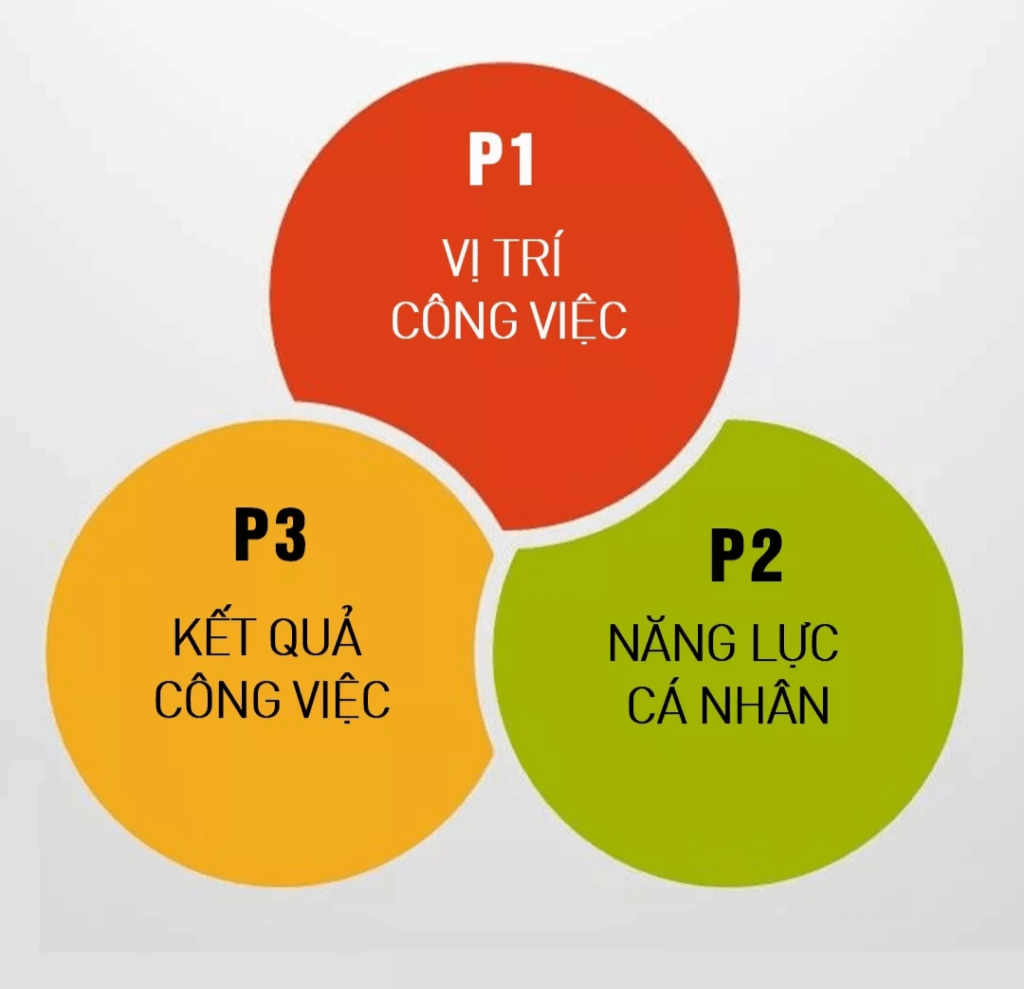
- 3P model:
- Position (position) + Person (ability) + Performance (result).
- Helps allocate budgets fairly, encouraging performance.
- Flexible Bonus: Project or peak period bonuses instead of fixed monthly bonuses.
Outsourcing of non-core activities
Focus on core operations, outsource ancillary work to save fixed costs.
Activities that should be outsourced:
- Recruitment freelancer or part-time during peak season.
- Hire a tech company instead of building an in-house team.
- Hire accounting, human resources or IT support services in a package.
Benefit:
- Reduce long-term salary, insurance and benefits costs.
- Flexibly expand or contract resources as needed.
Using human resource management technology
Technology is long-term solution to reduce costs and increase efficiency.
Applying technology helps:
- Application of technology in production and business: Automate processes so employees can focus on more important work, reducing the need to hire additional workers.
- Apply online meetings: Save on travel, printing, and meeting room rental costs.
- Using management software: To save and optimize working time for human resources, for example, professional human resource management software can reduce the number of personnel needed for manual work.
Control and cut other operating costs
In addition to direct costs related to personnel, many indirect costs also affect the budget.
Saving solutions:
- Save electricity, water, and stationery with internal regulations and IoT technology.
- Liquidation of excess materials, recycling of waste.
- Share an office with another business or use a co-working space.
- Renegotiate insurance, maintenance or logistics contracts.
Of all the above solutions, improving processes, optimizing working time, and using technology are the methods that can completely solve the invisible costs related to repetitive work and wasted time of finance staff. This is when businesses need to consider a specialized platform like Bizzi.
Financial Automation Solution (Bizzi) – The method to thoroughly optimize invisible costs
In the context of human resource costs increasingly accounting for a large proportion of the total budget, many businesses are facing difficulties in ensuring operating efficiency, fit optimize human resource costs.
Bizzi.vn – platform Comprehensive financial automation and cost control – is specifically designed to solve this problem. With smart features, Bizzi not only helps businesses manage cash flow but also reduce waste of human resources budget, while improving team performance.
Below are 3 outstanding solution groups from Bizzi to support businesses:
Automate manual tasks – Save time and costs
In businesses, accounting and finance teams often spend many hours on tasks. repetitive such as entering invoices, checking documents, reconciling debts... This is the reason for increased personnel costs and reduced productivity.
How to deploy with Bizzi.vn:
- Use OCR feature and automatic invoice entry on Bizzi to remove 90% manual operation.
- Connect directly to accounting, ERP and banking software for automatic data synchronization.
- The process of approving invoices and documents is carried out. online, fast, reducing paperwork and administrative staff costs.
Benefits:
- Save 50 – 70% of time on manual accounting work.
- Help employees focus on strategic tasks instead of data entry.
- In addition, Bizzi also solves another large invisible cost: System Integration Cost and Data Risk. The ability to seamlessly integrate with major ERP systems such as SAP, Oracle NetSuite, Odoo helps businesses completely eliminate errors due to manual reconciliation between platforms, ensuring financial data is always accurate and synchronized in real time.
Controlling HR Spending and Budgeting – Transparent and Accurate
One of the reasons why personnel costs are rising is lack of budget control for categories such as recruitment, training, compensation and benefits. Bizzi.vn provides Bizzi Expense – Smart expense management solution, helping businesses budget control and allocation tight from the start.
How to deploy:
- Establish standard budget for each specific department, project, or activity (e.g., recruitment, staff training, team building).
- Integration online spending approval process: All expenses must be approved before implementation, limit unplanned expenses.
- Monitor real-time spending reports to identify over-budget items.
Benefits:
- Control human resource related expenses such as recruitment, training, OT and benefits, Reduce waste up to 25 – 30%.
- Financial transparency, easy to evaluate investment efficiency for each human resource activity.
- Support leadership in making fast, data-driven decisions.
Effectively manage business expenses – Reduce incidental costs
Business expenses are one of the variable costs large and difficult to control, including travel, accommodation and food expenses of employees. Without a clear management process, businesses can easily encounter the situation overspending or fraudulent billing.
Bizzi Travel – Bizzi.vn's specialized features – help businesses per diem management from AZ, ensuring cost optimization and process transparency.
How to deploy:
- Establish standardized business expense regulations: spending limit for each position, area, and type of work.
- Staff Submit approval requests and pay online right on the system.
- Automatically store and reconcile invoices, travel and accommodation documents.
- Integrate cost analysis reports to evaluate work performance.
Benefits:
- Reduce 20 – 30% incidental business expenses, especially in businesses with sales or project teams that travel frequently.
- Transparency, limiting the situation of false declaration or fraud in business expenses.
- Save time on approvals and payments, improving the employee experience.
Conclude
Optimizing human resource costs is not only a short-term goal but also a long-term strategy for sustainable business development. Bizzi.vn is not just a software, but a powerful tool to help businesses transform invisible human resource costs into strategic investments for growth. Don't let manual financial processes hinder your cash flow and team productivity. Take action now to cut costs, improve management efficiency, and expand your business's future growth potential.
For more detailed advice on suitable solutions for your business, register for a demo today to receive an invisible cost analysis report specifically for your business's financial operations! https://bizzi.vn/dat-lich-demo/