


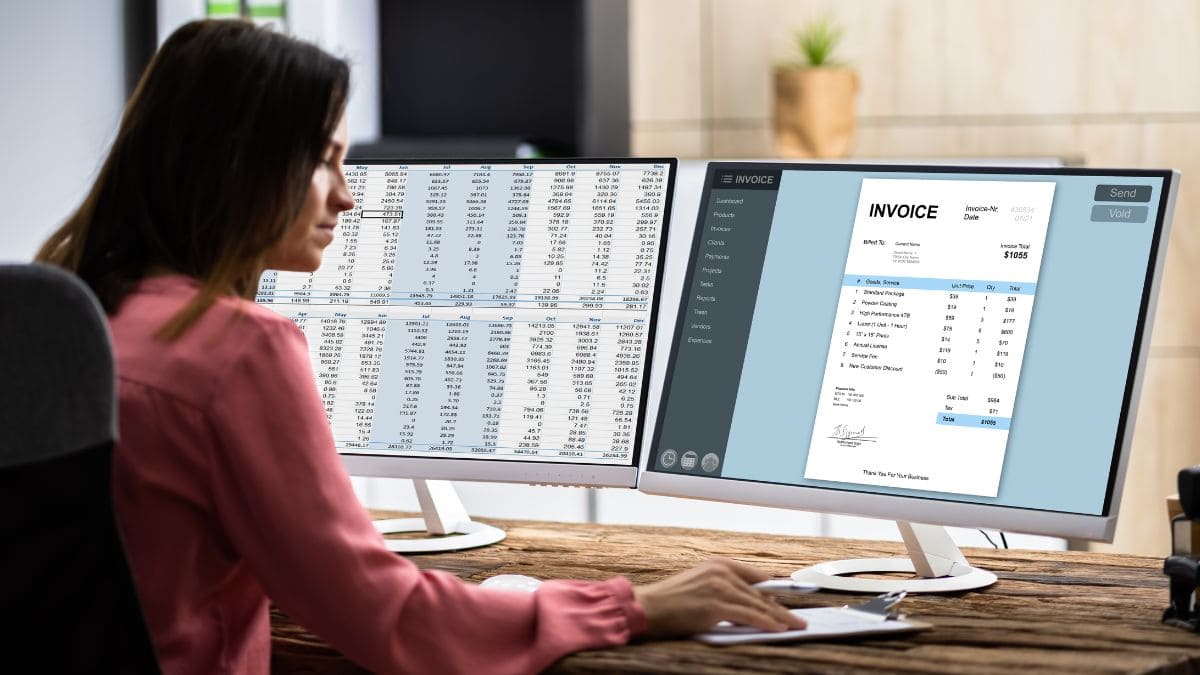
In the digital age, choosing the right online accounting software is not simply about changing an operational tool, but a strategic decision aimed at optimizing return on investment (ROI) and enhancing cash flow transparency. In reality, over 70% CFOs still face data "blind spots" due to manual, fragmented, and unconnected ledger reconciliation processes.
This article by Bizzi will analyze the Top 10 best accounting software of 2026, and propose a comprehensive automation roadmap to help businesses transform from a traditional "bookkeeper" role to a "strategic partner" in financial management.
Why do businesses need to evaluate the benefits of investing in accounting software?
In a context where data is becoming a strategic asset, implementation is crucial. online accounting software It's no longer simply about digitizing accounting records. This is an investment decision that directly impacts working capital, the closing cycle, and the CFO's risk management capabilities.
In essence, Benefits of investing in accounting software measured by the formula:
ROI = (Return on Investment – Cost of Investment) / Cost of Investment
The benefits stem not only from savings in data entry personnel but also from shortened decision-making time, reduced tax errors, and improved cash flow forecasting. With real-time data updates, the CFO's role shifts from "Bookkeeper" to "Strategic Finance Partner."
The biggest risk when using a fragmented offline system is data delays and a lack of synchronization between accounting, inventory, sales, and banking. This creates "blind spots" in cash flow reporting. Therefore, the most important criterion when choosing is... accounting software It's not about the number of features, but about the ability to generate "clean data at source"—the foundation for all financial decisions.
To realize these benefits, the next step is to choose the right system that suits the size and development strategy of the business.
Top 10 online and offline accounting software programs leading the market in 2026.
Market online accounting software In 2026, solutions will be divided into three main groups: flexible cloud solutions for SMEs, customized ERP systems for large corporations, and highly secure offline systems. Below is an in-depth analysis of each solution from a CFO's perspective.
| Software | Type | Annual fee | Integrated Bizz | The strongest point |
| MISA AMIS | Online | 2.9M – 6.9M | API available | AI & Mobile Ecosystem |
| Fast Online | Online | ~1.7M | API available | Production cost management |
| BRAVO 8 | subsidy | According to the project | Deep integration | ERP tailored to large enterprises. |
| EasyBooks | Online | 1.5M | API available | Simple for Household Businesses |
| AccNet Cloud | Online | ~2M | API available | AI Accounting Entry Suggestions |
| LinkQ | Online | By branch | Customize API | Chain store management |
| EFFECT | subsidy | 6M – 150M | Customize API | Highly specialized operations |
| MISA SME | Offline | 7.9M+ (permanent) | Via Tool Bizz | On-premise security |
| 3TSoft | Offline | ~2M (permanent) | Via Tool Bizz | Processing speed & Multilingual support |
| Smart Pro | Offline | 1.5M – 4M | Via Tool Bizz | For Accounting Services |
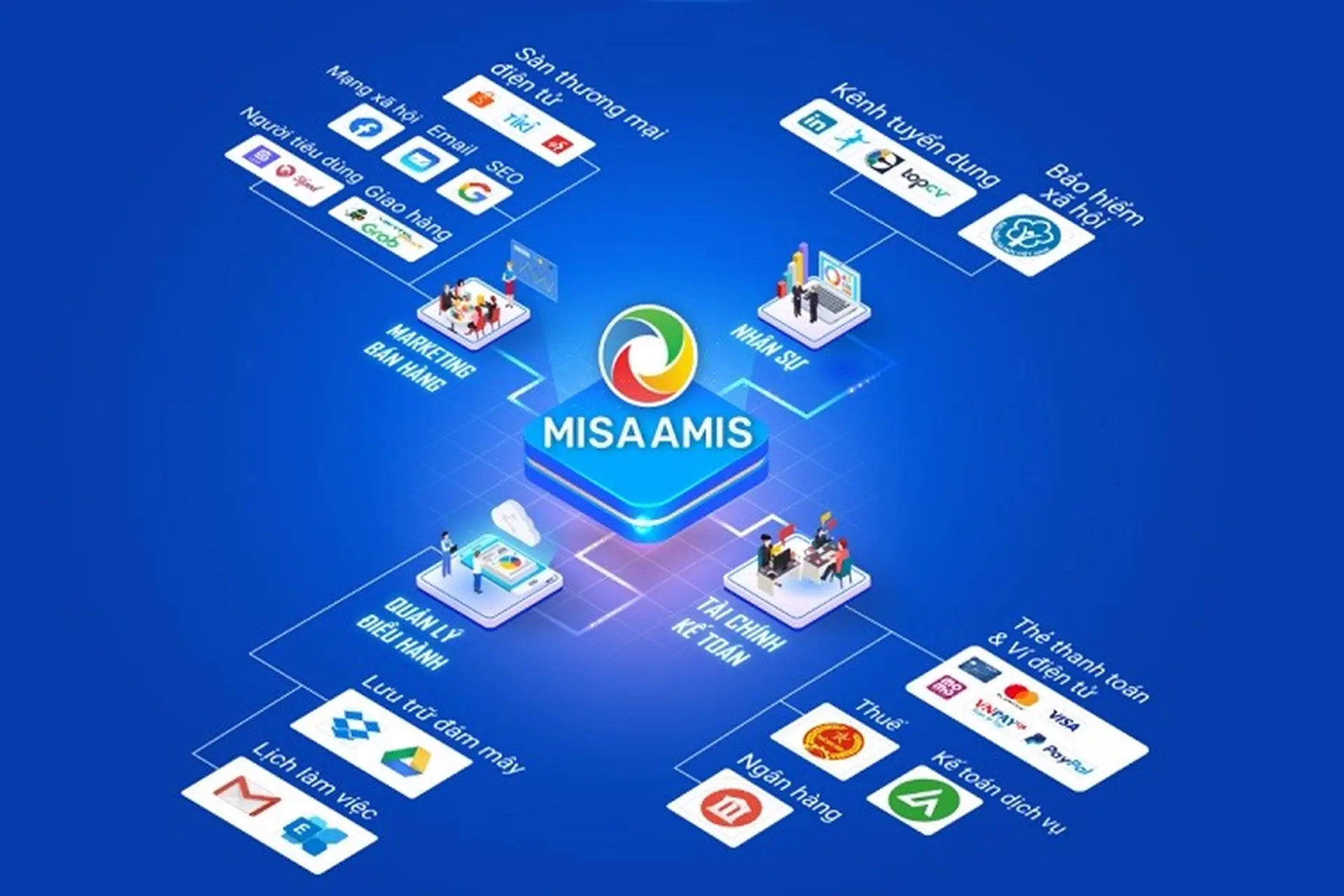
1. MISA AMIS: A comprehensive AI-integrated accounting ecosystem for SMEs
This is one of them online accounting software Most popular in Vietnam, especially in the SME segment.
MISA AMIS stands out thanks to its integrated ecosystem of banking, electronic invoicing, and a mobile app. However, when the number of documents exceeds a large threshold, report processing performance can slow down. Additionally, the system lacks a multi-tiered approval process before accounting – a crucial factor for businesses with tight budget control.
2. Fast Accounting Online: Powerful software for cost management and construction.
Fast is suitable for manufacturing and construction businesses due to its complex cost calculation module. However, its highly technical interface increases hidden training costs. Its limited integration with Bank APIs means that reconciliation of bank statements is often done manually.
The solution commonly adopted by CFOs is to integrate with the system. software for reconciling bank statements Use automated tools like Bizzi ARM to automate daily bank order matching.
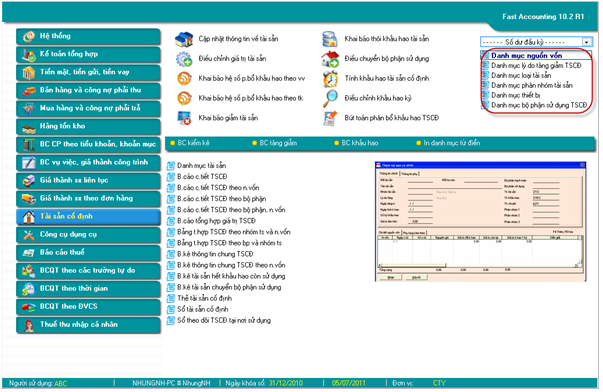
3. BRAVO 8 ERP: A highly customizable accounting solution for large corporations.
BRAVO 8 is suitable for large businesses requiring extensive customization. Its strength lies in its ability to adapt to specific processes. However, deployment time is lengthy (3–6 months) and mobile approval capabilities are limited. In this model, Bizzi Expense digitizes the spending approval process on the app, then synchronizes the data with BRAVO to ensure budget control.
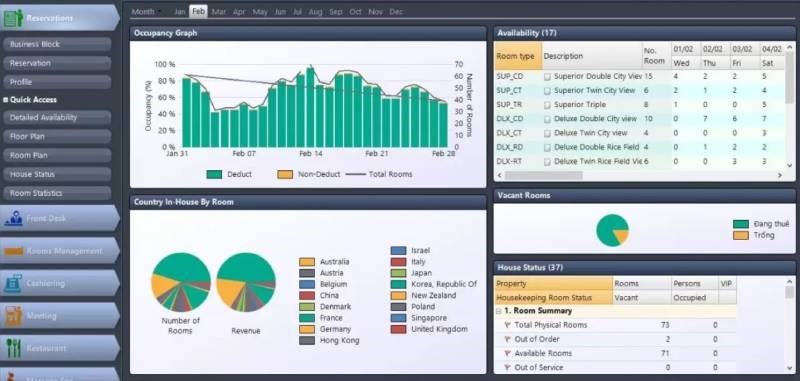
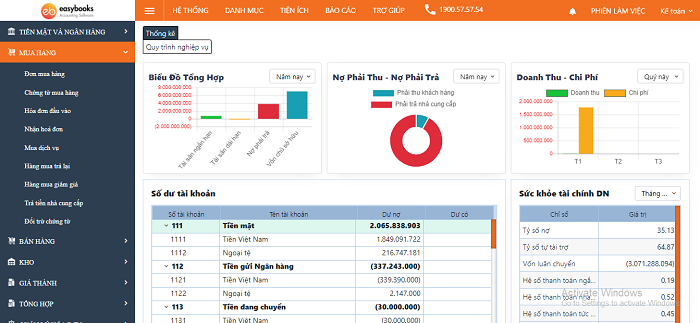
4. EasyBooks: A streamlined option for startups and small businesses.
EasyBooks is simple, low-cost, and suitable for sole proprietorships. However, when businesses expand into chains or multiple entities, scalability is limited. The system also lacks cash flow forecasting tools.
The Bizzi robot automatically downloads invoices from the tax portal and pushes them into the system, enabling business owners to manage their taxes even without in-depth business knowledge.
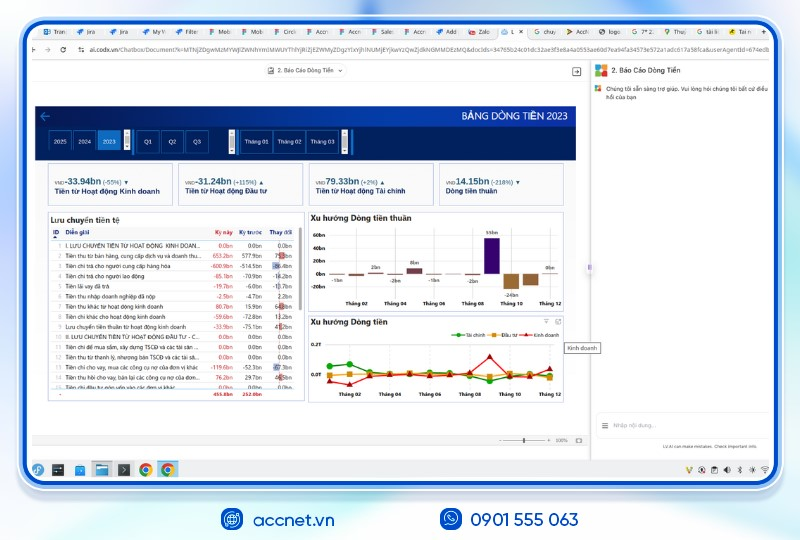
5. AccNet Cloud: AI accounting system suggests journal entries from Lac Viet.
AccNet Cloud offers AI-powered transaction suggestions and good security. However, its integrated ecosystem is limited, and the AI primarily handles simple business processes.
When combined with EPM, data from AccNet can be transformed into multidimensional management reports for CFOs.
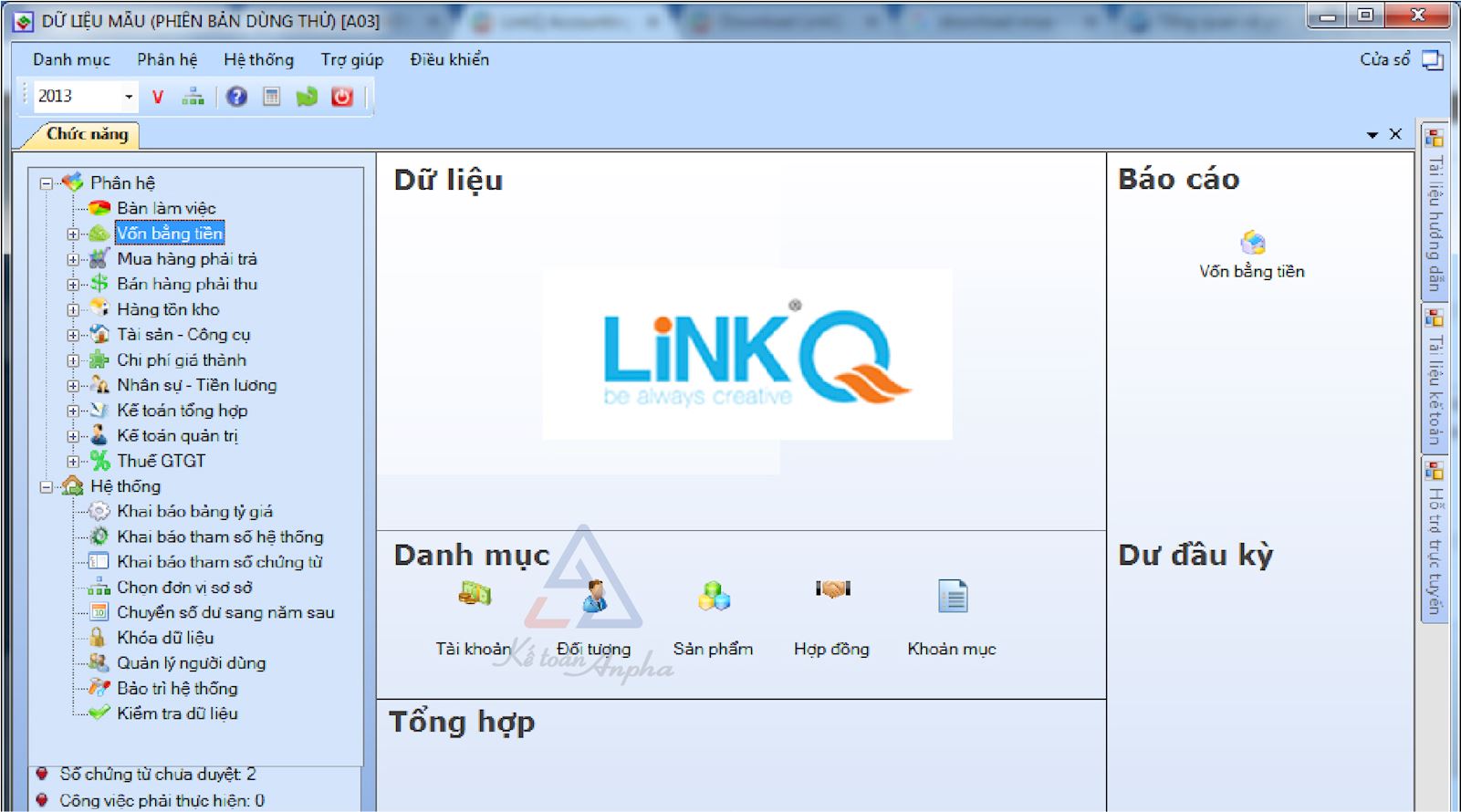
6. LinkQ Cloud: Centralized data management for multi-branch models
Suitable for a multi-branch model, but heavily reliant on internet connectivity. Internal transaction reconciliation processes are still performed manually.
Bizzi ARM supports cross-chain debt reconciliation on a centralized dashboard.
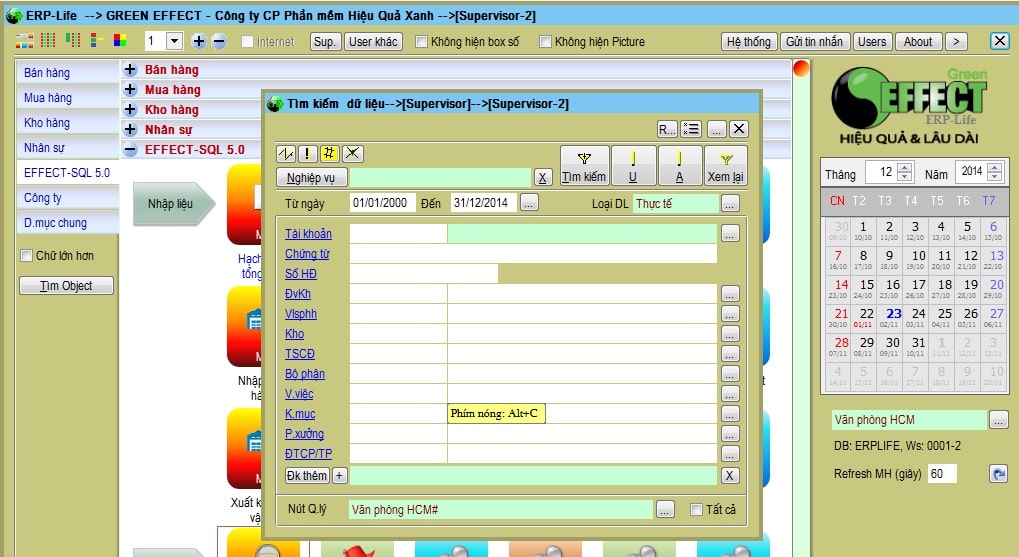
7. EFFECT: Flexible customization according to the business's "language".
EFFECT allows for deep customization to suit the business "language." However, customized versions are prone to errors during upgrades.
Bizzi Bot can adapt to custom data fields to automate invoice entry.
8. MISA SME: Secure Offline Version for Traditional Businesses
The offline version is suitable for traditional businesses. However, it's difficult to work remotely and policy updates are slower compared to the cloud version.
The Bizzi robot acts as a bridge, fetching cloud invoices and pushing them to the internal server.
9. 3TSoft: High-speed accounting software for FDI businesses
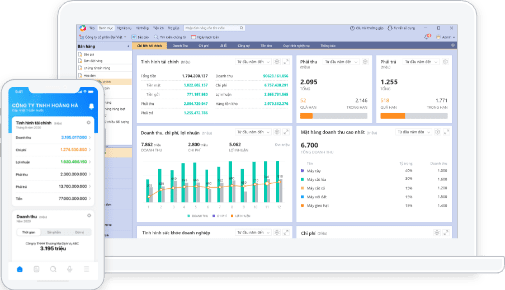
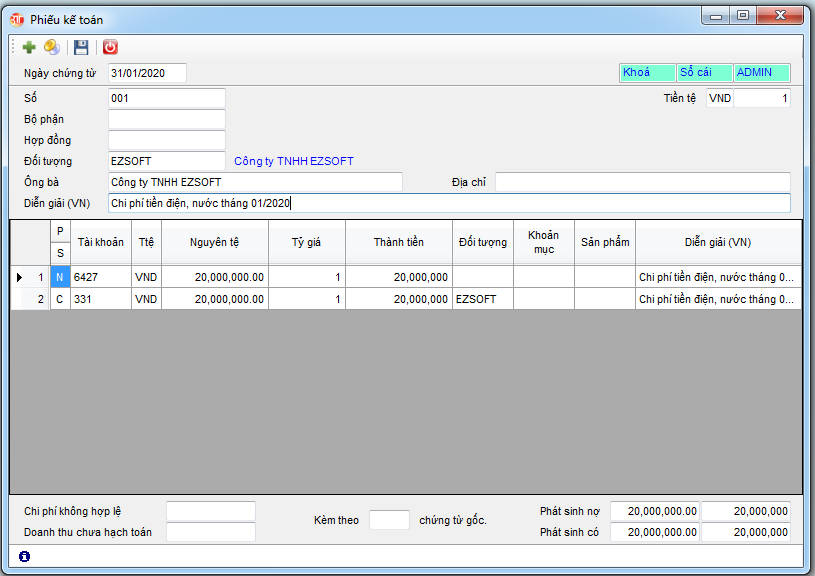
3TSoft is fast and supports multiple languages. Its weaknesses include a lack of a dashboard and fintech integration.
Bizzi ARM automates subsidiary ledger reconciliation and provides a real-time cash flow dashboard.
10. Smart Pro: A powerful tool for accounting service providers.
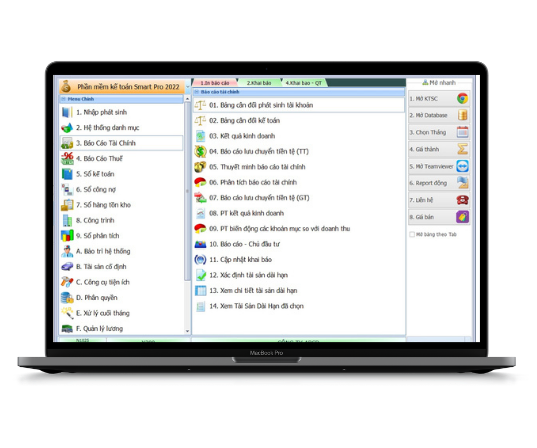
Smart Pro is suitable for organizations managing multiple clients. However, it lacks a transparent portal for businesses to track data.
Bizzi Bot aggregates invoices from all customers into a central system, reducing the data entry workload for 90%.
Automated accounting process: From raw invoices to touchless ledgers.
Automated accounting processes are the foundation of Automated accounting data entryInstead of manual input, the system uses RPA and AI to process sequentially: HElectronic invoice → Bizzi Bot verifies tax & extracts data → 3-way matching → Push in online accounting software → Consolidate reports on EPM.
The biggest difference between Manual and Straight-Through Processing lies in performance:
When data is normalized, businesses can integrate various systems without encountering data structure conflicts.
Automated ledger reconciliation software: The optimal solution for daily cash flow.
One software for reconciling bank statements Use RPA to download bank statements from multiple banks and automatically match them to the ledger.
The most challenging aspect in practice is handling 1:N or N:1 order matching. If done manually, accountants often consolidate corrections at the end of the month, creating the risk of "unsold debt."
Bizzi ARM automatically logs into over 30 banks, executes orders using AI, and sends Cash Flow reports to the CFO every morning. This helps monitor Cash-on-hand in real time – a key element in working capital management.
The 3-way matching process: A "shield" against corporate financial losses.
3-way matching is an automated process for comparing two sides. Invoice – Purchase Order (PO) – Goods Receipt (GRN) to ensure that businesses only pay for The goods ordered were received, and the price was as agreed..
This is the most important "internal control point" in the Procure-to-Pay (P2P) cycle, especially for businesses with large transaction volumes or multi-tiered approval processes for industrial purchases.
1. Normal relationship:
Invoice = Purchase Order (PO) = Goods Receipt (GRN)
These three documents must match on core criteria:
- Product code
- Quantity
- Unit price
- Total amount
- Payment terms
If only the invoice (PO) is compared while ignoring the gross receipt (GRN), the business may pay for goods not yet received. Conversely, if only the GRN and PO are compared without the invoice, discrepancies in pricing or additional fees beyond the agreed-upon terms may arise.
2. Common financial risks if you don't have automatic 3-way matching.
In large-scale businesses, even a discrepancy of just 1–2% in purchase value can result in losses of billions of dong annually.
- Duplicate payment
- The supplier raised the price compared to the purchase order.
- Items were missing from the delivery, but the invoice was issued with all the necessary information.
- Shipping/service fees are not included in the contract.
- Internal staff "skipped checks" due to document overload.
In industrial procurement practices (FMCG, manufacturing, energy, etc.), the Perfect match 100% It is almost impossible because:
- Measurement error (e.g., ±1–2%)
- Fluctuations in raw material prices
- Adjust the quantity based on actual delivery and receipt.
Therefore, large corporations often establish Tolerance Limits – the tolerance threshold allowed before the system automatically blocks payments.
For example:
- Allow for a quantity difference of ±2%
- Allow a price difference of ±0.5%
- If the threshold is exceeded → the status will automatically change to “Exception” for CFO/Procurement approval.
The problem is: Most SME accounting software only supports document recording. There is no mechanism for configuring multi-tiered tolerances based on product type, supplier, or framework contract.This forces businesses to conduct manual checks, which can easily lead to errors or missed risks.
Tự động hóa 3-way matching ở cấp độ tập đoàn với Bizzi
Performed by Bizzi Bot:
- Automatic invoice data extraction (OCR + AI)
- 3D comparison with PO and GRN
- Apply tolerance configurations according to each purchasing policy.
- Invoice classification:
- "Full match" → automatically pushed to accounting software for payment.
- “Exception” → requires verification before recording the debt.
As a result, the CFO can:
- Reduce the risk of incorrect payments.
- Reduce invoice processing time.
- Increase transparency and auditability.
- Standardize internal controls according to multinational corporation standards.
More importantly, data is no longer fragmented across accounting, purchasing, and inventory, but is connected into a unified management system.
The effectiveness of automated 3-way matching extends beyond theoretical risk control. Many global corporations have applied this model to shorten payment cycles, reduce losses, and improve the quality of management reporting.
FAQ – Frequently Asked Questions related to accounting software
Below are answers to some frequently asked questions when implementing accounting software.
What are the most obvious benefits of investing in online accounting software?
Businesses can save 50–80% in operating time while also possessing real-time financial data to make faster decisions, especially in cash flow and debt management.
Is the software for reconciling bank statements secure?
Modern solutions using banking security standards and RPA do not store user passwords. Data is encrypted according to international standards.
How do you choose the right accounting software?
The CFO needs to base their decision on the monthly volume of documents, the complexity of business operations, and the expansion strategy. SMEs should prioritize Cloud; corporations need customized ERP; traditional businesses can choose Offline.
Can Bizzi be integrated with MISA and Fast?
Yes. Bizzi has integrated its API with most popular online accounting software in Vietnam.
Is 3-way matching really necessary for SMEs?
It depends on the operating procedure.
- If the process is simple, with few suppliers and direct control by the business owner, then full 3-way matching may not be necessary.
- If the process starts with separate purchasing – receiving – payment, involves multiple branches/warehouses, and involves large transaction values, then this should be implemented to avoid errors and losses.
In summary: The more complex the process, the more necessary 3-way matching becomes.
What value does the Fast Close process bring?
Shortening the closing cycle allows CFOs to grasp market fluctuations 3–5 days earlier, thereby enabling them to adjust strategies in a timely manner.
Conclusion: From accounting software to the Financial Management Ecosystem 4.0
One online accounting software It's just the starting point. The real value lies in the automation ecosystem surrounding it.
Without automation:
- The accounting department is overloaded.
- Late reconciliation of subsidiary ledgers
- Lack of transparency in cash flow.
Lựa chọn phần mềm kế toán online không chỉ là quyết định công nghệ mà là chiến lược tài chính dài hạn. Khi kết hợp đúng giữa hệ thống ghi sổ (MISA, Fast, BRAVO…) và lớp tự động hóa phía trước như Bizzi Bot, Bizzi ARM doanh nghiệp có thể:
- Reduce data entry workload.
- Automated accounting data entry and reconciliation.
- Real-time transparency of cash flow
- Elevating the CFO role to a strategic level.
In the Industry 4.0 era, the benefits of investing in accounting software are maximized only when data is standardized, automatically reconciled, and integrated into a unified ecosystem. Bizzi acts as an intelligent connecting layer between accounting, banking, and management, helping businesses transform from "bookkeeping" to "data-driven financial management."
Schedule a one-on-one consultation for a customized solution tailored to your business here: https://bizzi.vn/dang-ky-dung-thu/