


In context cash flow With daily fluctuations, the CFO can't wait until the end of the month to know the actual balance. As transaction volumes increase rapidly and businesses utilize multiple banks, the question is no longer just... What is bank reconciliation?It's about how to turn that activity into a strategic tool.
This article provides an in-depth analysis from a conceptual standpoint. What is bank reconciliation?Legal risks in Vietnam, and mechanisms bank reconciliation automation and how automatic bank reconciliation This helps control cash flow in real-time from the CFO's perspective.
What is Bank Reconciliation in the context of internal control systems?
In modern accounting systems, bank reconciliation is not merely a technical operation but the final safeguard protecting the accuracy of cash transactions. To properly understand its value, it needs to be viewed from the perspective of internal control and financial reporting.
What is Bank Reconciliation?
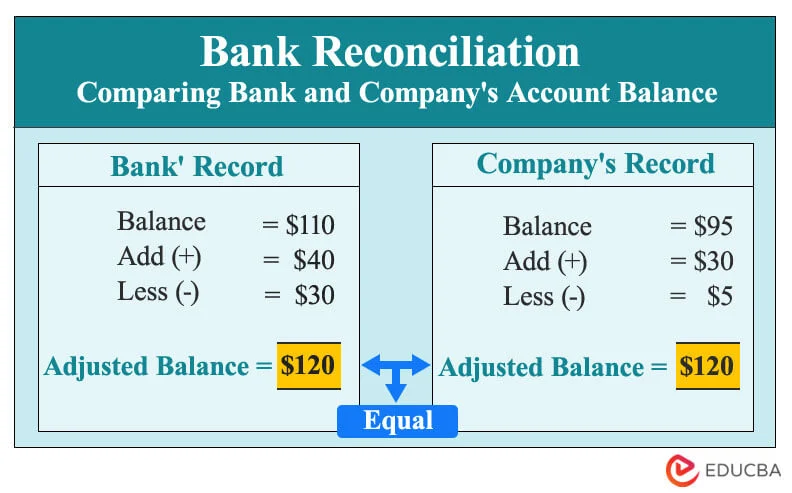
Bank Reconciliation is a financial control process within the Record-to-Report (R2R) cycle, involving the matching of ending balances between the General Ledger (account 112) and the Bank Statement.
The core objective is to identify and explain discrepancies, ensuring that the cash balance on the balance sheet accurately reflects reality.
When answering the question What is bank reconciliation?CFOs need to look beyond the accounting aspect: this is the foundation of liquidity management and cash flow forecasting.
How are these discrepancies formed?
Discrepancies between ledgers and statements often stem from "Reconciling Items." Deposits in Transit are amounts recorded as received but not yet credited by the bank. Conversely, Outstanding Checks are amounts paid but not yet deducted by the bank.
Additionally, there are rejected transactions (NSF Checks) or errors on the bank's part. If not detected in time, these can lead to inaccurate cash flow reports and distort liquidity forecasts.
In FDI or listed companies, the bank recon process is also linked to standard control requirements such as SOX. The digital audit trail becomes crucial evidence when internal or independent auditors conduct reviews.
The key difference is: bank reconciliation shouldn't be a "monthly" activity but rather a continuous monitoring mechanism. When the CFO has data reconciled daily, cash flow forecasts are no longer estimates but validated data.
Legal and Tax Risks in Vietnam When Comparisons Are Incorrect
Accuracy in the bank recon process serves not only internal governance but is also directly related to compliance with Vietnamese law.
Discrepancies in bank reconciliation can lead to three main legal risks: disallowance of expenses during tax settlement, administrative accounting penalties, and the risk of internal fraud.
According to Circular 96/2015/TT-BTC, expenses exceeding 20 million VND must be paid using non-cash methods to be considered deductible. If a business cannot match the payment order on the statement with the input invoice, the risk of having the expense disallowed during corporate income tax settlement is very high.
Furthermore, time discrepancies can be exploited for Kiting or Lapping Fraud. Accountants can conceal embezzlement by taking advantage of the recording delays between bank accounts.
A common practice in Vietnam is "fictitious debt." Because transactions are recorded before reconciliation is complete to meet reporting deadlines, VAT obligations may be incorrectly recorded in the wrong period. This is a dangerous blind spot if there isn't an auto-flagging mechanism to detect transactions without original documentation.
Why is manual reconning killing performance?
Even though I understood it clearly What is bank reconciliation?Many businesses still perform these tasks using Excel. This creates a bottleneck in the bookkeeping process.
Manual bank recon processes can consume up to 70% of data entry and cleaning time, with a T+30 delay and a high risk of errors.
Excel poses risks of formula errors, poor version control, and a lack of security. When a business uses batch payments, a payment order of 5 billion VND for 500 invoices will only appear on one line of the statement. Accountants must "unbundle" this transaction to match each invoice in the ledger – a task that takes many hours.
The biggest cost is not the time, but the opportunity cost. Time that should have been spent analyzing cash flow and optimizing working capital is instead wasted on repetitive tasks.
When accountants have to download files from multiple banks like Techcombank, Vietcombank, or ACB in different formats and then manually standardize them, the risk increases significantly. This is where the risks come in. automatic bank reconciliation It has become an essential requirement.
Bank Reconciliation Automation Mechanism: From RPA to AI Matching
The shift from manual to automated processes is not just about upgrading tools, but also about redefining the role of accounting.
Bank reconciliation automation combines RPA for data collection and AI Matching to automatically match complex transactions.
First, the robot automatically connects to the API or logs into the bank's portal to download statements according to a pre-scheduled plan. Then, the data is standardized into a unified structure.
The matching engine performs an Exact Match when the amount and date perfectly match. For complex transactions, the system applies rule-based matching or machine learning to handle one-to-many and many-to-many relationships.
Unlike accounting software that only supports file imports, Bizzi acts as a multi-bank connector, consolidating all data into a single platform before pushing clean data into the ERP system.
Fuzzy Matching Technology: Solving the Problem of "Vietnamese Without Diacritics"
In Vietnam, transfer details are often abbreviated or lack accents. This poses a significant obstacle if only using exact match. Fuzzy Matching is an approximate matching algorithm that calculates similarities between character strings to automatically reconcile transactions.
For example, the ledger shows "Payment to ABC Joint Stock Company, Invoice 123" while the bank displays "Payment for Invoice 123, ABC Company". The system calculates a similarity score, and if it exceeds the 80% threshold along with the matching amount, the transaction will be automatically reconciled.
Bizzi is trained on millions of Vietnamese transactions, understanding common abbreviations like TT, CK, and HD. The system also has a machine learning feedback loop, allowing accountants to "teach" the bot to improve accuracy over time.
From data reconciliation to Working Capital Optimization
When automatic bank reconciliation Because it happens daily, the CFO is able to see the cash position right from the start of the workday.
Real-time data helps determine the exact amount of cash available, instead of waiting until the end of the month. This directly impacts DSO because debt It is processed immediately upon receipt of funds, freeing up credit limits and boosting sales turnover.
Cash flow management is shifting from reactive to proactive. CFOs not only know when money is coming in but also predict when it will flow in – the foundation of working capital optimization.
Bizzi's dashboard provides inflow/outflow charts based on validated data, helping to make decisions about investing idle funds or restructuring credit lines.
Frequently Asked Questions about Bank Reconciliation (FAQ)
Bank Reconciliation is the process of comparing a company's deposit ledger with bank statements to ensure the correct balances, detect errors, and identify fraud. It should be performed monthly (or daily/weekly for large transactions) to ensure the accuracy of financial data.
Frequently Asked Questions (FAQ) about Bank Reconciliation:

What size of business should use automated Bank Recon?
SMEs with more than 50 bank transactions per month or using two or more bank accounts should consider implementing automated bank reconciliation. As transaction volume increases, the personnel costs for performing manual bank reconciliation processes are often higher than the cost of software, not to mention the risk of errors and reporting delays. From a CFO's perspective, investing in bank reconciliation automation is a cost-effective long-term decision that improves efficiency. business cash flow management.
Is financial data on Bizzi safe?
Security is a top priority when implementing automated bank reconciliation, especially for businesses with numerous accounts and large transactions. Bizzi adheres to ISO 27001 security standards, uses encryption for data transmission, and only requests "Read-only/View-only" permissions, meaning they can only view transaction data without the right to execute transfer orders. This allows CFOs to confidently implement bank reconciliation automation without incurring unintended payment risks.
What is the difference between Bank Reconciliation in accounting software (MISA/Fast) and Bizzi?
Most traditional accounting software requires accountants to manually import bank statements or only supports limited connections with certain banks, leaving the bank reconciliation process heavily reliant on manual operations. Bizzi acts as a "middleware" layer, processing raw data from multiple banks using AI, automatically standardizing and matching it before pushing clean data into accounting software or ERP. As a result, automated bank reconciliation is not just a feature in the accounting system but also becomes a real-time cash flow control process at the management level.
Conclusion: Bank Reconciliation is no longer a burden at the end of the month.
Understand correctly What is bank reconciliation? To be It's just an initial step, but the real value lies in transforming it into a real-time cash flow control system.
In a fiercely competitive environment, CFOs need accurate data every day, not every month. Automated banking reconciliation This not only helps reduce manual operations but also opens up possibilities for optimizing working capital, increasing transparency, and preventing fraud.
With Bizzi, bank recon process It's being redefined from an accounting operation to a strategic advantage. Let robots handle the data and let CFOs focus on what's more important: making decisions based on real, immediate, and reliable cash flow.
To receive personalized advice on the best solution for your business, schedule a demo here: https://bizzi.vn/dat-lich-demo/