


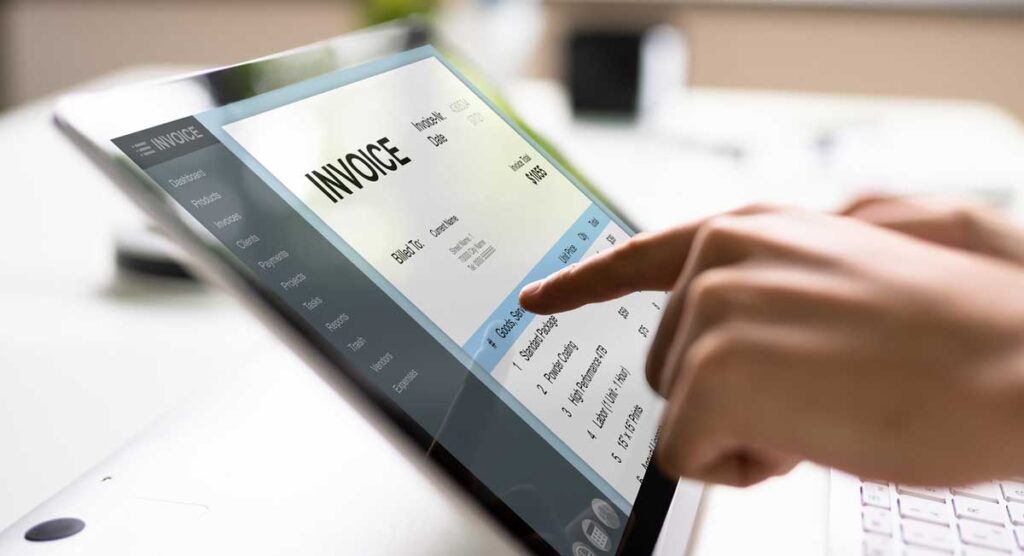
Electronic invoices are becoming increasingly common, but many businesses and household businesses still don't fully understand them. How many years are electronic invoices stored?How to save data correctly according to regulations. In many cases, simply due to data loss, incorrect saving format, or accidental deletion of invoices, people face administrative penalties, disqualification from claiming expenses, or difficulties during tax audits and settlements.
So How many years are electronic invoices stored according to the latest regulations for 2026?Is it mandatory for businesses to print this on paper? Will the tax authorities keep a copy? And what is the safest, most legal, and most easily accessible way to store it?
This article will help you understand all the regulations and how to implement them correctly.
According to the latest regulations, how many years are electronic invoices stored?
Many businesses and household businesses still have a vague understanding of the question: "If electronic invoices are already stored on the provider's system, do we need to store them again?" In reality, according to current legal regulations, The responsibility for storing electronic invoices rests entirely with the seller/issuer., not the tax authorities or the software provider.
And the minimum retention period is mandatory.
Direct answer: At least 10 years
By law, all legally generated electronic invoices must be archived. at least 10 years to serve the following purposes:
- Tax inspection and audit
- Reconcile accounting data.
- Explanation in case of disputes or audits.
The 10-year period is calculated from the end date of the fiscal year.
Which types of invoices does this regulation apply to?
Regulations regarding How many years are electronic invoices stored? This applies to all types of valid electronic invoices, including:
- Electronic invoice with tax authority code
- Electronic invoices without tax authority codes
- Hóa đơn đầu ra – đầu vào của doanh nghiệp và hộ/cá nhân kinh doanh
Regardless of who you are:
- Large enterprises
- SME
- Individual business
- Freelancer registered for electronic invoicing.
...all must comply with these archiving regulations.


What are electronic invoices and why do they need to be stored for 10 years?
Trong bối cảnh chuyển đổi số mạnh mẽ trong lĩnh vực tài chính – kế toán, hóa đơn điện tử đã trở thành hình thức bắt buộc đối với hầu hết doanh nghiệp và hộ kinh doanh. Tuy nhiên, không ít người vẫn chưa hiểu rõ hóa đơn điện tử có giá trị pháp lý ra sao và vì sao lại phải lưu trữ trong thời gian dài đến 10 năm. Việc nắm rõ nội dung này giúp doanh nghiệp tránh được rủi ro pháp lý và sai sót khi quyết toán thuế, thanh tra hoặc kiểm toán.
1. Definition and legal value
To understand why electronic invoices need to be stored long-term, it is first necessary to clearly define what an electronic invoice is and what its legal value is.
An electronic invoice (e-invoice) is an invoice presented in the form of... electronic data, Have:
✔ Valid digital signature of the seller
✔ Initiated, sent, and received via electronic means.
✔ Has legal validity equivalent to a paper invoice unless the content is modified or distorted.
According to the law, Electronic invoices are classified as accounting documents.Therefore, I accept it. The retention period is 10 years, similar to accounting records and other financial documents..
2. The purpose of storing electronic invoices
Lưu trữ hóa đơn điện tử không đơn thuần là yêu cầu hình thức để “đủ hồ sơ”, mà là một phần cực kỳ quan trọng trong quản trị tài chính – pháp lý của doanh nghiệp. Việc lưu trữ đầy đủ và chính xác giúp bảo vệ doanh nghiệp khi xảy ra kiểm tra, tranh chấp hoặc đối chiếu số liệu trong nhiều năm sau đó.
Specifically, electronic invoices are stored for the following purposes:
- To be basis for tax settlement, auditing, and inspection.
- Prove deductible expenses when calculating corporate income tax.
- It is the base VAT deduction/refund
- As evidence in contract disputes and debt settlements.
- Serving internal auditing and long-term financial management.
Missing just one important invoice can lead to the following consequences for a business:
- Cost Type
- Increase taxable income
- Bổ sung – truy thu và phạt
Legal basis stipulating the retention period for electronic invoices
The requirement to store electronic invoices for a minimum of 10 years is not a suggestion or recommendation, but a regulation clearly stated in many current legal documents. This is a mandatory requirement that businesses, household businesses, and individuals who generate invoices must comply with.
| Legal documents | Terms and conditions | Stay period |
| Decree 123/2020/ND-CP | Articles 11 and 29 | 10 years |
| Circular 78/2021/TT-BTC | Guidance on Article 30 | 10 years |
| Accounting Law 2015 | Article 41 | 10 years |
| Tax Administration Law 2019 | Articles 16 and 19 | 10 years |
Some internal accounting documents may be stored in 5 yearsIn addition, valuable documents about history, security, defense can be stored forever According to the decision of the head of the unit.
However, it is important to emphasize that: Regular electronic invoices are required to be stored for a minimum of 10 years. And without exception.
Special cases to note when storing electronic invoices.
Besides the general regulation requiring electronic invoices to be stored for a minimum of 10 years, in reality, there are still some special cases that household businesses and enterprises often overlook or misunderstand. These are also the points that easily lead to risks during tax audits and inspections if the data and documents are not fully prepared as required.
1. Household businesses & small enterprises
Many small businesses and micro-enterprises believe that their small size allows them to omit some of the necessary record-keeping obligations. However, regulations regarding the archiving of electronic invoices remain in place. regardless of business size, which depends on whether you issue and use invoices or not.
Specifically:
- Regardless Do household businesses pay flat-rate taxes or declare their taxes?If electronic invoices are issued → A minimum storage period of 10 years is still mandatory.
- The tax authorities are not responsible for archiving the documents.
- The seller/invoice issuer must Ensuring the ability to retrieve and provide data when tax authorities conduct audits.
This means that even small businesses, if they use electronic invoices, must have a proper storage plan, avoiding the mindset that "it's okay because it's a small business."
2. Businesses dissolve, merge, or cease operations.
When a business ceases operations or changes legal entity, the responsibility for archiving electronic invoices remains. It doesn't disappear automatically.The invoice data must remain fully retained until the end of the prescribed period.
Some points must be followed:
- Electronic invoice data must be hand over to the legal representative or receiving legal entity (in the event of a merger)
- Do not delete or cancel invoice data. before the storage period expires
- When converting a business model (e.g., from a sole proprietorship to a company), it is necessary to... ensuring data continuity, linked with old and new tax identification numbers, if available.
Improper handling during the dissolution or transformation phase can expose businesses to legal risks years later, even after they have ceased operations.
3. Adjustment, replacement, or erroneous invoices
Trong quá trình xuất hóa đơn, việc sai sót là điều khó tránh. Tuy nhiên, không ít đơn vị cho rằng chỉ cần lưu hóa đơn “đúng”, còn hóa đơn sai thì có thể bỏ đi – đây là serious misunderstanding.
The correct storage principles are:
- Bill adjust or replace must be saved along with the original invoice
- The relevant invoices must be complete string for comparison
- The retention period is calculated from the date of issuance of the last invoice. in that related chain
This is crucial in audit cases, where tax authorities need to examine the entire adjustment history, not just the final invoice.
How to store electronic invoices correctly according to legal standards.
It's not just about saving enough. 10 yearsBusinesses and household businesses also need to keep records. đúng cách – đúng định dạng – đúng quy trình According to legal regulations, storing data in the wrong format or lacking the original data (XML) is still considered illegal. invalid when tax authorities, auditors, or inspectors conduct a check later.
1. Permitted methods for storing electronic invoices
According to current regulations, businesses can choose one or a combination of the following methods to store electronic invoices, provided that they ensure data accessibility, security, and integrity:
Stored on an internal server.
- The company manages, operates, and maintains its own data system.
- Advantages: complete control over data.
- Note: Without regular backup mechanisms and risk mitigation systems, data loss is highly likely due to hard drive failure, virus infections, fire, explosions, etc.
Stored on a cloud platform. – ví dụ: Bizzi Cloud, AWS, Google Cloud
- Data is stored on an online server system and automatically backed up.
- Advantages: easy to access, not dependent on a single physical device, reduces the risk of data loss.
- Note: High security standards must be ensured (encryption, access control, user authentication).
Stored on the tax authority's system.
- Applicable to electronic invoices have tax authority code
- Advantages: ensures authenticity when cross-referencing.
- IMPORTANT NOTE: this not an alternative form of storage → The business still must save separately in accordance with their legal responsibilities
2. Mandatory technical requirements for storing electronic invoices
Regardless of the storage method used, businesses must meet the following mandatory requirements:
- Store the original XML file. – đây là bản có unique legal value
- Save more PDF/HTML representation to facilitate display, retrieval, and printing when needed.
- Ensure fast access when subject to tax inspection and audit.
- Set up a standard periodic backup mechanism. Backup 3-2-1 (3 bản sao – 2 thiết bị khác nhau – 1 bản ngoài hệ thống)
- Implement security measures: Strong passwords, access control, and logging enable user monitoring.
If these elements are not ensured, the invoice may be considered invalid. Invalid storage, even though it had actually been released and used legally before.
3. Is it necessary to print electronic invoices on paper?
As per the rules, It is not mandatory to print electronic invoices on paper.However, in some special cases, businesses may still print for internal management purposes:
- When requested by the authorities.
- When needed for use Documents accompanying goods during transportation.
Note: Print this on paper. For archiving and reference purposes only., It has no transactional or legal value.The legally valid version is still the one that remains valid. original XML file Digitally signed.
Responsibilities for storing and managing electronic invoices
Once you know clearly According to regulations, how many years are electronic invoices stored?Therefore, storing electronic invoices is no longer "the responsibility of accountants alone," but rather... The legal responsibility of the entire organization related to the issuance, sale, and use of invoices..
Without clearly defined roles and management processes, businesses are highly susceptible to risks such as data loss, information inaccuracies, or violations of retention deadlines.
Here's how to determine it. The right person for the right job and the right responsibility. and standard storage procedures as prescribed.
1. Who is responsible for storing electronic invoices?
Business / Seller (invoice issuer)
This is the unit bearing primary and ultimate responsibility Regarding the storage of electronic invoices, including:
- Preservation original (XML) has been digitally signed and is valid
- Ensure that invoice data remains intact and has not been altered.
- Ready to provide upon request from tax authorities, auditors, and inspectors.
- You will be held legally liable if the invoice is lost, damaged, or you are unable to provide it.
Buyer / Invoice User
The buyer also has obligations. Keep a record of the invoices you receive. to:
- Tax declaration and settlement services
- Reconcile accounts payable and payment amounts.
- To serve as a basis in case of disputes, tax refunds, or future audits.
Many businesses today They only consider the seller's side and forget the buyer's side.This makes the cross-checking process risky and unfounded.
Chief Accountant / Head of Finance and Accounting
Responsible for organizing and controlling the entire storage system, including:
- Establishing a process for storing electronic invoices within the business.
- Establish security systems, manage access rights, and perform regular data backups.
- Monitor storage deadlines and plan for disposal upon expiration (after 10 years).
- Collaborate with IT or the platform provider to ensure data security.
In fact, if an invoice is lost, The responsibility lies not only with the operating staff but also with the accounting system manager..
2. Standard 5-step process for storing, retrieving, and destroying electronic invoices.
To ensure legal compliance and minimize risks, businesses should establish an electronic invoice management process following these five steps:
Step 1: Issue and digitally sign the document.
Invoices must be issued in the correct format, at the correct time, and have valid digital signature of the sellerThis is a mandatory requirement for the invoice to be legally valid.
Step 2: Automatically save the XML and the presentation (PDF/HTML)
Immediately after release:
- File Original XML saved to the main storage system
- File PDF/HTML It is saved for display, retrieval, and printing when needed.
Businesses shouldn't just save PDFs and neglect XML files, because XML is the version with legal validity.
Step 3: Perform regular backups and verify integrity.
Set up a regular backup system (daily/weekly/monthly), and also:
- Verify that the data has not been altered.
- There is a backup copy on another device or system (according to the 3-2-1 standard).
- Record your backup history to use as evidence in case of an audit.
Step 4: Quickly retrieve information when needed for verification or comparison.
The storage system must allow searching by:
- Tax code
- Invoice lookup code
- Invoice number and date
- Time or trading partner
If a business spends hours searching for a single invoice, it means their storage system is inadequate.
Step 5: Securely destroy the data after the expiration date (10 years).
After the 10-year storage period ends:
- Business establishment Minutes of electronic invoice destruction
- Perform secure data deletion, making it impossible to recover.
- Keep records of the destruction process as legal evidence for future reference.
🚫 Unauthorized deletion of invoices before the 10-year period may result in severe penalties as stipulated in Decree 125/2020/ND-CP.
Legal risks and penalties for improper storage.
Improper invoice storage not only creates difficulties during tax settlements and audits, but also leads to serious legal and financial risks.
Many businesses remain complacent about lost, damaged, mistakenly destroyed, or untraceable invoices, leading to administrative penalties, disqualification of legitimate expenses, and additional tax obligations.
Below are common violations along with their corresponding penalties under current regulations that businesses need to pay particular attention to.
| Violation | Penalties according to Decree 125/2020/ND-CP |
| Loss, burning, or damage to invoices during storage. | 4 – 8 triệu đồng |
| Failure to provide invoices during inspections and audits. | 8 – 15 triệu đồng |
| Delete or destroy invoices before their validity period expires. | 10 – 20 triệu đồng |
| Falsifying electronic invoice data | 20 – 50 triệu đồng |
⚠️ Important Note: Besides administrative penalties, businesses also face risks. Expenses are disqualified when calculating taxes.This increases the amount of tax payable and directly affects financial statements.
Bizzi: An automated solution for secure electronic invoice storage.
With the rapid increase in the number of electronic invoices and the increasingly stringent storage requirements from regulatory agencies, manual management using fragmented files or individual tools is no longer suitable. Businesses need a solution that ensures legal compliance while optimizing operations and reducing the workload for the accounting department.
Bizzi was created as a "digital assistant" to automate the entire process of receiving, checking, and storing electronic invoices. safe - accurate - systematicThis minimizes legal risks and data loss.
1. Current state of corporate accounting when storing electronic invoices
In many small and medium-sized enterprises today, invoice management and storage remain manual, fragmented, and unsystematic:
- Scattered invoice data from various sources such as email, Google Drive, personal Excel spreadsheets, accounting software, or the personal computer of the person in charge.
- When needing to retrieve invoices for verification, reporting, or tax audits, accountants must... It takes a lot of time to search., and couldn't even find a valid original XML file.
- High risk of data loss. This can happen due to personnel changes, equipment failure, virus infections, or the lack of a clear backup procedure.
- Job Compare the invoice with the purchase order (PO) and the delivery receipt (GR). They are usually made by hand, which is both time-consuming and prone to errors.
- When tax authorities request documents within a short timeframe, businesses are put in a passive and stressful position, making them prone to errors and penalties.
Clearly, without a centralized and automated storage system, businesses are putting themselves at high legal and financial risk.
2. Bizzi – An AI assistant for automating invoice management and storage.
Bizzi eInvoice is a specialized solution that helps businesses standardize and automate the entire process of handling incoming invoices – from receiving, checking, storing to reconciling and retrieving.
Bizzi helps businesses:
✅ Automatically download, check, and store input invoices.
Through Bizzi Bot, which combines RPA and AI, the system automatically:
- Download invoices from various sources (email, suppliers, partner systems, etc.)
- Verify validity: tax identification number, digital signature, invoice status on the tax system.
- Categorize and store files in the correct folder, by the correct provider, and at the correct time.
All of them have been processed. automatic, minimizing reliance on manual accounting tasks.
✅ Real-time 3-way reconciliation (Invoice – Purchase Order – Grand Prize)
The system automatically compares between:
- Electronic invoice
- Purchase Order (PO)
- Delivery/Receipt (GR)
When discrepancies are detected (wrong price, wrong quantity, wrong supplier, wrong product code, etc.), Bizzi will immediate alertThis helps accountants process information promptly before recording expenses.
This is a particularly important feature for businesses with a large volume of invoices, multiple suppliers, and complex purchasing processes.
✅ Cloud storage meets international standards.
All invoice data is securely stored on a cloud system that meets high security standards (ISO/IEC 27001):
- Minimum storage period of 10 years as required by law.
- Automatic multi-layer backup minimizes the risk of data loss.
- Prevent unauthorized editing and deletion.
Businesses don't need to invest in their own server infrastructure, while still ensuring absolute security and legal compliance.
✅ Invoice risk warning
Bizzi automatically detects and alerts you:
- Duplicate invoices
- Incorrect tax identification number on the invoice.
- Invalid invoice
- The invoice shows signs of risk from the supplier.
This helps businesses Reduce the risk of expense disallowance, tax arrears, or administrative penalties..
✅ Flexible integration with accounting systems – ERP
Bizzi easily connects and synchronizes data with popular software such as:
- MISA
- SAP
- FAST
- AMIS
- Oracle
- …
This helps ensure data consistency, eliminating the need for repeated manual entry.
✅ Extremely fast invoice retrieval
Simply enter:
- Tax code
- Supplier Name
- Time
- Invoice code / QR code
=> The invoice can be found in less than 1 second – Extremely useful when preparing documents for inspections, audits, or internal reconciliation.
Practical benefits for businesses when using Bizzi
Applying Bizzi to accounting processes yields clear and measurable benefits:
- Reduce invoice processing time by up to 80%. compared to traditional manual methods.
- Ensure compliance with 100% regulations on storing electronic invoices for 10 years. legal.
- Minimize the risk of data loss, misplacement, or errors.
- Reduce pressure on the accounting department and optimize human resources.
- Ready for any round audit – inspection – tax settlement without having to search or compile everything from scratch.
Bizzi is not just a storage tool, but... This platform helps businesses standardize their financial and accounting management in a systematic and sustainable way over the long term.
Frequently Asked Questions about Storing Electronic Invoices
During the process of consulting and implementing solutions for thousands of businesses, these are the most common questions revolving around retention periods, storage methods, legal responsibilities, and how to handle issues related to electronic invoices. The section below will help you quickly and accurately grasp the essence of the problem.
How many years must electronic invoices be retained?
According to Decree 123/2020/ND-CP and the Accounting Law 2015, electronic invoices must be archived. minimum 10 yearsThis regulation applies to all types of electronic invoices (with and without tax authority codes), including both output and input invoices of businesses, households, and individual business owners, effective from the date of issuance.
Is it necessary to print electronic invoices on paper?
Printing on paper is not mandatory. Businesses only need to store the electronic version in the prescribed format. However, in some special cases, such as when required by authorities or for use during the transportation of goods, businesses may print it out for documentation purposes, but this printed copy must be... The transaction has no legal validity..
Does the tax authority keep invoices on behalf of businesses?
No. This is a common misconception among many businesses. Although some invoices have codes that are recorded in the tax authority's system, The responsibility for storage still rests with the business/seller.Tax Authority There is no obligation to retain and re-provide data when a business loses it..
What should I do if my invoice data is lost?
In the event of loss, damage, or inability to retrieve electronic invoice data, businesses need to:
- Proactively recover data from backups or service provider systems.
- Prepare reports and Notify the tax authorities within 5 days. since the date the problem was discovered
- Accountable if data cannot be fully recovered.
Not having a backup plan from the start can lead to the risk of penalties and the disallowance of expenses when settling taxes.
What types of files related to electronic invoices need to be saved?
Legally, it is mandatory to keep this information:
- Original XML file – This is the only legally valid document.
- PDF/HTML file – Used for display, lookup, comparison, and printing
Saving only PDF files or screenshots not considered sufficient legal basis In the case of inspections and audits.
Is it possible to cancel an invoice before the 10-year deadline?
No. Any act of deleting, destroying, or falsifying invoice data when The 10-year retention period has not yet expired. All of these are considered violations of the law and may be subject to administrative penalties ranging from 10 to 50 million VND depending on the severity. Destruction can only be carried out after the storage period has expired and must be clearly documented in a written record.
Does Bizzi support automatic invoice saving?
Yes. Bizzi eInvoice is specifically designed to solve the problem of storing electronic invoices for businesses:
- Automatically save XML and PDF files in standard format.
- Back up your data for at least 10 years.
- Cloud storage is ISO 27001 certified.
- Easy to access during inspections and audits.
This helps businesses completely eliminate worries about lost invoices, misplaced data, or violations of storage regulations.
Conclusion: Storing electronic invoices is no longer a "technical matter," but a business protection strategy.
Hopefully, this article will help answer your questions about how many years electronic invoices can be stored. Electronic invoice storage. It is 10 years old and meets legal requirements. This not only helps businesses avoid heavy administrative penalties, but is also a mandatory condition for the auditing, tax inspection, and financial settlement processes to run smoothly, transparently, and with minimal risk.
In the context of data increasingly becoming a "digital asset," electronic invoices are not simply accounting documents, but rather legal evidence, serving as a basis for protecting the rights and reputation of businesses in all economic transactions.
Instead of relying on manual, decentralized, and high-risk storage methods, businesses can proactively use Bizzi to automate the entire process: from downloading, checking, and cross-referencing to storing and securing invoices in accordance with legal standards. The system eliminates the worry of data loss and ensures full accessibility when requested by tax authorities, eliminating the need for paper printing.
Electronic invoices = financial assets in digital form. And assets must be managed by a robust, standardized, and reliable system.
Bizzi is more than just a tool. Bizzi is a layer of protection for your business's financial system for 10 years and beyond.