


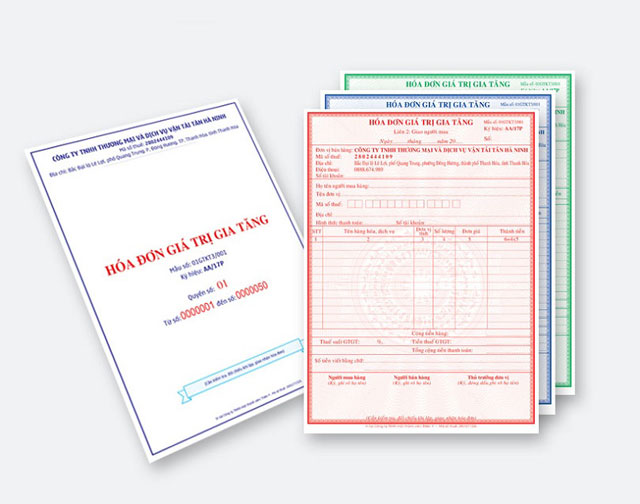
Amidst the tax authorities' tightening of regulations on electronic invoices, tax refunds, and transaction risk control, fake invoices This has become one of the biggest risks for businesses. Just one invoice that doesn't accurately reflect the nature of the transaction can lead to a host of consequences: disallowed expenses, inability to deduct VAT, back taxes and penalties, and even criminal liability.
This article helps businesses understand correctly. What is a fake invoice?Distinguishing it from other types of invoices, understanding the legal framework and penalties, and providing ways to identify and prevent problems from the perspective of accountants, CFOs, and internal auditors.
What is a fake invoice?
First, it's necessary to clarify the concept to avoid confusing fraudulent invoices with common errors.
Legal concept
Fake invoices is an invoice does not reflect actual economic transactions that occurred.In other words, the invoice is issued, but... No goods or services are actually bought, sold, or supplied..
According to current regulations, fraudulent invoices are classified as a category. illegal invoiceThis constitutes a serious violation in tax and invoice management.
economic nature
From an accounting and auditing perspective, fictitious invoices violate accounting principles. "Substance over form" (the essence is more important than the form).
Even if the invoice has all the necessary forms, digital signatures, authentication codes, etc., if... No real transactions It would still be considered invalid.

What is the difference between a blank invoice, an erroneous invoice, and a fake invoice?
Here's how Clearly distinguish between blank invoices, erroneous invoices, and fake invoices. based on three core criteria commonly used by tax authorities, auditors, and inspectors.
Distinguishing between these three types of invoices correctly is very important because The severity of the violation, the handling method, and the legal risks are completely different..
1. Was there a real transaction?
- Fake invoices: There were no actual economic transactions..
There are no goods being delivered, no services being provided, or they only exist "on paper". - Incorrect invoice: There was a real transaction.However, the invoice contains incorrect information (name, quantity, unit price, tax rate, date, etc.).
- Fake invoice: No real transaction., and the invoice Not issued by the legitimate seller. (Forgery of forms, digital signatures, tax codes, etc.).
The key point:
- Incorrect invoice → technical error
- Fake and counterfeit invoices → incorrect transaction
2. Severity of the violation
- Incorrect invoice
– Level mild to moderate
– Often subject to administrative penalties if adjustments are not made within the deadline. - Fake invoices
– Level very serious
– Considered tax fraud, which can lead to:- Expenses excluded
- VAT is not deductible.
- Back taxes and heavy fines.
- Risk of criminal prosecution
- Fake invoices
– Most serious
– Directly linked to the act of forging or illegally trading invoices.
– The risk of criminal activity is very high right from the start.
3. Ability to adjust and correct
- Incorrect invoices: Can be adjusted, replaced, or canceled. in accordance with regulations
(Issue an adjustment/replacement invoice and notify the tax authorities) - Fake invoices: Cannot be "corrected to be valid"
Since no actual transaction occurred, only the consequences can be addressed (submission of supplementary declaration, removal of expenses, dealing with the tax authorities). - Fake invoices
– It had no legal validity from the start.
– No modifications or legalization are permitted in any form.
Quick comparison table
| Criteria | Fake invoices | Incorrect invoice | Fake invoices |
| Actual transaction | Do not have | Have | Do not have |
| Level of violation | Very serious | Mild to moderate | Very serious |
| Adjustable | Almost none | Adjustable/Replaceable | Are not |
| Tax consequences | Expenses, VAT, and heavy penalties may be imposed. | Adjusting declarations | Hold people accountable. |
The key point: A fictitious invoice is wrong from the start.That's not a technical error.
Common types of fraudulent invoices used by businesses.
In practice, during tax audits and inspections, Fake invoices don't just exist in one form.Businesses can inadvertently or intentionally be involved with fraudulent invoices to varying degrees, from easily recognizable to highly sophisticated.
Below is 5 most common types of fake invoices which tax authorities often discover.
1. Completely fictitious: No delivery or receipt, no actual transaction.
This is the form Clearly fraudulent invoices represent the highest risk..
Characteristic:
- No goods delivered, no actual service provided.
- No contract, purchase order, acceptance certificate, or shipping documents.
- Payments are merely a formality or lack real cash flow.
Common purposes:
- Legitimizing expenses
- Increase input VAT to qualify for tax deductions or refunds.
- "Beautifying" financial statements.
Risk:
- Almost certainly considered using illegal invoices
- High risk of tax arrears and criminal prosecution if the value is large.
2. Partial misrepresentation: Transactions occurred but the value or quantity was falsely declared.
This is the form It is dangerous because it can easily be mistaken for a legitimate transaction..
Common symptoms include:
- There was delivery, but:
- Increase the quantity
- Increase the unit price.
- Adding fictitious "additional services"
- An invoice value that is unusually high compared to market rates or transaction history.
Purpose:
- Inflating costs to reduce corporate income tax.
- Increase in deductible input VAT
Risk:
- When comparing the Purchase Order (PO), General Merchandise Store (GR), and Invoice, or checking market prices, the inflated amount will become apparent.
- The inflated value portion is still considered fake invoices, even if the transaction was partially genuine.
3. Chain fraud: Receiving invoices from a "phantom" business through an intermediary business.
This is the model invoice trading chain They are often discovered in major cases.
Common structure:
- "Ghost" businesses → issue invoices
- Intermediate businesses → legalization
- The last business in the supply chain uses invoices to declare expenses and VAT.
Identifying characteristics:
- Many related businesses include:
- Common representative
- Shared address
- Family relationship or interest
- Revenue and VAT are generated through a circular process, but there is no actual capacity to act.
Risk:
- Not only were they penalized for tax violations, but There is a risk of it being considered an organized act.
- Easily subject to criminal provisions regarding the buying and selling of invoices.
4. Internal control: Transferring revenue and expenses between affiliated companies.
This form commonly appears in a group of businesses with multiple legal entities.
Symptoms:
- Issuing internal invoices:
- No real service
- Or a purely formal service.
- Purpose of adjustment:
- Profit
- Cash flow
- Tax obligations between companies
Common examples:
- Company A paid "management fees" and "consulting fees" to Company B, but there was no documentation to prove the actual services provided.
Risk:
- Easily mistaken for disguised transfer pricing
- Expenses were disallowed and the tax liability for the entire group was adjusted.

5. Misrepresentation of timing: Issuing invoices before the actual transaction takes place.
This is the form fictitious invoices based on the time period, which is often overlooked by businesses.
Common purpose:
- Loan disbursement
- Complete the bidding documents.
- Run revenue KPIs
- Beautifying short-term financial statements.
Symptoms:
- Invoices issued in advance:
- Before delivery
- When the service is not yet complete
- Not suitable for:
- Contract progress
- Acceptance report
- Actual cash flow
Risk:
- Even if a real transaction happens later, An invoice issued at an incorrect time may still be considered as not reflecting the transaction at the time of declaration.
- The risk is particularly high when tax authorities conduct periodic audits.
In short
Common features of all forms fake invoices To be:
The invoice does not accurately reflect the nature and timing of the actual economic transaction.
The sooner businesses identify this, the better. I am at risk of encountering fraudulent invoices.The easier it is:
- Proactive adjustment
- Minimize tax risks.
- Avoid being categorized as a high-risk business in terms of invoices.
Legal basis for adjusting fraudulent invoices
Fraudulent invoices are not just a simple accounting or tax issue, but... Illegal behavior is regulated by multiple layers of legal documents.From invoice management, administrative penalties, and tax collection to criminal liability.
Understanding each legal basis correctly helps businesses:
- Identify the level of risk associated with the behavior.
- Knowing whether you are facing administrative penalties or criminal charges.
- There is a suitable strategy for handling situations when fraudulent invoices are discovered or audited.
1. Decree 123/2020/ND-CP – Legal framework for electronic invoices
Decree 123/2020/ND-CP is a legal document. foundational regulations about:
- Set up
- Release
- Use
- Manage electronic invoices
Regarding fraudulent invoicesDecree 123 clearly states:
- The invoice must Reflecting actual economic transactions that occur.
- Invoices issued at the wrong time, without a real transaction, or not reflecting the true nature of the transaction → illegitimate
In other words, if:
- There are no actual goods or services.
- Or, even if there are invoices, they don't accurately reflect the content, value, or timing.
That invoice Does not meet the legal requirements under Decree 123This serves as the basis for the tax authorities to process the case further.
2. Decree 125/2020/ND-CP – Penalties for administrative violations related to invoices
If Decree 123 determines true - falseDecree 125 is the regulating document. What kind of penalty?.
Regarding fraudulent invoices, Decree 125 regulates acts such as:
- Use of illegal invoices
- Issuing invoices without actual transactions.
- Using invoices to make false declarations and evade taxes.
Consequences according to Decree 125:
- Fines will be imposed for each specific offense.
- To tie:
- Cancel invoice
- Cost Type
- Input VAT type
- Recover any illicit gains (if any).
In many cases, The business was penalized under Decree 125 first.Subsequently, if more serious issues are detected, the case will be transferred for tax or criminal processing.
3. Tax Administration Law 2019 – Tax collection, assessment and risk management
The 2019 Tax Administration Law serves as the basis for:
- Tax collection
- Penalty for late payment
- Imposing taxes when transactions do not reflect their true nature.
With fictitious invoices, this law allows tax authorities to:
- The expense is invalid.
- You have the right to deduct VAT.
- Determine revenue, expenses, and taxes payable if the business:
- The actual transaction could not be proven.
- Uncooperative in providing explanations.
In addition, the 2019 Tax Administration Law also serves as the foundation for:
- Tax risk management system
- Businesses with a history of using fraudulent invoices are classified as high-risk.
4. Criminal Code 2015 – When fraudulent invoices exceed administrative limits
When the behavior involves fraudulent invoices serious enoughBusinesses and individuals may face criminal prosecution under the 2015 Penal Code.
Article 200 – The crime of tax evasion
Applicable when:
- Using fake invoices to:
- Reduce the amount of tax payable.
- Increase the amount of tax refunded.
- The amount of tax evaded has reached the threshold for prosecution.
The person being prosecuted:
- Individuals (accountants, directors, legal representatives)
- Commercial legal entity
Article 203 – Crime of illegally printing, issuing, and trading invoices
Applicable in the following cases:
- Buying and selling fake invoices
- Setting up "ghost" businesses to issue invoices.
- Participating in an organized invoice trading chain.
These are the terms and conditions. most serious Related to fraudulent invoices, often accompanied by:
- Large fines
- Imprisonment
- Suspension of legal entity operations
Summary of legal perspectives
A fictitious invoice is not subject to adjustment. a single text, which is located within multi-layered legal chain:
- Decree 123: determine whether the invoice is legitimate or not
- Decree 125: administrative penalties related to invoices
- Tax Administration Law: recovery, assessment, risk management
- Penal Code 2015: criminal prosecution for serious violations
This explains why a fraudulent invoice, initially thought to be just a "disallowed expense," can later lead to further complications. Tax arrears, heavy fines, and even criminal liability. if the business does not take timely control.
What are the penalties for issuing fake invoices?
Fraudulent invoices don't just result in "expenses being disallowed," as many businesses believe. In reality, A fraudulent invoice can trigger a chain reaction of subsequent actions.From administrative penalties and tax recovery to criminal liability if the risk threshold is exceeded.
The level of processing depends on:
- The nature of the act (unintentional or intentional)
- Invoice value and related tax amount
- Frequency of violations and level of organization
1. Administrative penalties according to Decree 125/2020/ND-CP
This is first processing layerThis is usually applied when the tax authorities discover a business is operating illegally. using illegal invoices but it does not yet constitute serious tax evasion.
Punishable behavior:
- Using fake invoices
- Using invoices without actual transactions.
- Issuing invoices that misrepresent the nature of the transaction.
Main form of punishment:
- Fines will be imposed according to the regulations in Decree 125 (depending on the specific offense).
- Apply remedial measures simultaneously.
Mandatory corrective measures:
- Cancel fraudulent invoices
- Recover all illicit gains. arising from the use of fraudulent invoices.
- Adjust the relevant accounting records and declarations.
At this stage, many businesses mistakenly assume that "paying the fine is the end of it," but in reality... Administrative penalties are often the first step toward harsher tax enforcement..
2. Tax Penalties – Collection of overdue taxes and penalties according to the Tax Administration Law
When fraudulent invoices have been used to:
- Reduce the amount of tax payable.
- Increase the amount of tax deductible or refundable.
The business will move forward. tax processing layer, with far greater financial consequences.
Common forms of processing:
- Falsely declaring taxes
→ Penalty 20% Underdeclared Tax Amount - Tax evasion (when there is an element of intent, concealment, or conspiracy)
→ Penalty 1-3 times the amount of tax evaded - Input VAT is completely excluded. related to fraudulent invoices
- Expenses disallowed during corporate income tax settlement.
In addition to the fine, the business must also:
- Submit back taxes
- Submit late payment penalty calculated from the time the tax liability arises.
This is a period that causes many businesses to... "cash flow shock"Because the total amount payable is often many times higher than the original invoice value.
3. Criminal prosecution under the 2015 Penal Code
When the practice of issuing fraudulent invoices exceeds administrative and tax thresholds, The tax authorities have the right to transfer the case to the investigative agency. for criminal prosecution.
The person being prosecuted:
- IndividualDirector, Chief Accountant, Legal Representative
- Commercial legal entity: the business itself uses or buys fake invoices
Form of criminal prosecution:
- Large fines
- Imprisonment for individuals
- Fines and suspend operations for legal entities
These "triggers" can easily lead to criminal charges:
- Large invoice value and amount of tax evaded.
- Organized violations involving a chain of related businesses.
- Repeat multiple times
- Setting up a "ghost" business solely for the purpose of issuing invoices.
At this stage, the risk is no longer about fines, but about... reputation, business practices, and personal responsibility.
Long-term consequences of fraudulent invoices that businesses often don't anticipate.
In addition to direct penalties, fraudulent invoices also leave behind other consequences. long-term consequences Many businesses only realize this when it's too late.
- VAT is not deductible → actual tax expense increases.
- Businesses have to bear the entire input VAT.
- Increases the real cost of goods and services.
- Expenses disallowed from corporate income tax lead to a sharp increase in tax payable.
- Taxable profits increased suddenly.
- Impact on financial planning and profit distribution.
- Cash flow shock
- Tax arrears, fines, and late payment penalties usually come at the same time.
- This can easily lead to short-term cash flow shortages.
- Ranked as a high-risk business in terms of invoices.
- Increase the frequency of inspections and audits.
- Tax refund applications are easily subject to pre-refund audit.
- The invoice issuance limit has been tightened.
- Restrict or suspend the right to use electronic invoices.
- This directly impacts sales and cash collection activities.
- Credit and partnership impacts
- The bank downgraded the credit rating.
- Partners are tightening payment terms and demanding higher guarantees.
Fake invoices It's not just an accounting error., which is Comprehensive legal, financial, and operational risksA fraudulent invoice, if not detected and dealt with early, can bring a business to its knees. Three levels of processing: administrative → tax → criminal, at a price far greater than the initial short-term benefits.
How to identify fake invoices in practice.
Fake invoices are rarely exposed on the surface. In most cases, they are only discovered when tax inspectors conduct a thorough check. the entire transaction chainFrom contracts, deliveries, and payments to revenue, inventory, and cash flow data.
Therefore, to identify fraudulent invoices early, businesses need to look at them. simultaneously four layers of signals Below, instead of just checking the form of the invoice.
1. Identifying fraudulent invoices through transaction documents.
This is the most important layer of identification, because Fake invoices are always weak in proving the actual transaction..
Common symptoms include:
- There is no contract, purchase order, or sales agreement.
- No prior contract was signed.
- Or the contract is signed after the invoice date.
- The contract's content is vague and doesn't specify the quantity or value.
- Lack of handover and acceptance records.
- There is no evidence that the goods have been delivered.
- No service completion acceptance.
- The minutes exist, but they are merely a formality, lacking signatures and not dated correctly.
- The payment document does not match the invoice.
- The payment was for an incorrect amount compared to the invoice.
- The transfer details are vague and make no mention of a contract or invoice.
- The money circulates through multiple intermediary accounts.
👉 The inspection revealed the following: Just one link in the documentation chain needs to be broken.The invoice could easily be deemed fraudulent or illegal.
2. Identifying fraudulent invoices through their content.
Even if the invoice is in a valid format, The content shown on the invoice can still "reveal" risks..
Signs that require special attention:
- The description of the goods and services is too general.
- Phrases such as: “other services”, “total fees”, “support costs”
- The nature, volume, and scope of the work were not described.
- Unable to compare with the contract or actual circumstances.
- Unusual invoice value
- Significantly higher or lower than the industry average.
- Does not match the company's previous sales history.
- Many large bills with no clear economic justification.
- The timing of invoicing was not in line with the schedule.
- Issue invoices before delivery or completion of services.
- Issuing invoices at the end of the period or year to "cover expenses"
- An invoice was issued, but the actual transaction took place many months later.
With the tax authorities, The timing of the invoice is illogical. It is a very strong risk indicator, especially when combined with cash flow data.
3. Identifying fraudulent invoices through suppliers.
In many cases, the issue It is not the business that uses invoices., which is located The supplier issues the invoice..
Common risk indicators from the supplier include:
- Newly established businesses with small capital but issuing large invoices.
- Mismatch between financial capacity and invoiced revenue.
- Lack of suitable warehouses, machinery, and personnel.
- Constantly changing business addresses
- Relocating multiple times in a short period
- The address is difficult to verify and is not actually operational.
- Has a history of tax risks.
- Previously received a warning on the tax risk management system.
- Included in the list of high-risk businesses.
- There are signs of abandoning the address and ceasing operations, but invoices are still being issued.
In fact, Many businesses are held liable simply for choosing the wrong supplier., even though they did not intentionally try to cheat.
4. Identifying fraudulent invoices through data analysis and risk indicators.
This is the identification layer that Tax risk management system (TMS) While tax authorities are increasingly using this information, businesses rarely conduct their own audits.
Common warning signs:
- Abnormal K coefficient
- Revenue from invoices is much higher than the ability to purchase and inventory.
- Reflects the ability to issue invoices exceeding actual capacity.
- The VAT/revenue ratio is too low.
- Revenue increased, but the VAT payable was very small.
- Output VAT is approximately equal to input VAT for several consecutive periods.
- Revenue increased sharply, but costs did not keep pace.
- Revenue "skyrocketed" but there was no increase in labor, warehousing, or operating costs.
- There are no signs of corresponding expansion of actual operations.
This is it the intersection of tax accounting, management accounting, and financial analysis., where fraudulent invoices are often discovered late but are dealt with very severely.
In short
Fake invoices It is rare for there to be only a single symptom.The real risk arises when:
- Weak documents
- The invoice content is ambiguous.
- Unreliable supplier
- And the financial figures "don't tell the same story."
The earlier a business detects a problem, the better. Receive and check invoices.The lower the processing costs, the easier it is to control legal risks.
How should businesses handle the situation when they discover fraudulent invoices?
When you discover or suspect a bill is fraudulent, the most important thing is... It's not about getting it over with., which is processing true to nature and at the right time.The way a business responds will determine the level of tax and legal risk it faces later on.
1. Review all relevant documents.
The first thing a business needs to do is Stop the additional accounting entries immediately. and review all records of that transaction, including:
- Contract, contract addendum (if any)
- Purchase Order (PO)
- Handover and Acceptance Record (GR)
- Payment documents (bank statements, payment orders)
- Emails, internal communications, and related business documents.
The goal of this step is to clearly identify: Does the transaction actually exist?Or does it only exist on paper?
2. Clearly classify the nature of fraudulent invoices.
After the review, the business needs accurate classification Instead of a general approach, there are two completely different scenarios:
Case 1: No actual transaction.
- No goods, no services.
- No delivery or acceptance testing.
- No actual payment was made.
This is a truly fraudulent invoice, highest risk.
Case 2: There was a real transaction, but it was incorrect in nature.
- There are actual goods/services.
- But:
- Inflated value
- Incorrect invoice issuance time
- Incorrect content, incorrect tax rate
- The invoice does not accurately reflect the actual transaction.
This case adjustable, if handled promptly and according to proper procedures.
Proper classification helps businesses. to avoid being accused of tax evasion, especially during inspection periods.
3. Handling each situation individually.
If there is a real transaction
Businesses need:
- Work with the supplier to:
- Issue an adjustment or replacement invoice.
- Adjust the content to reflect its true nature.
- Perform:
- Adjustment declaration
- Adjust accounting and tax records accordingly.
Early and proactive adjustments are generally considered by tax authorities to be effective. cooperation and goodwill.
If there are no actual transactions
Businesses need:
- Work directly with the supplier:
- Request for explanation
- Request to recall/cancel invoice
- Perform:
- Filing supplementary or amended tax returns
- Remove the expense and related VAT from the accounting records.
You shouldn't wait until you're caught by inspectors.Because the risk of being judged as acting intentionally would be much higher then.
4. Proactively work with the tax authorities.
A common mistake is Avoiding or delaying dealing with tax authorities. once the fraudulent invoice was discovered.
In reality:
- Proactively submit supplementary information.
- Early explanation
- Provide transparent records.
By proactively working with the tax authorities, businesses can:
- Reduce the level of penalties.
- Avoid being charged with "tax evasion".
- Reduce the risk of transferring the case to criminal prosecution.
The tax authorities highly appreciate it. cooperative attitude and self-discovery/self-adjustment.
5. Strengthen internal processes to prevent recurrence.
A fraudulent invoice has been processed. That doesn't mean the risks are over.Businesses should view this as a signal to review their entire internal control system.
How to prevent fraudulent invoices (from the perspective of the CFO – internal auditor)
From a management perspective, fictitious invoices It's not my fault., which is a consequence of loose processBelow are some systematic preventive measures.
1. Establish a three-tiered approval mechanism.
A transaction should only be recorded when it has gone through all the necessary steps:
- Major: Confirmation that there is a need, that the need has actually arisen.
- AccountantChecking documents and invoices
- Internal Control/CFOrisk assessment, reasonableness
Separating roles helps reduce the risk of one person doing everything.
2. Mandatory three-way reconciliation (PO – GR – Invoice)
This is the core principle for blocking fraudulent invoices:
- Having a Purchase Order (PO) proves the intention to buy.
- Having GR → proof of delivery
- Invoice available → tax document
Lack any one elementThe transaction should not be accounted for.
3. Verify the supplier before making a transaction.
Before signing a contract or making a payment:
- Look up tax identification number
- Check operating status
- Check if the registered occupation is suitable.
- Review transaction history
Many of the risks associated with fraudulent invoices stem from Choosing the wrong supplier.
4. Limit cash payments.
Cash payment:
- It is difficult to prove cash flow.
- Easily suspected of legitimizing expenses.
Recommendation:
- Bank transfer is preferred.
- Payment details must be clear and strictly adhere to the contract/invoice.
5. Alerts for unusual transactions based on thresholds.
Businesses should establish the following:
- The transaction value threshold needs to be strictly controlled.
- Industry-specific thresholds and "sensitive" expense categories.
- Advise
- Advertisement
- Comprehensive services
Transactions exceeding the threshold need to be carefully reviewed before being recorded.
6. Maintain complete documentation – ready for explanation.
Ultimately, no matter how good the process is, businesses still need:
- Maintain complete and systematic records.
- Easy to access during inspections.
- Proven substance over form – the nature of the transaction
This is the "last line of defense" when dealing with tax authorities.
How does Bizzi help businesses prevent fraudulent invoices?
In reality, very few businesses intentionally Using fictitious invoices from the start. Much of the risk arises from manual processes, lack of reconciliation, and the failure to detect loopholes until tax authorities intervene. This is where control platforms like Bizzi act as a active defense.
1. Bizzi IPA + 3-way matching: Block fraudulent invoices right from the start.
With Bizzi IPA (Invoice Processing Automation), businesses no longer need accountants to manually review each invoice.
Bizzi supports:
- Automatically read, check, and compare input invoices. Using RPA + AI.
- 3D verification: Invoice – Purchase Order (PO) – Receipt/Acceptance Record (GR).
- Early warning system for suspected fraudulent invoices., like:
- There is an invoice but no purchase order (PO).
- The quantity and value on the invoice do not match GR.
- An invoice was issued, but there is no proof of delivery.
- Check the supplier's tax identification number and operational status. This is done directly through the tax system, helping to avoid transactions with risky businesses or "phantom businesses".
The key point is: invoices lacking the substance of the transaction will flagged right from the start., before it can be included in expenses or tax returns.
2. Bizzi Expense: Reduce the root cause of fraudulent invoices.
One of the most common causes of fraudulent invoices is: The expenses were actually incurred but lacked valid supporting documents.This leads to the need to "buy invoices to legitimize the transaction."
Bizzi Expense solves this problem from the root:
- Cost control by true nature of the transactionRight from the moment the expenditure request was made.
- Link costs to:
- Intended use
- Departments and projects
- Actual documents
- Establish Clear expenditure approval flow, limit expenses outside of the established procedures.
When costs are controlled transparently, The incentive to use fake invoices has been almost completely eliminated..
3. B-invoice: Strict control over outgoing invoices
Fake invoices don't just come from input invoices. Many risks arise from... Output invoices are issued when no actual transaction has taken place..
With Bizzi B-invoice:
- Businesses can only Issue invoices when valid transaction data is available..
- Electronic invoices are:
- Released in accordance with regulations.
- There is a verification code from the tax authority.
- Synchronize with accounting/ERP
- Invoice status (issued – adjusted – canceled) is managed seamlessly, reducing the risk of incorrect timing or issuing invoices to meet KPIs.
4. Bizzi as an “Audit Layer” for businesses
Instead of each department storing documents in a separate location, Bizzi acts as a central hub. Digitalized internal audit class:
- Focus completely:
- Bill
- PO
- GR
- Payment documents
- Reconciliation history
- Quick access by:
- Supplier
- Project
- Accounting period
- Help businesses always ready to provide explanations When the tax authorities conduct an audit, instead of "rushing through paperwork" under pressure.
Frequently asked questions from users about fake invoices.
Can VAT be deducted from fictitious invoices?
No. Input VAT from fictitious invoices will be disallowed and collected if it has already been deducted.
What is the difference between a blank invoice and a fake invoice?
A fictitious invoice may be a genuine invoice in form but without a real transaction; a counterfeit invoice is an invoice that is illegal from the moment it is issued.
What is the penalty for issuing a fake invoice?
Depending on the severity, penalties may include administrative fines, tax arrears, penalties of 1-3 times the amount of tax evaded, and even criminal prosecution in serious cases.
What should you do if you accidentally used a fake invoice?
It is necessary to review, classify, and supplement tax declarations early, and proactively work with tax authorities to reduce the risk of being considered for tax evasion.
How to check if an invoice is legitimate?
The following need to be verified: existence on the tax portal, supplier status, delivery and payment documents, and the nature of the transaction.
Is there any software that can automatically identify fraudulent invoices?
Platforms like Bizzi support automated reconciliation, alerts, and invoice control through standardized processes, reducing reliance on manual checks.
Conclude
Understand correctly What is a fake invoice? This not only helps businesses avoid tax violations, but also serves as a foundation for development. a robust and sustainable internal control systemIn the context of tax administration increasingly relying on data, risk indicators, and automated reconciliation, preventing fraudulent invoices is crucial. from early morning It is always much cheaper than the cost of dealing with the consequences.
Businesses cannot rely on luck; they need to... appropriate process + tools To ensure that each invoice accurately reflects the nature of the transaction from the outset.
To receive personalized solutions tailored specifically to your business, register here: https://bizzi.vn/dang-ky-dung-thu/