



ESG is no longer just a "green PR piece" or a report made for the sake of appearances. For CFOs, ESG is a set of criteria that helps measure risk, measure effectiveness, and demonstrate transparency with traceable data. This article explains the true nature of ESG, distinguishes between "standards/frameworks/regulations," and presents an ESG model that can be implemented from the transaction level (invoices/expenses/accounts payable) to compliance reporting and financial decision-making.
What is ESG?
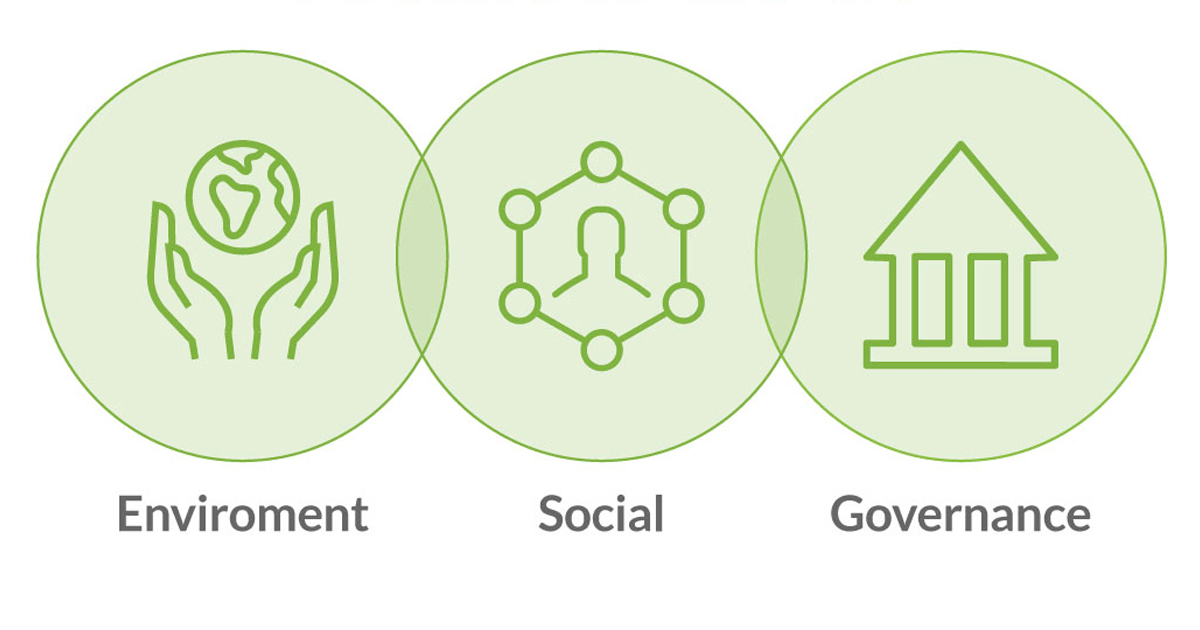
ESG is a set of criteria for assessing the sustainability of a business based on three factors: environmental, social, and governance. ESG helps businesses measure risk, compliance levels, and transparency to support governance and financial decision-making.
From a management perspective, ESG exists not to tell a story about "how good the business is," but to answer very practical questions: what risks could affect cash flow and business value, where is compliance, and are current operational decisions sustainable in the long term? Therefore, ESG is used as a system for measuring risk and performance, not as a slogan or a marketing campaign.
The biggest difference between ESG and "green commitments" lies in the fact that ESG requires indicators, data, and the ability to verify its effectiveness. An emissions reduction target, a welfare program, or a governance policy is only considered ESG when the business can demonstrate it with data generated during operations: costs, contracts, invoices, approvals, and relationships with suppliers. Without traceability to the original data, ESG remains merely a declaration.
From a financial perspective, ESG serves three main objectives: (1) long-term risk management (legal, supply chain, compliance), (2) transparent reporting for access to capital and partners, and (3) improved quality of operational decisions and budget allocation.
What is an ESG report? ESG reporting is a tool for disclosing environmental, social, and governance indicators according to certain standards, helping businesses demonstrate their sustainability capabilities to investors and partners. Here, ESG only truly "works" when operational data is standardized. Platforms like Bizzi are often used by CFOs as a reliable source of transactional data, ensuring ESG remains integrated with finance.
To properly understand ESG, it is necessary to clearly distinguish it from CSR, sustainable development, or Net Zero.
How does ESG differ from CSR and sustainable development?
ESG focuses on measuring and controlling risks using data; while CSR and sustainability are often oriented towards or involve a set of committed activities. ESG requires businesses to demonstrate their commitment through verifiable indicators and evidence, not just statements.
In many businesses, CSR (Corporate Social Responsibility) and sustainable development are often associated with "things that should be done": community programs, environmental policies, employee benefits, or social initiatives. These activities have value, but their nature is action and commitment. In contrast, ESG raises more difficult governance questions: how do these activities impact risk, costs, cash flow, and business value, and what evidence does the business have to support this?
This difference is evident when comparing four core criteria. In terms of objectives, CSR focuses on image and social responsibility, while ESG focuses on risk management and long-term effectiveness. Regarding target audiences, CSR primarily serves the community and brand communication, while ESG serves investors, banks, auditors, and management. In terms of data requirements, CSR can be described through stories and activities, while ESG requires quantitative, consistent, and traceable data. Most importantly, in terms of auditability, ESG requires evidence for independent verification, while CSR generally does not place such a strong emphasis on this requirement.
The key point to emphasize is: ESG must be verifiable. A tree-planting or plastic-reduction initiative only truly becomes ESG when the business can demonstrate the costs incurred, the suppliers involved, the approval process, the measured results, and the financial impact. Without this data chain, businesses risk "talking more than they act" or being suspected of greenwashing.
Therefore, ESG does not replace CSR. CSR is the "action" part, while ESG is the governance layer that sits above CSR, helping to measure, control, and integrate those activities into the financial decision-making system. In other words, CSR answers the question of what the business does, while ESG answers whether it is sustainable and controllable.
In practice, this distinction is clearly demonstrated in the data. CSR is typically documented as a program or initiative, while ESG needs to be measured by costs, invoices, and budgets associated with each activity. This is why CFOs often use platforms like Bizzi to transform CSR activities into verifiable ESG data: spending is purposeful, invoices serve as evidence, and budgets help monitor commitment levels.
Once the fundamentals are understood, the next question is: what are ESG standards and how many types are there?
What are ESG standards?
Many CFOs often ask: What are ESG standards? And which standards should businesses comply with? ESG standards are sets of guidelines or regulations that help businesses determine which ESG content to measure, how to disclose it, and to what extent to which they comply. Not all ESG standards are mandatory, and no business needs to implement all of them.
In practice, when we talk about "ESG standards," many businesses are often confused because it's not a single concept. ESG comprises three different layers, each addressing a specific governance question.
First, there are the frameworks. These are sets of principles that help businesses understand what to measure and why. Frameworks are usually flexible, allowing businesses to choose metrics that are appropriate for their operational context, industry, and level of data maturity. They serve to shape ESG thinking rather than force compliance.
Secondly, there are disclosure standards. These standards focus on external reporting: what metrics a business needs to disclose, and in what structure, so that investors or partners can compare and evaluate them. Disclosure standards require consistent data and clear definitions, but are usually not legally mandated unless referenced by the market or regulatory body.
Thirdly, there are regulatory requirements. This is the strictest layer, linked to the law or listing obligations. When a company falls into this category, it no longer has a choice of "to do or not to do," but must ensure compliance, be prepared to explain and audit.
A key perspective for CFOs is that businesses don't need – and shouldn't – implement all ESG standards simultaneously. Applying a wide range of standards when data isn't ready often leads to overly formal, costly, and potentially inaccurate reporting. More importantly, it's crucial to choose standards that align with management and market objectives: is the business focused on internal risk management, investor relations, or preparing for legal requirements?
Before choosing a standard, the CFO needs to answer a very practical question: what data does the business currently have at hand? Cost data, invoices, suppliers, contracts, and internal approvals form the basis for deciding which standard can be implemented. At this stage, platforms like Bizzi are often used to assess ESG data readiness: is the data centralized, traceable, and reliable enough for publication?
Clearly understand What are ESG standards? This helps CFOs choose the right framework to apply. Once you understand what ESG standards are, the next question is: which ESG standards are commonly used today and in what situations should they be used?
What are the currently popular ESG standards and when should they be used?
Currently, popular ESG standards include GRI, ISSB, and ESRS (alongside several climate-specific frameworks). Each standard serves a different purpose: reporting impacts to multiple stakeholders, disclosing information to investors, or complying with legal requirements in specific markets.
In fact, common ESG standards can be divided into three groups according to their intended use, rather than trying to remember their names or technical details.
The first group serves to report on overall impact and transparency. A typical example is GRI. This standard is suitable for businesses that want to convey a broad picture of ESG: environmental, social, and governance impacts on multiple stakeholders such as the community, employees, customers, and partners. GRI is often chosen when businesses want to build an initial ESG foundation or create independent sustainability reports.
The second group serves investors and capital markets. A prime example is the ISSB with its IFRS S1/S2 standards. This group focuses on “financial materiality”—that is, which ESG issues directly impact cash flow, risk, and enterprise value. Listed companies, those seeking international funding, or working with investment funds often prioritize this group of standards.
The third group relates to regional legal compliance, typically ESRS in Europe. ESRS are designed to meet mandatory requirements, with a high level of detail and stringent data requirements. Businesses with operations or supply chains involving the EU need to pay particular attention to this group.
The key takeaway is: there is no “best ESG standard” for every business. There is only the standard that best suits the company's goals, market, and current data capabilities. A business can start with GRI to build its data foundation, then gradually move to ISSB as needed for investor disclosures – provided the source data is clean and consistent.
This is why CFOs need to view ESG from a data systems perspective. When expense, invoice, and accounts receivable data are standardized at the transaction level, businesses can switch reporting standards without having to "start from scratch." Platforms like Bizzi help standardize input data, so that switching between ESG standards becomes a reporting problem, rather than an operational one.
The ESG standard answers the question "how to report." The following section will answer a more important question for CFOs: what is the ESG model and how does it operate so that ESG becomes a long-term governance competency?
What is the ESG model?
Question "What is the ESG model?The term "ESG" is usually applied after a business has understood the standard. An ESG model is how a business organizes its people, data, and processes to implement ESG in a consistent, controlled, and reportable manner. This model determines whether ESG is just a short-term project or becomes a long-term management capability of the business.
To understand What is the ESG model?It's important to recognize that ESG isn't a single department. Businesses can't simply "set up an ESG department" and expect environmental, social, and governance metrics to automatically take effect. In reality, ESG is a multi-departmental operational model where data and responsibilities are scattered across finance, accounting, purchasing, human resources, legal, and operations.

In this model, the CFO is typically the central coordinator. The reason lies not in the title, but in the nature of the job: the CFO controls cash flow, expenses, liabilities, internal controls, and reporting—that is, the core data sources that ESG can measure, verify, and validate. ESG, if not linked to financial data and operational controls, remains merely a statement.
The different perspective of this article is that instead of describing ESG as a sequential series of steps (survey → data collection → reporting), ESG should be viewed as a living, operating system where data is generated daily, continuously monitored, and reporting is merely the final “output.” When the model operates correctly, ESG doesn’t need to be “re-done every year.”
In that system, platforms like Bizzi don't play a strategic ESG role, but rather reside at the data and control layer: where expense documents, invoices, and accounts payable are standardized, tracked, and reconciled. An ESG strategy can only "work" when this layer is robust enough.
Once we understand that the ESG model is an operational system, the next question is: what components are needed for a practical ESG model to be implemented in reality?
What are the components of a viable ESG implementation model?
A successful ESG implementation model typically comprises five closely interconnected components: governance mechanisms, key performance indicators, data systems, internal controls, and reporting and improvement. Missing any one component makes ESG difficult to maintain and demonstrate.
First, clear assignment of responsibilities is crucial. ESG doesn't operate on a "everyone involved but no one accountable" model. Businesses need to clearly define who is responsible for the data, who approves policies, who compiles the data, and who is ultimately accountable for the reports. In many businesses, this role is concentrated in the CFO or the Finance Department because they control the data flow throughout the company.
Secondly, it's crucial to identify the key ESG indicators. Not every indicator in the standard needs to be monitored from the outset. Effective models always begin with indicators that have high financial impact, risk, and measurability, and then gradually expand. Choosing the wrong or too many indicators will cause the ESG model to "bottleneck" from the start.
Third, collect data from real-world operations. ESG data isn't found on slides or in individual surveys, but rather in costs, invoices, contracts, suppliers, and internal approvals. ESG models are only sustainable when they leverage existing operational data instead of creating new manual data entry flows.
Fourth – and most often overlooked – is data control and reconciliation. This is the layer that determines whether ESG is “audit-ready.” Control includes: whether documents are valid, whether expenditures comply with policy, and whether data is properly categorized for ESG purposes. Without this layer, ESG reporting is highly susceptible to inaccuracies or greenwashing.
Finally ESG report and continuous improvement. ESG reporting in finance It's not just for publication, but to provide feedback to management: which costs need adjustment, which suppliers are risky, and which policies are no longer appropriate. When the model works correctly, each reporting period helps the ESG system become "better," not heavier.
From an implementation perspective, financial tools play a specific role in this model. Expense management helps enforce ESG policies from the outset; invoices become primary evidence for environmental and social indicators; and accounts receivable data helps ensure transparency in B2B relationships within the supply chain. Bizzi supports these layers at the operational level, ensuring that ESG is not only accurate in reporting but also holds up when audits are needed.
In the entire ESG model, the most challenging component is data—and this is where many businesses encounter the biggest problems when they begin implementation.
Where does ESG data come from within the business?
ESG data doesn't just come from environmental or human resources reports; it's primarily found in daily operational data such as invoices, expenses, contracts, accounts payable, and internal approvals. Without proper control over these data sources, ESG will lack reliability and be difficult to verify.
In reality, most businesses look for “ESG data” as if it were a new type of data. However, ESG often doesn’t create new data but rather restructures how existing data is used. Information serving ESG purposes already exists within financial, accounting, and operational systems, but it hasn’t been labeled, categorized, or controlled according to sustainability goals.
The most common ESG data sources include:
- Expense: energy costs, waste treatment costs, training costs, compliance costs, spending on sustainability initiatives.
- Invoices and contracts: Input documents reflecting procurement activities, suppliers, environmental services, or social services.
- SupplierInformation regarding compliance, payment terms, transaction history, and credit risk.
- Payments and accounts receivableTransparency in B2B relationships, credit terms, and cash flow stability in the supply chain.
The problem isn't a lack of data, but rather that the data is scattered across multiple systems and departments: ERP, email, Excel files, purchasing software, HR systems, etc. When data is fragmented, businesses find it difficult to trace and demonstrate consistency.
The key takeaway here is that ESG isn't about "new data," but about reusing existing data correctly. When costs are properly linked to cost centers, invoices are fully tracked, and suppliers are categorized by risk criteria, businesses already have an ESG data foundation without needing to build a separate system.
At the operational level, platforms like Bizzi help centralize transaction data – invoices, expenses, accounts receivable – into a unified flow with audit trails and clear access control. This is a prerequisite for businesses to move towards ESG audit-ready status.
Having sufficient data is not enough; the key issue is: how to consistently control and reconcile ESG data?
How can ESG data be controlled and reconciled?
ESG data control requires businesses to verify the validity of documents, classify them for the correct purpose, and track the entire data processing process. This helps reduce the risk of discrepancies and avoid accusations of "greenwashing."
Many businesses talk about “ESG transparency,” but transparency doesn’t come from disclosing more information, but from clear and traceable control mechanisms. A reliable ESG system is typically built on three layers of control.
The first layer is the validity of the documentation. Invoices, contracts, and acceptance reports must be complete, legally correct, and match the actual transaction. If the original documentation is incorrect, all ESG KPIs based on it become invalid.
The second layer is compliance with internal policies. An expenditure may be legally valid but inconsistent with the company's ESG policy (e.g., purchasing from a supplier that doesn't meet evaluation criteria). Control at this layer ensures that ESG is not only accurate in terms of data but also aligns with strategic direction.
The third layer is proper ESG classification. Costs must be correctly labeled for the project, the item, and the measurement indicator. If misclassified, ESG reports may exaggerate or underestimate the actual impact.
In practice, this control cannot be done manually. At the invoicing level, automated systems can verify supplier information, tax identification numbers, contract terms, and store a complete audit trail. At the expenditure level, budget- and policy-based approval mechanisms help prevent overspending before funds leave the business. At the accounts payable level, reconciliation and tracking of payment relationships help ensure supply chain transparency.
Solutions like Bizzi support each layer of this control: automating invoice processing, enforcing spending policies, and tracking accounts receivable in real time. When each ESG KPI is traceable back to its original source and approval log, businesses can truly reduce the risk of greenwashing.
Once the data is under control, ESG is no longer just a "beautiful" report, but begins to directly impact costs and cash flow.
How does ESG affect business costs and cash flow?
ESG reporting in finance It is not separate from regular management reporting. Instead, ESG reporting in finance It is an expansion of the existing reporting system, adding risk and compliance indicators that impact business value.
ESG impacts corporate finance by reducing risk, improving access to capital, and stabilizing cash flow. Businesses with transparent ESG data and good controls generally achieve more favorable financial conditions.
First, ESG impacts the cost of capital and the cost of risk. Businesses with transparent governance and verifiable data often reduce their risk premium when dealing with banks or investors. When risk is reduced, credit terms and covenants can be improved.
Secondly, ESG strengthens internal spending discipline. When costs are aligned with objectives and tracked according to ESG policies, businesses avoid wasteful or uncontrolled spending. Measuring Budget vs. Actual for sustainability initiatives helps ensure ESG doesn't lead to unplanned cost overruns.
Third, ESG impacts partnerships and supply chains. Transparency in accounts payable and payment terms builds trust with suppliers, reducing disputes and cash flow disruptions. A stable supply chain helps businesses maintain optimal working capital.
At the operational level, when accounts receivable are systematically tracked and reminders are issued, businesses improve their Date of Sale (DSO) and shorten the Cash Conversion Cycle. When spending is controlled before payment, ESG budgets stay within limits and avoid sudden liquidity pressures.
ESG, therefore, is not just about reputation, but a system for reducing financial volatility. When data is standardized and controlled right from the transaction level, ESG becomes a tool that helps CFOs clearly see risks – optimize costs – and protect long-term cash flow.
FAQ on ESG for CFOs/Accountants
What does ESG mean in the context of a CFO?
In the context of CFOs, ESG is not just about "sustainability reporting," but rather a set of criteria that helps measure risk and operational efficiency using verifiable indicators. ESG is directly related to financial materiality (the degree of impact on financial results), risk premium (the additional cost of capital due to risk), and the requirement for an audit trail (the ability to trace back to the original documents).
Are ESG standards mandatory?
Not all ESG standards are mandatory. Some businesses adopt them based on market demand, investor requirements, or disclosure regulations. In many cases, businesses voluntarily adopt them to increase transparency and prepare for independent audits (assurance).
How does GRI differ from ISSB (IFRS S1/S2)?
GRI typically provides broad-based impact reporting for a wide range of stakeholders (targeted at various groups such as the community, employees, and partners). In contrast, ISSB (IFRS S1/S2) focuses on information directly related to the financial interests of investors (investor-focused), emphasizing financial materiality and verifiable disclosures.
What is the minimum ESG model a CFO needs to have?
At a minimum, a CFO needs a model that includes: clear assignment of responsibilities (RACI – who is responsible, who approves, who implements), key performance indicators, a data dictionary (unified definition of data fields), a data pipeline (how data is collected and processed), an internal control matrix, and a plan-result comparison report (variance analysis).
How can we automate the collection of "green spending" data from invoices?
Businesses need to standardize their "green spending" categories, then tag invoices by project, department, or expense center. Exceptions must be identified and the exception rate tracked. Most importantly, each metric must be accompanied by a supporting documentation pack.
How can we reduce the risk of "greenwashing" when reporting ESG?
Reducing the risk of "greenwashing" requires designing three layers of control:
- Valid documents
- In accordance with internal policy.
- Correct ESG classification
Each indicator must be traceable back to its original source (traceability). In addition, periodic control testing is required.
Should ESG costs be capitalized or recognized as operating expenses?
Whether an expense is capitalized (CAPEX – capital expenditure to create long-term assets) or recognized as an operating expense (OPEX – recurring operating expenses) depends on the nature of the expense and the accounting standards applied. If the expense generates long-term economic benefits or creates an asset, it may be considered capitalized; if it only maintains operations, it is usually recognized as an operating expense according to the accounting recognition criteria.
How does ESG affect WACC and the likelihood of obtaining preferential loans?
Businesses with transparent ESG practices can reduce the cost of debt and lower the risk premium, thereby impacting the WACC (weighted average cost of capital). Good ESG also helps improve creditworthiness (covenant loan terms) and increase cash flow stability.
What additional data fields does an accounting system need to measure ROI in ESG?
To measure the effectiveness of ESG investments (ROI), the accounting system should include: project/initiative code, ESG-based supplier labels, expenditure categories, cost centers, approval codes, and document links. All of these need to be clearly defined in a data dictionary to ensure auditability.
What "evidence" is included in an ESG readiness audit?
Prepared for an ESG audit requires: invoices, contracts, purchase orders (POs), approval logs, internal policies, index calculation methods, and supplier evaluation records. Businesses may be subject to limited or reasonable assurance audits. Most importantly, data lineage must be traceable (the origin and journey of the data).
How do ESG reports in finance differ from regular financial reports?
ESG reporting in finance Expanding the scope of traditional reporting by adding indicators of environmental, social, and governance risks that impact financial materiality. While financial reporting focuses on the past, ESG reporting in finance It also measures future risk and long-term sustainability. This is a tool that helps CFOs integrate ESG factors into financial decision-making and risk management processes.
Conclude
ESG is not a standalone report, but rather a data-driven management system. For CFOs, the value of ESG lies in its ability to measure risk, control costs, and demonstrate transparency through auditable financial evidence. Businesses begin ESG most effectively not from standards, but from standardizing transaction data – where ESG truly takes shape.
Monitor Bizzi To quickly receive the latest information:
- Facebook: https://www.facebook.com/bizzivietnam
- Linkedin: https://www.linkedin.com/company/bizzi-vietnam/
- Youtube: https://www.youtube.com/@bizzivietnam