


When data discrepancies occur, is responsibility being "diluted" among departments? When payment processes are delayed, is the bottleneck due to all decisions being concentrated at the CFO's desk? In the modern financial environment, the RACI matrix is not simply a project management tool, but a core component of the internal control system.
This article by Bizzi will help you restructure your authorization matrix from a static Excel model to an automated operating mechanism, ensuring the principle of separation of duties and optimizing capital utilization efficiency.
What is the RACI matrix in financial management?
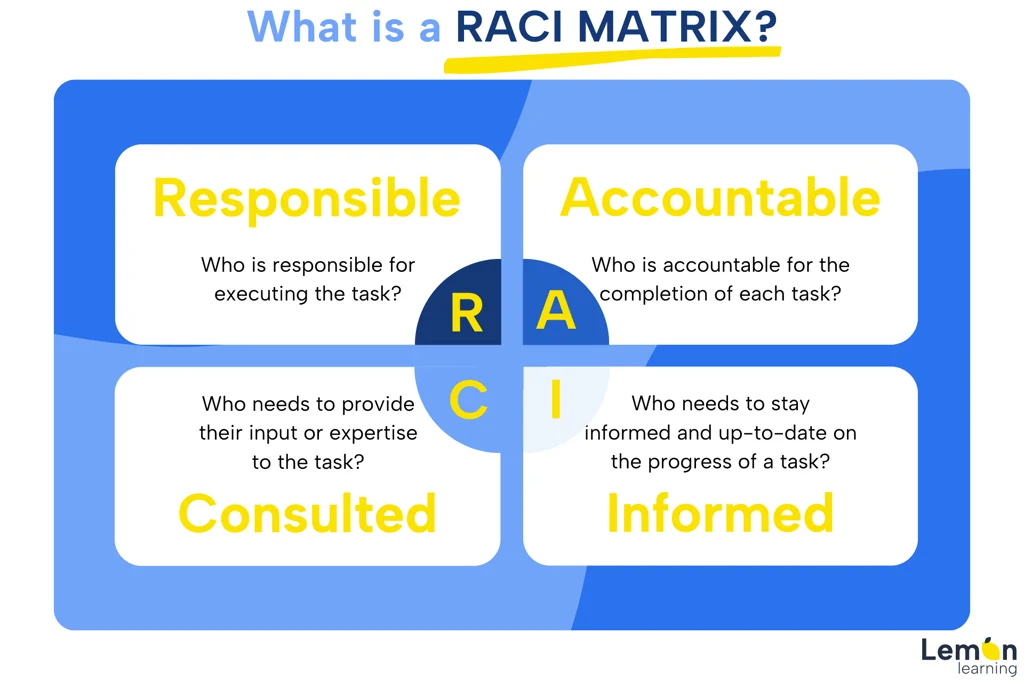
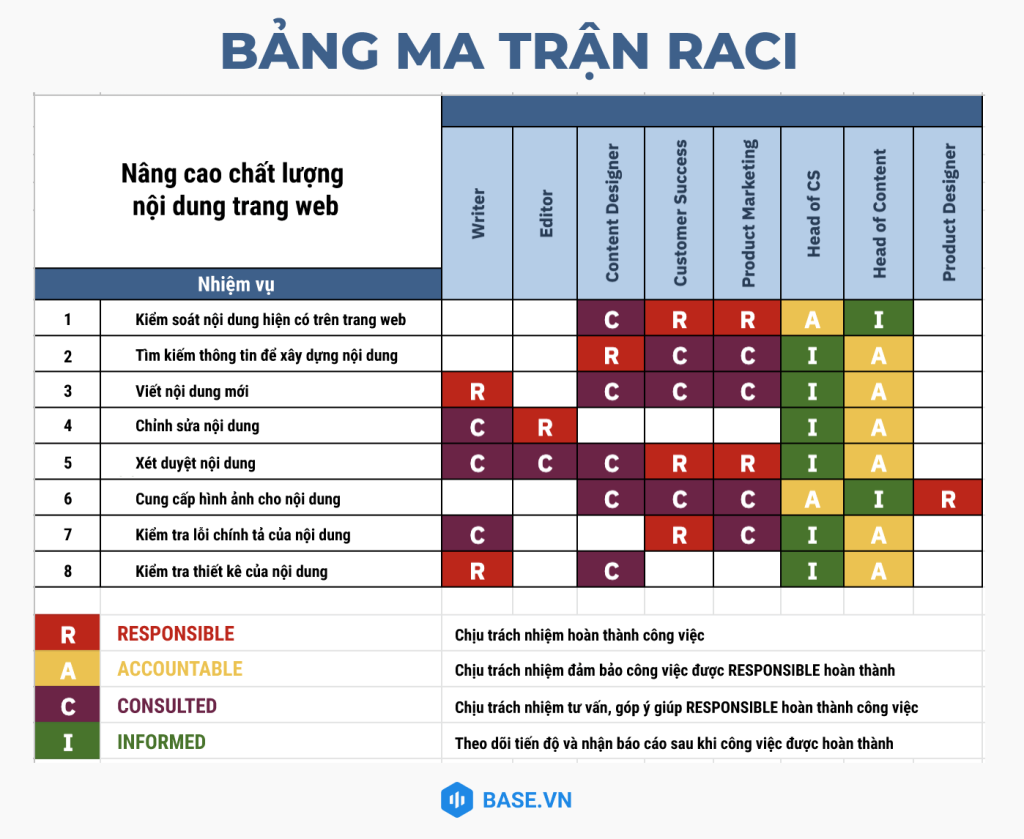
In financial management, assigning responsibility is not simply about "dividing tasks," but about establishing clear accountability mechanisms for legal and audit risks. The RACI matrix in finance is a tool for defining the responsibilities of accounting personnel according to four roles: R (Execution), A (Approval), C (Consultation), and I (Notification). This model helps establish clear delegation processes, ensuring compliance and data transparency.
When asking the question "What is the RACI matrix?"?", many businesses think of project management tools. However, in finance, RACI has legal implications. This is an assignment mechanism. Accountability – ultimate accountability should any wrongdoing occur.
The key lies not in the R (Responsible), but in the A (Accountable). The CFO needs RACI to answer a crucial question: "Who is accountable to the tax authorities if this invoice is rejected?"
If missing accounting authorization matrixThe common consequences are:
- Overlapping authority
- It is unclear who is ultimately responsible.
- Increased risk of internal fraud (fraud)
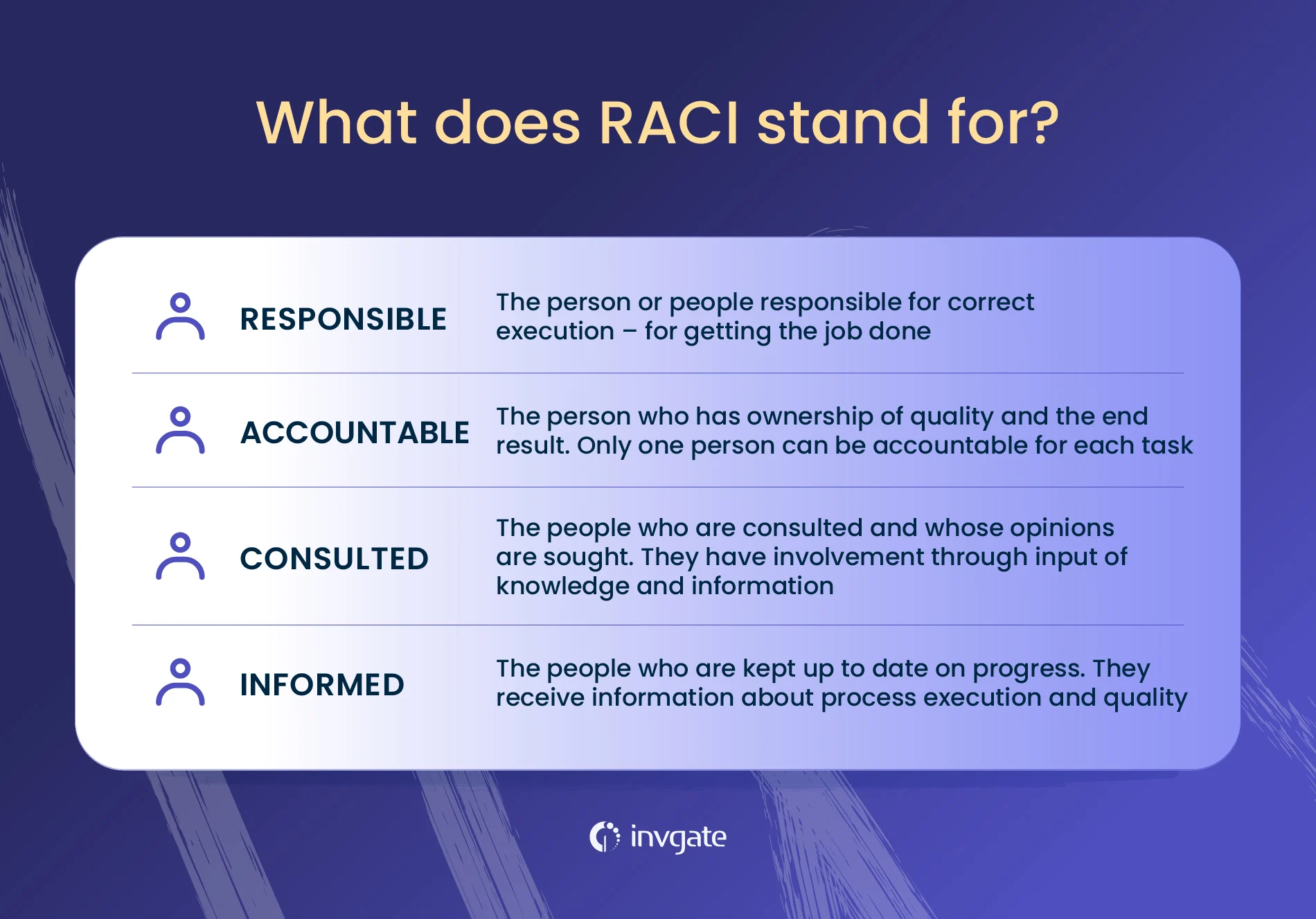
A golden rule in finance: Each business operation has only one letter A.When two people are "responsible" for a single expense item, in reality, no one is held accountable.
To better understand the power of this tool, we need to decipher the details of each RACI role within a specific business process.
Decoding the 4 roles of RACI in accounting practice.
Understanding each role correctly helps avoid the "virtual R" or "figurehead A" situations – two common loopholes in internal control systems.
In accounting practice, Responsible (R) is the data entry and reconciliation staff; Accountable (A) is the Chief Accountant or CFO who approves payment orders; Consulted (C) is the tax or legal specialist; Informed (I) is the CEO or budget manager who receives the results report.
During the payment process:
- R (Responsible): Payment accounting perform 3-way matching Between Purchase Order (PO) – Grand Prize Receipt (GRN) – Invoice.
- A (Accountable)Payment Authorization Person. This is the person who "holds the money".
- C (Consulted)Controller or tax specialist checks the validity of VAT and CIT.
- I (Informed)The purchasing, sales, or budget department receives payment status notifications.
Two common mistakes:
- Firstly, "Virtual R": employees only enter data without physically checking the documents.
- Secondly, "a puppet": leaders sign off on numerous documents due to overload without reviewing the files.
Both weaken the effectiveness of RACI matrixClearly defining these four roles forms the basis of the most important risk management principle: Separation of roles.

Why is RACI the foundation of the principle of separation of roles?
In internal control, the Segregation of Duties (SoD) is a vital principle.
The RACI matrix is a tool for enforcing the SoD principle by preventing an individual from simultaneously holding R and A roles within the same process, thus mitigating the risk of embezzlement and internal fraud.
A prime example is a "Ghost Vendor." When an employee has both the right to create a vendor (R) and the right to approve payments (A), they can:
- Create fake suppliers
- Invoice
- Self-approved payments
If not accounting authorization matrix Clearly, the risk of asset loss is very high.
RACI helps visualize permission conflicts directly on a single dashboard. This is the first step before configuring it on ERP or management software. So how do you build one? RACI matrix Accurate and operational?
The 5-step process for building an accounting authorization matrix.
Building RACI is not a theoretical exercise. It's a strategic decision that directly impacts cash flow.
The process of building an accounting authorization matrix consists of 5 steps: (1) Listing the financial transaction categories; (2) Identifying personnel positions; (3) Assigning RACI roles; (4) Checking SoD compliance; (5) Configuring on ERP system or management software.
- Step 1: List all business models such as P2P, O2C, R2R, and Tax.
- Step 2: Define roles based on actual job titles (CFO, Chief Accountant, AP, AR).
- Step 3: Assign RACI and define the Approval Limit. This is where the CFO makes strategic decisions about delegation.
- Step 4: Review SoD conflicts. Ensure R does not overlap A in the same transaction.
- Step 5: Transition from a "paper matrix" to a "digital matrix." Most businesses fail because they stop at Excel files. When personnel changes, the file isn't updated in a timely manner.
Step 5 is what determines the success or failure of RACI matrix.
RACI application in P2P process automation.
When integrated into the Procure-to-Pay process, RACI's value becomes most evident.
In the P2P automation process, the RACI matrix is transformed into an Approval Workflow. The system automatically assigns the R role to the invoice processing bot and the A role to the manager based on budget limits.
Instead of scrambling for signatures, the system routes documents to the right person in role A. The concept of "Dynamic Accountable" allows for:
- Invoices under 5 million VND: Approved by the department head.
- Invoices over 50 million VND: Approved by CFO.
Excel files cannot automatically change this logic.
Visual comparison
| Criteria | Manual RACI matrix (Excel) | RACI Automation Matrix (Bizzi) |
| Update | Static – manual editing | Dynamic – updates based on role |
| Execution | Based on self-discipline | Mandatory – Hard Stop |
| Control A | Difficult to control limits | Automatically block over budget |
| Audit marks | No history saved. | Save detailed logs. |
| Risk | High | Short |
In this model, Bizzi Bot plays the role of a superior R: automatically collecting invoices, checking tax identification numbers (MST), and performing 3D reconciliation. Bizzi Expense helps CFOs configure DOA and control A roles according to the actual budget. The result is clean data and real-time cash flow decision-making capabilities.
However, good delegation alone is not enough. The CFO needs to measure whether the system is creating bottlenecks.
The RACI Health Check formula assesses employee performance.
One RACI matrix Efficiency must be balanced by the burden of responsibility.
RACI Health Check is a decentralized matrix health assessment method based on the allocation of roles, avoiding concentrating too many "A"s in one person or too many "R"s in a single task.
Accountability Load = (Total number of A roles / Total number of tasks) × 100%
- If the CFO holds the 90% A → Overload.
- If a Task has two A's → Conflict.
- If there is no R → Orphan Task.
This provides a quantitative basis for deciding whether to delegate authority or restructure personnel.
Legal risks of incorrectly establishing the RACI matrix.
Error in accounting authorization matrix This not only slows down the process but also entails legal risks. Incorrectly setting up the RACI matrix can lead to violations of accounting regulations, asset losses, and the risk of expense disallowance due to the lack of valid signatures from authorized personnel.
If the person who prepared the form (R) signs on behalf of the person who approved it (A), this constitutes document forgery.
Independent auditors will compare the authorization matrix with the list of Authorized Signatures. If there is a discrepancy, the business must provide an explanation. Another serious issue is the lack of an audit trail. Excel files do not save edit history. Meanwhile, automated systems like Bizzi record the entire log: who approved, when, and from which device.

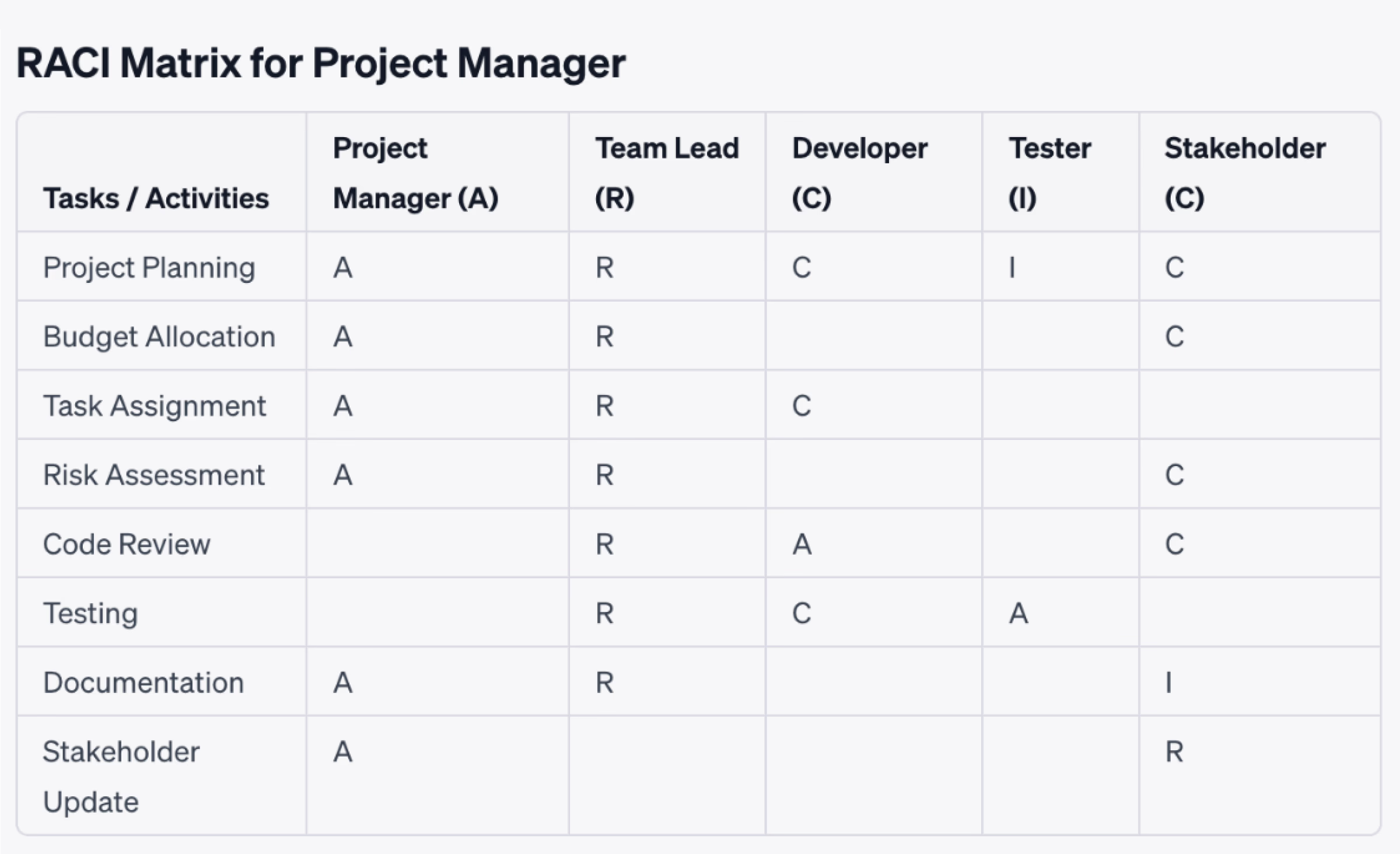
Download the RACI Excel matrix template for the finance department.
You can start by building RACI matrix model Standard for the finance department. The sample file includes:
- Vertical column: CFO, Chief Accountant, Account Manager, Account Officer
- Horizontal rows: P2P, O2C, R2R, Tax
However, Excel should only be used for conceptual purposes. For practical operation, businesses need to configure the system. You can convert this RACI matrix template into an automated browsing flow in Bizzi Expense in just 15 minutes through a real-world configuration demo.
Frequently Asked Questions about the Accounting Authorization Matrix
Most CFOs only begin to pay attention to the accounting authorization matrix when an incident occurs: data discrepancies, delayed payments, or audit risks. Below are the most practical questions that finance departments often ask when implementing or restructuring the RACI matrix.
1. What is the core difference between Responsible (R) and Accountable (A) in expense approval?
This is a fundamental question when conducting research. What is the RACI matrix? in a financial context.
Responsible (R) is the person who performs the tasks: data entry, invoice verification, document reconciliation, and payment processing. They ensure procedural completeness.
Accountable (A) is the person with the final approval authority and is accountable if the transaction violates budget, law, or internal regulations. A assumes the legal risk.
Common mistakes in accounting authorization matrix To be:
- The person in the role of R thinks they are "just following orders".
- Person in role A signs off on a large number of applications without checking the content.
In auditing, responsibility will be attributed to the person holding the letter A, not R. Therefore, when designing... RACI matrixThe CFO needs to ensure:
- Each transaction has only one letter A.
- A had enough time and data to make a decision.
If A becomes overloaded, the system will create a "dummy A," disabling the entire control mechanism.
2. Do small and medium-sized enterprises (SMEs) with only 2-3 accountants need the RACI matrix?
The answer is yes, and it's even more necessary than in large businesses. In SMEs, the same person might be responsible for bookkeeping, cash handling, and payments. This is a high-risk environment without it. accounting authorization matrix clear.
Without RACI, the entire P2P process could be in the hands of one person. In SMEs, the goal of RACI matrix The goal isn't to create complexity, but to minimize conflicts of interest. Just ensure the basic principles are met:
- Cashier ≠ Bookkeeper
- File creator ≠ Approver
Even with a small staff, a CFO still needs one. RACI matrix model Simplify to avoid the risk of internal fraud.
3. Should the RASCI variant (with added Support) be applied to the accounting department?
In many cases, RASCI is more suitable than RACI. The S (Support) role is particularly useful in:
- Month-end Close
- Year-end audit
- Prepare consolidated reports
For example, in the closing process, one accountant might hold the primary role of R, but need 1–2 people to assist in data collection. Without adding S, the R role would be overloaded.
However, CFOs should note:
- Do not turn S into a “second R”.
- There's still only one "A" for each item.
The RASCI variant helps accounting authorization matrix More flexibility, but without blurring accountability.
4. How do you handle the situation when the person in role A (CFO/Chief Accountant) is away on business or leave?
This is a common bottleneck that causes the payment process to "freeze". If RACI matrix Without a Delegation of Authority (DOA) mechanism, the entire browsing flow will stop when A is absent.
The standard solution includes:
- Set up A2 (Accountable backup) according to the limit.
- The regulations clearly specify the validity period of the authorization.
- Record audit trail for all authorized transactions.
In accounting authorization matrix In modern systems, the letter A doesn't represent a fixed individual role, but rather a job title and budget allocation. When systems are digitized, the transfer of authority can be done instantly without disrupting the control structure.
5. Can the RACI matrix replace a Job Description (JD)?
Are not.
A JD (Job Description) describes the static duties of a position.
RACI Matrix It describes the dynamic interaction between positions within a specific process.
For example:
The job description for an accounts payable clerk states: "Check and process invoices."
But in accounting authorization matrixThat same job may include:
- R: Accounts Payable
- C: Tax Inspector
- A: CFO
RACI does not replace JD, but clarifies accountability in each transaction. It is an operational tool, not a personnel document.
6. When building the RACI matrix model, should it be designed by department or by process?
Designing through a process is always more effective.
Many businesses are established. RACI matrix model by department (Accounting, Purchasing, Sales). This approach can easily lead to a "silo" and miss out on cross-departmental interaction.
The CFO should design the financial process accordingly:
- P2P (Procure-to-Pay)
- O2C (Order-to-Cash)
- R2R (Record-to-Report)
- Tax Adjustment
When designing according to a process, accounting authorization matrix This will reflect the actual workflow, rather than the organizational structure.
7. How can we measure if the RACI matrix is working effectively?
A CFO can use three key metrics:
- First, Accountability Load: the ratio of A-levels to the total number of tasks performed by an individual. If it exceeds 60–70%, the risk of overload is high.
- Secondly, Approval Cycle Time: the average time from application creation to approval. If it's too long, the matrix may be creating a bottleneck.
- Thirdly, Exception Rate: the percentage of transactions returned due to errors. If it's high, the role R is playing is not effective.
One RACI matrix Good practices not only clearly define responsibilities but also optimize operational efficiency.

8. When is it necessary to restructure the accounting authorization matrix?
The CFO should review this. accounting authorization matrix when one of the following situations occurs:
- Businesses expand their scale or add branches.
- Organizational structure changes
- Changes to budget limits
- Serious errors discovered in the audit.
RACI is not a "one-time" document. It's a living structure that needs updating as the business model changes.
9. Is Excel sufficient to run RACI matrices?
Excel is enough for initial design thinking. But not enough for execution.
The problem with the Excel file:
- There is no mechanism to block transactions exceeding the limit.
- No audit trail editing
- Do not automatically route files.
As the number of transactions increases, RACI matrix It needs to be configured into an automated workflow to ensure "System Enforcement" instead of relying on human effort.
Conclusion: From paper-based authorization matrices to live control systems
Understand correctly What is the RACI matrix? That's not enough. The real value lies in the transformation. accounting authorization matrix Converting a static Excel file into a mandatory execution mechanism on the system.
For CFOs, this is not just a human resources management tool, but the first line of defense against fraud, losses, and legal risks. When integrated into an automated P2P process, the RACI matrix becomes a real-time cash flow monitoring engine. If Excel helps you design your mindset, then a platform like Bizzi helps you execute and protect that mindset with data, audit logs, and automatic budget overrun prevention mechanisms.
In the context of increasing auditing and risk management pressures, standardization and digitalization are crucial. RACI matrix model It is no longer an option, but a mandatory requirement to ensure the financial sustainability of a business.
To receive a one-on-one consultation on a personalized solution for your business, schedule an appointment here: https://bizzi.vn/dang-ky-dung-thu/