


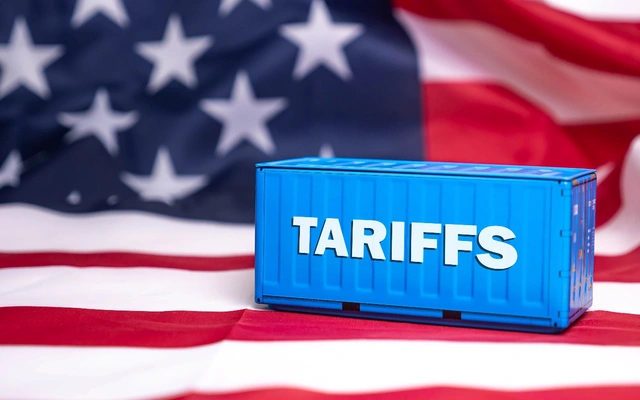
What is reciprocal tax and why do businesses need to understand it correctly? Reciprocal tax is not just a concept of "tit-for-tat" in international trade, but an import tax policy that directly impacts the cost of goods sold, cash flow, origin of goods, and the level of data transparency for businesses. For CFOs and export businesses, misunderstanding what reciprocal tax is can lead to misassessment of costs, erode profits, and put serious pressure on liquidity.
What is reciprocal taxation and why is this concept often misunderstood?
What is reciprocal taxation? Countervailing duties are additional import tax measures that a country applies in response to trade practices deemed unfair by another country. In practice, this concept is often confused with retaliatory duties and countervailing duties (anti-subsidy duties).
The confusion arises from the fact that "counter-tax" is not a familiar accounting tax, but rather... trade policy toolsThis arises from relations between countries, not from domestic business activities.
What are some common misconceptions about reciprocal taxes?
-
Countervailing tax not VAT they too not corporate income tax
-
This is additional import tax, collected at customs
-
Taxes arising from international trade policy, regardless of whether the business makes a profit or a loss.
Two common meanings of "counter-tax" in Vietnam
In practice, "counter-tax" is often understood in two different ways:
-
Retaliatory tariff
This applies when one country directly retaliates against an unfavorable trade policy from another country. -
Countervailing duty (CVD)
This applies following a subsidy investigation, when imported goods are determined to have unfairly benefited from the exporting country's government.
These terms often appear together in groups. trade remedies, in order to process unfair trade practicesFrom a CFO's perspective, correctly identifying... What is reciprocal tax? Whether it's A or B is not just a matter of terminology, but a direct decision. Types of data, documents, and expenses that need to be controlled..
With Bizzi, CFOs can immediately use it to identify tax documents:
-
Step 1: The CFO needs to clearly categorize what the "counter-tax" in question is. Retaliatory tariffs or CVDs to determine which data group needs to be prepared (commercial or cost-origin).
-
Step 2: Standardize all input invoices on Bizzi so that all import-related costs are included. valid, consistent, and traceable documents when a request for explanation arises.
Once the concept is properly understood and the data is standardized, the next question the CFO needs to answer is: When will the retaliatory tax actually be applied, and which businesses are at risk?
When does a country apply retaliatory tariffs, and what is the real purpose?
When are reciprocal taxes applied? Countervailing duties are applied when a country believes that imported goods are causing or threatening to cause serious damage to its domestic industry, or when it needs to respond to unfavorable trade policies from another country.
Common triggers that lead to reciprocal tariffs.
-
Subsidy from the exporting country's government
-
Dumping below domestic market price
-
Trade barriers or discriminatory treatment
A key point for CFOs to note is: reciprocal taxes. not aimed at "taxing just enough"which aims rebalancing competitive advantage.
Practical scope of application
-
Not for mass application
-
Apply only as follows specific product category, specific origin
-
Closely connected Rules of Origin (ROO) and level technology medicine
Unlike many articles that only address the question "why is it subject to tariffs?", a financial management perspective needs to delve deeper: Is the company's industry at risk, and what data will be scrutinized by the regulatory authorities? In practice, reviewing input invoices by supplier, industry, and origin helps CFOs identify expense categories that are likely to be investigated early, rather than waiting until they are asked to explain. Understanding the policy context is only the first step. What CFOs should be more concerned about is... How do countervailing duties affect the cost of goods sold and actual profit?.
Bizzi assists in preparing data before being called out.
-
Step 1: Use Bizzi Bot to review all incoming invoices according to supplier – product category – country of origin, instead of performing discrete manual checks.
-
Step 2: Attach cost data – supplier – origin a unified access stringThis helps CFOs identify risk areas early on if an industry is placed under investigation.
Understanding the new policy context is only a necessary condition. The next issue is... How do reciprocal taxes directly impact cost of goods sold and profit?.

How do reciprocal taxes affect a company's cost of goods sold and landed cost?
What is the direct impact of reciprocal taxes? Countervailing duties directly increase the tax. paid cost of imported goods, thereby pushing Cost of Goods Sold (COGS) rising and eroding gross profit margin if businesses fail to adjust their selling prices or cost structure in time.
The nature of finance needs to be clearly understood.
Countervailing duties are not just "another tax line," but become... a component of landed cost:
-
Landed Cost ↑ → COGS ↑ → Gross Margin ↓
-
Ability price pass-through dependent on market competitiveness
Commonly used CFO formula:
- Landed Cost = Purchase Price + Shipping + Insurance + Import Tax + Customs Clearance Fee
- Gross Margin (%) = (Revenue – COGS) / Revenue
The key difference in the reciprocal tax calculation is that, without properly separating costs, businesses can easily misjudge the effectiveness of each product or market. In practice, many CFOs choose to track costs by batch or project to detect early changes in landed costs, rather than waiting for the consolidated cost of goods sold report at the end of the period. When the cost of goods sold increases, the problem doesn't stop at profit. Cash flow becomes a more dangerous bottleneck.
Bizzi – How to control landed costs in practice
-
Step 1: Bizzi Bot automatically extracts input invoices and categorizes component costs. paid cost per shipment.
-
Step 2: Bizzi Expense tracks cost fluctuations according to shipment/projectThis helps CFOs detect early signs of cost of goods sold "bloating" instead of waiting for the end-of-period report.
When the cost of goods sold increases, the risk doesn't stop at profit. The influx of new capital is creating greater pressure.
How do reciprocal taxes put pressure on cash flow and working capital?
Countervailing duties have an impact. cash flow how?
Countervailing duties require businesses to Cash payment immediately at the customs clearance stage., reduce Operating Cash Flow and increase pressure Working Capital, especially in the context of already thin profit margins.
Actual financial impact
-
Taxes must be paid before goods are sold.
-
Cash flow is "stuck" in inventory.
-
The cash conversion cycle is prolonged
Key metrics CFOs need to monitor:
- Working Capital = Current Assets – Current Liabilities
- Cash Conversion Cycle (CCC) = DIO + DSO – DPO
Unlike many analyses that only focus on profit, the tax analysis problem is essentially a more complex problem. liquidityBusinesses may be profitable on paper but still lack sufficient cash to keep their operations running.
In practice, managing and tracking accounts receivable involves several aspects. DSO By proactively reminding customers about outstanding debts, CFOs can offset cash flow losses caused by tax advances.
When cash flow is strained, the CFO is forced to return to the original question: Are the origin data and input invoices "clean" enough to avoid further risks?
Bizzi helps CFOs relieve cash flow pressure by:
-
Step 1: Bizzi ARM tracking Customer-specific DSOAutomatic debt reminders help shorten the cash flow cycle.
-
Step 2: CFOs use actual cash recovery data to offset the portion of cash flow "stuck" due to reciprocal taxes, instead of relying on subjective forecasts.
When cash flow is strained, the CFO is forced to return to basics: Are the origin data and input invoices clean enough?


What is the relationship between countervailing duties, origin of goods, and input invoices?
How are reciprocal taxes directly related to origin of goods?
Countervailing duties, particularly countervailing duties (CVDs), are closely linked to Rules of OriginBusinesses must demonstrate their localization rate through... valid input invoice and long-term data retrieval systems.
Core connection
-
ROO → requires explicit input data
-
Increased localization → increased supplier risk
-
Invalid invoices → legal risks & tax recovery
Unlike the general advice to "increase localization," the crucial issue is... proven by dataThe longer and more consistent the audit trail, the lower the risk of being audited later.
When implementing Bizzi, businesses can have greater peace of mind thanks to a robust post-audit process:
-
Step 1: Bizzi Bot checks the validity of input invoices according to Tax ID and accounting logic.
-
Step 2: Storing and retrieving invoices and documents. 5–10 years, ensure audit trail Complete when undergoing a tax audit or investigation.
Frequently Asked Questions: What is reciprocal tax?
Is the reciprocal tax VAT or corporate income tax?
No. Countervailing duties are additional import taxes, collected at customs, that directly increase the cost of goods sold and cash outflows. They are not deductible like VAT and are not levied on profits like corporate income tax.
How is a reciprocal tax different from an anti-dumping tax?
Countervailing duties are applied when an exporting country subsidizes a business. Anti-dumping duties are applied when a business sells goods below market price. These two types of duties have different objectives and can be applied simultaneously.
Does the reciprocal tax apply to all goods?
No. This only applies to specific items and countries/territories as concluded by the investigation.
How long do businesses need to retain invoices to prove origin of goods?
Post-audit practice requires a minimum retention period. 5–10 yearsThis includes invoices, Certificates of Origin (CO), customs declarations, contracts, and bills of lading.
When taxes rise, should the priority be improving the Data Storage and Offloading (DSO) or reducing inventory?
Priority for reduction DIO First, release cash quickly, then optimize DSO in parallel.

Conclude
Understand correctly What is reciprocal tax? This not only helps businesses avoid confusion regarding tax policies, but also directly determines how they can exercise control. origin, cost of goods sold, and cash flow in the long term. In fact, reciprocal taxes do not "hit" accounting profits, but hit them straight to cash out and working capital, where data discrepancies are very difficult to correct once they have occurred.
For the CFO, the challenge isn't about reacting when taxes are implemented, but about their ability to... Prepare clean data in advance to avoid being caught off guard.Valid input invoices, clear traceability of origin, and consistent cost breakdown for each shipment. This is also why many businesses are switching from manual management to Standardizing Finance Ops, where expense data – invoices – accounts payable are interconnected and readily available for audits, post-audits, or commercial investigations.
In a context where tax risks are increasingly linked to data, the use of platforms like Bizzi Help the CFO:
-
Standardize and store invoices and documents for the long term.
-
Ensure consistent audit trail for cost of goods sold and origin.
-
Track the impact of reciprocal taxes on landed cost and cash flow in real time.
When understood correctly What is reciprocal tax? By effectively managing data directly from Finance Ops, businesses not only reduce the risk of tax arrears but also maintain a proactive stance in all trade policy scenarios. To receive advice on a specialized solution tailored to your business, register here: https://bizzi.vn/dang-ky-dung-thu/