


Cost-effectiveness metrics help businesses measure the level of revenue, profit, and cash flow generated from each dollar spent. CFOs need to combine financial indicators with real-time cost data to identify waste and optimize operational efficiency.
This article will analyze the role of cost performance metrics and how they support CFOs in making financial decisions.
What are the metrics used to evaluate cost efficiency?
Cost efficiency indicators are metrics used to determine:
- How much is the business spending?
- Does that expenditure create value?
- Is cost control effective or ineffective?
These metrics help businesses assess the relationship between Costs – Revenue – Profit, instead of just looking at the total cost incurred.
The essence of cost-effectiveness metrics is not to evaluate costs. standing aloneAlways consider costs in relation to: Revenue – Profit – Output – Operational efficiency.
A business with high costs is not necessarily inefficient if those costs generate commensurate revenue and profit. Conversely, low costs but misallocated funds can still reduce business efficiency.
The purpose of cost efficiency evaluation indicators is:
- Measuring resource utilization efficiency
- Compare the costs with the results achieved.
- Identifying unreasonable and wasteful expenses.
- Early warning of financial and tax risks.
In fact, this is not just a tool of accounting, but... Management tools for CFOs and senior management.This helps in making decisions about cutting, optimizing, or reallocating costs.
Why should CFOs focus on evaluating cost efficiency instead of cutting costs?
Cost reduction strategies in businesses While cost-effectiveness assessment doesn't guarantee improved profitability, it helps CFOs understand which expenses are creating value and which are reducing profit margins. Cut costs It helps with short-term survival, but not long-term survival.cost-effectiveness assessment helping sustainable growth
For the CFO, the goal isn't to spend the least, but to... Every dollar spent must create clear value and the risk must be controlled..
Cost efficiency metrics help distinguish between "good costs" and "bad costs".
Through cost efficiency metrics, CFOs can identify which expenses generate revenue, profit, or competitive advantage, and which expenses do not yield commensurate results. This forms the basis for... cost optimizationInstead of making cuts impulsively.
- Not all expenses need to be cut.
- There are costs that, the more you spend, the more value you create.
Measuring cost effectiveness helps in data-driven decision-making.
During periods of business expansion, digital transformation, or long-term investment, cost cutting can be counterproductive to growth strategy. Conversely, measuring effectiveness helps CFOs understand... Where should we invest more, and where should we exercise stricter control?, ensuring growth goes hand in hand with profitability.
- Avoid making decisions based on emotions.
- Reduce internal conflict by cutting costs.
From a role of "control" to a role of "strategic partner"
When applying cost-effectiveness metrics, the CFO shifts from a "cost-blocking" role to a more proactive one. spending guidelines, working alongside the CEO and departments to use the budget more effectively.
When CFOs base their decisions on clear metrics such as cost-to-revenue ratio, cost per unit, or cost per customer, decisions become more transparent and persuasive. This helps the leadership team agree on spending strategy, instead of debating "which department should be cut."
Indicators for evaluating cost efficiency help detect risks early.
Many businesses only discover problems during tax audits or when profits have already declined. Performance indicators play a crucial role. early warningThis helps CFOs make timely adjustments before risks become actual losses.
- Unusual cost increase
- Costs exceeding the ceiling or deviating from the schedule.
- Expenses that risk being disallowed during tax settlement.
What are the key performance indicators used to evaluate cost efficiency?
An effective CFO doesn't just look at total costs, but simultaneously monitors all three groups of metrics to ensure the business is profitable, operates efficiently, and maintains cash flow security.
Profitability-based metrics
This group answered the question: Do the expenses incurred generate a profit?
Profitability metrics focus on measuring the relationship between costs, revenue, and profit, helping CFOs assess the quality of expenditures.
Commonly used indicators:
- Gross Margin
- Net Margin
- Profit to Cost Ratio
- Cost per unit of profit
Through this set of indicators, CFOs can identify business segments that are "cost-intensive" but not generating commensurate profits, thereby adjusting pricing strategies, cost structures, or product portfolios.
Efficiency-based performance indicators
This group answers the question: Are costs being used effectively in operations?
Unlike profitability metrics, performance indicators do not focus on final profit, but rather assess the degree of optimization in the use of costs.
Commonly used indicators:
- Cost/Revenue Ratio
- Cost per unit
- Cost of sales per customer
- Management expenses/revenue
This set of metrics is particularly useful for comparing efficiency across departments, projects, or phases, helping CFOs detect early signs of escalating costs without corresponding increases in efficiency.
Cash-flow based metrics
This group answers the question: Are costs "boiling" cash flow?
An expense might seem reasonable in terms of profitability, but if it leaves the business short of cash, the financial risk remains significant. Cash flow metrics help CFOs assess the actual impact of expenses on solvency.
Commonly used cost efficiency indicators:
- Operating cash flow/Expenses
- Cash Conversion Cycle
- The ratio of cash expenses to total expenses.
- The ability to cover expenses with operating cash flow.
This set of indicators is particularly important during expansion, investment phases, or when a business faces liquidity pressure.


Which cost efficiency metrics are most important to a CFO?
There isn't a single "most important" metric for every business, but from a CFO's perspective, there's always a central metric that acts as a "pivot" to understanding the entire cost picture: Cost per unit of profit (Cost per Profit / Profit-to-Cost Ratio)
Here's why this metric is considered the most important for CFOs, and how it connects to the rest.
CFOs don't just manage costs – CFOs manage value.
This indicator directly answers the question: How much does a business have to spend to generate one dollar of profit?
If costs are rising faster than profits, businesses are sacrificing efficiency for growth – something CFOs should warn about early on.
- Revenue can increase thanks to the market.
- The new profit reflects the quality of costs.
This metric encompasses profitability, performance, and cash flow.
Instead of looking at dozens of metrics in isolation, a CFO can use this metric as a key indicator, then delve deeper into the root causes using other detailed metrics.
- Profitability: reflects the quality of profits.
- Performance: shows whether costs are ballooning.
- Cash flow: if costs are high but profits are low → cash pressure
Easy to compare over time, by department, and by strategy.
This is a metric that helps CFOs make strategic decisions, not just accounting decisions.
- Compare this quarter to the previous quarter.
- Compare project A with project B.
- Comparison of expansion phase vs. optimization phase
Although central, the cost per dollar of profit cannot stand alone. CFOs often place it within a “minimum triad”:
- Costs / Revenue → Operational Control
- Cost / Profit → Value Assessment
- Cash flow from operating activities / Expenses → protects liquidity
What are some common indicators of poor cost efficiency?
A poor cost efficiency indicator doesn't usually appear suddenly, but rather reveals itself through repeated signs. financial report and operations. From a CFO's perspective, these signs indicate that the business is spending money but not creating commensurate value.
1. Costs are increasing steadily, but profits are not increasing (or are decreasing).
This is the most common and dangerous sign. The business continues to expand, budgets are fully disbursed, but profits are not improving or are even declining.
This shows that costs are Increased in quantity but decreased in quality.The CFO will look at this and ask: Does this expense actually generate additional revenue, or is it simply "supporting" the operating system?
2. The cost per unit of revenue is increasing.
When the target Costs / Revenue Things get worse over time, which is a sign that spending efficiency is declining.
Businesses have to spend more money to generate the same level of revenue, usually due to:
- Inefficient process
- Indirect costs ballooned.
- Uncontrolled activity
Without early intervention, profit margins will continue to erode.
3. Profits are present, but cash flow is weak.
A poorly performing metric is often evident when:
- The financial results report shows a profit.
- But cash flow from operations is low or negative.
This suggests that expenses may not have been recognized at the right time, or that money has been spent but the return on investment hasn't been substantial enough. For the CFO, this is a sign that expenses are putting pressure on liquidity, even though the books look good.
4. Budgets frequently exceed planned targets, but the value generated cannot be explained.
When costs:
- Regularly exceeding budget
- But it's not tied to clear output KPIs.
Then the cost-effectiveness evaluation criteria are almost lost effectivenessSpending has become an operational reflex, no longer a decision based on a cost-benefit analysis.
5. Cost reductions were implemented, but overall efficiency did not improve.
A paradoxical but very common sign: the business has drastically cut costs, but:
- Profits did not increase.
- Operating efficiency decreased.
- Overstaffing
This indicates that the cost evaluation criteria are misdirection – Focus on saving money instead of maximizing value.
6. Cost data is fragmented and lacks timeliness.
When CFOs have to wait until the end of the month or quarter to see the full cost picture, performance indicators are almost entirely meaningless. post-audit.
Cost inefficiency is often accompanied by:
- Discrete data
- Difficult to verify
- It relies heavily on manual operation.
At that time, the target existed, but Not quick enough to adjust spending behavior.. In short, a poor cost efficiency metric not only leads to bad results, Moreover, it doesn't help businesses know where to make adjustments.


Why do businesses have sufficient metrics to assess cost efficiency but still fail to control their costs?
This is a very common paradox in financial management: businesses have all the necessary indicators, impressive reports, and clear KPIs, yet costs still balloon and are difficult to control. The problem doesn't lie in... short of targets, which is located how to use indicators.
Here are the core reasons, from the CFO's perspective.
1. The remaining balance after the costs have been incurred.
In many businesses, cost-effectiveness metrics are only calculated as follows:
- End of the month
- End of quarter
- Or when the report has been finalized.
By the time the CFO sees bad performance, the money has already been spent, contracts signed, and payments made. At this point, the performance indicator is merely irrelevant. report, is no longer valid controlThe target was correct, but it arrived too late.
2. Indicators that are separate from the spending decision-making process.
A very common problem is:
- The finance department monitors the targets.
- But other departments Not bound by spending quotas when requesting expenditures.
The targets are in the report file, but the spending decision is made via: Email, Zalo, or verbal approval. When the targets are met... not linked to the expenditure approval processBusinesses cannot control costs at the source.
3. Measure "results," not "spending behavior."
The majority of cost indicators are measured as follows:
- Costs / Revenue
- Cost / Profit
- Total cost per period
But again cannot be measured:
- Which costs exceeded the limit?
- Which expenditures lack documentation?
- Which payment method is incorrect?
Therefore, businesses see bad indicators, but I don't know where the repair costs are. to be repaired.
4. Cost data is scattered and updates are slow.
Even with targets, if the data:
- Scattered across multiple files
- Manual input required
- Slow updates
The indicators always reflect past, which does not reflect the present.
A CFO cannot monitor costs in real time if invoices, contracts, and payments are not interconnected.
5. Do not distinguish between “bad costs” and “risk costs”
Many businesses only view costs from this perspective:
- Does it cost money or not?
- Exceeding the budget or not?
But it misses the angle. tax risk:
- The expense may be disallowed during the final settlement.
- Costs associated with risk suppliers
- Costs for missing legal documents.
The result is the cost. still increasingHowever, when it came time for final accounting, they were exposed, causing a double shock to profits and cash flow.
6. Targets not linked to specific responsibilities.
When the target:
- Belongs to the finance department.
- But the costs arise from other departments.
Then no one is really held accountable for the effectiveness of the spending. The targets then become numbers "to watch," not "to act upon."
What are the differences in evaluating cost efficiency by department or project?
The use of cost-effectiveness metrics by department and by project differs not only in the calculation method but also in the management objectives, the interpretation of the metrics, and the decision-making process of the CFO. Applying the same evaluation logic to both can easily lead to incorrect conclusions.
1. Differences in the nature of costs
According to the department, recurring and operating costs include: salaries, office expenses, ongoing marketing, management costs, etc. The main goal is to keep costs at a reasonable level relative to the value created in the long term.
According to the project, costs are temporary and have an end point: implementation costs, outsourcing, technology, and personnel costs over the project's duration. Here, the important thing is not whether you spend little or much, but whether you spend at the right time and achieve the final results.
2. Differences in evaluation objectives
When evaluating departmentThe CFO is interested in:
- Are costs increasing faster than the scale of operations?
- Is the expenditure commensurate with the department's contribution?
- Which department is incurring high costs but generating low value?
Conversely, with projectThe main focus is:
- Did the project achieve its approved business objectives?
- How much did the actual costs differ from the initial budget?
- Does each dollar spent help the project get closer to the break-even point?
3. Differences in how indicators are interpreted.
With departmentPerformance indicators are often interpreted in the following way:
- Compare this period with the previous period.
- Comparison between departments with similar functions
- Look at stability and cost control capabilities.
With projectThe metrics are read according to the lifecycle:
- Start-up – Deployment – Closure
- Compare the initial budget and the actual costs.
- Evaluate the effectiveness after the project is completed, not mechanically midway through.
4. Differences in how to handle poor performance indicators.
If department With poor cost management, CFOs often:
- Tighten procedures
- Budget adjustments
- Optimize operational methods or reallocate resources.
Meanwhile, with projectPoor performance indicators can lead to:
- Adjusting the project scope
- Pause or cancel the project.
- Accept higher costs if the long-term benefits are significant enough.
Applying departmental "cost-cutting" thinking to a project often leads to problems. strategic objective disruption.
5. Differences in data and tracking requirements
Rating by department We need aggregated, stable, and standardized data on a periodic basis. Evaluation should follow this approach. project Requires:
- Assign costs to each work item.
- Real-time tracking
- Closely linked to contracts, acceptance testing, and payment.
If project costs are not separated out from the outset, it is nearly impossible for the CFO to accurately assess the effectiveness later on.
How can we track cost-effectiveness metrics in real time?
To track cost performance metrics in real time, CFOs can't just "view reports faster," but need to redesign how costs are generated, recorded, and responded to. Real time here doesn't mean every second, but early enough to intervene before money leaves the business.
To track cost performance metrics in real time, CFOs can't just "view reports faster," but need to redesign how costs are generated, recorded, and responded to. Real time here doesn't mean every second, but early enough to intervene before money leaves the business.
1. Move the checkpoint forward to the payment processing time.
If costs are only visible when:
- The invoice has been processed.
- Money has been transferred.
That cannot be called real-time monitoring. To monitor early, businesses must implement controls right from the start. payment requestWhen an expense request is created, the system needs to show the CFO and Finance immediately:
- Which category does this expense belong to?
- Is it within the budget?
- Did the risk limit or threshold exceed the allowed range?
Only then will the cost efficiency assessment criteria begin to "come alive".
2. Directly link targets to the expenditure approval process.
Cost-effectiveness metrics should not be in a separate report file, but rather... It appears right on the payment approval screen..
When a manager approves a payment request, they need to see:
- Total department/project expenses incurred
- Ratio to budget
- Warning if expenses negatively impact targets.
Thus, the criteria are no longer for "evaluation later," but for Guide spending behavior in that moment..
3. Connect invoices, contracts, and payments into a single data stream.
Real-time monitoring is impossible if the data is interrupted:
- The bill is in one place.
- The contract is in another location.
- The payment details are in the bank file.
CFOs need a unified data flow where every expense is linked to:
- Source of origin
- Purpose of expenditure
- Application and payment status
When the data flow is seamless, the metrics automatically update with each new transaction.
4. Switch from “summary report” to “operations dashboard”
The end-of-month Excel report only shows... what happenedReal-time monitoring requires an operational dashboard.
A cost-effective dashboard should display:
- Expenses incurred vs. budget
- The cost group is rising at an unusually rapid pace.
- The department or project's performance metrics are deteriorating day by day.
The CFO doesn't need to look at every detail; they just need to spot anomalies so they can act early.
5. Set alert thresholds instead of waiting for them to be exceeded.
Real-time reporting doesn't mean waiting for costs to exceed the limit before notifying. The system needs to issue an alert when:
- Costs reach 70–80% budget
- A group of limbs that tend to grow unusually rapidly.
- Expenses that show signs of tax risk or lack of documentation.
This gives the CFO time to make adjustments before the performance becomes irreversibly bad.
6. Leverage technology to "read" costs instead of humans.
Real-time monitoring is virtually instantaneous. cannot be done manuallyPlatforms like Bizzi or systems ERP help:
- Automatically collect input invoices
- Classify costs according to established rules.
- Update performance metrics as soon as a transaction occurs.
- Risk warning before accounting and payment
The CFO's role now is not data entry or reconciliation, but rather... Decision-making based on early signals.
How does Bizzi help CFOs optimize cost efficiency metrics?
From a CFO's perspective, Bizzi doesn't "beautify" metrics, but rather makes cost efficiency metrics controllable in actual operations. Bizzi's value lies in shifting metrics from end-of-period reports to tools for controlling daily spending.
1. Transform cost data from accounting data into management data.
In many businesses, costs only arise when:
- The invoice has been processed.
- The accounting period has closed.
Bizzi helps CFOs see costs. as soon as it begins to form – from expenditure requests, contracts, input invoices to payments. Thanks to this, indicators such as expenses per department, expenses per project, and expenses per revenue are continuously updated, without having to wait until the end of the month. The CFO no longer manages "results that have already occurred," but rather manages... ongoing cost flow.
2. Integrate performance indicators directly into the expenditure approval process.
Instead of viewing metrics in separate report files, Bizzi provides the following metrics:
- Budget used
- Ratio of expenditure to planned expenditure
- Risk threshold
This is displayed right at the payment request approval stage. When an expense negatively impacts the target, the system will issue a warning before approval. This helps to change spending behavior, rather than just evaluating it after the money has been spent.
3. Assist the CFO in controlling costs by department and project simultaneously.
Bizzi allows you to tag each expense to:
- Department
- Project
- Specific contract or objective
This allows the CFO to track cost effectiveness:
- Horizontal comparison (comparison between departments)
- Vertically (throughout the entire project lifecycle)
Profitability, performance, and cash flow metrics are viewed in in the correct context of occurrence, to avoid misjudgment due to mixing costs.
4. Significantly reduce "bad" costs and tax risk costs.
A large part of the deterioration in cost-effectiveness is not due to increased spending, but rather:
- Costs for missing documents
- Invalid invoice
- Incorrect payment method
Bizzi helps:
- Automatically check invoice validity
- Supplier risk warning
- Require full contract, acceptance, and documentation before payment.
As a result, the CFO not only optimizes operating costs but also Maintain the after-tax profit target.This helps avoid having expenses deducted during the final settlement process.
5. Create a real-time cost tracking dashboard.
Bizzi provides dashboards to help CFOs monitor:
- Expenses incurred vs. budget
- Group of expenses with unusual increases
- Departments or projects with deteriorating performance indicators.
CFOs don't need to delve deep into the data; they just need to look at the dashboard to:
- Hotspot detection
- Early intervention
- Adjust spending strategy
6. Shift the CFO's role from "inspector" to "controller".
When using Bizzi, the CFO no longer has to:
- Review each invoice
- Correct errors after spending.
Instead, the CFO:
- Set rules
- Establish a threshold
- Track the signal.
- Make timely decisions.
This is the foundation for cost efficiency indicators. truly unleashing the value of governanceIt doesn't just exist in reports.
Common mistakes when evaluating the effectiveness of business cost utilization.
When evaluating cost efficiency, many businesses There is no mistake in the formula., but the mistake is Viewing and using indicatorsHere are some examples. most common mistake, which often causes problems for the CFO and the management team. Making biased decisions even when the data seems "correct"..
1. Equate “cost reduction” with “cost efficiency”
The most common mistake is mistaking cost efficiency for cost reduction.
Businesses can drastically reduce costs in the short term, but:
- Revenue decreased accordingly.
- Operational capacity has been weakened.
- Missed opportunities for growth.
Cost efficiency must be viewed in relation to value created, not just the amount of money spent.
2. Only looking at total cost, ignoring cost structure.
Many reports only go as far as:
- Did the total cost increase or decrease?
- Cost/Revenue
While the real problem lies in:
- Which expense categories showed an unusual increase?
- Fixed or variable costs are getting out of control.
- What percentage of the costs are being attributed to "bad" expenses (tax risks, missing documents)?
Without breaking down the cost structure, the targets can easily appear "falsely good".
3. Evaluating costs without considering the proper context.
One bad cost indicator is:
- This department might be normal.
- But in other departments, it's a serious problem.
Similarly, high costs in the early stages of a project are not necessarily inefficient if they yield long-term benefits. Evaluating costs without considering:
- Department or Project
- Business phase
- Current strategy
It can easily lead to making wrong decisions.
4. Use "end-of-period" metrics to manage "daily" performance.
Many businesses only evaluate cost-effectiveness:
- End of the month
- End of quarter
- After the books have been closed
When the target is visible, The money has been spent.At this point, the target only has reporting value, not operational value.
5. Separate spending targets from the spending decision-making process.
A very common mistake is:
- Finance tracks metrics
- Other departments spend habitually.
If the expenditure targets are not included in the budget approval process, and there are no warnings when the limits are exceeded, then no matter how comprehensive the system of targets is, expenses will still get out of control.
6. No distinction is made between operating costs and investment costs.
Combine the costs:
- Maintain operations
- Investing in growth, technology, and branding.
This distorts performance indicators. Investment costs often negatively impact short-term targets but are essential for long-term growth. Failing to separate these two groups can easily lead to problems. Cutting investment in the wrong place..
7. Ignoring tax risks when evaluating cost effectiveness.
Many businesses consider the costs to be reasonable because:
- I have the invoice.
- Money has been spent.
But no judgment:
- The possibility of being deductible during tax settlement.
- Supplier risk
- Lack of contract and acceptance testing.
As a result, the cost figures look fine, but when it comes to tax settlement, the profit is "turned upside down".
8. Evaluating costs without assigning responsibility.
When:
- The targets belong to the finance department.
- Costs incurred from other departments
Then no one is really held accountable for the effectiveness of the spending. The budget is only for "viewing," not for "correcting."
Frequently Asked Questions about Cost Efficiency Performance Indicators
Below is The most frequently asked questions about cost efficiency evaluation criteria.This is a compilation of the real-world challenges faced by CFOs and finance teams in management.
1. Do we need multiple indicators to assess the effectiveness of cost utilization?
No. That's not the issue. number of targets, which is Meeting the target and using it at the right time..
A business can track dozens of cost KPIs but still lack control if those metrics are only used for end-of-period reporting.
A CFO only needs one core set of metrics that reflect:
- Value created compared to the cost incurred.
- Cost trends over time
- Abnormalities that require early intervention.
2. Should cost efficiency indicators be assessed monthly, quarterly, or annually?
Each timeframe plays a different role.
- According to monthThis indicator helps detect negative trends early.
- According to precious, a metric that helps evaluate operational efficiency.
- According to yearThis indicator reflects the overall spending strategy.
A common mistake is to only look at annual targets when managing daily expenses.
3. When expense indicators are negative, should we cut costs immediately?
The immediate "cutting" reflex shouldn't be a good idea. First, the CFO needs to determine:
- Bad expenses result from overspending or from revenue that hasn't been recognized yet.
- Operating costs or investment costs
- Which costs create value, and which do not?
Cutting the wrong cost of value creation often leads to failure. Worse in the medium term.
4. How can we tell if the high cost is due to a specific department or a specific project?
Costs should be separated right from the moment they are incurred:
- Assign costs to departments.
- Link costs to specific projects or objectives.
If costs are not categorized from the outset, subsequent "blame-shifting" or evaluations are often inaccurate.
5. Should cost-effectiveness indicators be linked to the budget?
It's mandatory to include it. Without a budget, cost-effectiveness targets are just absolute numbers, lacking context for comparison.
The budget serves as a "benchmark" for the CFO to know:
- Costs are under control.
- Hay has gone beyond the original plan.
6. Do small businesses need to track cost efficiency metrics?
The smaller the business, the greater the need. Small businesses typically:
- Thin profit margins
- Cash flow sensitivity
Just a few inefficient expenses can put significant pressure on cash flow. Early monitoring helps avoid "losing money without knowing why."
7. How does the cost efficiency indicator differ from a regular financial KPI?
Financial KPIs typically reflect the final outcome. Cost-effectiveness metrics reflect how money is used to generate that outcome.
Simply put:
- Financial KPIs answer: Is the business making a profit or a loss?
- The cost-effectiveness indicator answers: Is the money being spent wisely?
8. Is it possible to track cost-effectiveness metrics in real time?
Yes, if the business:
- Control costs from the proposal stage.
- Connect invoices – contracts – payments
- There is a system for continuous data updates.
If you still rely on Excel and end-of-period reports, real-time tracking is almost impossible.
9. Is the cost efficiency indicator related to tax risk?
They are very closely related. The cost might seem reasonable, but what if:
- Missing documents
- Invalid invoice
- Risk provider
When settling accounts, the disallowed expenses will be processed. Profitability and cash flow indicators deteriorated suddenly..
10. Who should be responsible for cost efficiency metrics?
The CFO is responsible for designing and monitoring the performance evaluation system. However, The responsibility for cost-effective use rests with each department and the project owner.If the targets are solely the responsibility of the finance department, they will never be effective in management.
Conclude
In the context of increasingly stringent regulations, cost efficiency metrics help businesses not only "spend according to regulations" but also spend strategically. Cost efficiency metrics are not just for "beautiful reports," but to help businesses spend more intelligently every day. When understood and used correctly, these indicators become financial compass This helps CFOs both control costs and protect long-term growth.
In today's increasingly complex business environment, managing costs using Excel and manual controls is no longer fast or accurate enough for metrics to deliver real value. Technology has become a mandatory requirement.It's not a choice. Modern cost management platforms allow businesses to incorporate targets right from the expenditure proposal stage, linking them to budgets, projects, and departments, thereby turning targets into "early signals" instead of historical data.

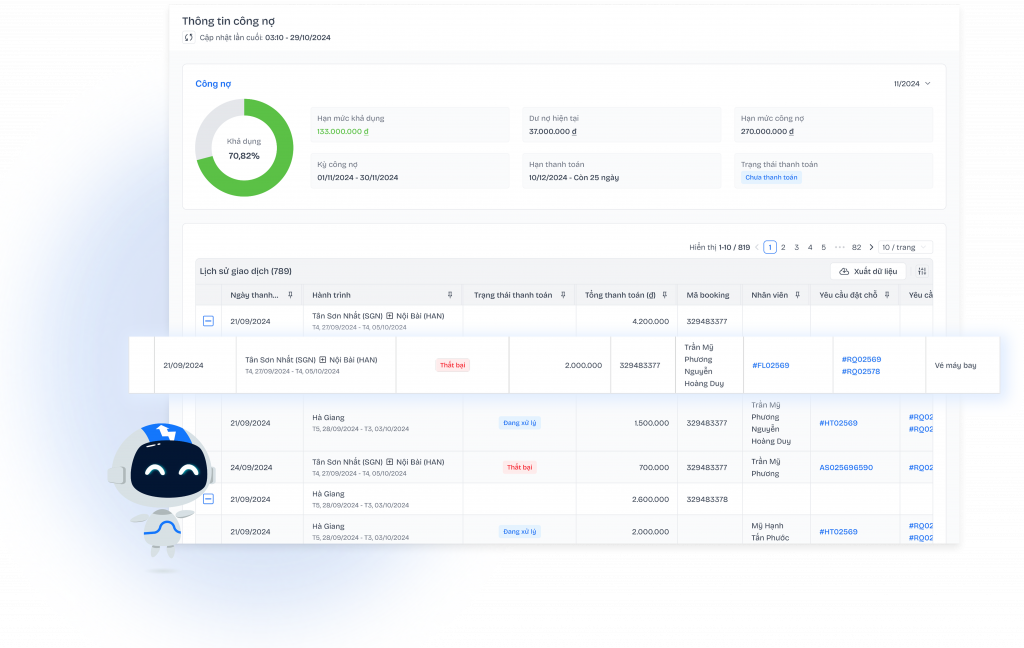
From this perspective, Bizzi acts as a cost management infrastructure.Instead of simply recording incurred expenses, Bizzi standardizes the expense approval process, connecting invoices, contracts, and payments into a seamless data stream, while automatically alerting users to risks and missing records. As a result, cost efficiency metrics are continuously updated, accurately reflecting the nature of spending and enabling CFOs to intervene promptly before expenses spiral out of control or become tax risks.
With the right technological platform like Bizzi, cost efficiency metrics are no longer passive measurement tools, but become active tools. Leverage helps businesses spend wisely, sufficiently, and in a way that creates sustainable value.Register here to receive personalized solutions tailored to your business: https://bizzi.vn/dang-ky-dung-thu/