



Are you reviewing your monthly P&L report but still don't understand why your company is profitable yet your accounts are short? Or do you spend up to 15 days closing the books, and by the time the figures reach the CEO, they're already outdated?
What is a P&L report? From a CFO's perspective, it's not just a summary of revenue and expenses to submit to the tax authorities. It's a strategic tool for measuring operational health, controlling profit margins, and assessing growth quality.
This article by Bizzi will start from the essence, how to calculate P&L, down to the construction method Profit and loss report by project and the transition strategy actual P&L report Real-time thanks to automation.
What is a Profit and Loss Statement (P&L)?
Before discussing management, CFOs need to understand the standard definition. The Profit and Loss Statement (P&L) is a consolidated financial report reflecting the revenue, expenses, and profit of a business over a specific accounting period, prepared according to the accrual basis.
Unlike the Balance Sheet, which reflects a "snapshot" of a single point in time, the P&L (Payment and Revenue) is a "film" recording the performance of operations over an accounting period. Structurally, the P&L includes core components: net revenue, cost of goods sold (COGS), selling and administrative expenses (SG&A), operating profit, and net profit. But for a CFO, managing the P&L goes beyond simply "looking at the numbers"; it's about understanding the value stream that generates top-line growth and its potential to translate into bottom-line efficiency.
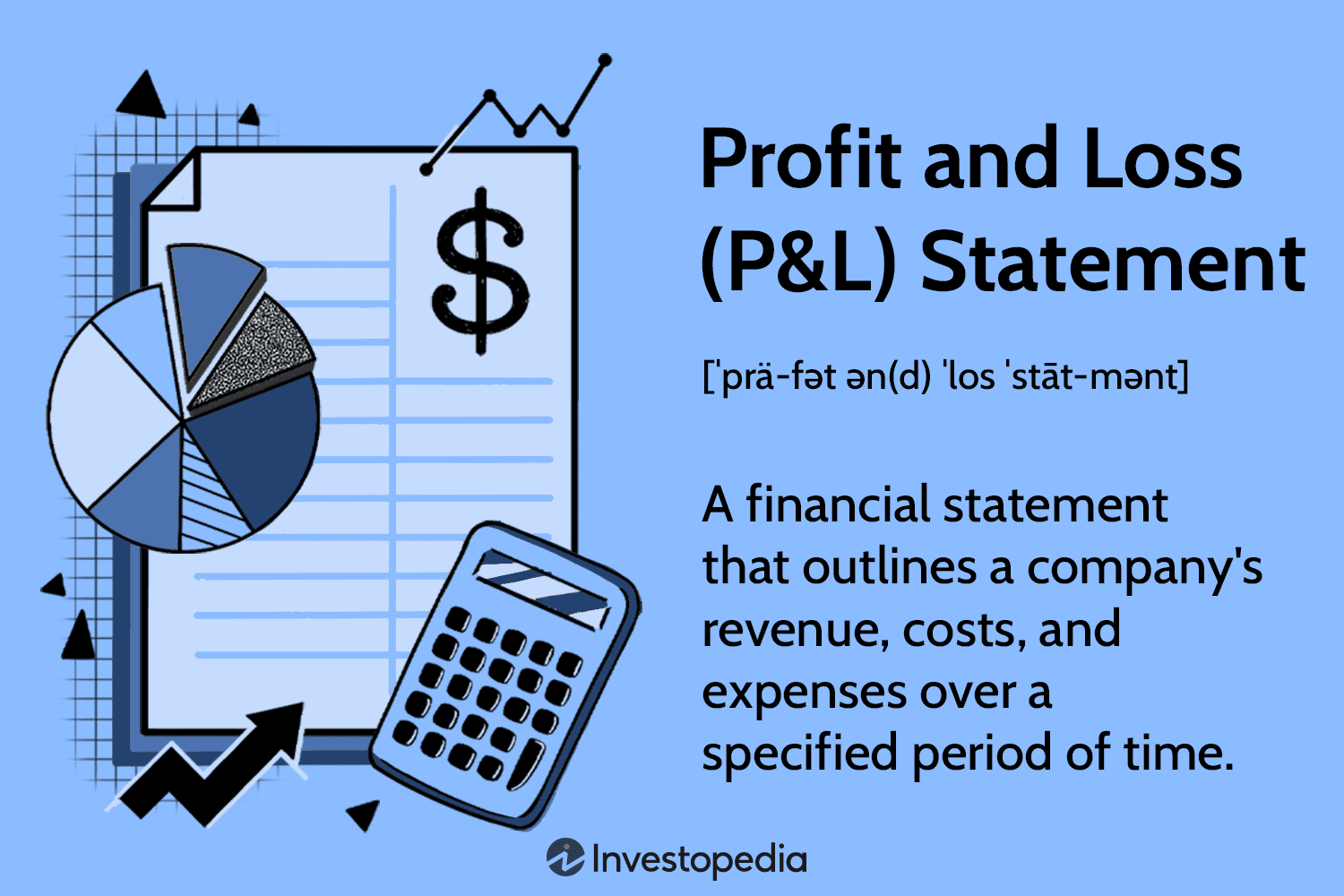
How does a business performance report reflect the financial health of a company?
A "green" P&L figure doesn't necessarily mean a business is safe. To understand this correctly, it's necessary to analyze the operational nature behind the numbers.
The income statement reflects three pillars: Revenue (Top-line), Operating Expenses (COGS and OpEx), and Profit (Bottom-line). The CFO uses... actual P&L report To assess profitability and cost control effectiveness, not just to fulfill tax obligations.
A key difference lies in distinguishing between financial P&L and management P&L. Financial P&L serves shareholders and adheres to VAS/IFRS standards. Management P&L, on the other hand, is more flexible, allowing for the separation of fixed and variable costs, by product, or by department to support decision-making.
A common mistake made by Vietnamese businesses is preparing only P&L based on tax forms, neglecting management P&L, leading to a lack of operational information. This paradox arises when the company has profits on paper but lacks cash flow.
Why does the P&L report show a profit, but...? cash flow Still in the red? The paradox in financial management.
The "Profit rich, Cash poor" phenomenon stems from the discrepancy between accrual accounting and actual cash flow. Revenue is recognized when invoices are issued, but the money may not yet have been collected. When accounts receivable grow faster than cash inflows, working capital gets tied up.
The basic formula is: Cash Flow ≠ Net Profit.
The key indicator here is the Cash Conversion Cycle (CCC) and DSO (Days Sales Outstanding)If revenue growth is rapid but the deadweight loss (DSO) is prolonged, the business faces liquidity risk even if the P&L remains positive.
The concept of "Quality of Earnings" also needs to be emphasized. High-quality earnings are those that can be quickly converted into cash. As a P&L manager, the CFO must closely monitor accounts receivable and cash flow simultaneously.
The practical solution is to integrate accounts receivable management into the system. Bizzi ARM helps track the aging of each invoice, alerts about discrepancies, and continuously compares actual P&L reports with real cash flow, minimizing liquidity traps.
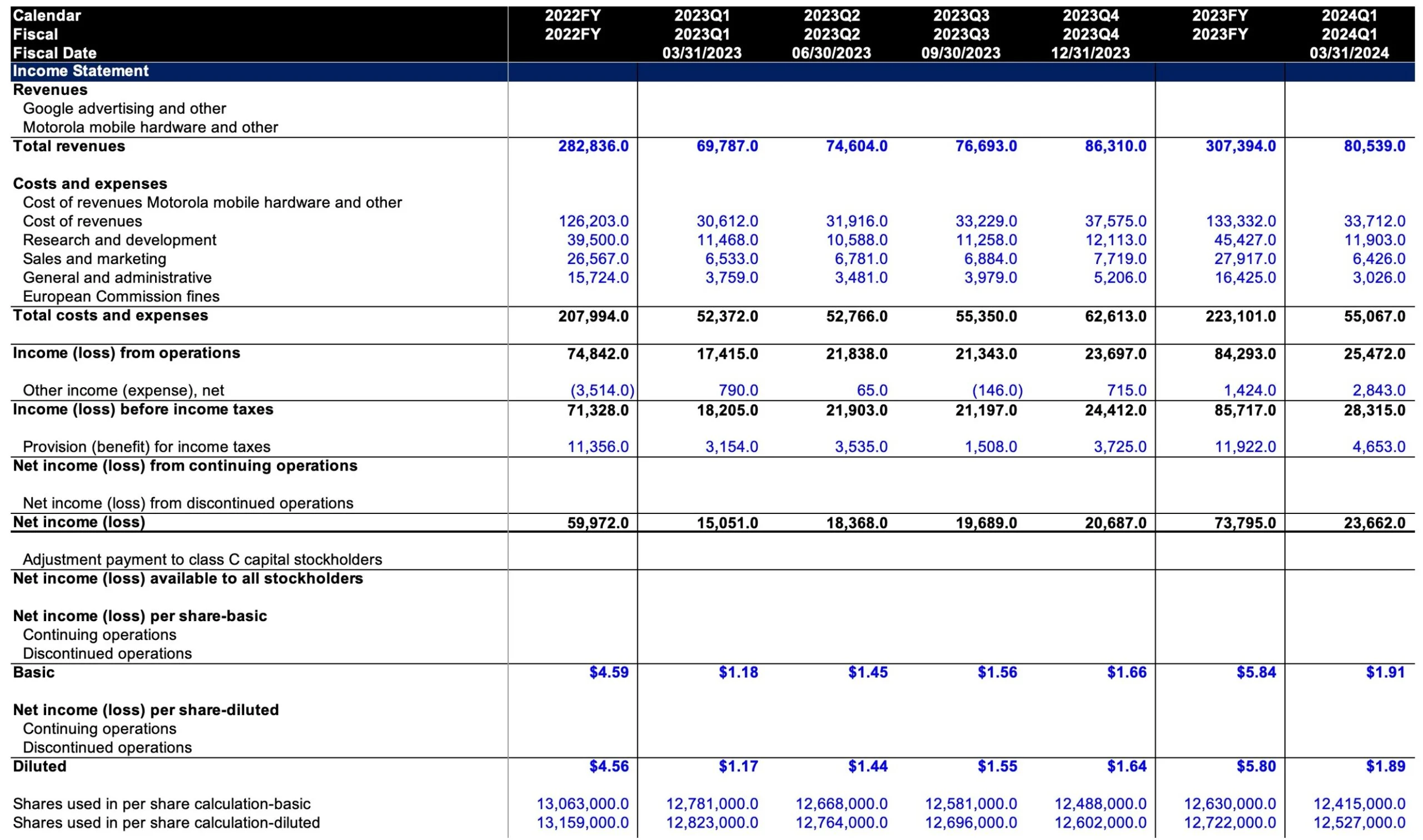
The structure and calculation of P&L in a standard management system, from Revenue to EBITDA.
To understand in depth how to calculate P<he CFO needs to start from the profit margin structure. Modern management models are often based on the Contribution Margin: Net revenue minus variable costs to determine the contribution to covering fixed costs. From this, EBITDA is calculated – a measure reflecting core operational efficiency before the impact of financial leverage and depreciation policies.
Basic formula:
- Gross Profit = Net Revenue – COGS
- Operating Profit (EBIT) = Gross Profit – OpEx
- Net Income = EBIT – Interest – Taxes
EBITDA is considered the closest “proxy” to operating cash flow. When comparing across periods, EBITDA helps eliminate the impact of capital structure and accounting policies.
However, in order P&L management To be effective, CFOs need to clearly separate direct and indirect costs. Inaccuracies in input data will lead to misjudgments of profit margins.
In practice, expense data is often inaccurate due to manual data entry from invoices. Bizzi Bot automatically extracts input invoice data with accuracy exceeding 99%, ensuring that COGS and OpEx figures accurately reflect reality. This forms the foundation for building... actual P&L report reliable.
The process of constructing a profit and loss report by project to evaluate investment efficiency.
When a business expands its product portfolio or undertakes multiple projects simultaneously, the overall P&L is no longer sufficient for decision-making.
Profit and loss report by project It is a tool for determining the individual profit margin of each investment item. The biggest challenge lies in allocating overhead costs. Project revenue is relatively easy to determine, but indirect costs such as admin salaries, utilities, and server costs require a proper allocation method. Businesses can allocate these costs based on revenue or direct labor hours. Incorrect allocation can lead the CFO to cut off profitable projects while retaining loss-making ones.
An advanced approach is a simplified Activity-Based Costing (ABC) model, which links costs to value-creating activities.
In terms of systems, Bizzi Expense This allows you to set up a Cost Center or Project Code from the start. When employees submit payment requests, they are required to select the relevant project. Costs are automatically mapped to the appropriate project. Profit and loss report by project In real time, instead of accountants having to manually allocate funds at the end of the month.
Strategy for transitioning to real-time P&L through R2R automation.
One of the biggest challenges for CFOs is data lag. Last month's P&L report might not be finalized until the 20th of the following month, causing businesses to react too slowly.
Real-time P&L is the result of automating the Record-to-Report (R2R) process. By using AI and RPA to process invoices and account automatically, closing time can be shortened from 10–15 days to 1–3 days.
The process consists of three layers: Bizzi Bot processes incoming invoices, clean data is pushed into the ERP system, and then an EPM system like Sacton integrates and presents a visual P&L dashboard for the CFO. This allows businesses to quickly generate Flash Reports while ensuring high accuracy.
This is an important step in the transition from "recovery" P&L to actual P&L report It is predictive in nature.
Forensic P&L techniques help detect fraud and expense misappropriation.
In addition to analyzing efficiency, P&L is also a tool for risk control.
Forensic P&L is a trend and proportion analysis method used to detect anomalies. If the OpEx/Revenue ratio spikes or the cost of goods sold fluctuates unusually relative to production volume, the CFO needs to investigate immediately.
Common risks include fictitious invoices, inflated purchase values, or duplicate payments. Instead of only discovering these issues after the money has been lost, a better strategy is prevention.
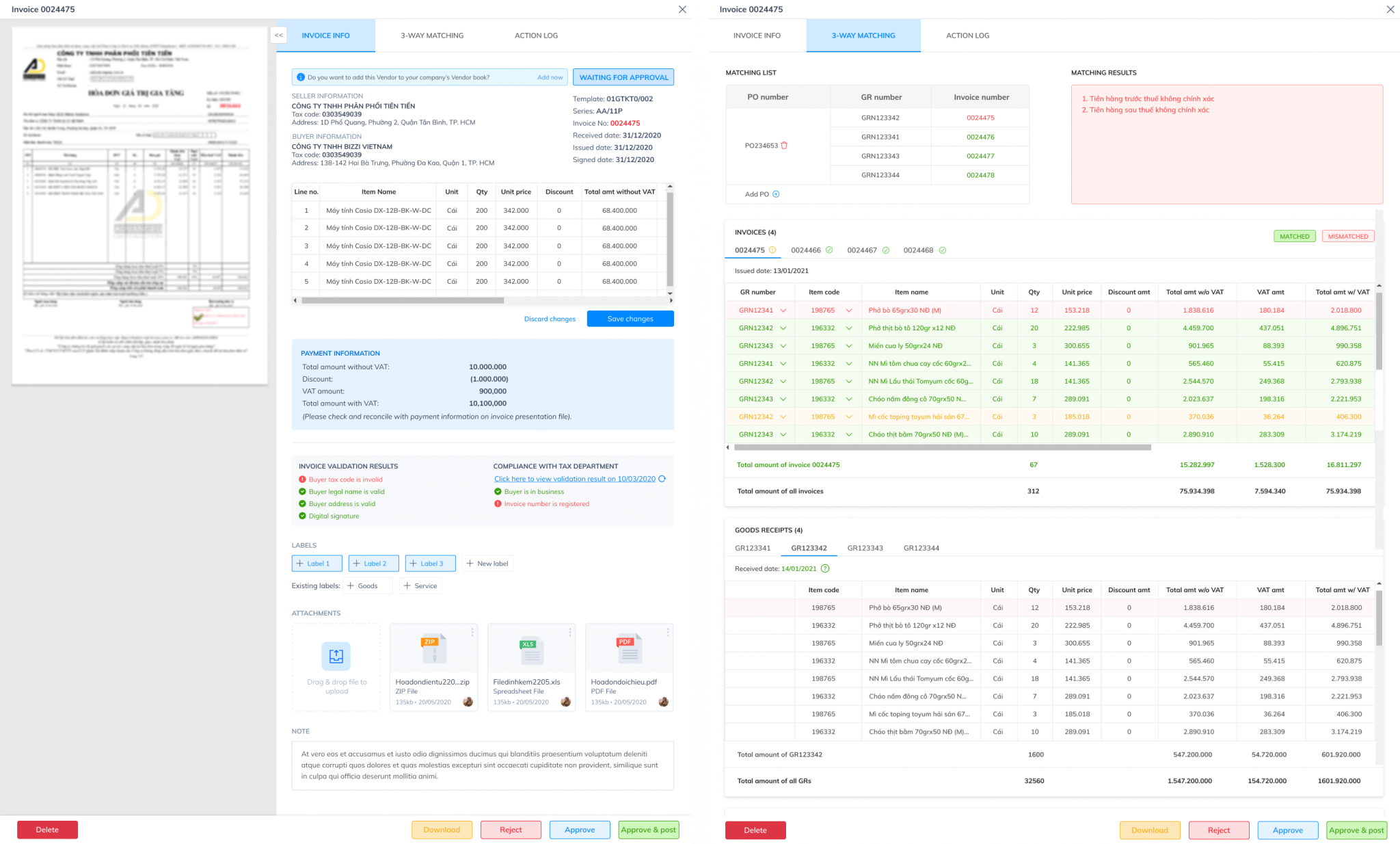
Bizzi applies a mechanism 3-Way Matching The system automatically compares invoices, purchase orders (PO), and warehouse receipts. If the amount on the invoice exceeds the PO, the system immediately blocks payment. This ensures that the expenses recorded in the bill of lading (P&L) are valid and accurate.
Frequently Asked Questions about Profit and Loss Statement Management and Analysis (FAQ)
What is the fairest way to allocate overhead costs?
The ABC method, or revenue-based allocation, is common, but the most important thing is to link costs to the correct Cost Center as soon as they are incurred.
What is the difference between EBITDA and Net Profit?
EBITDA reflects core operating efficiency, while Net Profit represents the value remaining for shareholders after interest and taxes.
Is it mandatory to prepare a P&L (Personal Account and Revenue) report according to the Circular 200 template for internal management?
No. Tax reporting is mandatory by law, but management P&L should be designed with flexibility to support decision-making.
Can Flash Report replace the official P&L?
Flash reports support rapid decision-making with an accuracy of approximately 90–95% (%). Formal P&L reports are still needed to ensure compliance with 100% (%).
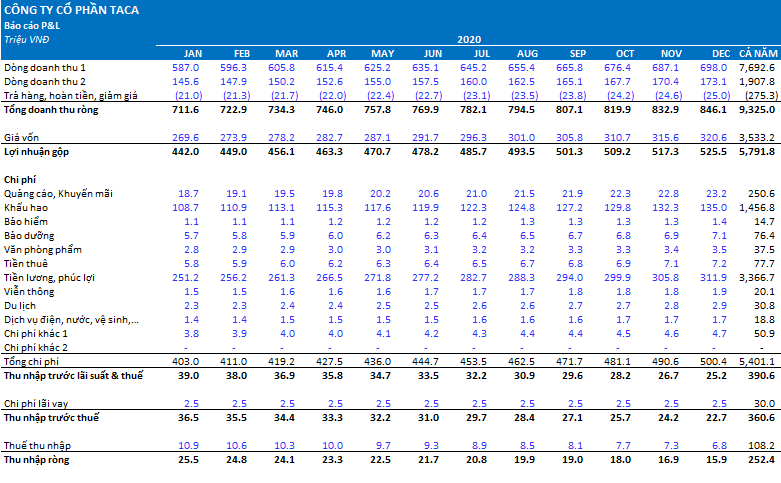
Conclusion: From understanding the true nature of P&L to managing it in real time.
Clearly understand What is a P&L report? This is just the beginning. The real value lies in how the CFO uses it to P&L management, optimizing profit margins and protecting cash flow. When businesses master how to calculate P&L, deployment Profit and loss report by project and move on actual P&L report In real time, they not only have the data but also the ability to act quickly.
Bizzi plays a pivotal role in this journey: automating invoice processing, standardizing expense data, and connecting to a unified reporting system. As a result, CFOs no longer passively wait for end-of-month reports, but can manage their businesses based on accurate, transparent, and up-to-date data.
To receive advice on management solutions tailored to your business, schedule an appointment here: https://bizzi.vn/dat-lich-demo/