


Project time management is not just about drawing a timeline – it is the skill of controlling the “heartbeat” of the entire project. There is no perfect method for every project, but a good manager is someone who knows how to combine the right method for the right stage.
Follow the article below to get more information about the most popular project time management software today and the secret to controlling it. project management cost standards – cash flow over time.
Why is time management vital to every project?
Time management is vital to any project as it ensures timely completion, cost control and productivity enhancement. It also helps to reduce risks, improve the quality of the final product and maintain the reputation of the business by meeting customer expectations.
1. Problems users encounter
General situation: Many projects in Vietnam are behind schedule or over budget. For example, in the infrastructure construction sector in Vietnam, studies show that the risk of delays and over budget is very common.
Specifically: The expressway project, an infrastructure project of the Vietnamese Government, is said to have a "phenomenon cost overrun" - meaning the cost exceeds the initial budget - due to many reasons such as design, approval, and investor finance.
Common reasons:
- No clear time plan: For example, lack of milestones, lack of constraints, lack of responsibility for follow-up.
- Unable to control costs in real time: When progress slips, costs of labor, equipment, materials increase…
As progress slips → costs increase → profits decrease → reputation and scalability are affected:
- Delays in progress cause loss of exploitation/marketing opportunities, increase financial costs, and increase legal risks.
- Cost overruns reduce profit margins, may necessitate contract renegotiations, and impact customer/partner relationships.
- Reputation is affected: if the project is continuously delayed or over budget, customers and the market will lose confidence → making it difficult to expand or sign new contracts.
2. What is project time management?
Project Time Management (Project Time Management – PTM) To be the process of planning, organizing, monitoring, and controlling activities to ensure the project is completed on time, on budget and with the right quality.
Basic steps in project time management:
- Identify the activities/work to be performed in the project.
- Arrange the order, determine the relationship (precedence) between the jobs.
- Estimate time for each task.
- Create a master schedule with timelines, critical paths, and milestones.
- Monitor progress and compare with plan.
- Adjust as changes occur (arise, delay, risk) to get the project back on track.
The role of time management in projects:
- Help investors and project teams know When must complete each task.
- As a basis for monitoring progress and early detection of delays or deviations.
- When combined with cost and quality management, it ensures the project achieves its overall goals: on time, within budget, with the required quality.
3. Core benefits
- Ensure progress, reputation and team productivity:
- When the schedule is clear, each member knows their job, avoiding "waiting" or "not knowing what to do" situations.
- Completing projects on time helps increase reputation with customers/partners, creating trust for future projects.
- Reduce capital risk, control budget:
- Late progress often results in increased costs for labor, machinery, materials, or contract penalties; good time management helps reduce these risks.
- By knowing the timeline and progress of the implementation, resources and costs can be forecasted more accurately.
- Increased predictability and decision making:
- With the actual schedule compared to the plan, the project manager has the data to assess “current situation vs. target” and decide to adjust: increase resources, change tasks, delay milestones, or terminate/extend.
- Helps management and stakeholders gain a clear view of time risks — thereby making strategic decisions such as whether to take on additional projects, scale up or down, increase resources, etc.
6-step standard process in project time management
“A project fails not because of lack of capacity – but because of lack of clear time plan.” How to make a systematic time plan from the beginning? Refer to 6 steps on standard project time management PMBOK (Project Management Body of Knowledge) hereafter.
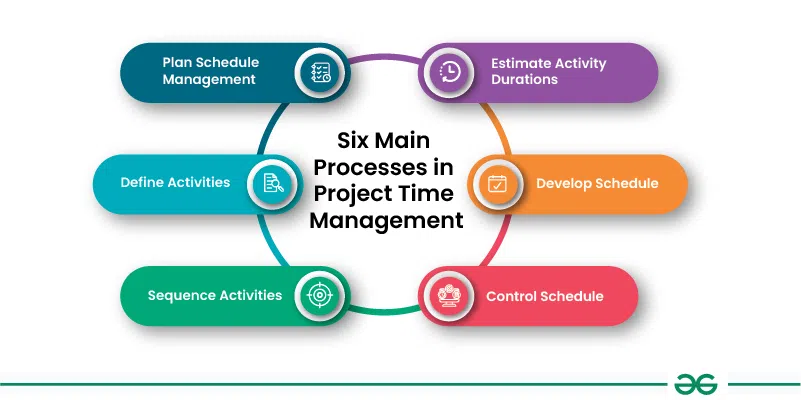
Step 1. Define Scope & Activities
Target: Clarify project boundaries, outputs, and objectives.
- Use WBS (Work Breakdown Structure) to break down work from general to detail (task, sub-task).
- Define what is in scope and what is not (scope boundary).
- Set key milestones for each stage.
Output:
- Activity List
Step 2. Sequence Activities
Target: Define the logic of how work is performed — what comes first, what is dependent. Use Network Diagram or Dependency Matrix to visualize workflows.
- Dependency analysis:
- FS (Finish-to-Start): B can only start after A is done.
- SS (Start-to-Start): A must start before B can start.
- FF (Finish-to-Finish): A ends then B ends.
- SF (Start-to-Finish): Rarely, B ends only when A begins.
- Output: Activity Network Diagram
Step 3. Estimate Resources
Target: Know what you need who – what – how many – how long.
- Identify resource type (personnel, equipment, materials, budget).
- Estimate quantity and cost for each activity.
- Check individual workload to avoid overload (Resource Leveling).
- Output: Resource Sheet
Step 4. Estimate Duration
Target: Calculate the time required to complete each activity.
- Apply estimation techniques:
- Analogous Estimating: Based on similar project.
- Parametric Estimating: Based on formula or productivity (eg: 1 person tests 10 cases/day).
- PERT (3-Point Estimating):
Te=(O+4M+P)/6Te = (O + 4M + P)/6Te=(O+4M+P)/6- O: Optimistic
- M: Most likely
- P: Pessimistic
- Output: Activity Duration Estimates
Step 5. Develop Schedule
Target: Turn data into actual timeline.
- Use Gantt Chart, PERT Chart, or CPM (Critical Path Method) to determine the critical path.
- Assign start date – end date for each job.
- Calculate float time (allowable delay) to optimize execution order.
Output:
- Project Schedule
- Critical Path
- Overall Gantt chart
Step 6. Monitor and Control
Target: Keep the project on track.
- Monitor “Planned vs Actual” through progress reports or dashboards.
- Using KPIs to measure progress performance: SPI (Schedule Performance Index) = EV / PV; % On-Time Completion
- When there is a discrepancy, adjust promptly but must control of incidental costs parallel.
Output: Progress Report and Change Log
The Most Effective Project Time Management Method 2026
Learning and applying proven project time management methods will help you or your business:
- Choose the method that suits the specific work and project scale.
- Optimize progress, allocate resources and control costs more effectively.
- Reduce the risk of late delivery, increase team productivity, and enhance project reputation.
1. Critical Path Method (CPM)
Principle: Identify the most important work sequence – where any delay will delay the entire project. This sequence is called the Critical Path.
How it works:
- List all the work in the project.
- Identify dependency relationships (A must be completed before B can be done).
- Calculate the earliest and latest possible time to complete each task.
- Jobs with no buffer time (float = 0) → lie on the critical path.
Advantage:
- Helps focus resources on key activities.
- Clearly identify progress bottlenecks.
- Easy to apply to projects with fixed plans (construction, production, R&D…).
Limit:
- Lack of flexibility when the project is constantly changing.
- Accurate time data is required for correct calculations.
2. Earned Value Management (EVM)
Principle: Measure project progress based on three core variables: Scope – Cost – Time.
Key metrics:
- PV (Planned Value): Work value expected completion.
- EV (Earned Value): Value actually completed.
- AC (Actual Cost): Expense actually spent.
- SPI = EV / PV → Progress performance index.
- CPI = EV / AC → Cost performance index.
Advantage:
- Allows early detection of schedule and cost deviations.
- Measurable data, easy to report to stakeholders.
Limit:
- Need a good tracking system (MS Project, Jira, Power BI).
- Difficult to implement for short projects or continuous innovation (marketing, early R&D).
3. Agile & Timeboxing Method
Principle: Instead of planning the entire project in a rigid way, break down the work into Sprints (1–4 weeks). Each Sprint is a fixed timebox with a specific goal.
How it works:
- Create a backlog (priority task list).
- Divide into Sprints of fixed duration.
- After each Sprint: review – evaluate – adjust – move to a new Sprint.
Advantage:
- Lhighly flexible, suitable for changing environments.
- The team works more focused, making it easier to measure results periodically.
- Suitable for IT, marketing, startup projects.
Limit:
- Requires good self-management and high commitment from the team.
- Difficult to apply to large projects with fixed deadlines (construction, bidding, etc.).
4. Pareto Principle (80/20) & Eisenhower Matrix
Principle:
- Pareto (80/20): 20% work produces 80% results.
- Eisenhower Matrix: Classify tasks according to level of importance – urgency.
Advantage:
- Helps prioritize the right tasks, avoiding "being overwhelmed with tasks without results".
- Suitable for group or individual managers who need to control their daily time.
Limit:
- Highly subjective, depends on the classifier.
- Not applicable directly to entire large projects.
5. Pomodoro Technique & Deep Work
Principle: Increase productivity by focusing for short, controlled periods of time.
How it works:
- Pomodoro: Work for 25 minutes → rest for 5 minutes → repeat 4 rounds → rest for 15–30 minutes.
- Deep Work: Block out all distractions (meetings, phone calls, emails) to do deep work for 1–2 hours.
Advantage:
- Improve focus & personal productivity.
- Reduce stress when running long deadlines.
- Help the team maintain a steady work rhythm.
Limit:
- Not suitable for jobs that require quick response (support, sales).
- Requires high self-discipline and initiative.
Most popular project time management tools and software
Which software should I use to track progress and manage project time? Here is a summary Introducing project progress tracking software Suitable for many types of businesses – from small to large, from Vietnamese to international.
1. Base Wework / Base.vn
This is work and project management software of Base.vn - Vietnamese enterprise.
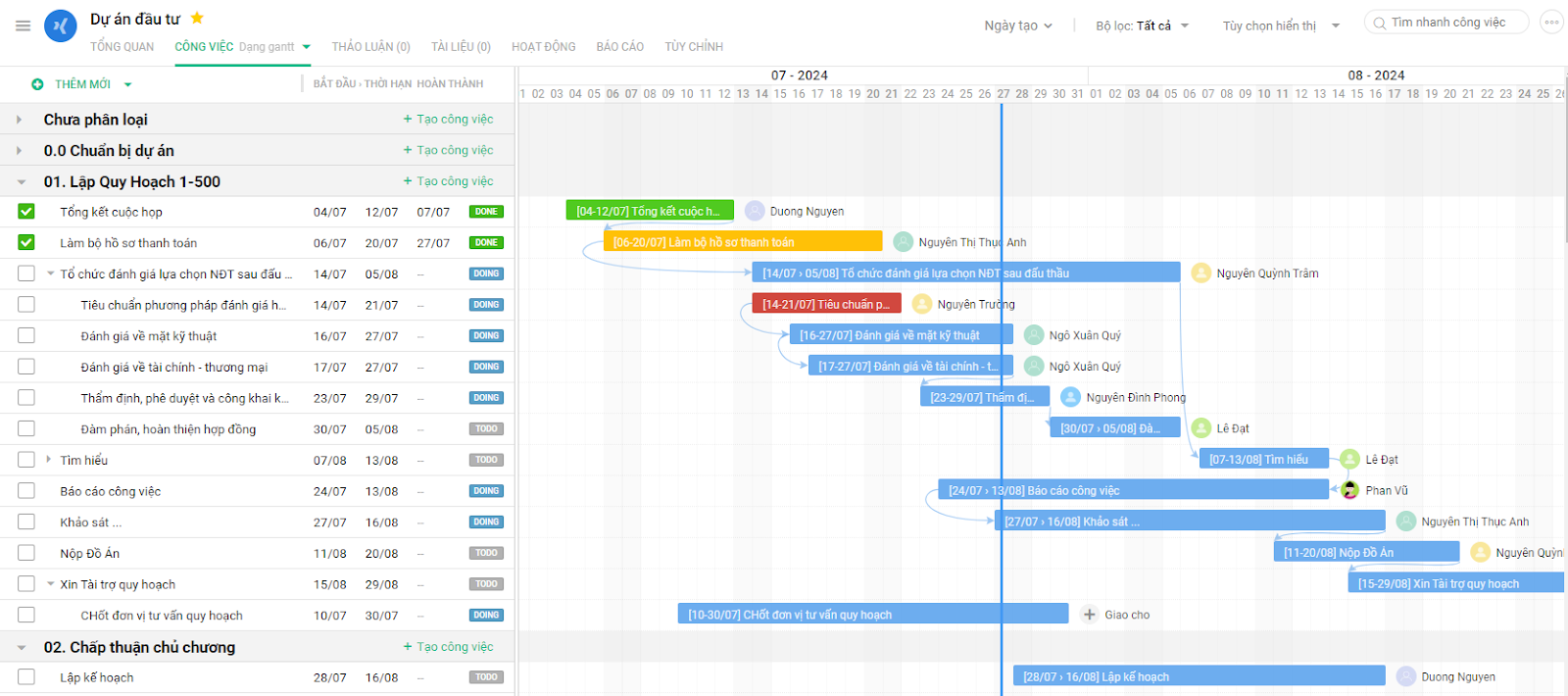
Outstanding features: planning & tracking projects from overview to details, assigning tasks - reminding tasks - updating progress, displaying in To-do list, Gantt chart, Kanban. Businesses need to check costs and scalability if the team grows rapidly.
2. 1Office
This is the foundation “All-in-One” digital transformation Developed by Vietnamese enterprises, aiming at overall management: Work – Human Resources – CRM – Electronic Office.
Pure Vietnamese interface, easy to use, has mobile application. Suitable for both SME, agency or medium-large sized company want to have a synchronized system.
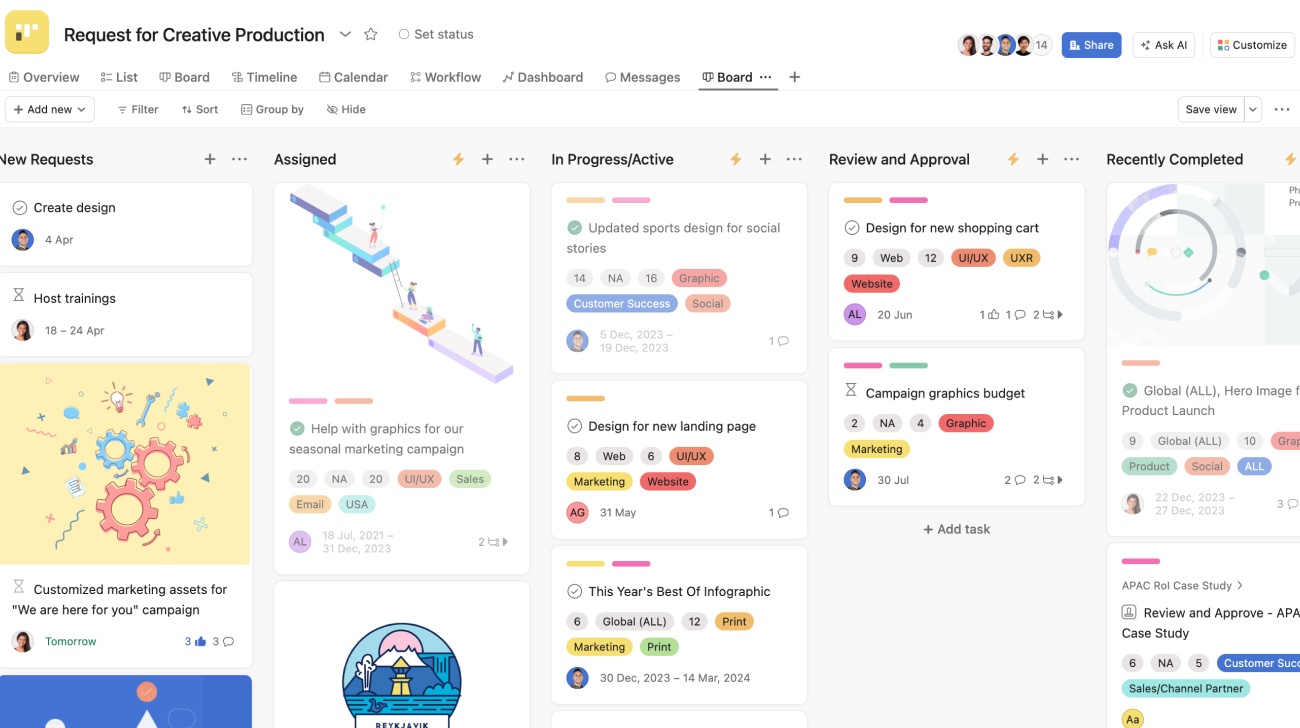
3. Asana / Trello / Monday.com
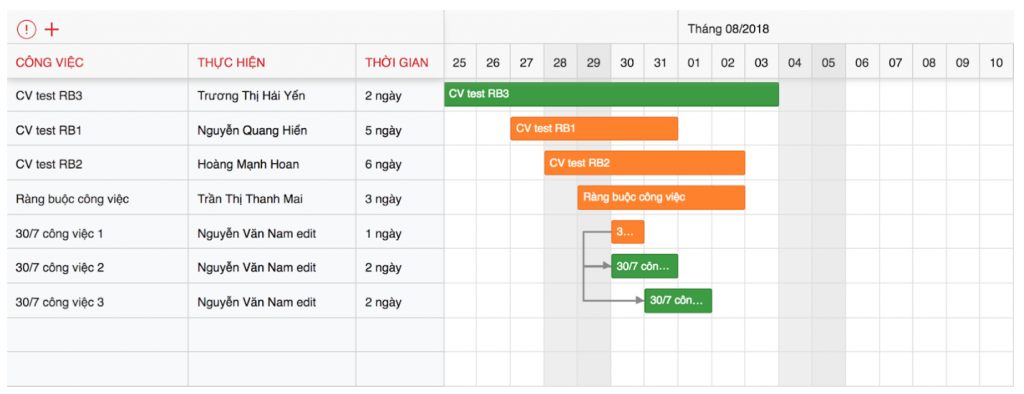
These are project time management tools, task type. Kanban board, easy to use. You can see the overview of multiple projects, timelines, dependencies, dashboards.
Suitable for small groups, startups, marketing teams.
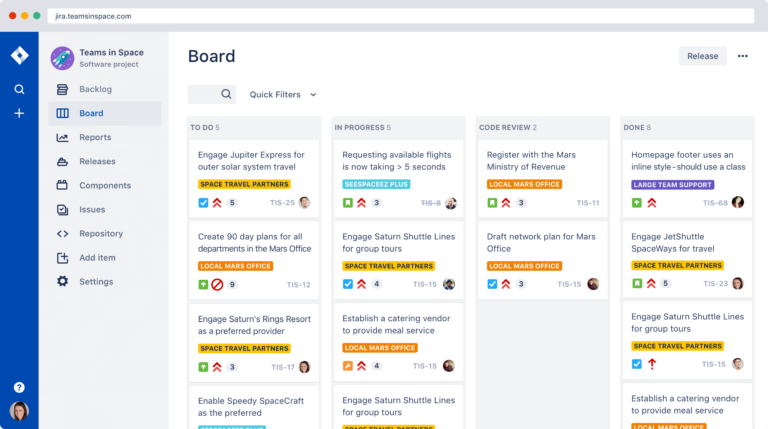
4. Jira
Jira was originally built for software development management – Agile, bug tracking – but is now used more widely for agile projects. Suitable for engineering or software development teams.
5. ClickUp / Smartsheet / GanttPRO
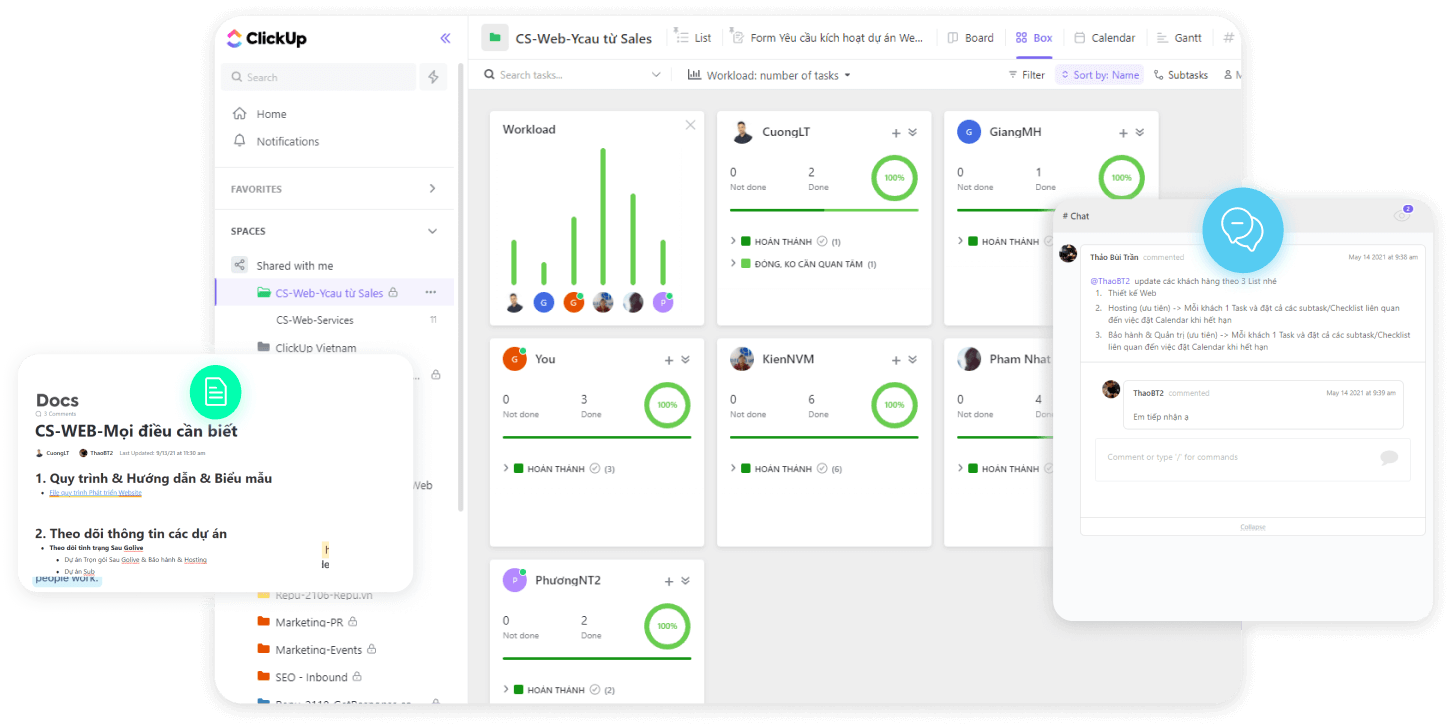
Internationally popular software for project time management and detailed planning using Gantt charts include ClickUp, SmartSheet or GanntPro. What these tools have in common is the time tracking feature and support for automatic progress reporting.
Budget Control – The Missing Piece of Project Time Management
In modern projects, completing on time is not enough — If costs exceed budget, the project still fails in terms of efficiency. Cash flow and time are the two most important variables that determine project success — understanding both will help PMs and CFOs make decisions quickly, accurately, and effectively.
1. The relationship between time and cost
Every day the project is late = One day of increased operating costs. When progress slips, costs such as personnel, outsourcing, equipment, project management… all increase.
If you only manage the timeline and ignore the cash flow, the project will:
- Easy to increase capital compared to the original plan.
- Cost forecasting is difficult, causing CFOs and PMs to lose control.
- Directly affects profit margins and brand reputation.
2. Bizzi – Smart project cost control system
Bizzi acts as a “financial assistant” alongside the progress management software, helping businesses control both time and costs in the same data stream.
Project Expense Management (Bizzi Expense)
From budgeting to expense tracking – all in one platform. PMs and accountants always see the real-time “financial picture”.
- Set up & allocate budgets for each project or phase.
- Monitor actual vs budget spending.
- Automatic warning when spending exceeds the allowed threshold.
- Attach each expense to the correct work category (marketing, production, human resources…).
Cost Control (IPA + 3-Way Matching)
Automate your payment reconciliation process, reducing the risk of errors and unauthorized spending.
- 3-way reconciliation (Invoice – PO – GR) in real time.
- Detect discrepancies, verify suppliers before payment.
- Reduced 80% of manual invoice review time.
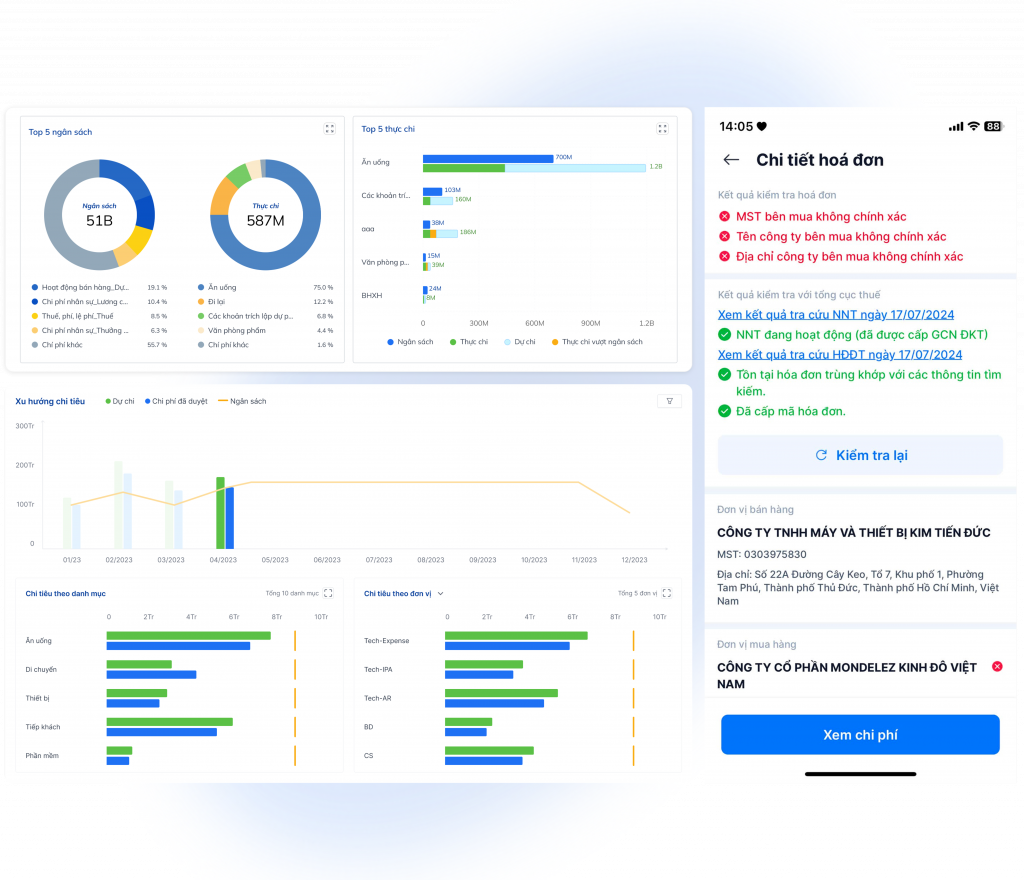
Coordinate with Progress Management Software (Base, Jira, Asana, etc.)
Integrating Bizzi with progress management tools like Base Wework or Jira helps leaders make decisions faster, more accurately and more economically:
- The system displays costs according to each progress stage.
- PMs, CFOs, and accountants can track “cash flow alongside progress” — knowing Which stage is spending the most and why?.
Bizzi's distinct advantage
Bizzi not only makes project time management simple – smooth, on-time – but on-budget.
| Common project management platforms | Bizzi |
| Focus on tasks and deadlines | Focus on time and cost together |
| Only help PM track progress | Help PM – CFO – Accountant to view data together |
| No over-cost warnings | Automatic alerts & reports by budget |
| No support for expense reconciliation | Integrated 3-Way Matching & Expense Control |
- Learn more about Top 27 cost management software here
Project Time Management Tips & Skills for Managers
In a project, time is an “invisible cost” — every day late not only extends the deadline, but also increases human and operational costs and missed opportunities.
If you only rely on the initial plan without continuously optimizing time management, the project can easily:
- Progress slips due to misprioritization or lack of workload control.
- Loss of team productivity when members are “disconnected” or work out of sync.
- Risk forecasting is difficult because performance cannot be monitored in real time.
The project time management tips below will help managers keep a closer eye on the project, forecast earlier, and better balance speed - quality - cost.
Time Blocking Application – Block time for each task group
Divide your work schedule into fixed “blocks” (e.g., morning for progress review, afternoon for issue handling). This helps avoid constantly jumping between tasks and reduces stress from information overload.
Prioritize work by Impact – Work that creates great value first
Instead of doing things by urgency, do them by impact on project outcomes.
Use the 80/20 principle or Eisenhower Matrix to identify your most productive tasks.
Personal KPI Tracking – Measure Your Own Productivity
Track metrics to accurately assess bottlenecks and improve performance.
- Average time to complete a task
- % work completed on time
Maintain a Daily Stand-up
It only takes 10–15 minutes for the team to update 3 points: what they did yesterday – what they did today – what they are stuck on. Maintain transparency and connection between members.
Review your plan every week – Adjust early to avoid backlog
At the end of the week, review your progress and identify tasks that are late or have incorrect time estimates. This will help you adjust your timeline and reallocate resources before things fall off track.
What are the frequently asked questions about project time management?
Below is List of frequently asked questions (FAQs) about project time management — compiled from project implementation experience, B2B blogs, and PM guides.
- How to plan project timeline effectively?
→ Start with WBS, define critical path, update timeline weekly. - What is the best software to track progress?
→ Base and ClickUp are suitable for SME groups; Jira is optimized for Agile; Bizzi helps manage costs in parallel. - What to do if the project is behind schedule?
→ Analyze the cause through CPM or KPI, reallocate resources and control arising costs.
Conclude
Effective project time management = Process structure + Appropriate method + Synchronized software. In other words, master time, master budget, the project will always reach the finish line.
Popular software helps you monitor progress, but Bizzi is the first tool that helps you control costs and cash flow for each milestone. A successful project is not only completed on time, but also on budget. Combine Bizzi with a progress management tool to get a handle on both time and cost — the two variables that determine the true performance of your project."
👉 Experience Bizzi – Control Assistant and project cost management helps you manage cash flow and progress in the same dashboard. Sign up for a demo: https://bizzi.vn/dat-lich-demo/