


In modern financial management, purchasing accountants are not simply record-keepers of accounts payable (APs). They are the "gatekeepers" of cash flow, directly controlling 60–80% of the total operating expenses of the business. However, when the process remains manual, CFOs face risks such as fictitious invoices, duplicate payments, expense losses, and working capital bottlenecks.
This article by Bizzi will provide a framework for purchasing accounting competencies and a modern purchasing payment control process, helping businesses transition from execution accounting to strategic financial partnership.
What is purchasing accounting in a Procure-to-Pay management system?
Accounts Payable (AP) is a position responsible for managing the entire accounts payable cycle, from receiving invoices and recording liabilities to completing payments to suppliers. In financial management, this is a central link in the Procure-to-Pay (P2P) process, ensuring all cash outflows are legitimate and payments are made at the optimal time.
Understanding what purchasing accounting is means re-evaluating the role of AP as a "gatekeeper"—the final control point before money leaves the business.
WHAT – The nature of control:
AP not only records debt, but also verifies the legality of invoices, checks contract terms, and ensures that debt obligations are accurately recorded.
WHY – Why does a CFO need a powerful AP?
A weak purchasing accounting department can cause a business to:
- Loss of VAT tax deduction rights.
- Duplicate payments.
- Loss of early payment discount.
- Your trade credit rating has been reduced.
DECISION – Data for decision-making:
Data from the AP is input for:
- Cash Flow Forecasting.
- Weekly/monthly payment plan.
- Calculate the DPO (Days Payable Outstanding) index.
Unlike many articles that merely "record" information, the modern approach views AP as a strategic data source for financial forecasting.
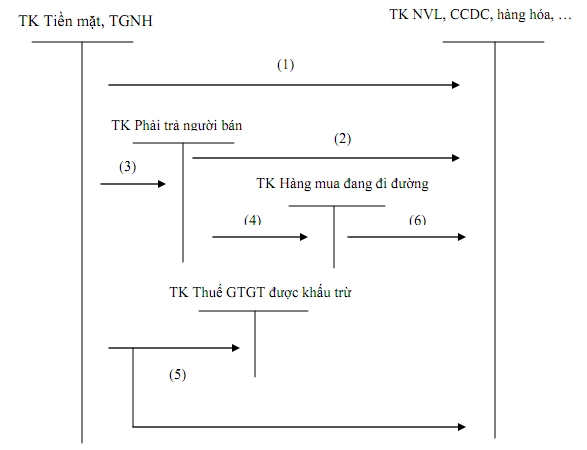
Job description for a purchasing accountant using a modern internal control model.
The work of a modern purchasing accountant revolves around three pillars:
(1) Control the validity of input documents,
(2) Multidimensional data reconciliation to accurately record accounts payable,
(3) Develop an optimal payment schedule based on debt terms and cash flow situation.
1. Legal control of documents
The biggest risk is "recording fictitious liabilities" if there is no separation of duties between the purchasing and accounting departments. Purchasing accountants must:
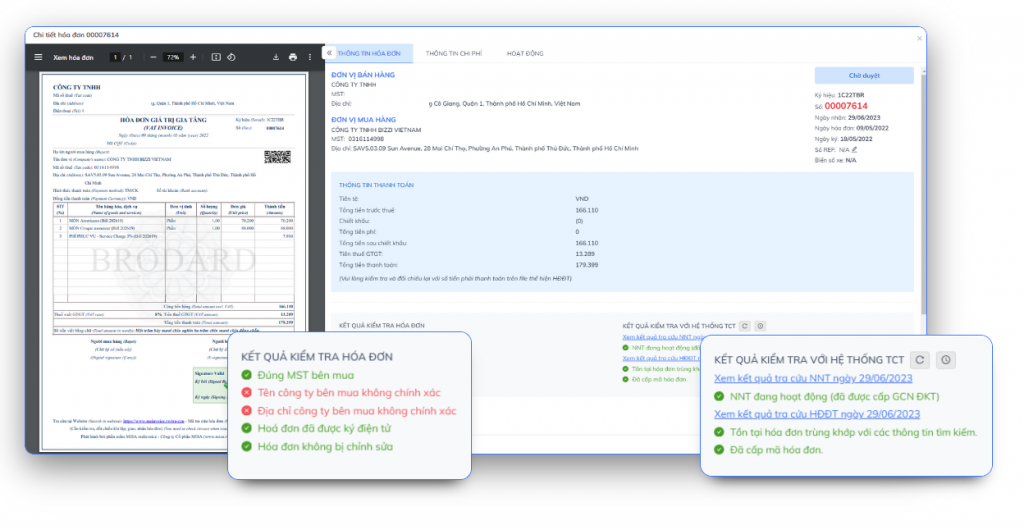
- Verify the validity of the electronic invoice.
- Verify the supplier's tax identification number and operational status.
- Compare the contract and payment terms.
2. Measuring the effectiveness of working capital through DPO
Formula: DPO = (Accounts Payable / Cost of Goods Sold) × Number of Days
A high DPO (Demand on Purchases) means the business is making good use of trade credit. However, if it's too high, it can damage relationships with suppliers.
3. Shift from manual tasks to analytical value.
In the traditional model, the work of a purchasing accountant mainly involves manual data entry and reconciliation. In the modern model, thanks to automation:
- Data entry is being replaced by OCR/AI.
- Accounting focuses on analyzing cost variations.
- The Purchase Price Variance (PPV) report is designed to support CFOs in making decisions.
Solutions like Bizzi Bot can automatically extract invoice data and check tax identification numbers in real time, thereby helping accountants shift their role from "data entry" to "data risk control".
The process of controlling purchase payments aims to optimize working capital.
Purchase payment control is the process of verifying conditions before disbursing funds, ensuring that the business only pays for goods/services received, at the correct price and at the correct time, in order to optimize working capital.
Preventing Cash Flow Leakage
Incorrect unit price payments or duplicate payments can cause losses of billions of dong every year.
Manage payment timing
Paying too early results in a loss. working capital. Paying too late will result in losing the Early Payment Discount.
CFOs make decisions based on Aging Reports – reports on debt aging categorized by 0–30, 30–60, and 60–90 days. An optimal payment strategy must balance:
- Reputation with suppliers.
- Maximize the capital's payload time.
- Ensuring liquidity.
Platforms like Bizzi help consolidate all invoices onto a centralized dashboard, automatically classify due dates, and provide alerts, enabling CFOs to monitor purchase payments in real time instead of waiting for end-of-month reports.
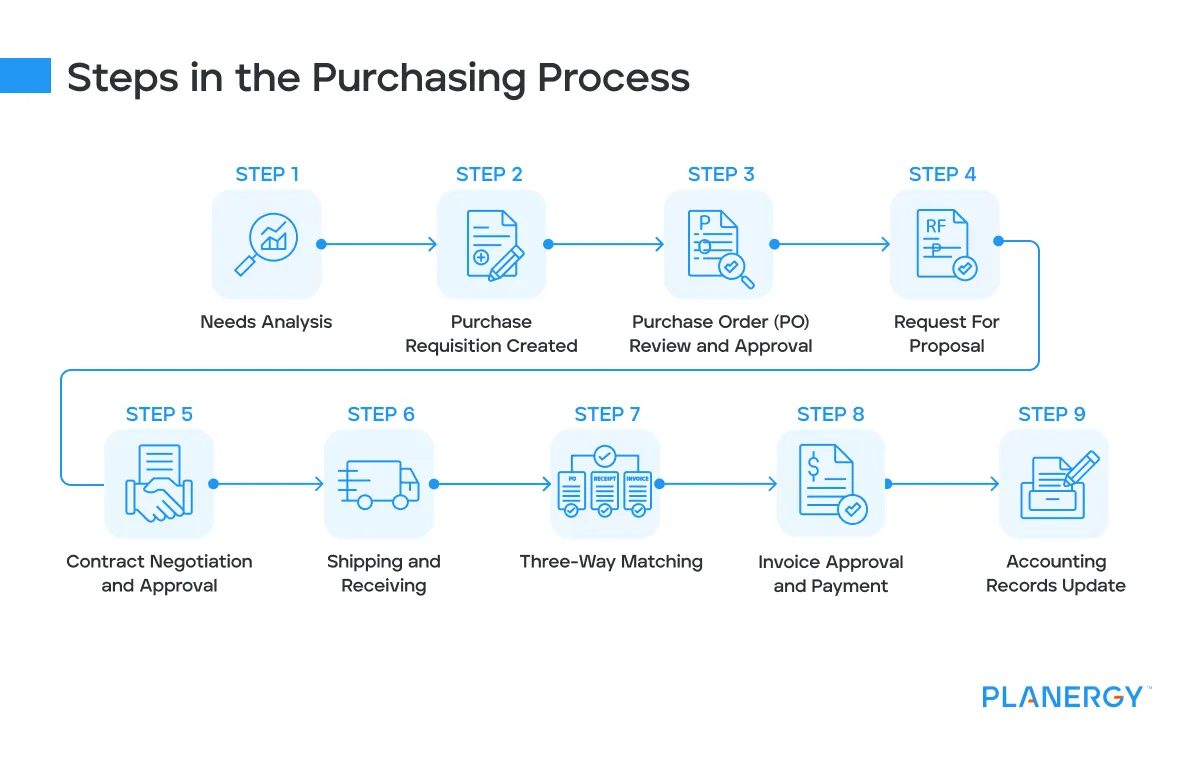
Why 3-Way Matching Is it the gold standard in AP control?
Three-way reconciliation is an internal control method that involves matching data between... Purchase Order (PO)The payment will only be approved if all three documents match: the Goods Receipt (GRN) and the Invoice.
- PO = Negotiable Price
- GRN = Amount Received
- Invoice = Financial obligation
If the quantity received is less than the quantity on the invoice, the business will overpay.
In practice, advanced ERP systems allow setting a "Tolerance Level"—an allowable deviation threshold, for example, ±2% of the invoice value. This is especially important for manufacturing businesses with fluctuations in the weight or price of raw materials.
Bizzi Bot can automatically match each line-item and only transfer invoices that "completely match" to the ERP system, reducing manual reconciliation time by up to 80%.
Analysis of purchase price volatility (PPV) to support cost management decisions.
PPV (Purchase Price Variance) measures the difference between the actual price and the standard price.
Formula: PPV = (Actual Price – Standard Price) × Actual Quantity
A positive PPV may be due to:
- Material inflation.
- Weak negotiation skills.
- Choosing the wrong supplier.
A negative PPV indicates good procurement performance. Data from purchasing accounting, if properly compiled, can become a cost analysis report for the CFO instead of just a detailed accounts payable ledger.
5 Key Key Performance Indicators for CFOs to Evaluate the Effectiveness of the Purchasing Accounting Department
The KPI for a purchasing accountant should not only be the number of invoices entered, but also reflect the effectiveness of control.
- Payment cycle processing time.
- Reconciliation error rate.
- The early payment discount rate has been achieved.
- Cost per invoice.
- Accuracy of accounts receivable reports.
Formula: Cost per Invoice = Total AP Room Operating Costs / Total Number of Invoices Processed
According to international benchmarks, if the processing cost per invoice exceeds $2–3, CFOs should consider automation immediately.
What are some frequently asked questions about purchasing accounting?
Below is a summary answering common questions about purchasing accounting, providing additional information about the responsibilities of this position.
What documents does a purchasing accountant need to claim VAT deduction?
A valid electronic invoice, non-cash payment documentation (for invoices over 20 million VND), and accompanying warehouse receipt/contract documents are required.
Furthermore, businesses need to ensure that the information on invoices matches the contract and acceptance report to avoid the risk of expenses being disallowed during tax audits. Maintaining complete records for each transaction also increases readiness for tax settlements or independent audits.
How can you detect invoices from a business that has absconded?
Use tools like Bizzi Bot to automatically check the status of your Tax Identification Number (TIN) on the General Department of Taxation's portal in real time.
In addition, accountants should check the supplier's business history, business suspension status, or tax risk warnings. Automating this check helps minimize the risk of incorrectly claiming deductions for invalid invoices.
What are the advantages of the "No PO, No Pay" process?
It helps control spending right from the proposal stage, preventing unplanned or unapproved purchases.
This process also helps to synchronize the budget with actual spending, limiting the 발생 of external debt. corporate financial forecastFrom a CFO's perspective, this is an effective input control mechanism to protect cash flow and avoid overspending.
Why is it necessary to perform periodic reconciliation of accounts payable?
To detect early signs of duplicate payments, fictitious debts, or trade discounts that have not been deducted from accounts payable by suppliers.
Regular reconciliation also helps ensure that accounts payable data in the ERP system matches confirmations from suppliers, reducing the risk of discrepancies when preparing financial statements. This is also an important step before each accounting closing period.
What should you do if the invoice price differs from the purchase order (PO) price?
The accountant needs to request the purchasing department to confirm the reason (due to market price changes or supplier error) and request an adjusted invoice before making payment.
If the discrepancy falls within the approved tolerance, the business needs a clear policy for automatic processing. Otherwise, all payments should be suspended to avoid the risk of financial loss.
Does the purchasing accountant need to perform bank reconciliation?
Yes, reconciling bank statements with supplier payment entries is the final step to ensure the cash flow matches correctly.
This process helps detect pending transactions, incorrect account transfers, or payments made to the wrong recipient. Timely bank reconciliation also supports more accurate cash flow forecasting for the next period.
Conclusion: From accounting execution to strategic financial partnership
Understanding what purchasing accounting is helps CFOs re-evaluate the strategic role of this department in protecting cash flow and optimizing working capital. The work of a purchasing accountant goes beyond simply data entry or recording accounts payable; it involves establishing a robust system for controlling purchase payments to prevent risks before money leaves the business.
In the context of increasing fraud risks and stringent tax audits, automation is no longer an optional enhancement but a mandatory requirement. Solutions like Bizzi enable automated 3D control, real-time invoice verification, and provide a management dashboard for CFOs – transforming the AP room from a cost center into a value control center.
To receive advice on solutions tailored to your business, schedule an appointment with Bizzi here: https://bizzi.vn/dang-ky-dung-thu/