



Petty cash Petty cash is a small expenditure fund provided by a business to stores or outlets to handle low-value but immediately payable expenses during operation. However, for businesses with multiple stores or branches, petty cash is no longer simply a "small change fund" but becomes a crucial link in cost management., Control of accounting expense documents and cash flow.
If petty cash management processes are not standardized, businesses are highly susceptible to problems such as lost documents, delayed reimbursements, discrepancies between cash balances and actual figures, or difficulty tracking expenses at each point of sale. These issues not only increase the workload for the accounting department but also leave CFOs and Finance Managers without timely data to control budgets and make informed financial decisions.
The following article by Bizzi will help you understand What is petty cash?, This includes how to build a petty cash management process for a chain of stores, the key metrics to track, and when businesses should transition from manual to digital management to more effectively control operating costs.
Why does petty cash become a financial blind spot when a chain expands?
Petty cash in retail chains is a small spending fund or spending wallet provided to each store to quickly handle low-value operating expenses that need immediate payment but are not covered by the standard purchasing or payment process.
Unlike large-value supplier payments with multi-step approval processes, petty cash is designed to address everyday store-related needs. Examples include purchasing consumables, replacing light bulbs, repairing door locks, paying shipping fees, buying cleaning supplies, or other urgent business expenses.
However, as a business grows from a few stores to dozens or hundreds of outlets, managing petty cash is no longer simply about recording income and expenses in a ledger. At this point, the business needs to simultaneously control multiple cashiers, numerous small daily expenses, and a large volume of documents scattered across various locations.
How is petty cash different from cash sales at a store?
One common misconception is that petty cash and cash received from sales are the same thing.
In fact, these are two completely different cash flows:
- Cash revenue This is the amount of money customers pay when purchasing goods, which is considered revenue for the business and must be recorded as revenue according to accounting regulations.
- Petty cash This is an advance payment from the business to the store for operating expenses. It is not revenue but a fund for internal spending.
Separating these two types of cash helps businesses avoid confusion between business cash flow and operating cash flow, and reduces the risk of discrepancies when reconciling revenue at the end of the day.
How is petty cash different from a personal advance?
Petty cash is also often confused with advance It's for employees, but these two jobs are fundamentally different.
- Personal advance This is a sum of money that a company provides to a specific employee to perform a particular task or job. Upon completion, the employee must settle accounts and repay the advance according to regulations.
- Petty cash The fund is provided to the store or point-of-sale manager to cover various operating expenses incurred over a period of time. The fund is replenished periodically or when it falls below the minimum level as per the company's policy.
In other words, advances are associated with an individual and a mission, while petty cash is associated with a point of sale and regular operational needs.
>> See more content about What is an advance payment? What is reimbursement? A comparison of advance payments and reimbursement in corporate financial management. in This

One important point that many new businesses often overlook is: The issuance of petty cash does not necessarily mean that an accounting expense is recognized..
An amount is only recognized as an expense when:
- The documentation is valid in accordance with internal regulations and policies.
- The expenditure was approved for its intended purpose.
- Complete the settlement and reconciliation process.
This means that businesses should not view the funds provided to the store as incurred expenses. Instead, the accounting department should rely on invoices, receipts, and settlement records to determine whether the expenditure qualifies for recognition.
These are common expenses that use petty cash.
Depending on the business model and internal policies, petty cash is typically used for small but frequent expenses, such as:
- Purchase stationery or consumables for the store.
- Minor repair and emergency maintenance costs.
- Costs for cleaning, drinking water, or supplies for operation.
- Internal delivery, shipping, or transportation fees.
- Purchase of tools and equipment beyond the planned budget.
- Expenses for sales support need to be processed immediately.
Due to the high frequency and relatively small value of these expenses, managing them solely using Excel or paper documents will quickly lead to fragmented and difficult-to-control data as the number of stores increases.
When a store uses petty cash, tracking funds and receipts remains relatively simple. But when a business operates dozens or hundreds of locations, the challenge is no longer managing a single cash fund, but controlling hundreds of small expenses occurring simultaneously at multiple locations. This is also the reason why... petty cash Financial management can gradually become a "blind spot" if there are no appropriate processes and tools.
What layers of control are needed for a standard petty cash process in a chain store?
An effective petty cash process should not only focus on checking invoices after expenses are incurred, but should also design layers of control throughout the entire process, from before spending, during spending, to after settlement. This approach helps businesses reduce losses, control budgets in real time, and limit the amount of manual reconciliation work for the accounting department.
For businesses with multiple stores, hundreds of small expenses can arise each day, involving numerous people, various types of documents, and different levels of management. If invoices are only compiled and settled at the end of the month, the finance team will find it very difficult to detect expenses exceeding policy limits, invalid documents, or duplicate recorded expenses.
A standard petty cash process should include the following steps:
1. Clearly identify the types of expenses that are permitted to be covered by petty cash.
Businesses need to establish a list of expenses that can be paid with petty cash from the outset to avoid a situation where each store applies a different method.
Generally, petty cash should only be allocated to small, unexpected operating expenses or those requiring immediate attention, such as:
- Purchase consumable supplies.
- The cost of cleaning the store.
- Minor repairs.
- Delivery fees.
- Stationery.
- Expenses for supporting sales activities.
Conversely, large-scale asset purchases, investment expenditures, or supplier payments should follow separate purchasing and approval processes.
2. Set spending limits by store, region, and category.
Not all stores require the same amount of petty cash.
Limits should be established based on factors such as:
- Store size.
- Revenue.
- Frequency of expense occurrence.
- Specific characteristics of the industry.
- Area of operation.
In addition to the overall limit, businesses can also set limits for individual expense categories to better control their budget. For example, emergency repair expenses may be allowed to be higher than stationery expenses, while any expenses exceeding the limit will automatically be transferred to the new category. expense approval process additional.
3. Clearly assign responsibility for managing petty cash at each store.
Each store should have one person primarily responsible for the assigned petty cash, usually the store manager or an authorized representative.
Clearly defining responsibilities helps to:
- Monitor the person managing the fund.
- Identify the point of contact when reconciliation is needed.
- This will prevent situations where many people use the service simultaneously but no one takes ultimate responsibility.
In the event of personnel changes, businesses also need a fund handover process and balance reconciliation before transferring funds.
4. Create a payment request or claim with complete information.
Each expense should be recorded as soon as it is incurred, rather than waiting until the end of the period to be aggregated.
The minimum information required includes:
- Purpose of expenditure.
- Expense list.
- The amount of money.
- Time of occurrence.
- Store or point of sale.
- Performed by.
Standardizing data from the outset significantly reduces the time accountants have to spend contacting stores to supplement information during the settlement process.
5. Attach all relevant invoices, receipts, and supporting documents.
Expenditures are only truly subject to control when accompanied by valid documentation.
Depending on the specific case, the documentation may include:
- Electronic invoices.
- Value Added Tax (VAT) invoice.
- Payment receipt.
- Photograph of the document.
- Delivery slip.
- Documents proving the purpose of the expenditure.
Businesses should also clearly define the required documentation for each expense category to avoid each store maintaining records in a different way.
6. Use matrix-based approval instead of manual approval.
One of the reasons petty cash is prone to risk is that all expenses are treated the same, regardless of their value or impact.
Instead of sifting through emails or messages, businesses should build Approval Matrix based on criteria such as:
- The value of the expenditure.
- Expense list.
- The store or area.
- Department.
- Remaining budget.
This approach allows for the quick processing of small expenditures, while those exceeding limits or falling outside of policy are forwarded to the appropriate authority for review.
7. Document reconciliation and duplication checking
After the payment is sent to the finance department, the accountant needs to perform a reconciliation between:
- Payment request.
- Document.
- The actual amount.
- Budget categories.
At the same time, businesses should check for the possibility of duplicate documents or using the same invoice for multiple payment requests. This is one of the common risks when chain stores operate multiple outlets but lack a centralized control mechanism.
8. Record the transaction in the cash book or store wallet.
Once the payment is confirmed as valid, the transaction needs to be updated in each store's petty cash tracking system.
Keeping a complete record of income and expenses helps businesses:
- Monitor your remaining balance.
- Monitor fund fluctuations over time.
- For end-of-period reconciliation purposes.
- Provide audit support when needed.
For businesses that are digitizing their cost management processes, using a model is beneficial. Store Wallet Combining the transaction tracking ledger (Wallet Ledger) allows the Finance team to easily track balance changes for each store without having to manually compile data from multiple Excel files.
9. Reimbursement of funds based on thresholds or after the claim is approved.
Instead of replenishing funds based on intuition or when the store proactively requests it, businesses should clearly define the conditions for fund replenishment.
There are two common ways to apply it:
- According to the balance threshold: The fund is replenished when it falls below the prescribed minimum level.
- According to the settlement cycle: Reimbursement will only be granted after previous expenditures have been fully reviewed and approved.
This method helps to keep cash flow under control and reduces the amount of cash held in the store.
10. Reports by store, region, category, and budget
The final layer of control is data aggregation for management purposes.
Instead of just looking at the total amount spent, CFOs and Finance Managers need to be able to analyze petty cash across multiple data dimensions, such as:
- Costs vary by store.
- Costs are determined by region or area management.
- The category of expenses that occur most frequently.
- Budget utilization status.
- Frequency of fund replenishment.
- Unusual expenses need to be reviewed.
These reports not only help assess the operational efficiency of each sales point but also serve as a basis for optimizing budgets, adjusting petty cash limits, and detecting early signs of risk.
No matter how well-designed a process is, businesses struggle to assess its effectiveness without appropriate metrics. Instead of simply checking whether stores have submitted all invoices, CFOs and Finance Managers need to track KPIs that reflect the quality of petty cash management to identify operational bottlenecks early.
What metrics should CFOs and Finance Managers monitor to know if petty cash is being managed effectively?
Petty Cash Effective control is only achieved when businesses track the entire lifecycle of each expenditure, from the initial request, approval, payment, settlement, and documentation. Therefore, instead of focusing solely on the cash balance, CFO and Finance Manager It is necessary to develop a system of key performance indicators (KPIs) that reflect operational efficiency, compliance levels, and the quality of cost data.
For chain stores, these metrics also help to detect early signs of unusual spending patterns, points of sale that frequently submit documents late, or areas with a high risk of cash loss. With real-time data updates, the finance department can proactively adjust policies instead of only addressing issues after the accounting period has ended.
Key KPIs for managing Petty Cash for chain stores
| KPI | Meaning | The value that management brings |
| Average approval time | Measure the time from when the store creates a spending request until it is approved. | Identify bottlenecks in the process and shorten the time it takes to process operating expenses. |
| Percentage of expenditures made in accordance with policy. | The percentage of transactions that meet the limits, categories, and internal regulations. | Evaluate the effectiveness of pre-expenditure controls and reduce off-budget expenditures. |
| Rate of timely document submission | Measure the store's compliance level after the expense is incurred. | Reduce instances of lost documents and delayed settlements. |
| Average settlement time | The time period from when the expense is incurred until the reconciliation is completed. | Evaluating the productivity of the Finance team and the effectiveness of the Petty Cash process. |
| The rate of returned documents | Number of missing or invalid documents | Identify stores that need additional training on documentation procedures and standards. |
| Unsettled Petty Cash balance | The value of outstanding payments or advances. | Control financial risks and reduce internal debt accumulation. |
| Overspending rate | The number of expenditures exceeding the budget or the approved amount. | Assess budget compliance and adjust policies as needed. |
| Costs by store/department | Summarize costs by point of sale or operating unit. | Compare operational efficiency between stores and help optimize the budget. |
| Reconciled transaction rate | The degree of consistency between the expenditure request, payment, and supporting documents. | Reduce data discrepancies, support faster audits and settlements. |
CFOs need to track not only the amount of money but also the "quality of the data."“
A common mistake is judging Petty Cash based solely on total spending or current fund balance. In reality, The greatest value of Petty Cash management lies in its ability to control the data and processing status of each payment..
For example, if total costs don't increase but the rate of late document submissions remains consistently high or the number of outstanding expenses grows, the business still faces risks when preparing financial statements, settling taxes, or conducting internal audits. Conversely, a system with a complete approval history (audit trail), processing status, and document retrieval capabilities will significantly reduce the time spent on reconciliation and data aggregation at the end of the period.
For businesses with multiple stores, tracking KPIs is crucial. each store, area, department, or cost center It also helps CFOs quickly identify sales points with unusual expense ratios so they can make timely adjustments to budgets or operational processes.
Real-time dashboards help shift from reactive to proactive approaches.
When metrics are aggregated on a centralized dashboard, the finance department doesn't need to wait until the end of the month to know the system's Petty Cash status. Instead, the CFO can monitor:
- Which store has a lot of expenses awaiting approval?.
- Which sales outlets frequently submit documents late?.
- Which expenditures have not yet been fully settled?.
- Which department has a high rate of exceeding its budget?.
- Trends in spending by region or spending category.
Real-time data monitoring enables businesses to proactively address emerging issues, while also providing a foundation for optimizing budgets and improving the operational efficiency of their chain of stores.
As businesses begin tracking multiple KPIs simultaneously, managing Petty Cash using spreadsheets or manual processes often becomes inadequate. This is also a good time to consider digitizing processes and automating approvals, document collection, reconciliation, and expense reporting on a unified platform.
How does managing petty cash manually differ from the in-store wallet model?
For businesses with multiple stores, dozens or even hundreds of small expenses can arise each day, such as purchasing supplies, paying shipping fees, repairing equipment, or replenishing inventory. If each store maintains its own cash fund and manually sends documents to headquarters, the finance team would spend a significant amount of time compiling and verifying the information.
Conversely, the store wallet model allows each point of sale to operate within a pre-allocated limit, Furthermore, all transactions are synchronized to the central system. The finance department can monitor the balance, budget usage status, and document submission progress of each store without waiting for the end-of-month report.
Another benefit is the ability process standardization Across the entire chain, whether a business has 10 or 500 stores, all expenses are processed according to the same policy, data format, and approval process. This significantly reduces operational differences between outlets and facilitates auditing and settlement.
Management perspective: Store wallets are more than just a replacement for cash.
Many businesses view store wallets as simply a replacement for cash. In reality, their greater value lies in their ability to... Connecting spending data to the entire financial management process..
When the store wallet model is integrated with the payment request, approval, document collection, and reconciliation processes, businesses can:
- Control your budget before any expenses arise.
- Monitor the status of each transaction in real time.
- Reduce reliance on Excel spreadsheets and paper documents.
- Minimize document loss and data discrepancies.
- Provide accurate cost data to accountants and CFOs on an on-time basis.
This is also the approach adopted by modern expense management platforms: It's not just about digitizing payments, but also digitizing the entire lifecycle of an expenditure., From proposal, approval, and budget utilization to final settlement and accounting.
As the number of stores and transactions increases, businesses need not only a tool to replace cash but also a platform capable of connecting expense management, store wallets, vouchers, and accounting data within a single process. This is the foundation for optimizing Petty Cash operations at a chain scale in a sustainable way.

When should retail chains transition from manual petty cash to automation?
Retail chains should transition from manual Petty Cash management to automation when the scale of operations makes Excel spreadsheets, paper records, or fragmented processes no longer sufficient for speed, transparency, and risk control. The right timing doesn't depend solely on the number of stores, but rather on the complexity of the spending process and the ability to track data in real time.
Initially, managing cash funds at each store using ledgers or spreadsheets might suffice. However, as the business expands, the number of small daily expenses increases, more people are involved in approving them, and accountants have to consolidate data from various sources. Manual processes become a bottleneck for the finance department.
Signs that indicate your business should automate Petty Cash.
| Token | Is handmade Petty Cash still suitable? | Should we automate? |
| With fewer than 5 stores, there are fewer expenses. | Maybe | Not mandatory |
| Many stores operate in multiple areas. | Difficult to control | Should |
| Many small expenses arise each day. | Easily overloaded. | Should |
| Documents are frequently submitted late or lost. | High risk | It should be prioritized. |
| The finance team needs to compile data from multiple Excel files. | Inefficient | Should |
| It is difficult to track the cash balance of each store in real time. | Limit | Should |
| Budget control is needed at the store or cost center level. | Excel is not responding well. | Should |
| The approval process takes place via email or chat application. | Lack of audit trail | Should |
| CFOs need a real-time cost dashboard. | Difficult to do manually | Should |
These "pain points" often appear as the chain of stores grows.
During the expansion phase, the finance department usually no longer faces difficulties because too many expensesbecause Too many states to monitor.. An expenditure might be pending approval, paid but not yet documented, documented but not yet settled, or settled but not yet accounted for. If everything is managed using spreadsheets and email, tracking becomes increasingly complex.
In addition, CFOs also find it difficult to quickly answer important management questions such as:
- Which store is nearing the end of its Petty Cash limit?
- How many expenditures still lack valid documentation?
- Which retail outlets frequently settle payments late?
- What percentage of the operating budget has been used for each store?
- Were there any transactions that exceeded the policy but were still processed?
If it takes days to compile the data before you can get an answer, that's a sign the business needs to switch to a centralized management model.
Automation not only reduces manual labor but also enhances control.
Many businesses believe the goal of automation is to reduce the workload for accountants. In reality, the greater value lies in... Shifting from reactive management to proactive management..
A digitalization process can help businesses:
- Set spending limits for each store, department, or expense category.
- Track the status of each expense in real time.
- Automatically remind you to submit documents or alert you to overdue payments.
- Standardize expense data across the entire store system.
- Reduce manual data entry and reconciliation.
- Provide dashboards for CFOs and Finance Managers during the accounting period instead of waiting for end-of-month reports.
For retail chains, F&B outlets, supermarkets, convenience stores, or systems with multiple sales points, automation also helps maintain operations. a unified management process even though the business continues to expand in size.
Once automation is identified, businesses should prioritize solutions that not only digitize Petty Cash but also connect the entire process from expense request, approval, payment, document collection to reconciliation and accounting. This is also the approach of [Company Name]. cost management software Bizzi Expense, This helps manage store operating costs on a centralized platform and can also be integrated with Bizzi Expense Pay To streamline payment flows and control expenses for chain businesses.
How can Bizzi Expense x Petty Cash support a store wallet model?
For businesses operating chain stores, the value of the store wallet model lies not only in replacing traditional cash, but also in its ability to connect the entire process from expense request, approval, budget allocation, fund utilization to reconciliation and accounting on a single platform. This is also the approach of Bizzi Expense, This helps businesses manage Petty Cash in a more digital, transparent, and easily controllable way as their stores expand.
Instead of managing multiple spreadsheets, paper documents, and disjointed communication flows, Bizzi Expense helps the Finance team standardize the process of handling store operating expenses right from the start. When combined with the store wallet model, spending data is seamlessly linked to approval history, documents, and settlement status, significantly reducing manual operations in the management process.
Bizzi Expense helps solve common Petty Cash problems.
| Challenges in managing Petty Cash | How does Bizzi Expense provide support? | Value delivered |
| Approving the expenditure takes a long time. | Approval Matrix Automatic routing by department, store, spending limit, or spending amount. | Reduce processing time, standardize approval procedures, and increase transparency. |
| Documents sent manually are prone to errors or omissions. | Intelligent Process Automation (IPA) Support for checking invoice information, combined Duplicate Detection to warn about documents or invoices that show signs of duplication. | Reduce the risk of data entry errors, limit duplicate documents, and support input data verification. |
| Allocate budget to the store manually. | Auto Top-up (Automatic credit limit top-up) Additional budget support may be provided to the store wallet after expenditure reporting or settlement meets the conditions according to the established process. | Reduce manual cash dispensing operations and maintain continuous store operation. |
| It is difficult to track the balance and usage history of funds. | Wallet Ledger Record all balance changes, transaction history, and budget usage status. | The finance team can easily track the balances of each store and reconcile them when needed. |
| It is difficult for CFOs to monitor the dispersed cash flow across multiple stores. | The dashboard compiles data on spending, spending limits, and processing status for each point of sale. | Enhance the ability to observe cash flow and support data-driven decision-making. |
Standardize the Petty Cash management process on a unified data flow.
One of the reasons Petty Cash is difficult to manage is that each step in the process is managed using a different tool. Expenditure requests might be sent via email, approved via messaging apps, documents stored in separate folders, and the final settlement statement compiled using Excel. This results in scattered data, making it difficult to retrieve information and time-consuming to reconcile.
With Bizzi Expense, businesses can standardize processes along a unified workflow:
- The store or employee creates the payment request. Includes purpose, department, store, budget, and related information.
- Approval Matrix Automatically route to the correct approval level according to company policy.
- After approval, store wallet budget or limit It is issued according to an established procedure, rather than being done manually each time.
- Transaction processing staff and download invoices, receipts, or documents directly from the system.
- IPA assisting in verifying document data, while Duplicate Detection Alert the Finance team to any invoices or transactions that show signs of duplication.
- Ledger Wallet It records the entire history of balance changes, transactions, and processing status, creating a favorable foundation for reconciliation and auditing.
Thanks to seamlessly connected data, the Finance team doesn't need to aggregate information from multiple sources and can track the processing progress of each expense in real time.
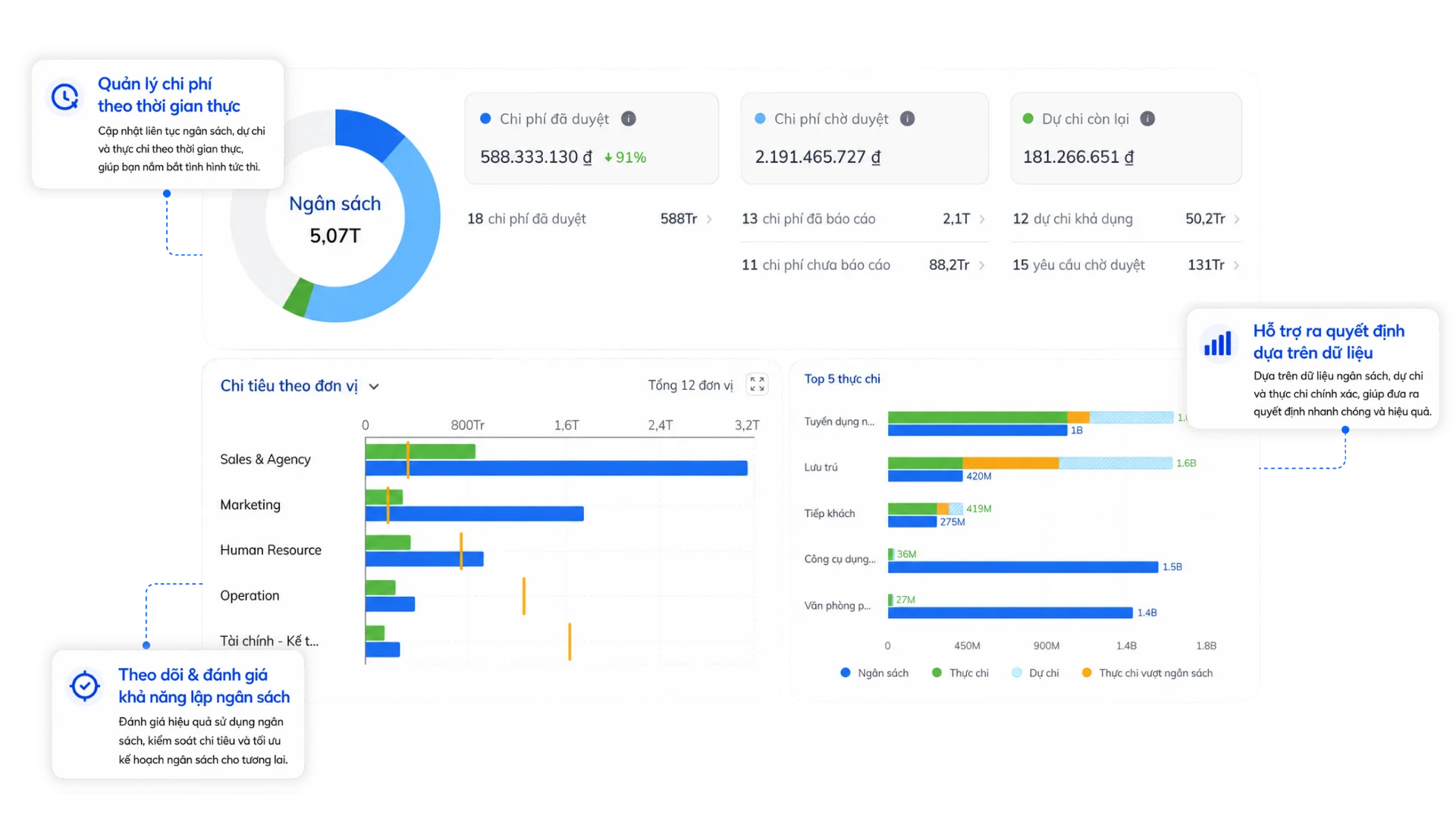
CFO's perspective: Managing the store wallet is managing dispersed cash flow.
For CFO, Petty Cash is not just about controlling small expenses, but also about managing cash flow across multiple locations. When each store maintains its own cash or budget, the business needs to know where the money is, what it has been used for, and how much credit is left.
The digitized store wallet model helps Reduce the amount of cash dispersed at points of sale., simultaneously Enhance the ability to track cash flow and transaction history. on a centralized platform. This supports CFOs and Finance Managers in making budget adjustments, detecting anomalies, and controlling operating costs more effectively without waiting until the end of the accounting period.
Once the Petty Cash process is digitized, the next step is to build a deployment roadmap that fits the scale of the business, from standardizing policies, setting limits and approval flows to scaling management across the entire store system.
Checklist for implementing petty cash for chain stores.
To effectively implement Petty Cash across a chain of stores, businesses should begin by standardizing management policies, limits, and control procedures before selecting digital tools. In reality, many businesses invest in software but still face difficulties because their internal processes are not standardized, leading to inconsistent data and difficulty in controlling operations as they scale up.
Below is a checklist to help the Finance team build a process. Petty Cash manages the store's operating expenses for the chain. towards transparency, ease of control, and readiness for automation.
Checklist for implementing Petty Cash for chain stores.
| Category | Content to be implemented | Management objectives |
| ☐ Identify the categories of expenses that are permitted to be paid using Petty Cash. | The regulations clearly define the small expenses that can be paid from Petty Cash, such as stationery, consumables, minor repairs, and incidental operating costs. | Avoid using Petty Cash for expenses that are beyond your control. |
| ☐ Set a spending limit | Set limits per transaction, per day/month, or per store. | Control the budget and reduce the risk of overspending. |
| ☐ Defining roles and responsibilities | Clearly identify the person who creates the payment request, the person who approves it, the person who verifies it, and the person responsible for managing the store's funds or wallet. | Transparency and accountability throughout the entire process. |
| ☐ Document standardization is mandatory. | Create a list of supporting documents to be submitted for each type of expense, such as invoices, receipts, statements, or related documents. | Improving the quality of settlement documents and facilitating auditing. |
| ☐ Set up the approval matrix | Establish approval criteria based on amount, expense type, department, or store. | Standardize processes and reduce reliance on manual approvals. |
| ☐ Check for duplicate invoices and documents | Establish a mechanism to check or alert on previously used documents. | Reduce the risk of duplicate payments and data errors. |
| ☐ Monitor your fund balance or store wallet balance | Track the balance and transaction history of each store in real time. | Help the Finance team proactively manage the budget. |
| ☐ Build a multidimensional cost report | Compile costs by store, region, expense category, department, or cost center. | Assisting the CFO in analyzing operational efficiency and budget control. |
| ☐ Set a budget supplement threshold | Regulations specify the conditions for increasing the store's credit limit or adding more budget when internal criteria are met. | Maintaining continuous operation while ensuring control. |
| ☐ Periodic policy review | Evaluate the generated data to adjust limits, processes, and management policies to suit the actual situation. | Continuously optimize processes in line with business growth. |
Standardize processes first, then digitize.
A common mistake is implementing Petty Cash management tools before a business has finalized its internal policies and procedures. This causes the system to index existing shortcomings instead of addressing the root cause of the problem.
Therefore, businesses should prioritize standardizing core elements such as expense categories, limits, approval flows, documentation requirements, and reconciliation principles. Once regulations are clear, adopting a management platform like... Bizzi Expense This will help digitize processes more efficiently, while also supporting centralized management of multiple stores on a single system. Features such as Approval Matrix, IPA (Intelligent Process Automation), Duplicate Detection, Wallet Ledger Or, the budget replenishment mechanism, implemented through a process, significantly reduces manual operations for the Finance team, increases control, and enhances transparency in Petty Cash management.
If the chain only has a few stores, a process Petty Cash It might seem sufficient to meet operational needs. However, as the number of sales outlets increases, hundreds of small expenses incurred each day will generate a large volume of paperwork, approval requests, and dispersed cash flow. At this point, Petty Cash It should no longer be simply a cash fund for incidental expenses, but should be viewed as part of the system. operating cost management. Combining standardized processes with digital platforms such as Bizzi Expense This helps businesses control costs in real time, improve budget tracking capabilities, and build a sustainable financial management foundation as they expand their chain of stores.
FAQ
What is petty cash in retail?
Petty cash is a small spending fund used by a store to pay for low-value, daily expenses that need to be processed quickly, such as purchasing consumables, stationery, minor repairs, shipping fees, drinking water, or emergency purchases.
For a business with only one store, managing petty cash can be relatively simple. However, when operating a chain of multiple stores, where each store incurs small daily expenses, the business needs to establish a unified control process to track limits, documents, approvers, and balances for each store.
Is Petty Cash considered an expense?
Not quite. Petty cash is a source of money or a credit limit allocated to cover small expenses., still expense This is the actual amount of money that has been used for business operations.
For example:
- The company provides 5 million VND in petty cash to the store at the beginning of the month → this is not yet an expense.
- When a store uses 800,000 VND to purchase cleaning supplies and has all the necessary valid documents, this amount is recognized as an expense according to accounting regulations and internal policies.
Therefore, the Finance team needs to monitor separately between petty cash balance and settled expenses To avoid confusion when preparing reports.
How should chain stores set petty cash limits?
There is no fixed limit that applies to all businesses. Limits should be established based on the operational characteristics of each chain, such as:
- Revenue scale of each store.
- The frequency of these expenses is low.
- Type of business (F&B, retail, fashion, pharmaceuticals, etc.).
- The distance between the store and the finance department.
- The company's risk management policy.
Typically, businesses should establish multiple tiers of credit limits, such as:
- Limits for each transaction.
- Daily or monthly spending limits.
- Limits vary by store.
- Limits are set for each expense category.
Setting limits from the outset helps reduce budget overruns and restricts unauthorized spending.
How can we control petty cash documents?
Documents should be collected immediately after a transaction occurs, rather than waiting until the end of the week or month to compile them.
Businesses can standardize processes by following these steps:
- The regulations clearly specify the required documentation for each expenditure.
- Request that the staff send the documents immediately after payment.
- Verify the validity of the invoice or receipt before settling the payment.
- Reconcile the expenditure, the person responsible for the expenditure, and the relevant supporting documents.
- Check for duplicate invoices or documents with missing information.
- Store electronic documents along with approval history for auditing and review purposes.
When dealing with a large volume of transactions, businesses should utilize tools capable of OCR, document duplication checking, and centralized archiving to significantly reduce the amount of manual verification.
When should you use a store-bought wallet instead of cash?
The online wallet model is suitable for businesses that:
- Manage multiple stores or branches.
- The goal is to reduce the amount of cash in circulation at the point of sale.
- Many small expenses arise each day.
- We need to monitor store balances in real time.
- We want to shorten the time it takes to allocate funds and supplement the budget.
- Centralized data is needed for Finance and CFO to track cash flow.
In these cases, the in-store wallet helps businesses better control the allocation, use, and reconciliation of funds after disbursement compared to the traditional cash fund model.
Can a store wallet completely replace petty cash?
Not necessarily.
Store Wallet can replace most purchases. petty cash Cash transactions are typically handled if the business has digitized its payment and expense management processes. However, there are still specific cases where a store needs to use cash due to internal policies or supplier requirements.
Therefore, many businesses choose a hybrid model:
- Store Wallet to handle the majority of your recurring expenses.
- Cash is reserved for special situations or when electronic payments are not yet available.
This approach helps reduce the amount of cash in circulation while maintaining operational flexibility.
Which metrics should a CFO use to analyze petty cash reports?
Instead of just tracking the total amount spent, CFOs should focus on metrics that reflect the effectiveness of control and operational quality, including:
- Percentage of stores exceeding petty cash limits.
- The balance in the fund or wallet varies by store.
- Percentage of documents submitted on time.
- The percentage of documents returned or lacking information.
- Average approval time.
- Average settlement time.
- The value of expenses awaiting settlement.
- Costs vary by store, region, and category.
- Frequency of fund replenishment (replenishment) or wallet recharge.
- Trends in operating costs between stores.
Monitoring these KPIs helps CFOs detect early signs of overspending, slow settlement processes, or risks in petty cash management, thereby enabling them to make decisions to adjust policies and allocate resources appropriately.
Conclude
Petty Cash remains an essential tool for handling small daily expenses at a store. However, as businesses expand into chains with multiple locations, more staff, and a growing volume of transactions, managing cash manually reveals many limitations, such as difficulty in controlling limits, slow document collection, time-consuming reconciliation, and a lack of real-time data for management.
Instead of just focusing on management cash fund, Businesses should shift to a management approach. store operating costs This is a seamless process – from expenditure proposal, approval, budget allocation, document collection to settlement and reporting. It also serves as a foundation for CFOs and Finance Managers to improve cash flow control, reduce the risk of losses, and standardize processes across the entire system.
In that context, Bizzi Expense Petty Cash is the ideal solution for digitizing Petty Cash management processes and operating costs for chain stores. The platform supports businesses in standardizing expense requests, establishing policy-based approval matrices, verifying and reconciling documents, tracking store wallet balances, logging all transactions (ledger), and building reports by store, region, or expense category. As a result, businesses not only effectively manage small expenses but also establish a transparent, consistent, and easily scalable cost control process as the chain grows.
To receive advice on effective corporate financial management solutions, schedule an appointment with Bizzi here: https://bizzi.vn/dat-lich-demo/