


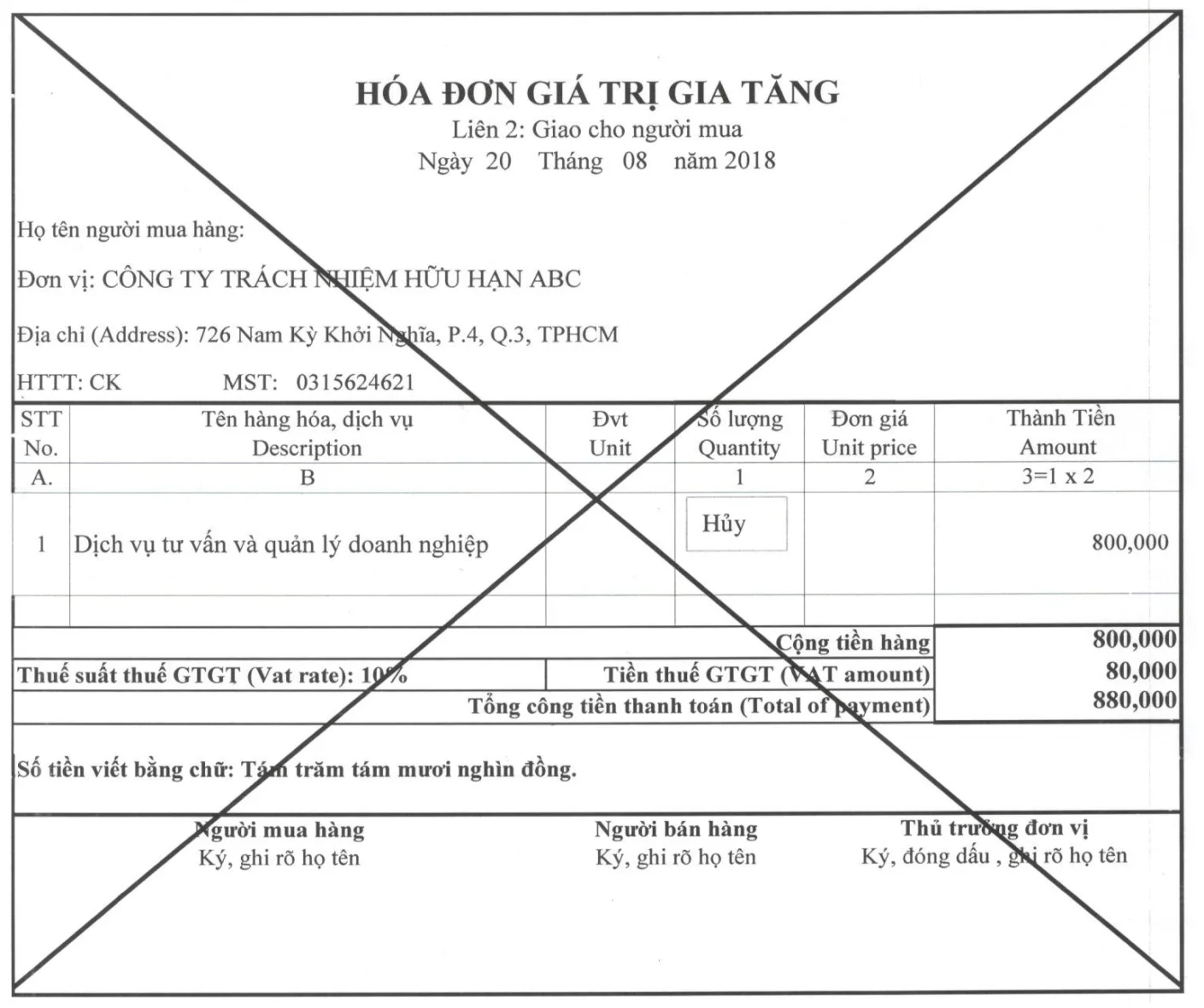
When discovering input invoices from a defunct business, the company needs to quickly review the transaction date, tax declaration status, supporting documents for the actual transaction, and provide explanations as requested by the tax authorities if necessary. This situation carries many potential risks related to VAT deductions, deductible expenses when calculating corporate income tax, and the risk of administrative penalties for tax and invoice-related issues.
However, businesses should not assume that all invoices from businesses that have absconded are completely dismissed. In fact, tax authorities will consider many factors such as the time of the transaction, the operating status of the seller at the time the invoice was issued, documentation proving the transaction's authenticity, and related documents before making a final conclusion.
What are invoices from businesses that have absconded, and why are they considered a risk?
Invoice from a company that has absconded. These are invoices issued by companies that are no longer operating at their registered address, have disappeared, or have had their tax identification numbers blocked by the tax authorities. These types of invoices are considered extremely risky because they are often associated with fraudulent invoice trading, resulting in significant revenue losses for the State budget.
What is an invoice from a business that has absconded?
Invoices from businesses that have absconded (businesses that are no longer operating at their registered address) are generally understood to be invoices issued by a business that has subsequently been determined by the tax authorities to no longer be operating at its registered address, has abandoned its business address, ceased operations, or has high tax risk indicators.
In practice, many accountants often confuse:
- The business has absconded or ceased operations.
- Illegal invoice.
- The act of using illegal invoices.
These are three related concepts, but they are not entirely the same.
A business being identified as having abandoned its business address does not automatically mean that all previously issued invoices become illegal. The tax authorities will base their assessment on the time the transaction occurred, supporting documents, and the actual circumstances of the transaction.
Why are invoices from businesses that are no longer operating at their registered address (often referred to as "abandoned") considered risky?
When tax authorities determine that a seller of goods or service provider is no longer operating at their registered address, the relevant input invoices are often subject to intensive review due to the following legal risks:
- Difficulty in proving the authenticity of the transaction: Businesses are unable to provide sufficient documentation (contracts, delivery receipts, non-cash payment documents, etc.) to prove that the purchase and sale transaction is genuine.
- Ineligible for input VAT deduction: The invoice is determined by the tax authorities to be illegal or an illegal invoice is used, resulting in ineligibility for VAT deduction.
- Ineligible for deductible expenses: Expenses related to this business's invoices may be excluded from deductible expenses when determining corporate income tax due to a lack of valid and legitimate supporting documents.
- Risk of illegal invoice usage: Tax authorities may suspect that a business is using illegal invoices or illegally using invoices to legitimize illicit goods or services.
- This creates obligations for explanation and inspection/auditing: Businesses will have to spend a lot of time and resources explaining and providing documents to tax authorities during tax inspections and audits.
According to Decree 125/2020/ND-CP (amended and supplemented by Decree 310/2025/ND-CP), the act of using illegal invoices or using invoices illegally may be subject to administrative penalties ranging from VND 20 million to VND 50 million depending on the nature and severity of the violation. In addition, businesses may also be subject to remedial measures such as forced cancellation of invoices, adjustment of deductible tax amounts, or removal of declared expenses.
Note: When discovering invoices related to a business that has absconded, businesses should not rush to discard all invoices immediately. Instead, they should conduct a thorough review of all transaction records and documents to accurately determine the nature of the transaction and the level of risk, in order to develop a plan for explanation or timely adjustments as instructed by the tax authorities.
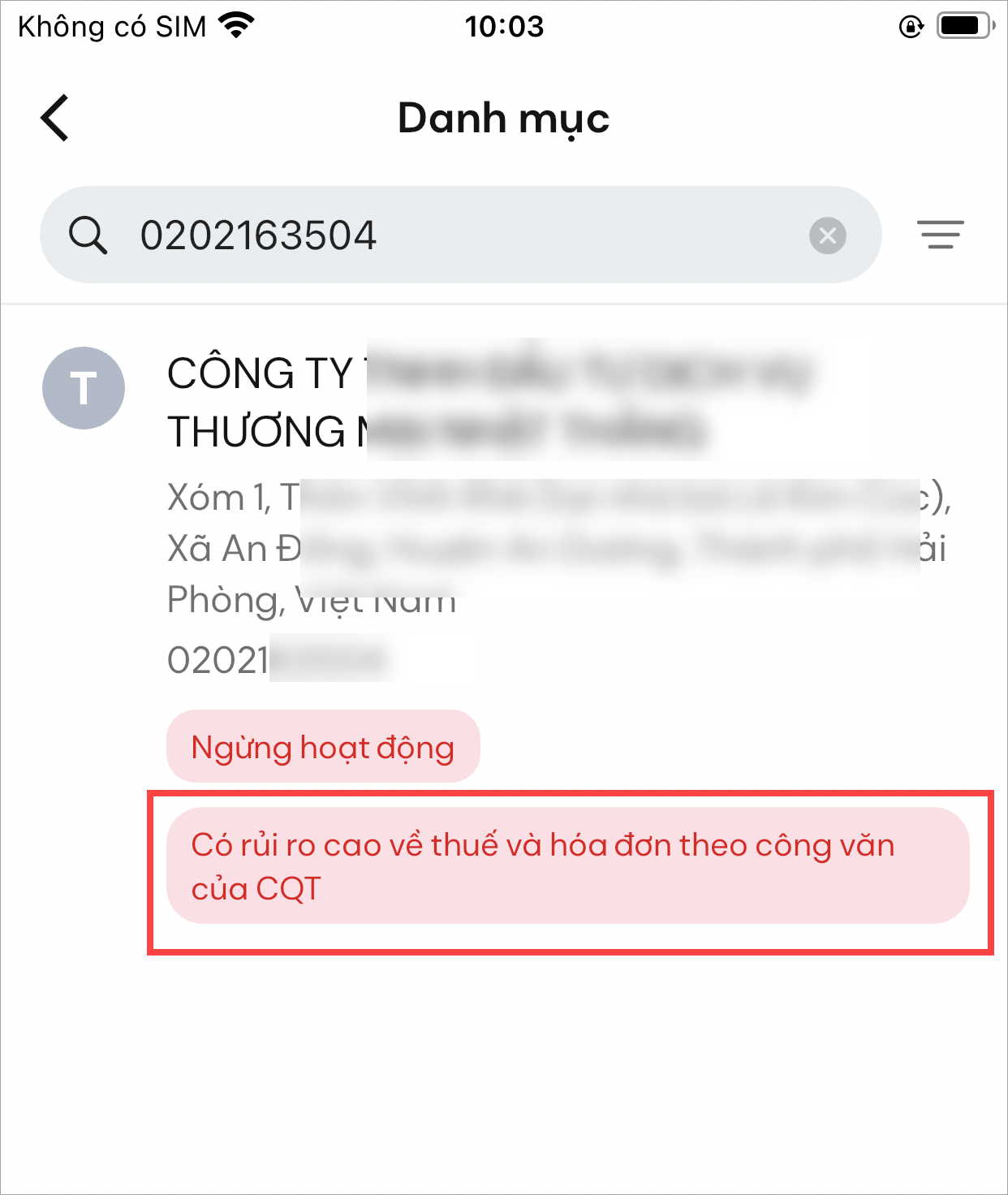
What should you check first when you receive an invoice from a company that has absconded?
Before making tax adjustments or preparing explanations for invoices from businesses that have absconded, accountants need to review all relevant records to assess the actual status of the transaction.
Checklist for quick risk assessment of invoices
□ What is the invoice date?
□ What is the delivery or service date?
What is the actual payment date?
□ From what point in time does the tax authority notify that a business selling goods has absconded or ceased operations?
□ Is the invoice still valid on the electronic invoice lookup system?
□ Is there a sales contract or a service contract?
□ Do you have a purchase order (PO) or documentation proving the need to purchase the goods?
□ Is there a service handover, acceptance, or transfer record?
□ Do you have a delivery note, a receipt note, or other goods transfer documents?
□ Are there any non-cash payment documents for mandatory payments?
□ Do the goods or services support the business operations of the enterprise?
Has the VAT already been deducted from the invoice?
□ Have the expenses been accounted for as deductible expenses when calculating corporate income tax?
Has the relevant tax been included in the tax refund application?
See more about List of 1500 businesses at risk regarding invoices and taxes (Update 2026)
Why is this review process important?
Early review helps businesses identify:
- Is it necessary to amend the tax return?.
- Is there sufficient evidence to prove that the transaction actually took place?.
- Is it necessary to prepare explanatory documents for the tax authorities?.
- The extent of impact on VAT and corporate income tax.
In many cases, businesses can demonstrate that the transaction actually occurred and be considered based on complete documentation, rather than having the expense or input tax completely disallowed.
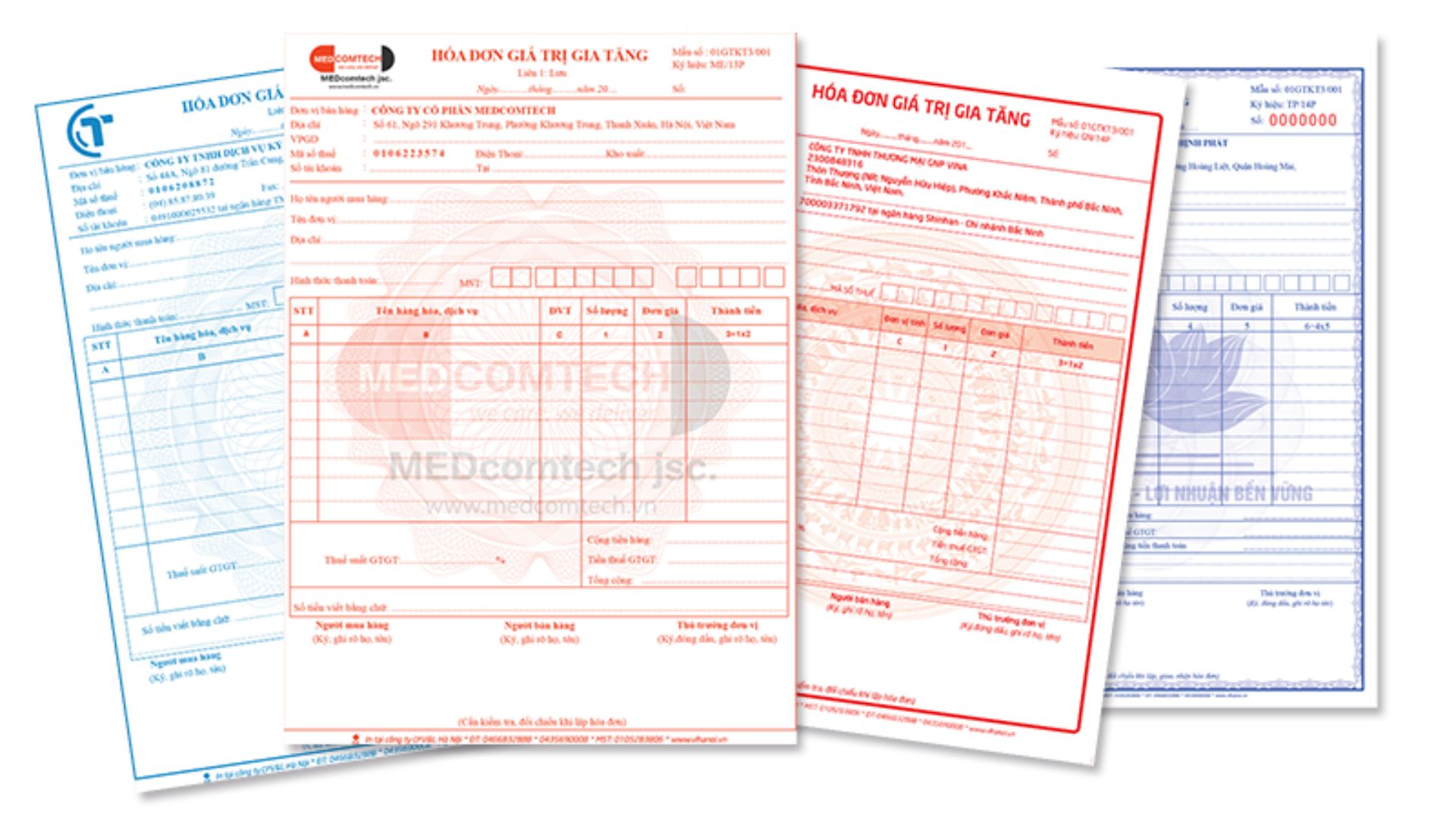
How to handle invoices from businesses that have absconded, depending on the specific case.
There is no one-size-fits-all solution. Handling invoices from businesses that have absconded depends on the status of tax declarations, deductions, refunds, and supporting documentation of the actual transactions.
| Situation | What to do | Main risks |
| VAT not yet declared or deducted. | Temporarily suspend the declaration of high-risk invoices and review the supporting documents for the transactions. | Not eligible for deduction |
| VAT has been declared and deducted. | Prepare explanatory documents and assess the likelihood of tax adjustments. | The amount of tax already deducted was reduced. |
| Included in corporate income tax expenses. | Prepare documentation to support business operations. | Expenses excluded |
| Waiting for tax refund | Review tax refund files related to risky invoices. | Delayed tax refunds or requests for additional documentation. |
| There are signs of invoice trading. | Cooperate in providing explanations to the tax authorities and supplying documents as requested. | Administrative penalties or criminal risks |
In cases where VAT has not yet been declared...
If a business discovers a risk before the tax declaration deadline, it should temporarily refrain from including the invoice in the VAT deduction file and conduct a thorough review of the supporting documents.
This is the most favorable stage for handling the issue because the business has not yet incurred any obligation to adjust previously filed tax returns.
In cases where VAT deduction has already been declared.
Businesses need to prepare a set of documents proving the actual transaction, including contracts, delivery and receipt records, payment documents, inventory records, and other related documents.
If the actual transaction cannot be proven or the tax authorities conclude that the invoice is illegal, the business may have to adjust down the amount of input VAT already deducted.
Cases where the cost has already been included in corporate income tax expenses.
To protect recognized expenses, businesses need to demonstrate:
- The transaction actually occurred.
- Goods or services used in production and business activities.
- All required documents are available.
- The accounting was done in accordance with accounting regulations.
This is often a key point in explaining invoices from businesses that have absconded to the tax authorities.
Note regarding the basis for guidance from the tax authorities.
When referring to guidelines for handling invoices related to businesses that have absconded, businesses need to check the exact document number being cited. Some older documents often mistakenly refer to Official Letter No. 1179/BTC-TCT dated July 22, 2014, while the document commonly cited by tax authorities and consulting firms is Official Letter No. 11797/BTC-TCT dated August 22, 2014.
Accurately comparing documents is essential to avoid misapplying legal grounds when providing explanations.
What documents are needed to explain invoices from businesses that have absconded?
When tax authorities request an explanation for invoices from a runaway business, the focus is not on whether the business actually possesses the invoices, but rather on its ability to prove that the actual purchase and sale transaction occurred.
According to the guidelines in Official Letter 7333/BTC-TCT, for transactions occurring before the seller is determined to have abandoned their business address or absconded, the tax authorities will review the actual records to assess whether the transaction is genuine. Therefore, businesses need to prepare a complete set of documents proving the transaction flow, goods flow, and cash flow.
Documents to prepare for explanation
| Document group | Purpose of proof |
| Sales contract or service contract | Proof of actual transaction agreement |
| Purchase Order (PO) | Demonstrate the need to purchase goods or services. |
| Handover and acceptance record | Proof that goods or services have been delivered. |
| Warehouse release form, warehouse receipt form | Demonstrate the actual flow of goods. |
| Payment documents | Proof of transaction cash flow |
| XML/PDF electronic invoices | Proof of invoice data |
| Accounting books and accounting documents | Proof that all entries have been fully recorded in the accounting system. |
| Related sales documents | Proof of input for business operations |
| Email, bill of lading, work report | Provide additional evidence of actual transactions. |
What types of documents are typically of most interest to the tax authorities?
During an audit or inspection, tax authorities typically focus on three main groups of evidence:
Transaction flow: Contracts, purchase orders, email exchanges, meeting minutes.
Product line: Warehouse release form, warehouse receipt form, bill of lading, delivery and acceptance record, inspection certificate.
Cash flow: Transfer documents, bank statements, payment documents.
If a business can fully demonstrate all three of the above factors, its chances of protecting its rights regarding VAT and corporate income tax expenses will be significantly higher.
Sample structure for a letter explaining invoices from a runaway business.
There is no single template for a single explanatory document that applies to all cases. However, the explanatory document should generally include the following basic information:
1. Company information for explanation
- Company's name
- Tax code
- Head office address
- Legal representative
- Contact information
2. Related invoice information
- Some bills
- Invoice symbol
- Invoice date
- Value of goods and services
- VAT
3. Supplier Information
- Name of the selling business
- Tax code
- Registration address
- Time of transaction occurrence
4. Summary of transactions
Present:
- Purpose of purchasing goods or services
- Transaction process
- Delivery time
- Payment time
- Intended use in production and business activities.
5. Evidence proving the transaction was genuine.
List all attached documents:
- Contract
- PO
- Receipt
- Acceptance report
- Payment documents
- Electronic bill
- Accounting
- Related sales documents
6. Commitments and proposals
- We guarantee the accuracy of the information provided.
- I am legally responsible for the content of this explanation.
- We request that the tax authorities review the file based on actual transactions that occurred.
Note: Avoid using generic templates found online without reviewing the actual records. The explanation must accurately reflect the declaration status, transaction time, and specific requirements of the tax authorities.
Can invoices from businesses that have absconded be used for VAT deduction and corporate income tax calculation?
Short answer
VAT may be considered for deduction and included in deductible expenses when determining corporate income tax if the business can prove the actual transaction, meets the prescribed conditions, and there is no basis to determine that the invoice is illegal.
Conversely, businesses may have their input VAT or expenses disallowed if they cannot prove the actual transaction or if there are signs of invoice trading.
The case may be considered.
Businesses have the opportunity to protect their tax interests if:
- The transaction occurred before the seller was determined to have absconded or ceased operations.
- The goods or services actually provided.
- We have all the necessary contracts, delivery documents, and payment records.
- The invoice has been fully accounted for in accordance with regulations.
- There are no signs of invoice trading.
Cases at risk of being disqualified
The risk will increase if:
- The delivery and receipt of goods could not be proven.
- There is no valid payment documentation.
- There are no complete sales records.
- The input used for production and business operations cannot be proven.
- The tax authorities concluded that the invoice was illegal or the transaction was fictitious.
Therefore, the answer is not always "deductible" or "non-deductible," but depends on the records and the actual verification results.
Common mistakes when handling invoices from businesses that have absconded.
Many businesses face disadvantages during the accountability process not because the transactions were fictitious, but because the documentation was incomplete or incorrectly processed from the outset.
1. Hastily adjust the entire invoice.
Some businesses automatically discard entire invoices as soon as they discover a supplier has absconded, without reviewing the transaction dates or supporting documentation.
2. Do not save the electronic invoice XML file.
Saving only as a PDF makes it difficult to cross-reference data and verify invoice information when explanations are needed.
3. Lack of delivery or acceptance documents.
Many businesses only have invoices but no proof of receipt of goods or services.
4. Cash payment for large value transactions.
This is a common reason why businesses struggle to prove the validity of transactions.
5. Not checking supplier status.
Businesses often only check price and quality, neglecting to verify the legal or tax status of their suppliers.
6. Preparing only the official letter but lacking supporting documents.
The explanatory letter is merely a presentation document. The primary evidentiary value comes from the actual transaction records.
7. No classification of declaration status.
Businesses need to separate:
- The invoice has not been declared.
- The invoice has been declared.
- The invoice has been refunded.
- The invoice is currently under investigation.
Each group will have a different approach to handling the situation.
8. Failure to establish a supplier risk control process.
Many businesses only discover risks after filing or settling their taxes, leading to significant processing costs.
How to prevent the risk of fraudulent invoices in the accounting process.
Instead of dealing with problems after they occur, businesses should establish control procedures from the outset.
Step 1: Check the supplier before making a transaction.
- Verify your tax identification number.
- Check the operating status.
- Check the business's industry.
- Review the transaction history.
Step 2: Check the invoice upon receipt.
- Compare the invoice information.
- Check the status of your electronic invoice.
- Verify the validity of the XML data.
Step 3: Compare with transaction documents
- Compare with the Purchase Order.
- Compare with the contract.
- Compare with the warehouse receipt.
- Compare with the acceptance report.
Step 4: Centralized record storage
- Save the original XML file.
- Save the PDF file.
- Save the payment receipt.
- Keep a record of the delivery and receipt.
Step 5: Risk warning before filing
Accountants need to review unusual invoices before:
- VAT declaration.
- Cost accounting.
- Pay off outstanding debts.
- Prepare your tax refund application.
Step 6: Monitor risks periodically.
Businesses should build a dashboard to monitor:
- Supplier of risk.
- The invoice needs verification.
- The file is missing supporting documents.
- Transactions require explanation.
From a CFO's perspective, the risk of a company's fraudulent invoice is not just about a rejected invoice, but reflects a loophole in the process of controlling input invoices and accounts payable.
How does Bizzi help businesses control input invoice risks?
For businesses that process hundreds or thousands of invoices each month, manual verification can easily miss signs of risk.
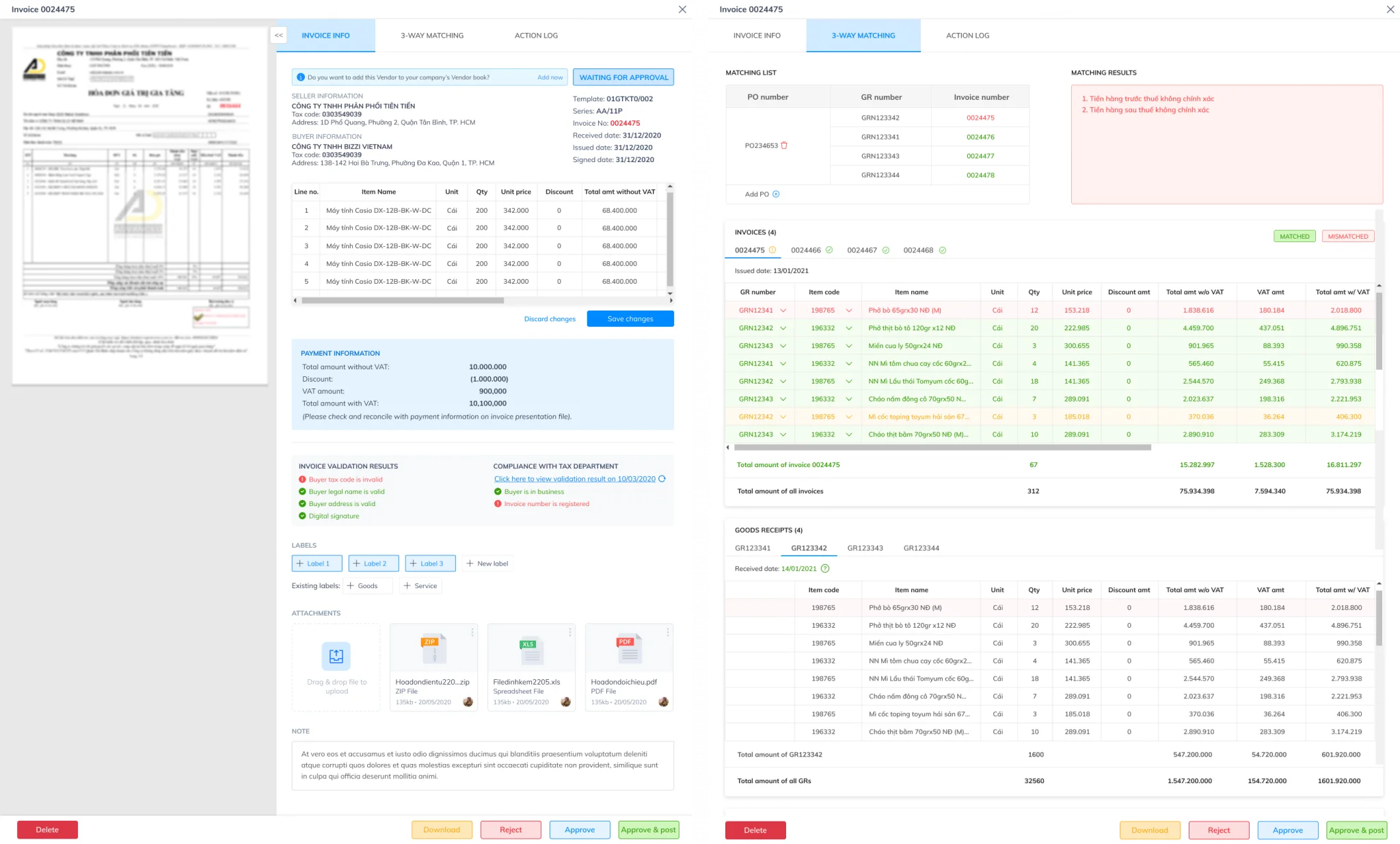
Bizzi supports businesses in building a comprehensive input invoice control process through:
- Automatically download and verify incoming invoices, including checking the operational status of suppliers.
- Reconcile invoice data with purchase orders, contracts, and warehouse receipts.
- Extract data from XML, PDF, or images using AI-OCR/IDP.
- Store invoice records centrally on one system.
- Be alerted to invoices showing signs of irregularities before filing or paying them.
- Periodic post-audit of invoices based on business needs (quarterly, annually, etc.)
- It facilitates quick retrieval of records when explanations are needed for tax authorities or auditors.
For businesses with a large volume of invoices, automating the process of checking, reconciling, and archiving not only saves time for the accounting department but also significantly reduces the risks involved in tax settlement.
FAQ
Will invoices from businesses that have absconded be automatically rejected?
No. The tax authorities will review the actual transaction records, the time the transaction occurred, and related documents before drawing a conclusion.
What happens if the transaction occurred before the seller absconded?
Businesses need to prepare documentation proving actual transactions, including contracts, delivery and receipt documents, payment records, and accounting entries, to present to the tax authorities.
What documents are needed to provide explanations to the tax authorities?
This typically includes contracts, purchase orders, warehouse receipts, acceptance reports, payment documents, XML/PDF electronic invoices, accounting documents, and other related transaction evidence.
The VAT deduction has already been declared, is there a need for an adjustment?
Not all cases require adjustment. Adjustments depend on the results of the record review and the conclusions of the tax authorities.
Can invoices from businesses that have absconded be included in corporate income tax expenses?
It may be considered if the business can demonstrate that the transaction was genuine, served its production and business operations, and fully meets the conditions stipulated by regulations.
Is it necessary to submit a formal explanation in all cases?
No. Explanations are usually required when requested by the tax authorities or when a business needs to provide additional documentation to clarify the validity of a transaction.
How can I check for risky input invoices before filing my tax return?
Businesses should check the supplier's status, the validity of electronic invoices, and compare invoices with related business documents.
Can the software automatically detect risky invoices?
Yes. AP Automation and input invoice control solutions like Bizzi can support automated checking, reconciliation, and alerting for invoices showing signs of irregularities before filing or payment.
Conclude
Dealing with invoices from businesses that have absconded is not just about the invoices themselves, but also about proving the actual transactions. Upon receiving a notification from the tax authorities, businesses should calmly review the transaction dates, prepare complete sales records, payment documents, and other relevant materials to provide explanations.
In reality, not all invoices from businesses that have absconded are immediately rejected. The important thing is whether the business can prove the nature of the transaction, the flow of payments, and the use of goods and services in business operations. Maintaining complete records from the outset will significantly reduce the pressure during tax audits or inspections.
Bizzi helps businesses manage incoming invoices centrally, automatically collecting and storing electronic invoices, and connecting invoices with contracts, orders, and related documents. This allows accounting teams to easily access records when needed for explanations, while also improving tax risk control throughout the entire procurement and payment process.
Sign up for a Bizzi demo today to experience our centralized input invoice management solution, helping businesses proactively prepare documentation and reduce risks in tax and accounting matters. https://bizzi.vn/dat-lich-demo/