


While many businesses have invested heavily in warehousing, purchasing and logistics, a big problem is still being overlooked: financial flows in the supply chain.
In fact, optimizing goods without controlling costs - debts - accompanying invoices makes the supply chain susceptible to cost leakage, reduced cash flow and increased risks.
2026 is the year that supply chain management (SCM) software will grow strongly, especially platforms that integrate additional capabilities. cost control – financial forecasting – automatic reconciliation. This is the “intersection” between SCM and financial solutions like Bizzi.
Why businesses need to invest in Supply Chain Management software
Supply chain management software (Supply Chain Management Software – SCM) is a tool that helps businesses plan, coordinate, and optimize the entire process from purchasing, production, inventory to transportation – to reduce costs and increase financial efficiency.
As raw material costs rise, delivery times fluctuate and cash flows become tighter, businesses need to not only optimize inventory, but more importantly, Control the flow of costs and liabilities throughout the supply chain.
Modern SCM (Supply Chain Management software) solutions have gone beyond warehouse management – purchasing – logistics. 2026 will witness the rise of a group of combined solutions:
- Supply chain management
- Demand forecasting with AI
- Cost & Debt Control
- Financial integration – ERP – accounting
This is the intersection between traditional SCM systems and smart finance platforms like Bizzi, helping businesses not only optimize operations but also optimize cash flow.
Top 10 Supply Chain Management Software 2026
The list below is selected according to 3 main criteria:
- Global popularity & trust
- Depth of features specific to supply chain management
- Ability to integrate finance – logistics – ERP – BI, suitable for Vietnamese businesses
1. SAP SCM (SAP S/4HANA)
SAP SCM software is the most powerful solution on the market for large, complex supply chains. In 2026, SAP continues to lead in integrated planning (IBP), AI-powered demand forecasting, and sustainability-driven supply chain management.
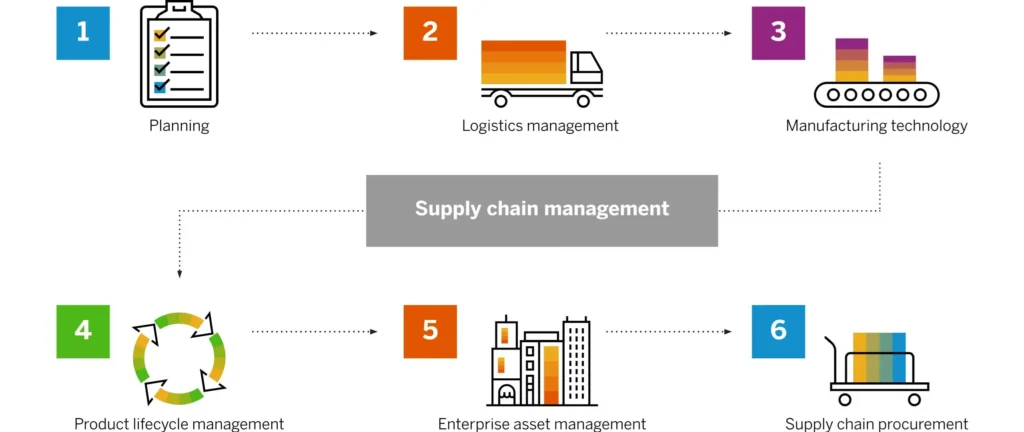
Featured Modules:
- SAP IBP (Integrated Business Planning) – demand forecasting, supply planning
- SAP EWM (Warehouse Management) – advanced warehouse management
- SAP TM (Transportation Management) – transport optimization
- SAP Business AI – simulation, real-time forecasting
Advantage:
- End-to-end supply chain visibility
- Extremely high stability and precision
- Suitable for multisite, multi-country operations
Disadvantages:
- Large investment costs
- Deployment is lengthy and requires a highly standardized process.
Fit: Multinational FMCG, manufacturing, retail group.
2. Oracle SCM Cloud
Oracle SCM Cloud is the most powerful cloud-native supply chain management software available today, integrating AI and supply chain risk analytics.
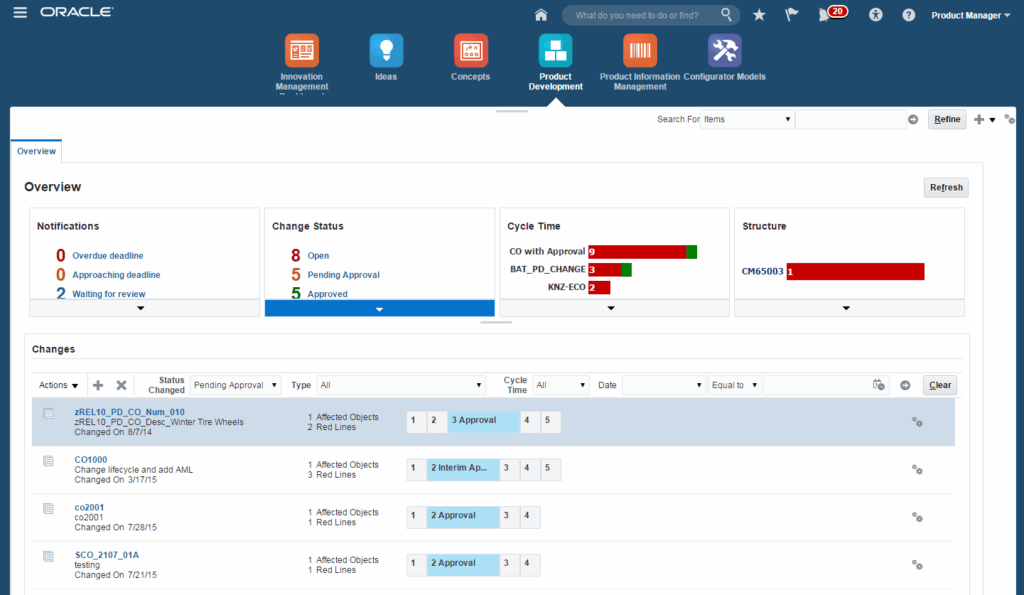
Outstanding features:
- Multi-channel order management and fulfillment
- Optimizing transportation and logistics
- Supply chain risk prediction
- Carbon footprint calculation
Advantage:
- Strong processing speed
- Tight connectivity with Oracle ERP
Disadvantages:
- Need IT team to operate
- The investment cost is relatively high
Fit: Global logistics or supply chain business.
3. Logility SCM
Logility is known for its AI/GenAI application modules for demand optimization, inventory and supply planning.
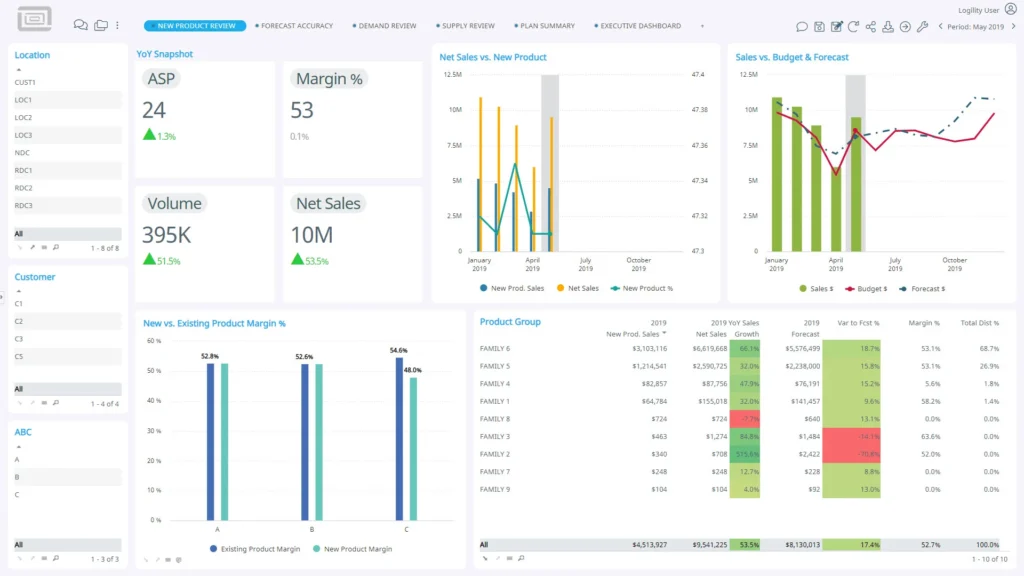
Strengths:
- DemandAI+, InventoryAI+
- Tools LEA (Logility's GenAI Engine)
Advantage:
- Accurate demand forecasting
- Reducing the risk of supply chain disruption
- Ability to simulate multiple scenarios
Fit: Garment, food, electronics industries – where demand fluctuates seasonally.
4. Blue Yonder (JDA Software)
Blue Yonder is one of the market-leading supply chain management solutions, having been a Gartner Magic Quadrant leader for many years.
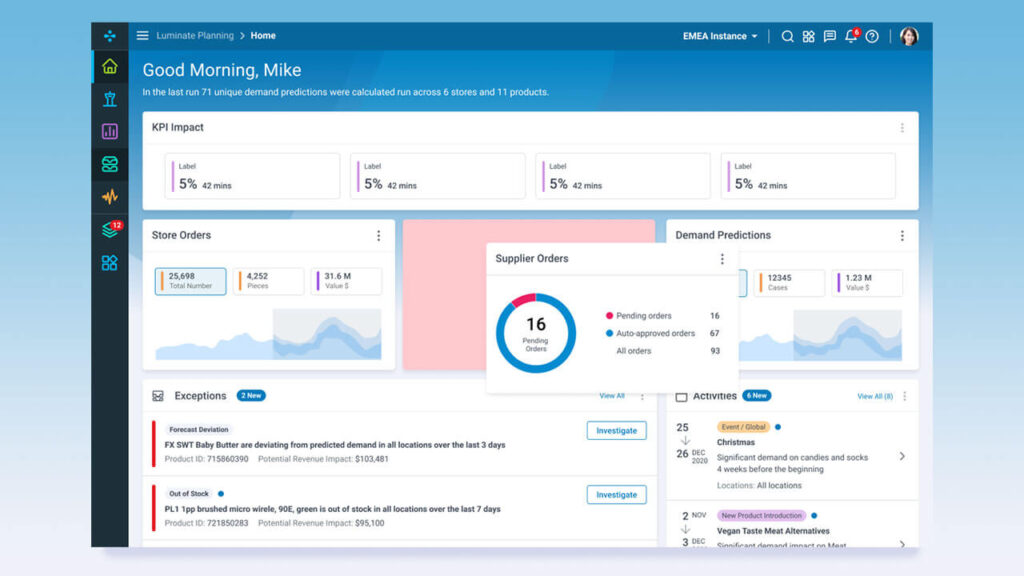
Advantage:
- AI forecasts demand in real time
- Strong transport optimization capabilities
- Comprehensive Retail SCM solution
Disadvantages:
- Focus on enterprise
- High cost
Fit: Logistics enterprises, large retailers, multi-industry corporations.
5. Kinaxis RapidResponse
Kinaxis is known for its real-time supply chain planning and risk simulation capabilities.
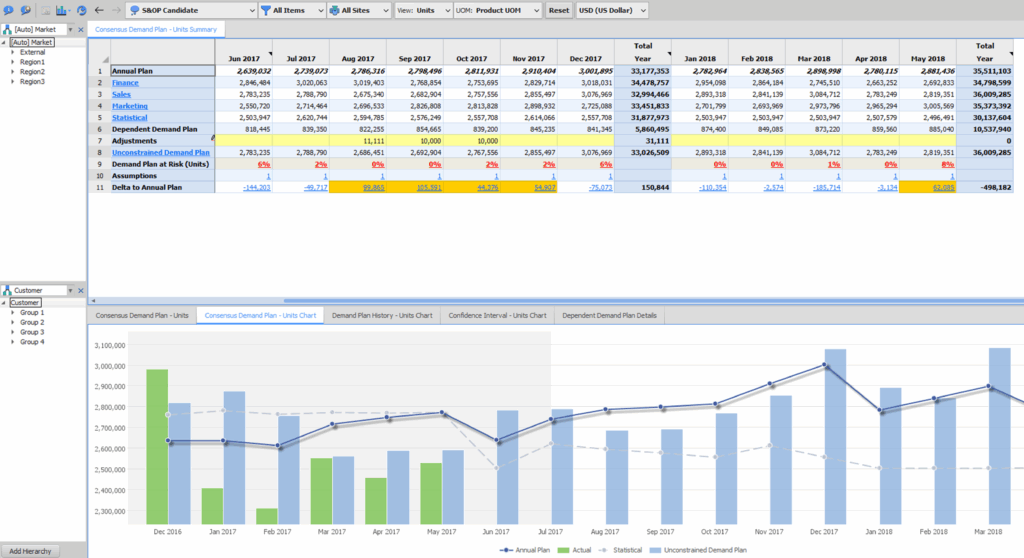
Advantage:
- Extremely powerful scenario planning
- Ability to make decisions very quickly
- Outstanding in medical equipment and heavy industry
Disadvantages:
- High price
- Requires quality data analysis team
Fit: Businesses have complex supply chains that are sensitive to market fluctuations.
6. ATALINK (Vietnam)
ATALINK is a pure Vietnamese SCM platform, connecting businesses - suppliers - partners.
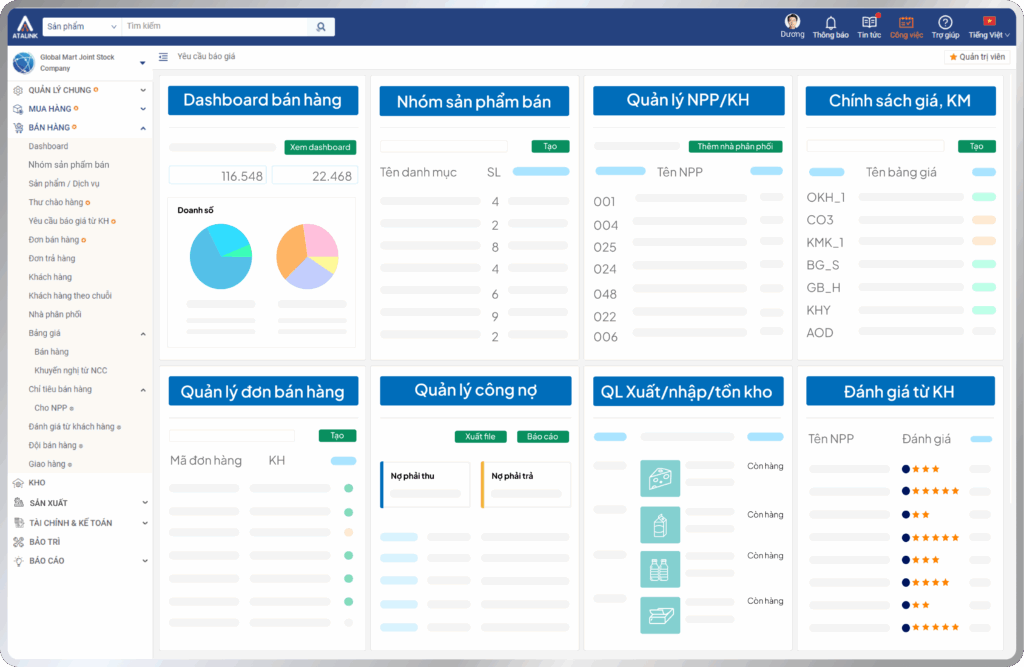
Main features:
- Centralized purchasing management
- B2B Ordering
- VMI Warehouse
- Accounting and finance integration
Advantage:
- Deep Vietnamization
- Suitable for multi-department model
- Easy to deploy
Fit: SMEs in Vietnam have domestic supply chains and need budget-friendly and fast-to-implement solutions.
7. Infor SCM
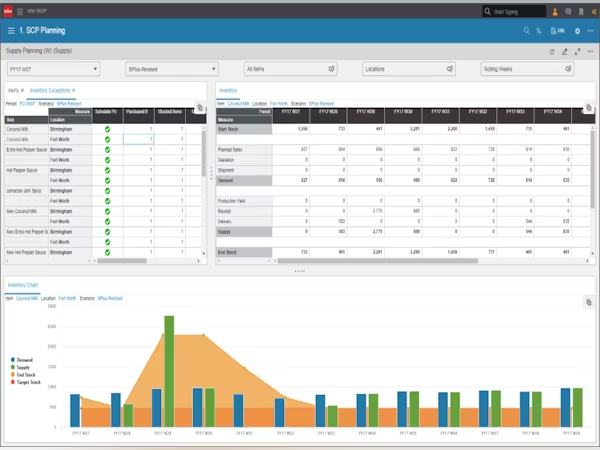
Introduction: Infor SCM is a cloud-based, analytics-integrated supply chain management and coordination solution.
Advantage:
- Focus on visibility and coordination between parts of the chain.
- There are reports showing effective cost optimization and waste reduction.
Disadvantages:
- May lack some of the in-depth features of the bigger guys.
Fit: Large to medium sized businesses want a more modern SCM solution but don't want to make the huge investment like SAP/Oracle.
8. E2open
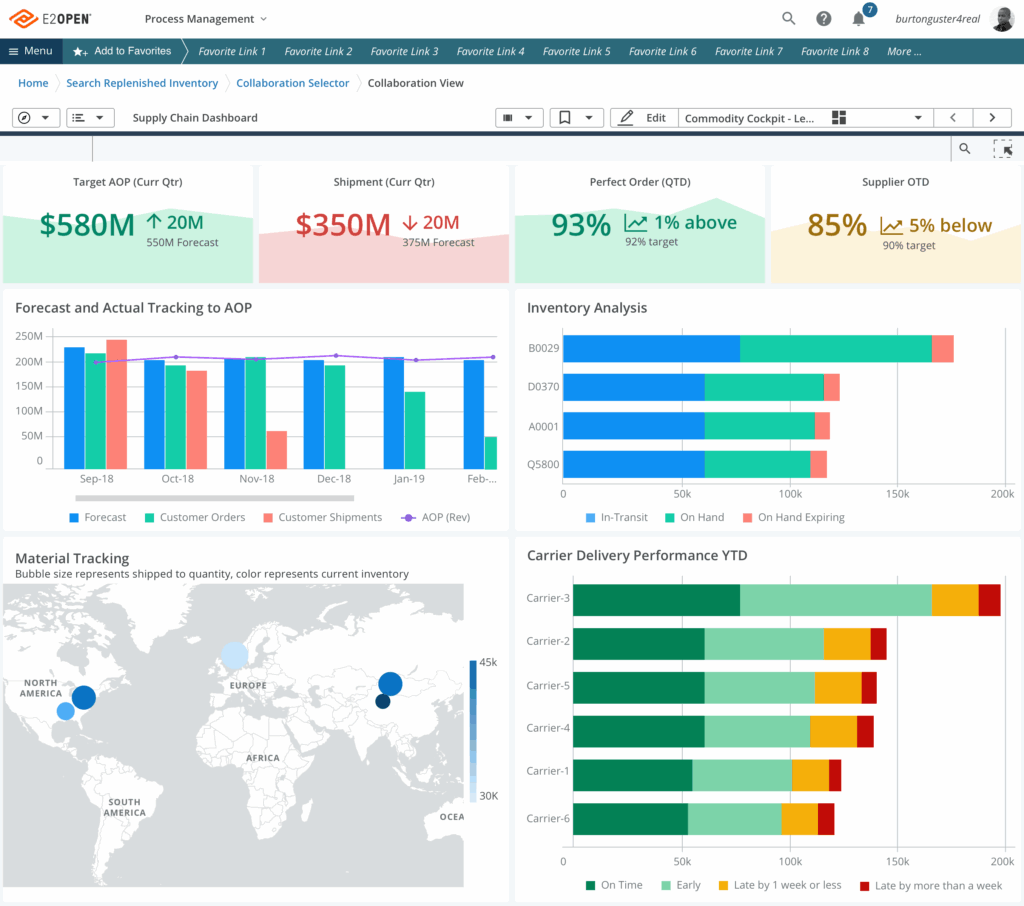
E2open is a SaaS SCM platform with a large partner network, focused on global supply chain collaboration.
Advantage:
- More than 400,000 partners connected on the platform – large network.
- Ability to respond to risks and chain breaks well.
Disadvantages:
- In-depth systems can be complex to deploy.
Fit: Enterprises with international supply networks need to coordinate with many subsidiaries and many suppliers.
9. Coupa Supply Chain Design & Planning
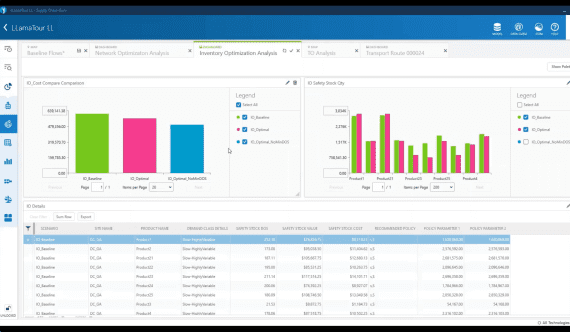
Coupa is a spend management platform, now expanding into SCM Design & Planning – focusing on supply chain simulation and supply chain cost management.
Advantage:
- Support chain modeling, scenario forecasting, and spend management between partners.
- Suitable for cost and cash flow optimization in the supply chain.
Disadvantages:
- May lack the depth of warehouse/logistics operations compared to large warehouse integration solutions.
Fit: Mid-sized businesses want to improve supply chain design and costs rather than just operations.
10. Manhattan Associates
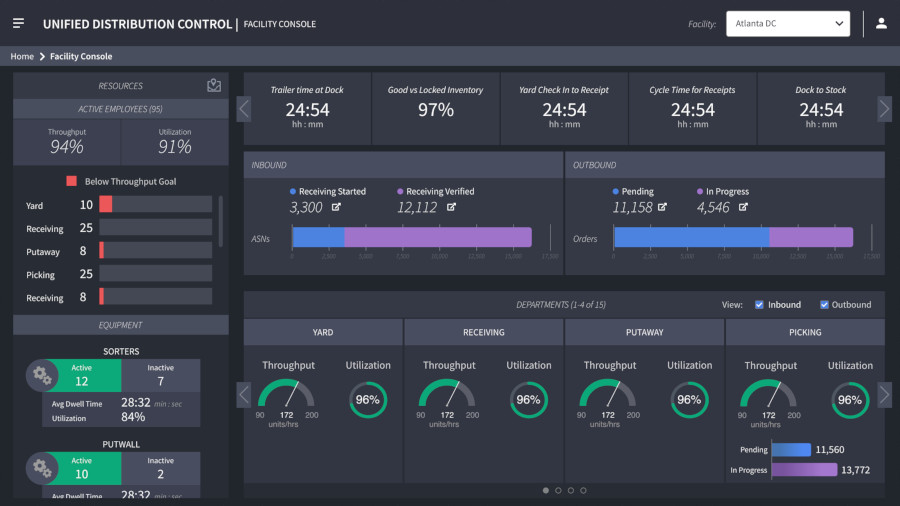
Manhattan Associates is a powerhouse in supply chain logistics (WMS) and warehouse solutions, with an extension into SCM.
Advantage:
-
Real-time orchestration between warehouse – transportation – orders.
-
Suitable for retail/wholesale/3PL environments.
Disadvantages:
- Focus more on warehousing and fulfillment than the entire super-wide scale chain.
Fit: Large retail, logistics, and distribution businesses need to optimize warehouse operations and delivery.
Comparison table of Top 10 popular supply chain management software 2026
| Software | Enterprise scale | Outstanding advantages | Weaknesses | Deployment |
| SAP SCM (SAP S/4HANA) | Large, multinational corporations (FMCG, manufacturing, retail) | – End-to-end display
– Extremely accurate demand forecasting (SAP IBP) – Strong Warehouse Management (EWM) & Transportation Management (TM) – Stabilize and standardize global processes |
– High cost
– Complex deployment, high standardization requirements |
Cloud / On-premise |
| Oracle SCM Cloud | Large enterprises, international supply chains | – The strongest pure Cloud in the market
– Forecast and analyze good chain risks – Deep integration with Oracle ERP – Multi-channel order management |
– Need IT team
– Relatively high cost |
Cloud |
| Logility SCM | Apparel, food, electronics, FMCG | – DemandAI+ & InventoryAI+
– GenAI supports accurate forecasting – Simulate multiple supply scenarios |
– Not as strong in logistics/warehousing as SAP | Cloud |
| Blue Yonder (JDA Software) | Logistics, large retail, enterprise | – Real-time AI forecasting
– Optimize transportation, strong fulfillment – World's top Retail SCM |
– High cost
– Enterprise focus |
Cloud |
| Kinaxis RapidResponse | Complex supply chains, heavy industry, healthcare | – The strongest scenario planning on the market
– Real-time response – Strong in “what-if simulation” |
– High price
– Data analysis team required |
Cloud |
| Infor SCM | Medium and large enterprises | – Very good display & chain coordination
– Reduce costs & waste effectively – Modern Cloud |
– Some modules are not as deep as SAP/Oracle | Cloud |
| E2open | Enterprises with international, multi-party supply networks | – Network of 400,000+ partners
– Responds well to risks/disruptions – Strong multi-enterprise collaboration |
– Complicated to deploy
– Many features require deep learning |
Cloud |
| Manhattan Associates | Retail, distribution, 3PL, warehousing | – The most powerful WMS & TMS on the market
– Real-time orchestration between warehouse – transportation – orders |
– Focus on logistics rather than comprehensive SCM | Cloud / Hybrid |
| Coupa Supply Chain Design & Planning | Large enterprises aim for cost optimization | – Comprehensive chain modeling
– Scenario forecasting, cost optimization – Support financial decision making – chain |
– Logistics/warehouse is not as strong as SAP/Blue Yonder | Cloud |
| ATALINK (Vietnam) | Vietnamese SMEs, domestic chains | - Deep localization, easy to use
– Purchasing – VMI warehouse – B2B order – Accounting integration |
– Not strong in advanced analysis
– Not suitable for large international chains |
Cloud |
Bizzi can integrate with supply chain management software to optimize costs and cash flow in the supply chain.
When businesses invest in supply chain management (SCM) systems such as SAP, Oracle, Logility or ATALINK, most of the goals revolve around optimizing the flow of goods, inventory and transportation. However, an important gap is often overlooked: financial flows that accompany each transaction in supply chain.
This is why businesses increasingly need a platform that is capable of Connect to SCM system to control costs, debts and invoices in real time — and Bizzi is that connecting layer.
Bizzi is not SCM – Bizzi is an additional “Financial Control Layer” to SCM systems
Bizzi doesn’t manage goods, transportation, or inventory. Instead, Bizzi solves a problem that many SCMs leave unanswered:
- Control costs in every supply chain transaction
- Automatic invoice reconciliation – PO – GR
- Real-time debt and cash flow management
- Connect financial data with ERP, accounting and SCM
- Supplier verification, transaction risk warning
Bizzi becomes the class of “financializing the SCM process”, helping businesses see cash flow parallel to product flow.
Bizzi's integration capabilities with leading SCM software
Bizzi supports flexible integration via API, webhooks or indirect connection via ERP, suitable for any SCM model:
1. Integration with SAP SCM / SAP S/4HANA
- Receive PO and GR from SAP
- Perform 3-way matching with supplier invoices
- Return reconciliation results to SAP to record debt
- Control spending by cost center
Result: Reduce fraud and cost distortions in complex supply chains.
2. Integration with Oracle SCM Cloud
- Automatically check invoices based on order data
- Synchronize invoice status – approval – payment
- Support cash flow forecasting for import plans
Result: strengthen the financial layer for multinational operating enterprises.
3. Integration with Logility, Blue Yonder, Kinaxis
These platforms optimize planning and forecasting, but don't handle the financial layer deeply.
Bizzi added:
- Control actual costs against supply plan
- Debt alerts related to each order
- Reducing payment risk in complex supply chains
Result: Seamless connection between SCM plans and financial reality.
4. Integration with popular SCM – ERP systems in Vietnam (ATALINK, MISA, Odoo, Viindoo)
- Automatically reconcile invoices according to PO/receipt
- Manage debt by payment deadline
- Connecting accounting – purchasing – financial data
Result: Vietnamese SMEs meet financial operation standards like large enterprises.
How does Bizzi optimize cash flow in the supply chain?
✔ Automatic reconciliation of invoices – PO – GR
- Reduce 80–90% manual operation
- Early detection of price – quantity – tax discrepancies
- Reduce invoice processing time from days to minutes
✔ Manage supplier debt in real time
- Track all payables per purchase order
- Warning of due and overdue debts
- Reduce the risk of disruption due to late payment
✔ Control spending according to budget
- Control each expense associated with the SCM plan
- Prevent overspending at the point of approval
✔ Combine SCM data to forecast cash flow
Bizzi adds a layer of financial information that SCM doesn't have:
- Estimated costs
- Cash flow according to payment schedule
- Accounts payable by supplier
Result: CFOs forecast cash flow accurately based on purchasing plans, shipping schedules, and actual invoices.
Conclude
In an increasingly complex supply chain landscape, businesses need not only a robust SCM system to manage goods, inventory and logistics – but also a deep enough financial control layer to ensure costs, liabilities and cash flow are accurately tracked in real time.
International supply chain management software such as SAP, Oracle, Blue Yonder, Kinaxis providing the ability to plan and optimize supply chains on a global scale. Meanwhile, platforms suitable for the Vietnamese market such as ATALINK, Viindoo, Odoo more flexible in implementation and cost, helping domestic businesses quickly standardize purchasing - warehousing - delivery processes.
However, most SCM solutions stop at “product lines”.
For a supply chain to be truly sustainable, businesses need to see cash flow, expense, debt and bill move parallel to the goods.
This is the role of financial platforms like Bizzi, which can integrate with SCM/ERP systems to:
- Automatic invoice reconciliation – PO – GR
- Control spending according to budget
- Debt management and warning
- Support cash flow forecasting based on real data
- Reduce cost leakage and increase financial transparency
The combination of SCM and financial solutions helps businesses close the entire chain: from goods – to data – to costs, creating the foundation for faster and more accurate decision making.