



In the retail and distribution model, Supplier support for retail chains (rebate) They often account for a large proportion of profits but are easily lost if not properly controlled. Many businesses face difficulties in this area. Trade discount management When data is scattered across contracts, sales, and invoices. Without a process. compare trade support Clearly, the CFO may misrecord net revenue or miss out on benefits.
This article by Bizzi helps to clarify What is a trade discount?, the regulations on trade discounts, while also providing processes and discount tracking software To accurately and optimally control cash flow.
What is a trade discount from a CFO's "net revenue" perspective?
What is a trade discount? This is a discount based on sales conditions (volume/sales), belonging to the group. supplier rebate and this was noted as a reduction in net revenue. For the CFO, the focus wasn't on "how much discount to offer" but on controlling the supply chain. gross-to-net to avoid losses.
Essentially, discounts are not just a sales policy but a component of revenue management. Without proper control, businesses may "sell a lot but make little profit" due to discounts exceeding planned targets or being recorded in the wrong period.
The biggest risk lies in the lack of synchronization between discount data, contracts, and invoices. This makes it difficult for CFOs to accurately determine actual revenue and can easily lead to revenue leakage.
In practice, Bizzi helps standardize contract and transaction data from the outset, creating a foundation for seamless discount reconciliation instead of fragmented processing in Excel.

How do trade discounts differ from payment discounts and trade assistance?
Trade discount linked to output/sales, payment discount linked to the payment schedule, and trade support Related to marketing/service activities.
| Criteria | Trade discount | Payment discount | Trade support |
| Nature | Volume-based discounts | Discounts based on payment terms. | Service allowance |
| Time | Before or after the sale | When making a payment | After the program was implemented |
| Impact | Decrease in net revenue | Reduce financial costs. | It could be marketing costs. |
| Control | Based on cumulative sales | According to accounts payable | According to the program |
What layers of control are involved in the trade discount management process for businesses?
The standard process includes 6 layers of control:
- Standardize contracts and master data.
- Track actual transactions
- Reconciliation of PO–GR–Invoice
- Compare trade assistance
- Offsetting debts
- Audit trail
If any of these layers are missing, the discount data will be skewed and difficult to control.
How to standardize master data and contract terms to track discounts without discrepancies?
To accurately manage trade discounts, businesses need to standardize five core data fields in their system: applicable entity, discount threshold, application period, SKU/product group, and offsetting method. This forms the foundation for tracking cumulative discounts and ensuring accurate reconciliation.
In practice, most discrepancies when reconciling trade support payments don't stem from calculations but from inconsistent input data. If the contract states one thing, the tracking system records another, and the compiled Excel spreadsheet shows yet another, tracking the discount becomes almost impossible to be accurate.
Standardizing master data helps transform contract terms into data that can be processed automatically. Five mandatory data fields that need to be configured from the outset include:
- Applicable entities (channels, customers, suppliers)
- Eligibility milestones (based on cumulative production or sales)
- Application period (month, quarter, year)
- Applicable SKU or product group
- Offsetting method (directly deducting from invoices or offsetting against outstanding debts)
Once these fields are standardized, the system can automatically track progress toward discount milestones, reducing reliance on manual aggregation files and minimizing discrepancies between departments.
CFOs should consider standardizing master data as a mandatory step before deploying any discount tracking software. If contract data is not structured, any backend system will simply "process incorrect data faster."
Optimization process for managing and recovering grants from NCCs.
Step 1: Data Collection & Standardization
Bizzi Bot They will replace humans in performing repetitive tasks:
- Automatic system access ERP, Portal from the Provider or Email To gather all purchase/sales data and related documents.
- Perform data cleaning and normalization, then push it directly into the system. EPM To ensure consistency and uniformity throughout the entire process.
Step 2: Detailed Modeling & Calculation
In the system EPMThe computational models are set up automatically:
- Develop separate calculation formulas for each type of financial assistance.
- Identification (ID) for each specific support item and store the results on Data Cube, supporting the rapid retrieval and analysis of multidimensional data.
Step 3: Monitoring & Reporting Aging
The intelligent reporting system helps to closely monitor the recovery progress:
- Multidimensional tracking: Track status by supplier, product category, or processing status.
- In-depth report: Managing the aging of uncollected grants and analyzing the ratio. Actual revenue compared to provisioned revenue.
Step 4: Automated reconciliation with the supplier.
Completely eliminate manual operations in the reconciliation process:
- Bizzi Bot automatically export Detail Statement in the exact format required by each vendor.
- Automatically send reconciliation emails directly to suppliers without requiring any personnel intervention.
Step 5: Accounting & Invoice Issuance (RPA + ERP)
Complete the management cycle in a closed loop:
- Accounting: After successful reconciliation, the robot automatically performs the accrual entries into the ERP system.
- Invoice: The robot automatically generates invoices and records the actual amounts received from suppliers into the system, ensuring accuracy and timeliness.
What documents should be included in the trade support reconciliation file to finalize the amount quickly?
The minimum required documentation for verifying trade support includes: program appendix, transaction statement, discount calculation rules, reconciliation report, and debt offsetting documents.
In reality, the process compare trade support Delays are often not due to complex calculations but rather to missing or discrepancies in documentation between the two parties. A complete set of documents facilitates quick data verification and minimizes disputes.
The program appendix serves as the legal basis, while the transaction statement and calculation rules form the foundation for determining the discount amount. The reconciliation record confirms the agreement between the two parties, and the debt offsetting document ensures that the figures are accurately recorded in the books.
When these documents are inconsistent, businesses are likely to experience delays in closing accounts, directly impacting cash flow and the Date of Sale (DSO) index.
CFOs should standardize reconciliation documentation from the beginning of the program, rather than processing it later at the end of the period. This helps reduce time spent on closing accounts and increases transparency when working with suppliers.
Bizzi supports the centralization of all transaction data and discount-related documents on a single platform, enabling quick reconciliation and reducing reliance on manual aggregation from multiple sources. As a result, businesses can significantly shorten reconciliation time and minimize discrepancies.
How does offsetting discounted accounts payable affect the Date of Sale (DSO) and the Cash Conversion Cycle (CCC)?
Delays in offsetting discounts create artificially "suspended" accounts receivable (AR), leading to increased costs. Average number of days to collect payments (DSO) This prolongs the cash cycle (CCC), weakening cash flow. Essentially, trade discounts are adjustments that reduce net revenue, but if not offset against accounts receivable in a timely manner, the system still records a higher-than-actual receivable value. This inflates the balance sheet (DSO), misrepresenting the effectiveness of cash collection and skewing working capital management decisions.
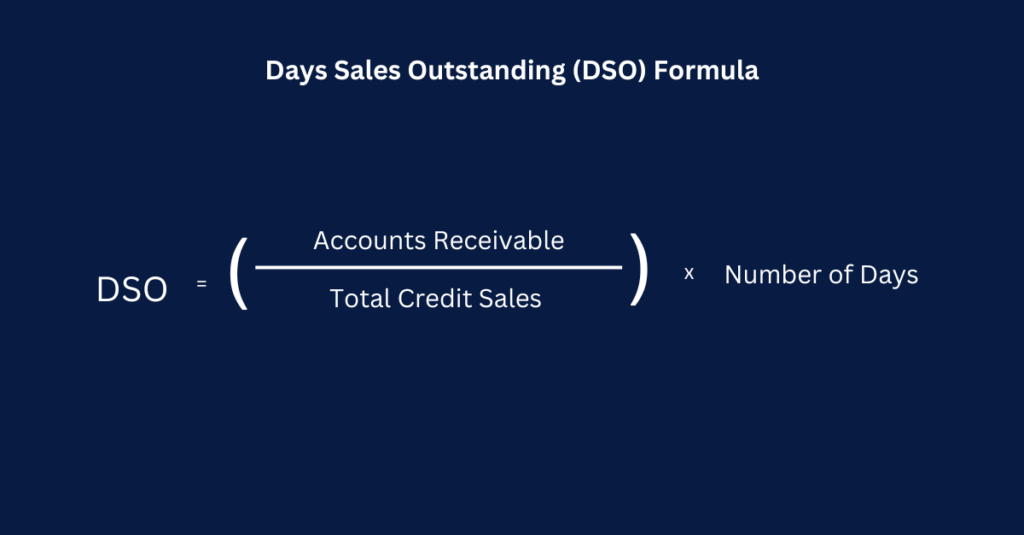
At the cash cycle level, the CCC is prolonged not because the business is selling slowly or collecting payments poorly, but because the data is not "netting" at the right time. This is a form of operational distortion, not business distortion, but it directly affects cash flow forecasts.
- DSO (Average Number of Days to Collect Payments) = (Accounts Receivable / Net Revenue) × Number of Days
- CCC (Cash Conversion Cycle) = DIO + DSO – DPO
- Netting value = Accounts receivable – Discounts/promotions payable
Risks if not properly controlled:
- "Virtual" DSO → inaccurate assessment of debt collection effectiveness
- Prolonged CCC → Cash flow pressure even if sales activity remains unchanged
- Misleading management reporting → impacts financial decisions (credit limits, capital plans)
Bizzi supports data standardization and discount reconciliation directly within the PO–GR–Invoice flow, thereby accurately recording the timing of offsetting obligations. This helps CFOs see the true DSO/CCC figures, instead of "distorted" data due to slow manual processing.
What criteria should discount tracking software meet to effectively replace Excel? (Grouping/Evaluation Question)
A discount tracking software needs six capabilities: invoice collection, PO–GR–Invoice reconciliation, cumulative tracking, claim management, automatic debt offsetting, and audit trail tracking.
Excel is only suitable when the data is small and not volatile. As the scale of transactions increases, discounts become a complex "gross-to-net" problem with many cumulative conditions, multiple reconciliation periods, and many stakeholders. At this point, the issue is no longer about "recording" but about "controlling and synchronizing data".
An effective discount tracking software needs to ensure three layers of value:
- Accuracy: data is automatically verified, reducing discrepancies.
- Timeliness: recording and offsetting in the correct period.
- Control: There is an audit trail and clear delegation of authority (SoD).
The core competencies required include:
1. Data Connectivity & Automation Capabilities (Integration & RPA)
This is the most important input criterion to ensure that the data is not fragmented:
- Multi-channel integration: It has the capability to automatically connect to and retrieve data from the vendor's ERP system and portal, and to read data from email.
- Data Cleaning: It automatically cleans and processes different data formats from multiple sources into a unified standard before using them in calculations.
- Synchronize: The ability to push data directly into the performance management system (EPM) without manual intervention.
2. Flexibility in Modeling & Calculation (Calculation Engine)
Software should function as an intelligent computing machine rather than just a storage location:
- Set up the formula according to the support type: This allows for the creation of separate calculation models for each different discount term or support program.
- Identification and Indexing: The ability to assign a unique ID to each grant prevents duplication and facilitates easy retrieval.
- Data Cube Analysis: Data must be stored in a cube structure to facilitate analysis from multiple perspectives (time, supplier, item, etc.).
3. Tracking & Aging System
This criterion helps businesses control cash flow and avoid losses:
- Aging Report: Track the details of outstanding grants by overdue period.
- Status monitoring dashboard: Visually display the recovery progress by supplier, product category, and processing stage.
- Variance Analysis: Automatically compare the actual amount received with the amount provisioned to assess effectiveness.
4. Automated Reconciliation
The software needs to be able to “communicate” with third parties:
- Template Customization: Automatically generate detailed statements (Detail Statements) according to the specific format required by each supplier.
- Automated communication: Integrate an automated email system to send reconciliation requests directly to the supplier.
5. Accounting & Finance Integration
The final criteria for completing the revenue/expense recognition process:
- Automatic accounting: The ability to perform accrual entries and record actual revenue directly into the ERP system.
- Connecting electronic invoices: Automatically generate invoices for support payments from the provider as soon as reconciliation is complete.
Bizzi not only replaces Excel at the "tracking" level, but also connects data seamlessly from invoices → reconciliation → accounts receivable. As a result, CFOs have a "single source of truth" for the entire discount management chain, reducing losses and increasing the reliability of management data.
Trade discounts always offer benefits, but when does the risk of revenue leakage occur?
Trade discounts are not always beneficial. Without proper data control and reconciliation processes, businesses can be at risk. revenue leakage due to overpayment of discounts or failure to recover trade subsidies.
In principle, trade discounts stimulate production and expand distribution channels, but at the same time reduce net revenue. Real value is only guaranteed when the CFO tightly controls the supply chain. gross-to-net – from contract terms and transaction data to reconciliation and offsetting of accounts payable.
The risk of loss often doesn't come from policy, but from... Data discrepancies and recording time discrepanciesIn that case, discounts are no longer "trade leverage" but become "hidden costs".
Common revenue leakage scenarios:
- Paying excess discounts due to data discrepancies.
- Failure to trigger the correct cumulative discount threshold → underpayment/overpayment
- The trade support (rebate/claim) amount was not fully reconciled.
- Delayed debt offsetting → accounts receivable/payable are suspended, resulting in gross-to-net discrepancies.
- Lack of audit trail → Discrepancies cannot be traced during the audit.
Revenue leakage not only reduces profits but also distorts management reports, especially metrics such as gross margin, DSO, and distribution channel efficiency. This is a type of "silent" risk that is difficult to detect without a comprehensive monitoring system.
CFOs need to shift from "file-based" discount management to a "system-based" management, where each discount is linked to clear transaction data, contract conditions, and reconciliation status.
Bizzi helps lock input data from invoices and transactions, automatically verifies discount conditions, and alerts for discrepancies before recording or offsetting. This allows CFOs to not only track discounts spent but also control "unnecessary" expenses – a key factor in reducing costs. revenue leakage.
What KPIs help CFOs measure discount effectiveness and identify potential losses?
CFOs need to monitor: Gross-to-Net ratio, Trade spend rate, Claims recovery rate, Reconciliation break rate, DSO/CCC impact, and Gross profit margin by channel/SKU.
These KPIs help the CFO control the entire chain. gross-to-netThis involves not only looking at the discount cost but also assessing the level of loss and the efficiency of recovery.
- Gross-to-Net (%) = Net revenue / Gross revenue
→ Measure the extent of revenue "erosion". - Trade Spend Rate (%) = Discounts & subsidies / Gross revenue
→ Assessing the level of commercial investment - Claims Recovery Rate (%) = Amount Recovered / Amount Recoverable
→ Measure the effectiveness of trade support measures. - Reconciliation Break Rate (%) = Transaction deviation / Total transactions
→ Warning about the risk of data discrepancies - DSO/CCC impact
→ Assessing the impact on cash flow when deferred offsetting is necessary. - Gross profit margin by channel/SKU
→ Determine whether the discount actually generates a profit.
What items are included in the discount control checklist before closing the monthly/quarterly books?
This includes: Confirming cumulative conditions, reconciling PO-GR-Invoice exceptions, closing the invoice summary, signing reconciliation minutes, accounting for debt offsetting, and archiving approval documents.
Control checklist:
1. Data & Systems Control Team
- [ ] Review the Robotic Process Log (RPA Log): Confirm that the robot has successfully accessed the 100% resources (ERP, Portal NCC, Email) without connection errors.
- [ ] Check the completeness of the documents: Ensure all purchase/sales data related to discounts has been collected and cleaned.
- [ ] Input data matching: Verify that the total amount of data collected from RPA matches the number of records pushed into the EPM system.
2. Computational Control Group
- [ ] Grant ID: Ensure that all new grant payments generated during the period have been assigned a unique ID on the EPM.
- [ ] Check the computational model: Confirm that the calculation formulas for each type of support (trade discounts, marketing support, display, etc.) are still functioning correctly as agreed.
- [ ] Check the Data Cube: Ensure that the data has been aggregated into the Data Cube, ready for multi-dimensional reporting without discrepancies in total figures.
3. Verification & Confirmation Team
- [ ] Status of Detail Statement submission: Check the list of suppliers to whom the Robot has sent the automated reconciliation statement.
- [ ] Track feedback (Confirmation Status): Categorize confirmed suppliers, suppliers under complaint, or suppliers who have not yet responded, in order to take timely action before the closing date.
- [ ] Handling discrepancies: Review and explain any discrepancies between the automatically calculated data and the data confirmed by the supplier (if any).
4. Accounting & Documentation Group
- [ ] Check the provision entry: Confirm that the planned support payments have been fully accounted for by the robot in the ERP system based on EPM data.
- [ ] Invoice control: Verify that all reconciled amounts have been invoiced and recorded as actual revenue by the robot.
- [ ] ERP vs EPM comparison: Ensure that the balances of support funds on the general ledger match the detailed reports on the performance management system (EPM).
5. Reporting & Analysis Team
- [ ] Review the aging report: Focus on overdue loan repayments (especially those overdue for more than 30-60-90 days).
- [ ] Analysis of actual revenue ratio: Check the ratio between actual revenue and provisioned funds (Actual vs. Provision) to adjust the calculation model for the next period if there is a significant discrepancy.
This checklist helps the CFO ensure that discounts are recognized. On time – on schedule – under controlThis avoids the situation of "discovering discrepancies only after the closing date," which is a common cause of retrospective adjustments and reporting errors.
Bizzi supports the automation of reconciliation, data locking, and approval tracking steps within a single workflow, ensuring that the closing process is not dependent on separate files but rather on consistently controlled data.
Frequently Asked Questions (FAQ) about Discount Management and Trade Support
Frequently Asked Questions (FAQ) about discounts and trade support:
Is it mandatory to issue an invoice for trade discounts?
Yes, but it depends on when the discount is applied.
If the discount is determined at the time of sale, it must be shown directly on the invoice. If determined later based on cumulative sales, an adjustment invoice or supporting document must be issued as required to ensure compliance with tax regulations and electronic invoicing.
When applying discounts based on end-of-period sales, what data needs to be locked before generating the statement?
The CFO needs to lock the data used as the "base for calculations" to avoid discrepancies during reconciliation:
- Sales/Production Recorded (PO–GR–Invoice)
- List of applicable SKUs/product groups
- Contract terms (benefit score, % discount)
- Related debt data
Data locking ensures consistency in spreadsheet creation and avoids disputes arising after reconciliation.
Why isn't trade assistance always a trade discount?
Because of their different economic natures.
Trade discounts are linked to purchase conditions (price reduction → reduction in net revenue), while trade support is usually associated with marketing/display activities and is recorded as an expense. Confusing these two types will lead to gross-to-net discrepancies and accounting errors.
Why does delaying discounting increase a company's virtual DSO (Demand for Sale)?
Before offsetting, accounts receivable (AR) retain their "gross" value, while in reality, customers only pay the "net" value. This artificially inflates the DSO, causing CFOs to misjudge the effectiveness of debt collection and the state of cash flow.
What does the audit trail for a valid discount include?
A complete set of documents should show the entire lifecycle of the discount:
- Discount program contract/appendix
- Transaction data is used as the basis for calculation (PO, GR, Invoice).
- Discount spreadsheet and application rules
- Minutes of reconciliation with the partner
- Debt offsetting or payment documents
- Data approval and change history (audit trail)
Missing any of these components could create risks during a tax audit or inspection.
What data does discount tracking software need to integrate with the ERP system?
To operate effectively, the system needs to synchronize core data layers:
- Vendor/Customer master data
- Transaction data: Purchase Order (PO), Gross Order (GR), Invoice
- GL coding and accounting accounts
- Tax code and tax rules
- Cost center/business unit
Full integration ensures data consistency from transactions to accounts payable and reporting, creating a single source of truth for CFOs to control discounts and support trade.

Conclusion: From discount control to optimizing net revenue
Managing trade discounts is not just about recording expenses, but about controlling the entire supply chain. gross-to-net – where revenue can be silently eroded if accurate data and rigorous reconciliation processes are lacking. In reality, many businesses don't lose money because of discount policies, but because of other factors. revenue leakage: overpayment, insufficient recovery, or incorrect timing of payment.
The core issue lies in shifting from manual management to data-driven, controlled management. The CFO needs a comprehensive view, from contract terms and transaction data (PO–GR–Invoice), to trade support reconciliation and debt offsetting. When these layers are not connected, all KPIs, such as Gross-to-Net, DSO, or profit margin, risk being inaccurate.
In this context, Bizzi acts as a platform for unifying data and process control. From automated invoice collection and standardization, three-way reconciliation, to tracking cumulative discounts and supporting debt offsetting, Bizzi helps businesses build a "single source of truth" for the entire trade discount management chain. As a result, CFOs can not only measure discount effectiveness but also proactively detect and prevent revenue losses before they occur.
To receive advice on effective corporate financial management solutions, schedule an appointment with Bizzi here: https://bizzi.vn/dat-lich-demo/