


Legal update: The content has been reviewed in accordance with Decree 254/2026/ND-CP, Circular 91/2026/TT-BTC, and other guidelines in effect as of the date of this update.
From July 1st, 2026, Decree 254/2026/ND-CP and Circular 91/2026/TT-BTC officially came into effect, establishing a comprehensive new legal framework for electronic invoices and documents. These amendments directly impact organizations, businesses, and household businesses in many aspects: from redefining the target users, the timing of invoice creation, and the content of data fields to the registration process and handling of business errors. This article not only summarizes the new points of the law but also provides a framework for compliance review, helping the Finance and Accounting department proactively control tax risks and adjust internal document circulation processes to comply with the new regulations.
When did Decree 254 and Circular 91 come into effect?
The tax administration system for electronic invoices (e-invoices) officially enters a new phase from today. 01/07/2026. This is the time when two important legal documents come into effect:
- Decree No. 254/2026/ND-CP (Issued on June 30, 2026) serves as the foundational legal framework, providing detailed guidance for the Law on Tax Administration No. 108/2025/QH15.
- Circular No. 91/2026/TT-BTC (Issued on the same day) is a document providing operational guidance, detailing the XML data structure and the process for interacting with tax authorities.
- Shortly thereafter, Official Letter No. 4831/CT-CS from the General Department of Taxation was also issued to provide detailed information on the core contents for synchronized implementation nationwide.
What are the new points regarding electronic invoices in Decree 254?
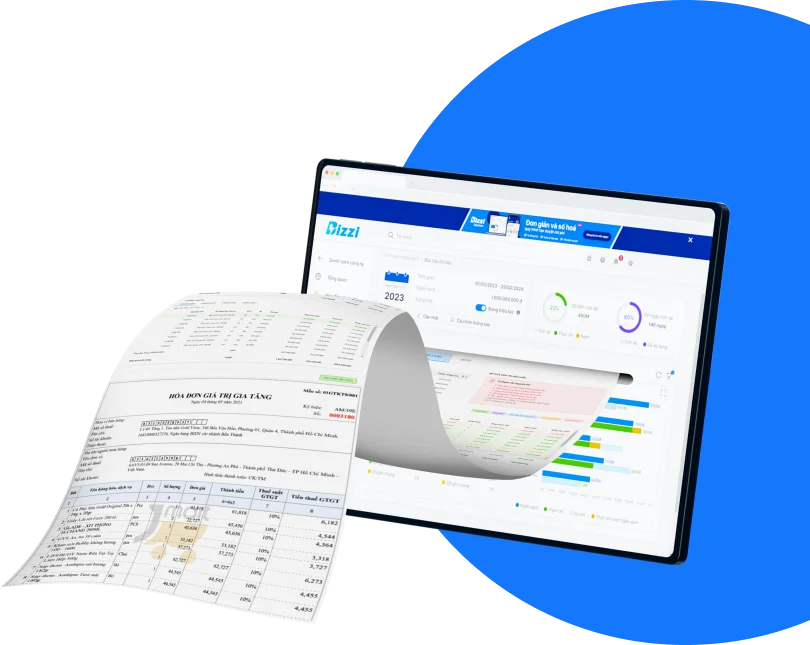
The changes in Decree 254/2026/ND-CP focus on resolving practical difficulties through five key areas, requiring businesses to review their cash flow planning and revenue recognition methods.
How have the target groups for using electronic invoices changed?
For electronic invoices without a tax authority code, the new regulations extend their application to businesses operating in specialized financial sectors such as securities, cryptocurrency trading, carbon credit services, insurance, and healthcare. These entities must ensure their software systems (ERP/Accounting) meet the standards for automatic data transmission and reception with the tax authority.
At the same time, the regulations also clarify that households/individuals engaged in business with revenue exceeding the threshold or those involved in asset transfer transactions requiring ownership registration will be required to use electronic invoices with codes or generate them from cash registers.
In which cases is it not necessary to use electronic invoices?
Article 7 of the Decree clearly defines exceptional transactions that do not give rise to the obligation to issue electronic invoices, helping to minimize the administrative burden on taxpayers, including:
- Purchase transactions for agricultural, forestry, and aquatic products directly from producers (applying the requirement to prepare purchase lists as per Corporate Income Tax law).
- Activities involving the provision of digital services or the leasing of real estate abroad by individuals and household businesses.
- Derivative financial transactions, deposit fees, debt sales, reinsurance.
- Non-commercial internal transactions include the transfer of dependent accounting fixed assets and capital contributions to establish legal entities.
Businesses need to carefully examine the nature of economic events to correctly apply this exemption, avoiding the risk of administrative violations related to invoices.
Are there any changes to the billing date that need to be considered?
One of the most groundbreaking reforms is the regulation on deposits. The decree confirms that receiving a deposit to guarantee the performance of a civil contract will... No invoice required.. This regulation clearly distinguishes between reservation fees and upfront service payments.
For specific industries with cyclical nature (digital technology, e-advertising) or export transactions outside of regular working hours, the timing of invoice issuance is also subject to a more flexible reconciliation mechanism, allowing for extensions to the next working day. For detailed review of each type of transaction, businesses can refer to the handbook on... time of issuing electronic invoices.
What information needs to be updated on an electronic invoice?
Standardizing the Master Data system is an urgent requirement. The information fields on invoices (Metadata) must accurately reflect:
- The buyer and seller identification information must completely match the National Database on Business Registration.
- A clear distinction is made between the "time of creation" and the "time of digital signature".
- For authorized invoices, it is mandatory to display the tax identification number and information of both the authorizing party and the authorized party.
What specific instructions does Circular 91 provide for businesses to implement?
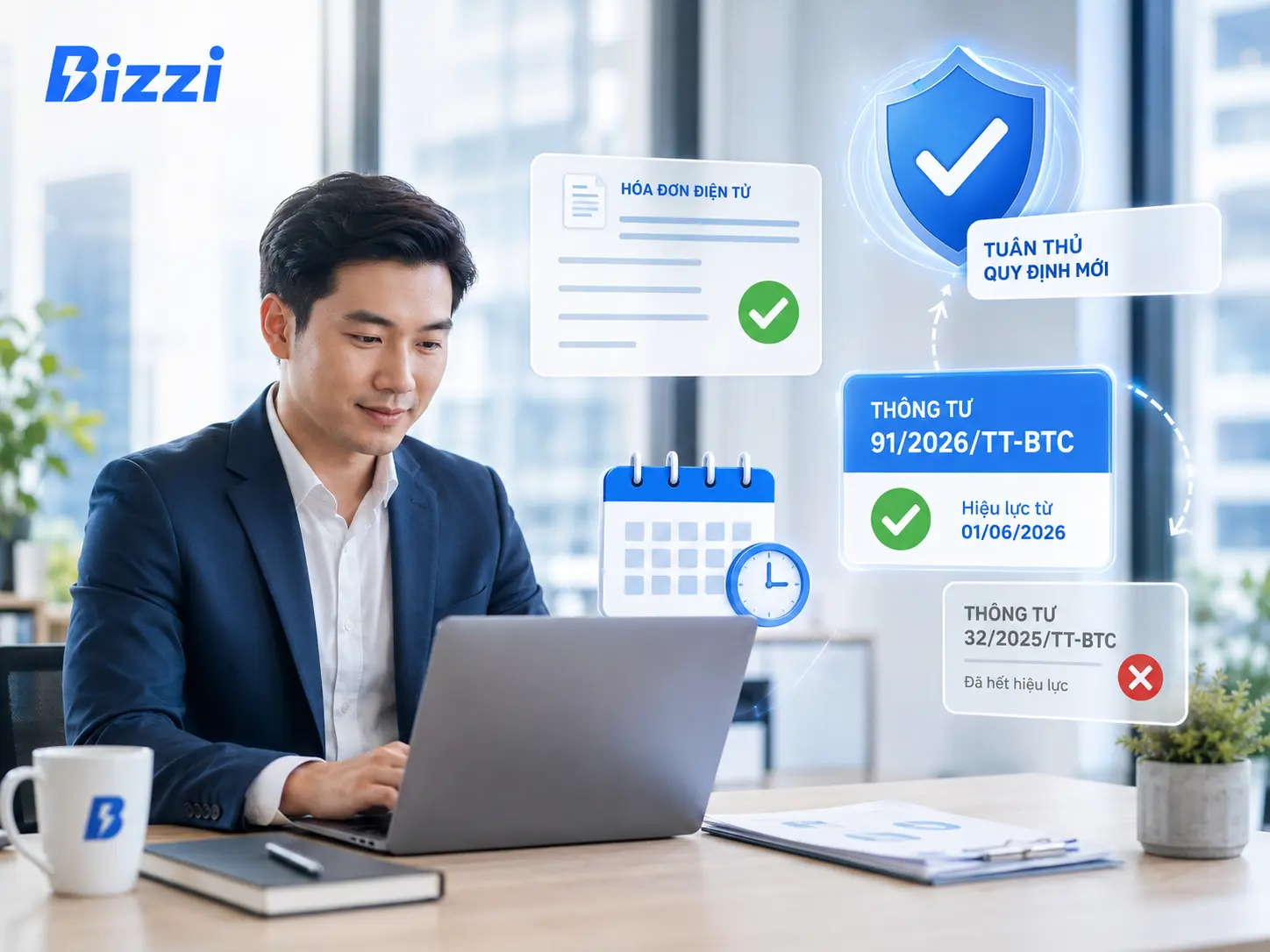
Circular 91/2026/TT-BTC standardizes the operational procedures of the Accounting and Finance department when operating the e-invoice system on a daily basis.
What should you keep in mind when registering and changing information for using e-invoices?
A key new feature in the registration procedure is the automated biometric authentication mechanism. When submitting the system configuration declaration, the tax authority will compare the information of the legal representative with the population database. Businesses need to confirm the OTP via email/phone number by the deadline (no later than the next business day) to ensure the declaration is approved.
When can electronic invoices be suspended or temporarily discontinued?
To ensure business safety, the enterprise's risk management system (Business Continuity) needs to take into account the following situations where the tax authorities may freeze electronic invoices: when the tax identification number expires, the business is not operating at its registered address, is under tax debt enforcement, or shows signs of violating economic laws (buying and selling fictitious invoices).
What principles should be followed when handling incorrectly issued invoices?
Exception handling is clearly defined with distinct branches:
- Non-financial errors (name, address): The accountant sends Notification Form 04/SS-HĐĐT and informs the partner; there is no need to reissue the invoice.
- Significant data errors (tax identification number, product value, tax rate): It is mandatory to apply the mechanism for issuing adjustment or replacement invoices.
Businesses need to establish procedures for creating bilateral memoranda of understanding to strengthen audit evidence for these transactions. Learn more about classification at Risk invoices and how to control them..
Download Form 04/SS-HĐĐT: Here
How do the criteria for high-risk taxpayers affect businesses?
Businesses classified as high-risk (such as those with representatives on a list of suspicious transactions or registered in the wrong administrative area) will be required to switch to using transaction-based electronic invoices. This increases compliance costs and slows down revenue recognition. The chief accountant should proactively develop a framework. Tax risk management in businesses To evaluate yourself.
What updates do businesses need to make following Decree 254 and Circular 91?

Businesses should review all five layers of defense: policies, processes, data, systems, and internal controls. The goal is to identify which new legal requirements are not yet being translated into control workflows in accounting practices.
| Item Changes | Responsible Party (Owner) | Factors to Check |
|---|---|---|
| Electronic Contract Subject | Chief Accountant / Tax | Standard XML registration and connection configuration |
| Time of establishment | Business Unit / Projects / Finance | Event triggers and approval flows |
| Invoice content | IT/Finance Department | Synchronization of Master Data and ERP data fields |
| Error handling | Tax Accountant | Audit trail history and exception approval process |
| Risk management | Chief Financial Officer (CFO) / Chief Accountant | Internal control regulations and partner classification |
Where do compliance gaps typically appear?
Compliance gaps are bottlenecks between legal regulations and operational practices. Delays in transferring acceptance reports from the project team to the accounting department create the risk of incorrect invoicing; similarly, the failure of ERP data to automatically update customer tax identification numbers can easily lead to the issuance of illegal invoices. These breakpoints require direct intervention through technological processes.
What updates are needed to the invoicing policies and procedures?
The financial regulations need to clarify the time limit (SLA) for delivering valid original documents, assign authority to approve adjustment invoices, and establish a separate processing flow for exceptional transactions such as gifts and promotions. Management can standardize these steps through documentation. invoice processing flow.
Which data and systems need to be reviewed?
In the data verification stage, businesses need to compare the consistency between the file format exported from the ERP system and the XML standard of the General Department of Taxation. At this step, digital solutions like Bizzi Bot can participate in the pre-processing of input documents through optical character recognition (OCR) technology and payment process automation (AP Automation). From there, invoice data and related documents are authenticated according to a centralized workflow, minimizing manual data entry for accountants and enhancing the ability to trace cash flow.
Priority Allocation Table for Review (Proposed Governance Framework)
- Level P1 (Highest Priority – Direct Violation Risk): Fix XML file formatting errors, digital signature delays, and review discrepancies between invoice creation dates and actual acceptance reports.
- Level P2 (Internal Control Not yet synchronized): Update departmental coordination regulations, standardize adjustment invoice processing forms, and review the integrity of Master Data.
- Level P3 (Heavy manual workload): Evaluate the performance of accounting personnel and consider automating data entry processes to prevent errors caused by manual operations.
What mistakes are most likely to occur when businesses implement new regulations?
During the transition period, departments can easily fall into the trap of "new policies but old procedures.".
| Failure Point | Financial/Legal Risks | How to Check & Troubleshoot
|
|---|---|---|
| Operating personnel used outdated checklists, resulting in delays in handing over acceptance reports. | Penalties for issuing invoices at the wrong time; Partner's expenses are excluded from tax calculation. | Establish a 24-hour internal document handover SLAs and implement cross-departmental electronic signatures. |
| ERP systems do not automatically update required data fields (Master Data is outdated). | Issuing invoices containing incorrect information, or invoices that have been illegally classified. | Use the API mechanism to automatically cross-check tax identification numbers before issuing invoices. |
| Storing fragmented document data, only saving PDF files instead of the original XML. | A lack of integrity in the digital signature renders it legally invalid during a tax audit. | Initialize a dual-storage cloud repository with attached system logs. |
Checklist businesses need to review after July 1, 2026
The Accounting department can use the following audit framework to measure compliance readiness:
- Regarding Policy: Have the reference documents (Decree 254/Circular 91) been updated in the internal regulations? Have the types of civil deposit payments that are exempt from invoice issuance been clearly defined?
- Regarding the Process: Has the department responsible for handing over the documents been clearly identified? Is there a process for handling electronic agreement minutes for invoice adjustments?
- Regarding the Data: Has the Master Data source been cleaned and cross-checked with the National Business Portal?
- About the System: Is the output XML structure fully compatible? Are the audit trails for digital signature operations stored securely?
- Regarding Control: Is there a mandatory end-of-period reconciliation mechanism between the quantity of goods shipped, the project completion report, and the list of issued electronic invoices?
When should businesses digitize their invoice processing?
As transaction frequency increases, relying on human effort to review the timing of invoice creation and data entry will create a critical tax loophole. Management should initiate a digital transformation project for the document flow when the system shows signs of: an excessively large volume of electronic invoices making centralized reconciliation difficult, manual data entry resulting in a high error rate (exception), or accountants spending too many working days cleaning up closing period data.
Solutions like Bizzi Bot support the processing of invoices and input documents through OCR technology and Accounts Payable Automation (AP Automation). This ensures a seamless and centralized workflow for document approval. Accounting teams are freed from manual typing, shifting their focus to reconciliation, expense validation, and budget risk analysis. Learn more about this mechanism through the platform. AI invoice processing software.
Frequently Asked Questions about Decree 254 and Circular 91
When did Decree 254 and Circular 91 take effect?
Both of these legal documents officially come into effect on July 1, 2026, completely replacing Decree 123/2020/ND-CP and all previous regulations.
What changes does Decree 254 bring compared to previous regulations on electronic invoices?
Besides expanding the group of entities eligible to use electronic invoices without codes (financial and healthcare sectors), the biggest breakthrough is the exclusion of deposit payments securing civil contracts from the obligation to issue invoices and the more detailed regulations on exemption items in Article 7.
How does Circular 91 differ from Decree 254?
Decree 254 establishes the macroeconomic policy framework; while Circular 91 is a detailed operational guidance document from the Ministry of Finance, including the XML file structure, symbol formatting procedures, and procedures for registering and handling erroneous invoices.
Which processes should businesses update first?
The top priority is to establish an internal SLAs to control the delay in document transmission between the Operations/Projects and Accounting departments, ensuring that the revenue recognition date coincides with the date of digitally signing and issuing outgoing invoices.
What data needs to be checked by ERP and e-invoicing software?
The IT and Accounting departments need to ensure that the XML file format is fully compatible with the standards of Circular 91, update customer Master Data, check the stability of the API connection flow, and verify the system log logging capability (Audit Trail).
What regulations govern the handling of incorrectly issued invoices after July 1, 2026?
Strictly adhere to Article 10 of Circular 91. Errors in identification (Name, address) only require sending Notification Form 04/SS-HĐĐT; errors in significant data (Amount, tax rate, tax code) require issuing an adjusted or replacement invoice with an attached agreement.
Under what circumstances can a business be suspended from using electronic invoices?
When a tax identification number is closed, the business abandons its business address, is subject to tax debt enforcement, or is on a high-risk list and cannot provide a valid explanation of its supply chain origin to tax inspectors.
How can a business prove it has implemented the new regulations?
Businesses need to maintain a closed, digitized audit trail: new document flow regulations, Master Data update history, electronic adjustment records, and simultaneously retain XML/PDF files attached to system approval logs.
Conclude
Decree 254 and Circular 91 impose many new requirements on electronic invoices, but compliance goes beyond simply updating regulations. Businesses need to simultaneously review their invoice creation and processing procedures, data, access control, and document storage and reconciliation mechanisms to minimize errors and tax risks during operation.
For businesses with a large volume of invoices, digitization through the application of technology helps to automatically collect, process, and manage incoming invoices and documents on a centralized system, reducing manual data entry and supporting accounting in controlling and reconciling data more effectively.
Register here to receive consultation and experience solutions from Bizzi: Matching Invoices & Documents