



The earnings report shows record profits, but the bank account doesn't have enough funds to pay suppliers. This is the "nightmare" of book profit but depleted cash flow that many CFOs and Chief Accountants face. So what is the true nature of cash flow management? How can liquidity risk be controlled, especially in investment and construction projects with high payback periods?
The following article by Bizzi will break down the framework. business cash flow management international standards and how to automate processes to protect the "lifeblood" of a business.
What is cash flow management from a management perspective?
What is cash flow management? This is the process of forecasting, monitoring, and optimizing cash inflows and outflows to ensure that the business always maintains liquidity. From a management perspective, cash flow is not just accounting data, but a vital indicator that determines the "runway"—how long the business can continue to operate.
According to Vietnamese accounting standards VAS 24Cash flow is broken down into three core components:
- Cash Flow from Operating Activities (OCF)
- Cash Flow from Investing Activities (ICF)
- Cash flow from financing activities (FCF)
A crucial point that many businesses often overlook is that profit does not reflect solvency. A business can report high profits but still go bankrupt if it doesn't manage its cash flow effectively.
Unlike the traditional approach which only records past data, Modern cash flow management is about forecasting future risks.A CFO needs to know not just "how much money is available," but more importantly, "when the money will come in and when it will go out."
The confusion between profit and cash flow is the root cause of the situation where "profits are on paper, losses are in real money."

Why do businesses with net profits still run out of cash?
The root cause lies in the accrual accounting principle. Revenue is recognized when it is earned, regardless of whether the money has been received or not. Meanwhile, many expenses require immediate payment in cash.
This creates a dangerous discrepancy between reported profits and actual cash flow.
A typical example: a business sells goods worth 10 billion VND, recording a profit of 2 billion VND. However, customers are given 60 days' grace period, so the money hasn't arrived yet. Meanwhile, the business has to pay 8 billion VND immediately to the supplier. As a result, the actual cash flow is negative 8 billion VND – even though the report still shows a profit.
In addition, factors such as accounts receivable (AR), inventory, and accounts payable (AP) all directly impact cash flow:
- Accounts receivable increase → money is "stuck" with customers.
- Increased inventory leads to capital being "tied up" in goods.
- Accounts payable decrease → immediate cash pressure
One notable point is that depreciation expenses do not reduce cash flow, but they do help reduce corporate income tax – thereby indirectly preserving cash flow for the business.
This "cash shortage" problem becomes even more complicated when applied to these situations. investment and construction projectswhere the flow of money has an extremely large phase difference.
What is the role of the chief accountant in managing the cash flow of investment and construction projects?
Managing cash flow for investment and construction projects. This is one of the most challenging problems in corporate finance. The unique aspect lies in the mismatch between cash inflows and cash outflows.
In reality, businesses must constantly spend money on materials, labor, and site operating costs. However, cash inflow depends on the progress of acceptance testing (milestones) and the disbursement schedule of the investor.
This delay can last from several weeks to several months, creating immense liquidity pressure. If not properly managed, businesses could find themselves in a situation where "the more construction they undertake, the faster they run out of money."
Some typical risks include:
- The investor is slow in paying for the acceptance documents.
- The retention rate (Retention Money) is typically between 5–10% (%), resulting in long-term cash flow being tied up.
- Unexpected expenses disrupted the cash flow plan.
To maintain control, the CFO needs to build a budget curve (S-Curve) – a tool to track cost and cash flow progress over time. Simultaneously, a crucial strategy is to match the payment schedule for suppliers (DPOs) with the collection schedule from investors.
In other words, project cash flow management is not just about tracking numbers, but about the art of balancing construction progress and actual cash flow.
What metrics should a CFO monitor to manage liquidity risk?
To effectively control cash flow, CFOs cannot rely solely on intuition but need a system of clear performance indicators.
The most important indicator is Cash conversion cycle (CCC), reflecting the speed of capital turnover within the business:
CCC = DSO + DIO – DPO
In there:
- DSO (Days Sales Outstanding): number of days to collect payment from customers.
- DIO (Days Inventory Outstanding): number of days inventory is outstanding.
- DPO (Days Payable Outstanding): the number of days to pay the supplier.
A business with a lower CCC (Cash Flow Count) has a faster cash flow turnover. The ideal situation is a negative CCC – meaning the business collects money before it has to pay it.
Besides, Free cash flow (FCF) FCF is an indicator showing the amount of cash remaining after deducting investment expenses: FCF = OCF – CAPEX
This is the source of funds that businesses use for reinvestment, dividend payments, or expansion.
How can the Miller-Orr model be applied to optimize cash holdings?
One of the advanced models used by corporations is the Miller-Orr model. This model helps determine the optimal cash level instead of relying on emotional cash management.
Specifically, the CFO will establish:
- Lower limit
- Upper limit
When cash exceeds the upper limit, the business will invest the surplus to generate profit. When it reaches the lower limit, additional funds need to be raised to ensure liquidity.
The core meaning lies in striking a balance between:
- Liquidity risk (lack of cash)
- Opportunity cost (holding too much non-performing money)
This represents a shift from reactive cash flow management to proactive management.
How does RPA automation technology help CFOs free up and accelerate cash flow?
The biggest bottleneck in current cash flow management lies not in theory, but in the manual operational process. The lengthy data entry, reconciliation, and invoice approval processes cause cash flow to "freeze" within the system.
RPA and AI technologies directly address this problem by digitizing the entire financial process.
On the cash outflow side, Bizzi helps:
- Automatically collect and verify input invoices.
- Perform real-time three-way reconciliation (PO – GR – Invoice).
- Control the budget before approving payments.
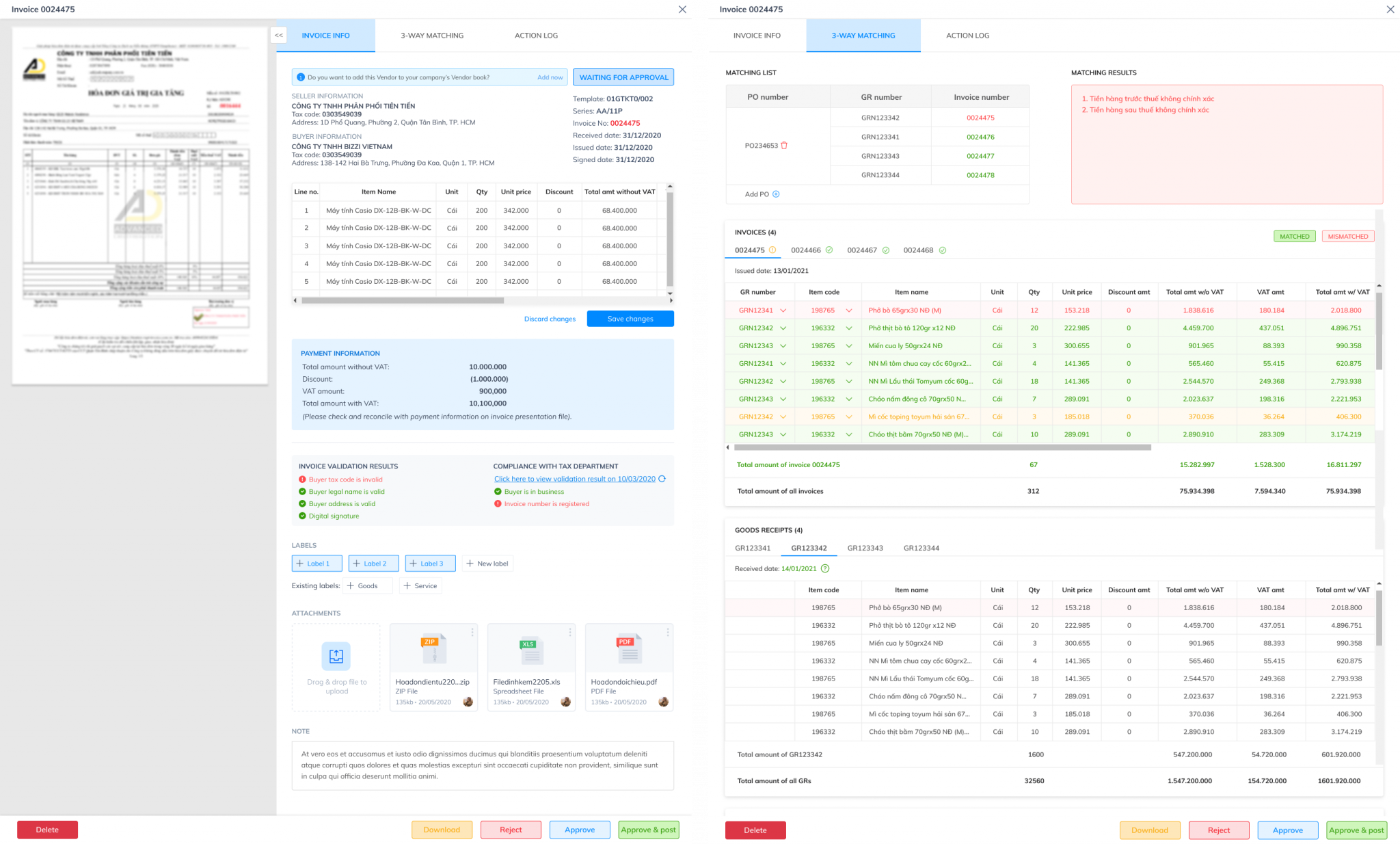
This eliminates the risk of incorrect payments and helps businesses optimize DPO in a controlled manner.
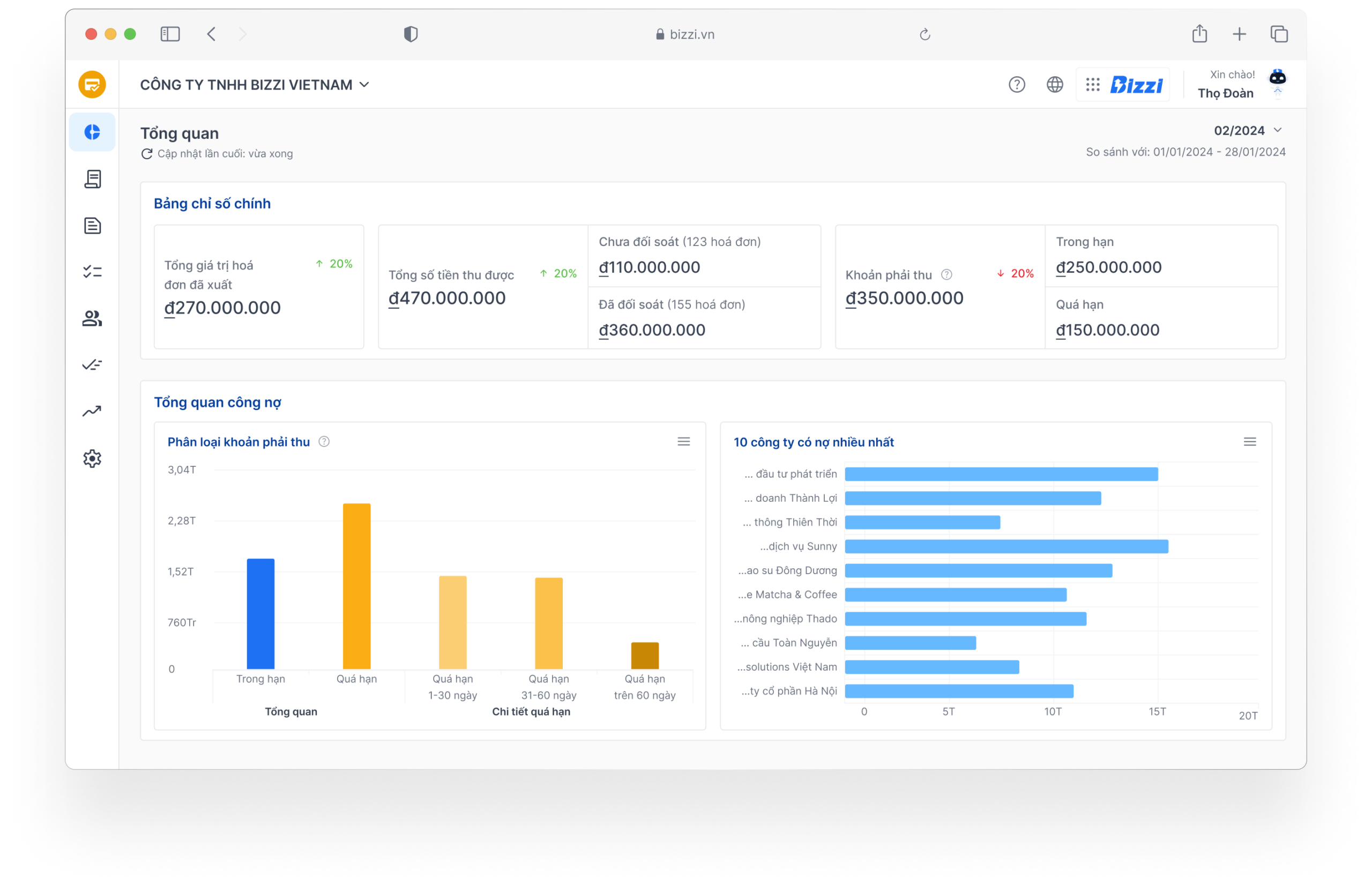
On the cash inflow side, the Bizzi ARM system:
- Automatically reconcile payments with the bank.
- Set up an automated debt reminder scenario.
- Shorten the Data Collection Time (DSO).
When both inputs and outputs are optimized, the cash conversion cycle (CCC) is significantly shortened, allowing for faster cash flow turnover.
Frequently Asked Questions about Cash Flow Management
Cash flow management is the process of monitoring, analyzing, and optimizing cash inflows and outflows to ensure liquidity and operational viability. Common problems include inaccurate forecasts, bad debts, and insufficient working capital. An effective solution is... detailed cash flow planningAutomated debt collection and tight cost control.
Below is a compilation of frequently asked questions (FAQs) about cash flow management:
Is negative cash flow a sign that a business is about to go bankrupt?
Not entirely. Negative operating cash flow (OCF) is a dangerous sign. But negative investing cash flow (ICF) can be a positive sign when a business is expanding.
What is the difference between cash flow and fund flow?
Cash flow reflects the change in cash during a period, while fund flow measures the change in working capital between two accounting periods.
What should a CFO do when cash flow forecasts show a deficit?
Immediate defensive measures need to be activated: tightening debt collection, extending DPO (Debt Collection Order) appropriately, and cutting non-essential expenses.
Conclude
Understanding cash flow management correctly not only helps businesses avoid liquidity risks but also opens up opportunities to optimize working capital and achieve sustainable growth. This is especially crucial for investment and construction projects, where cash flow can be highly variable, making cash flow management even more vital.
From measuring CCC and controlling DSO/DPO to applying advanced models like Miller-Orr, CFOs need a proactive rather than reactive governance system. However, no framework will be effective if the process remains reliant on manual operations.
This is why pioneering businesses are choosing solutions like Bizzi to automate their entire operations. P2P (Procure to Pay) process and O2C (Order to Cash) processThis transforms static cash flow into a continuous flow. When data is processed in real time, CFOs can not only control risks but also proactively make strategic decisions – protecting and enhancing the financial lifeline of the business.
To receive advice on effective corporate financial management solutions, schedule an appointment with Bizzi here: https://bizzi.vn/dat-lich-demo/