


What percentage of your finance and accounting department's budget is being wasted on manual data entry and invoice review? In the digital age, maintaining old processes not only bottlenecks cash flow but also carries the risk of massive tax penalties under Circular 32/2025/TT-BTC. Accurately measuring the ROI of financial digital transformation is key for CFOs to convince senior management to allocate investment budget.
This article by Bizzi provides a formula for quantifying costs, payback periods, and strategies for applying AI/RPA to achieve breakthrough financial performance.
How is the ROI of digital transformation in finance defined?
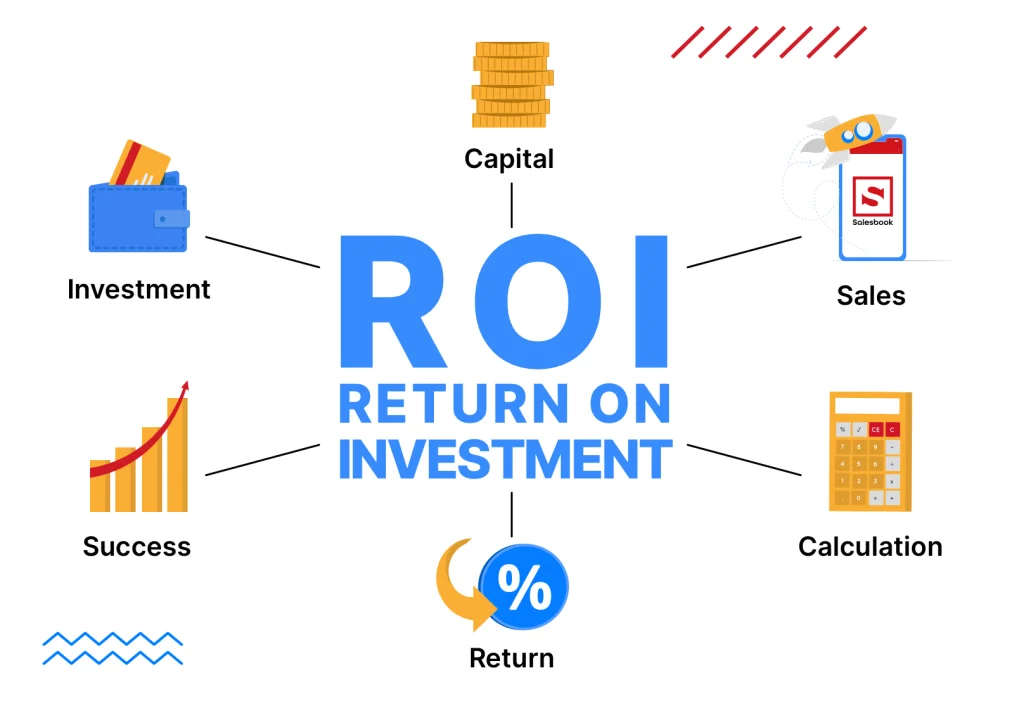
The ROI of digital financial transformation is the rate of return obtained from applying technologies such as Artificial Intelligence and Robotic Process Automation to accounting and financial processes. For CFOs, this metric does not reflect revenue but measures the ability to prevent cash flow leaks, reduce costs, and ensure compliance.
Standard formula: ROI = [(Total financial benefits – Total investment costs) / Total investment costs] × 100%
The three pillars that generate ROI include:
- Cost Reduction (Open Excess Reduction): cutting down on manual processing costs.
- Risk Mitigation: Avoiding tax penalties and invoice discrepancies.
- Operational Speed: Shortening processing and closing cycles.
Unlike other departments, the ROI of finance doesn't come from "increasing revenue," but from retaining money that would otherwise be lost and reducing opportunity costs due to process delays.
To ensure ROI is not just a theoretical number, CFOs need a method to quantify each task into monetary value.
How do CFOs calculate the ROI of digital transformation in the financial sector?
To build a compelling business case for the CEO/Board of Directors, the CFO needs to translate all manual operations into actual financial costs.
Step 1: Quantify personnel costs (FTE saved)
Cost savings = (Processing time per document × Number of documents × Personnel cost/hour)
Real life example:
- 5 minutes/invoice × 10,000 invoices/month = ~833 hours
- Average salary of 50,000 VND/hour → ~41.6 million VND/month
After automation, the time was reduced by 80% → saving approximately 33 million VND/month just for data entry alone.
Step 2: Calculate the Payback Period
Payback Period = Total investment cost / Net monthly savings
Real-world benchmarks:
- Successful RPA/AI projects typically break even within 6–8 months
- The SaaS model can be scaled down. 3–6 months
Comparison table before and after digital transformation
| Element | Handmade | Automation (AI/RPA) | ROI impact |
| Invoice processing fees | 15,000–20,000 VND | < 2,000 VND | Reduce ~80% OPEX |
| Closing date | 10–15 days | 3–5 days | Reduce opportunity costs |
| Discrepancies & Risks | High | Near 0% | Avoid tax penalties |
A major mistake many businesses make is This excludes server infrastructure and operating costs.whereas the SaaS model includes everything in a subscription.
See more content about Automated ROI calculation methods

What hidden risks are eroding cash flow in the absence of digitalization?
These "hidden costs" are the most valuable, intangible part of the ROI.
1. Tax compliance risk
Inability to conduct real-time checks with tax authorities → ease of using invoices from "phantom" businesses.
Consequences:
- Expenses were disallowed.
- The amount of back taxes plus penalties could be... 2–3 times the invoice value
2. Cash flow bottlenecks
The cash conversion cycle is prolonged due to slow approval processes, leading to "stuck" working capital.
3. Opportunity cost of delaying closing the books.
Closing the books 10 days late means:
- The CFO does not have real-time data.
- Financial decisions are delayed → investment opportunities are lost.
4. Data discrepancies and duplicate payments
A small data entry error can result in losses of hundreds of millions of dong.
Practical solutions for dealing with Bizzi.
- Bizzi Bot automatically extracts invoices using AI OCR.
- Three-way reconciliation (PO – GR – Invoice) in seconds
- Verify MST and supplier operational status in real time.
Result:
- Block risks before payment.
- Ensure absolute compliance.
- Protect cash flow right from the start.
Is the process of integrating digital financial solutions into an ERP system costly?
The biggest worry for CFOs is "dismantling the old system" and incurring sunk costs. But in reality, with modern architecture:
- SaaS platforms connect via APIs.
- Instead of replacing ERP, it's about adding an automation layer.
- Clean data is pushed directly into the ledger (GL).
This helps:
- TCO drops sharply.
- No operational interruptions
- Make the most of the existing system.
The cost of integrating digital financial solutions into ERP systems is often inflated because many businesses approach it in the wrong order: deploying technology before standardizing processes. In reality, the cost doesn't lie in the software itself, but in digitizing a fragmented operational system. This is why digital transformation projects fail or cost overruns.
Based on the "Financial Process & System Review" framework, Bizzi takes a reverse approach: Standardize first – integrate later.From the very beginning, the system focuses on evaluating the entire end-to-end process, such as Procure-to-Pay (P2P), Order-to-Cash (O2C) and Record-to-Report (R2R)This helps CFOs clearly identify bottlenecks causing cash flow losses, from manual data entry and slow reconciliation to a lack of budget control. Once the data and processes are "cleaned up," integration into ERP becomes significantly smoother and less costly.
One of Bizzi's core values lies in its ability. Accurately identify "hidden costs" before investing in technology.Instead of focusing solely on saving time, the system helps businesses identify all the risk factors that are silently eroding profits:
- Risks of incorrect, duplicate, or invalid invoices.
- Maverick spend is not controlled.
- Repetitive manual tasks waste resources.
- Departmental overlap leads to data discrepancies.
If these factors are not addressed from the outset, they will significantly increase ERP integration costs due to the need for continuous system modifications or compensation through personnel.
One key difference in Bizzi's approach is its use of Fit-Gap analysis To optimize investment costs, instead of replacing the entire ERP system – a decision that could cost billions of VND and take many years – Bizzi focused on "filling the gaps" that the current system failed to address. This was achieved through a flexible API architecture:
- Bizzi handles all "pre-accounting" steps outside of the ERP system.
- Data is only pushed into the ledger (GL) after it has been reconciled and cleaned.
- ERP remains the core system and is not subject to disruption.
As a result, businesses don't need to "tear down and rebuild" old systems, while minimizing the risk of sunk costs – one of the biggest concerns for CFOs when approving technology budgets.
Beyond technical integration, Bizzi also optimizes costs according to the specific characteristics of each industry.
- For FMCG or retail businesses with a huge volume of invoices, the system significantly reduces processing costs and accounting staff expenses.
- For construction or investment projects, Bizzi helps standardize the acceptance and payment process, thereby reducing discrepancies in cash flow between expenses and revenue.
- For diversified corporations, the platform helps synchronize financial data and establish a centralized cash flow management mechanism.
From a financial perspective, this represents a significant shift: integration costs are no longer purely “IT expenses,” but rather a direct investment in operational efficiency and control. business cash flow management.
In summary, integrating digital financial solutions like Bizzi is not expensive if businesses follow the right path. The biggest challenge lies not in the technology, but in the processes and data. When these two elements are standardized, technology only acts as a "lever" to help CFOs realize ROI quickly, often within a few months. This is also the foundation for businesses to shift from manual operations to real-time financial management, a crucial factor in today's competitive environment.
In-depth Q&A for CFOs on Financial Digital Transformation (FAQ)
Digital transformation in finance is not just about automation; it's about CFOs restructuring management systems and leveraging real-time data to make strategic decisions. CFOs need to focus on: upgrading technology infrastructure (ERP/AI), training personnel in digital skills, and shifting from a controlling role to a strategic partner to enhance competitiveness.
How can we quantify "time saved" in monetary terms when calculating the ROI of financial digital transformation?
When evaluating the ROI of financial digital transformation, many CFOs make the mistake of focusing solely on software license costs while overlooking the value of time freed from manual tasks. In reality, this "time saved" can be fully translated into tangible operating costs.
The common method of calculation is:
Personnel Savings (FTE Saved) = Total hours saved × Average hourly personnel cost
In this context, personnel costs include not only basic salary but also the following:
- Insurance and benefits
- Management costs
- Recruitment and training costs
- Opportunity cost due to slow processing
For example, if the accounting team is processing 5,000 invoices per month, and each invoice takes an average of 8 minutes for manual data entry and reconciliation, the total time spent could amount to over 650 hours per month. When automating invoice processing and 3D reconciliation, processing time is reduced to approximately 1–2 minutes per invoice, and this time savings will directly translate into saved FTE (Feed-in-Time) value.
More importantly, digital transformation in the financial sector not only helps reduce staffing levels, but also helps finance teams shift from data entry to analyzing cash flow, managing costs, and supporting strategic decision-making.

If a data leak occurs on third-party software, who is responsible?
In digital transformation projects within the financial sector, data security is always a major concern for CFOs, especially with regard to invoice data, accounts receivable, cash flow, and bank accounts.
In principle, confidentiality responsibilities will be defined in:
- SLA (Service Level Agreement)
- Data Processing Terms
- System access and permission policy
Therefore, CFOs need to evaluate vendors not only on features, but also on their technology risk management capabilities.
A standard platform should have:
- ISO 27001 certification for information security management.
- Data encryption mechanism
- Audit trail (operation log)
- Role-based delegation
- Multi-factor authentication and login control.
In practice, modern SaaS platforms like Bizzi operate on a cloud model with full access control and tracking mechanisms, helping businesses control access to financial data and supporting retrieval during audits or internal investigations.
What are the "sunk costs" involved in RPA (Regional Public Administration) process automation?
One common mistake when evaluating the ROI of financial digital transformation is only calculating the initial implementation costs while overlooking hidden costs.
In fact, these expenses typically come from three main groups.
- Training and operational change costs
The accounting team needs time to familiarize themselves with the new workflow, new approval processes, and how to handle exceptions on the system. Without a change management plan, businesses are likely to experience "technology resistance."
- Costs of data standardization and system integration
Many businesses are facing difficulties due to:
- Master Data is not consistent.
- Incorrect accounting account mapping
- Lack of standardized APIs between ERP and new software.
This is a common reason why automation projects are delayed or incur additional customization costs.
- Initial downtime costs
During the transition period, businesses may need to operate both old and new processes simultaneously to ensure continuity. Without a clear roadmap, closing the books or processing payments may be delayed initially.
However, when processes are properly standardized, the long-term benefits of digital transformation in the financial sector often significantly outweigh the initial costs.
What size of business can actually make a profit from investing in new financial technology?
It's not just large businesses that need financial automation. In fact, businesses with around 500 documents per month can achieve a positive ROI if their current processes rely heavily on manual data entry and verification.
Signs that indicate a business should invest early include:
- Handling multiple invoices each month
- Multi-level approval process
- Reconciling accounts payable takes a lot of time.
- Frequently late in closing the books.
- Errors occurred during data entry or payment processing.
In the FMCG and retail industries, where transaction volumes are high but profit margins are thin, slow automation often causes operating costs to increase faster than revenue.
Many businesses today prioritize a "quick-win" approach:
- Automate invoice processing beforehand.
- This was then expanded to include accounts receivable reconciliation and cost management.
- Finally, the entire P2P, O2C, and R2R process is connected.
This approach helps shorten the payback period and reduce implementation risk.
Which financial ratios help assess the effectiveness of an operational cost management system?
To assess the real-world effectiveness of digital transformation in the financial sector, CFOs shouldn't just look at the number of automated processes. More importantly, they should focus on metrics that directly reflect the effectiveness of cost control and cash flow management.
Some key KPIs include:
Maverick Spend Reduction – Reduce off-budget spending
This is an indicator that measures the reduction in expenditures that did not go through the standard approval process or exceeded the approved budget.
Without proper control over Maverick Spend, businesses are at risk of:
- Loss of control over the budget.
- Payment made in violation of terms.
- Increased risk of insider fraud.
Reimbursement Cycle Time – Reimbursement Cycle Time
This indicator reflects the time from when an employee submits a payment request to when they receive the reimbursement.
When implementing automation:
- Faster approval process
- Fewer lost documents
- Reduce backlog for the AP (Accounts Payable) department.
What is DSO?What is CCC?
In addition to cost management, CFOs also need to monitor:
- DSO (Days Sales Outstanding)
- CCC (Cash Conversion Cycle)
These are two indicators that directly reflect the impact of automation on a company's cash flow.
In practice, platforms like Bizzi help businesses shorten document processing time, speed up reconciliation, and standardize financial data before recording it in the ERP system. As a result, CFOs can improve cash flow forecasting and enhance the overall operational efficiency of the finance and accounting department.
Conclude
The ROI of digital transformation in finance lies not in promises of “growth,” but in its potential. Reduce costs, protect cash flow, and eliminate compliance risks.In the context of increasingly stringent tax regulations and growing pressure to optimize OPEX, delaying the transition is not only a missed opportunity but also a real financial risk.
A compelling business case needs to be based on three elements:
- Quantifying FTE clearly saved
- Calculate the specific Payback Period
- Fully identify hidden costs and risks.
Bizzi is the platform that helps CFOs realize this entire problem: from automating invoice reconciliation and controlling business expenses to standardizing P2P processes and managing B2B cash flow. Not only does it help achieve positive ROI within a few months, Bizzi also builds a transparent financial foundation, ready for long-term growth.
To receive advice on effective corporate financial management solutions, schedule an appointment with Bizzi here: https://bizzi.vn/dat-lich-demo/