



B2B payments are not simply a matter of spending money; they are a crucial element in managing working capital and tax compliance risks. Facing new regulations from Decree 181/2025/ND-CP (mandating non-cash documentation for invoices exceeding VND 5 million), manually processing thousands of transactions is putting businesses at risk of massive disbursement errors.
This article by Bizzi will provide an in-depth analysis of B2B electronic payment systems, valid payment methods, and how CFOs can apply technology to fully automate the Procure-to-Pay process.
What is B2B payment and how does it differ from B2C?
What is B2B payment? It is a financial transaction process between businesses to pay for goods or services in business operations. Unlike personal consumer transactions, B2B payments are characterized by large values, long payment cycles of 30–90 days, and require a multi-tiered approval process.
The difference between B2B and B2C lies not only in scale but also in control structure. While B2C payments are typically almost instantaneous, requiring only one decision, business payments operate on a clearly decentralized model, usually Maker – Checker – Approver. The payment cycle also doesn't happen immediately but follows Net-30, Net-60, or Net-90 terms, creating a significant time lag.
This time lag is the "financial space" for CFOs to optimize working capital. If managed well, businesses can extend the time it takes to spend money without affecting supplier relationships, while simultaneously optimizing operating cash flow. Conversely, if poorly controlled, this can become a breeding ground for errors, fraud, or losses.
Therefore, B2B electronic payments are no longer an option, but a mandatory infrastructure for modern financial management. And as the payment cycle becomes more complex, the legal framework is also becoming increasingly stringent.
- See more content about Top 5 Mistakes in Working Capital Management and How to Fix Them
Why do B2B electronic payment documents determine tax risk?
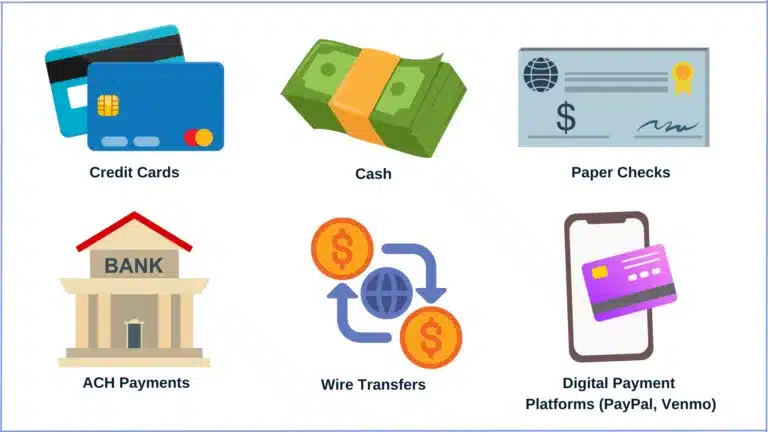
According to Decree 181/2025/ND-CP Effective from July 1, 2025, all business transactions exceeding VND 5 million must be documented with non-cash payment methods to qualify for VAT deduction and recognition as legitimate expenses.
The key change is that this threshold has been drastically reduced from 20 million to 5 million VND, significantly expanding the scope of tax authority oversight. This means that any errors in the B2B payment process can now translate into direct tax risks.
One common practice is splitting invoices below the prescribed threshold for cash payments. However, with modern data analysis systems, tax authorities can review tax identification numbers in clusters, detecting unusual transactions on the same day or with the same supplier. When a violation is identified, the business will not be allowed to deduct input VAT, and the expenses will be excluded from taxable corporate income.
From an auditing perspective, the biggest risk isn't whether or not something is wrong, but whether or not it can be proven. When payment documents are incomplete or lack a logical link to the invoice, the entire expense may be disallowed.
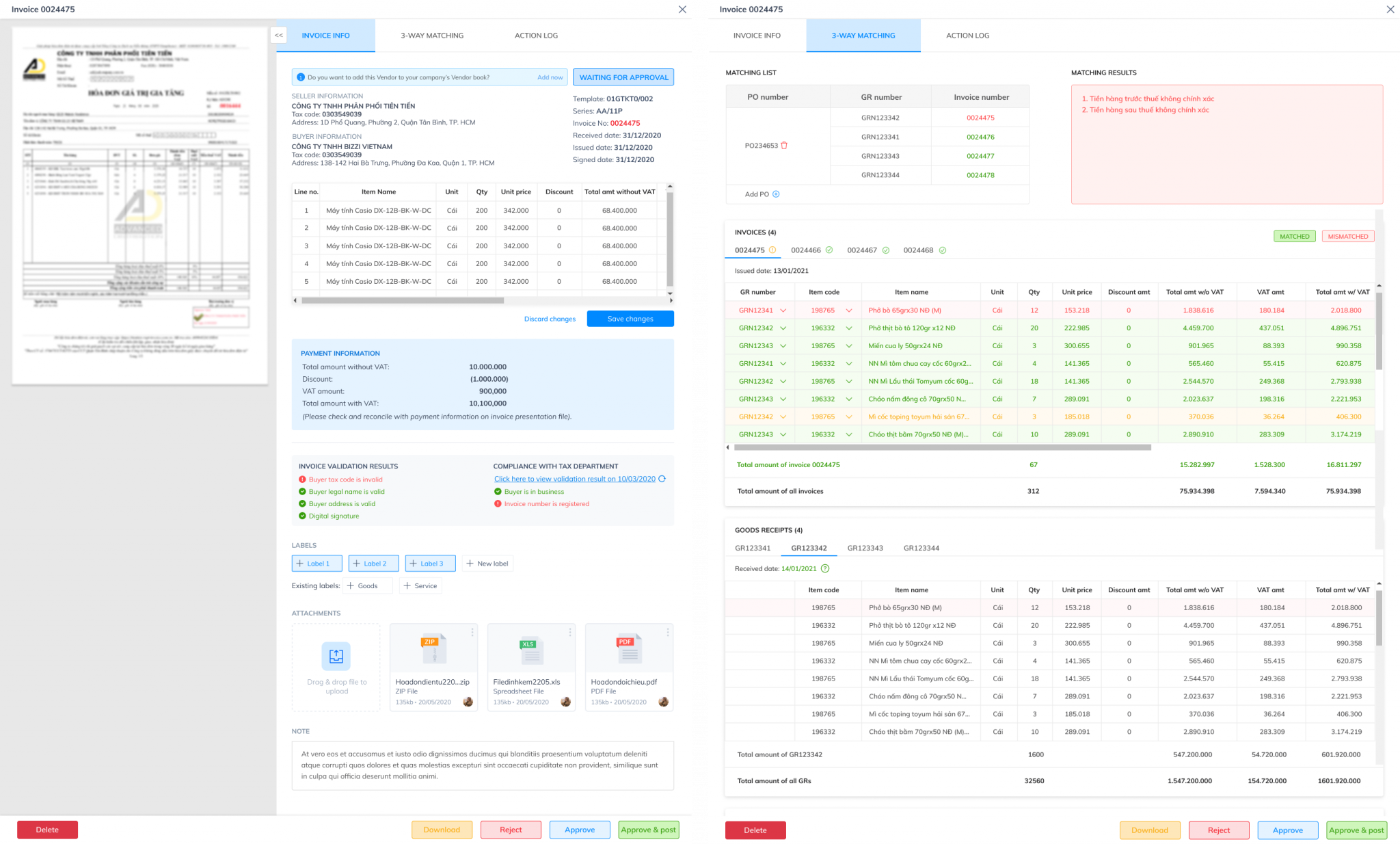
To control this issue, Bizzi provides a layer of automation right from the input stage. The system can automatically collect invoices, 3D matching operation and alerts about transactions lacking valid electronic payment documentation or showing signs of unusual splitting. This allows businesses not only to process transactions correctly but also to prevent risks before tax authorities conduct an audit.
In the context of increasingly stringent regulations, choosing the right B2B payment method has become crucial for survival.
What is the most optimal B2B payment method for businesses?
Current B2B payment methods have diversified, but can be divided into three core groups: bank transfers, corporate credit cards, and technology-integrated B2B electronic payment platforms.
Wire transfers (or direct debit) remain the most popular method due to their security and traceability. However, the order creation process is often time-consuming and heavily reliant on manual operations.
Corporate credit cards offer advantages in the following areas: The interest-free period lasts 45–55 days.This allows businesses to leverage the time between statements and payment deadlines to optimize short-term cash flow. It's an effective tool for managing non-trade operating expenses, and it helps CFOs proactively manage cash flow without incurring capital costs.
Meanwhile, B2B electronic payment platforms are emerging as a comprehensive solution. These platforms not only process transactions but also integrate directly with ERP systems, enabling automated accounting, reconciliation, and approval control.
One crucial factor that many businesses overlook is "float time"—the time it takes for money to actually leave the account. The choice of payment method should not only be based on transaction costs, but also on maximizing benefits from this period.
However, to maximize their effectiveness, these methods need to operate within an integrated enterprise payment system that includes banking.
How does a business payment system integrated with a bank operate?
An integrated enterprise payment system with a bank is a solution that directly connects ERP systems and banks via APIs or a Host-to-Host (H2H) model. Instead of manually entering payment orders on Internet Banking, all payment data is transmitted automatically, securely, and under control.
Essentially, this system operates as a closed loop. Businesses initiate payment orders directly on the ERP system using standardized data. These orders are then transmitted directly to the bank via a secure connection. Before execution, the system goes through a multi-level approval process, using digital signatures or tokens for authentication.
After the bank processes the transaction, the transaction status is reported back to the system in real time. This data is immediately recorded in the accounting books and used for automated reconciliation. The greatest value of this model lies in its ability to shorten the Record-to-Report cycle. Instead of waiting until the end of the month to reconcile subsidiary ledgers, businesses can perform reconciliation daily, thereby shortening the closing time from 10 days to approximately 3 days.
Conversely, if businesses continue to upload Excel files to the bank's portal, they will face security risks such as man-in-the-middle attacks and data corruption.
To ensure the accuracy of payment orders, the system needs to be tightly controlled right from the initial input stage – where Procure-to-Pay plays a crucial role.
How can Procure-to-Pay (P2P) automation help stop losses?
Automated Procure-to-Pay is a crucial step in ensuring all payments are valid. At the core of this process is a three-way reconciliation between invoices, purchase orders (PO), and goods receipt notes (GR).
In a manual system, checking each set of documents can take 10–15 minutes, and the risk of duplicate payments is very high when suppliers resend invoices multiple times. When the scale reaches thousands of invoices per month, errors are unavoidable.
Bizzi addresses this issue by using OCR and AI to read invoice data from emails or XML/PDF files. The system automatically matches each line item with the purchase order (PO) on the ERP system, then routes approval and prepares the payment order.
As a result, manual workloads are reduced by up to 80%, while accuracy is near-perfect. More importantly, businesses can completely eliminate incorrect or duplicate payments.
How can CFOs accurately measure ROI when digitizing processes?
Investing in B2B electronic payment systems should be evaluated using specific financial metrics. CFOs can measure effectiveness based on the cost of processing each invoice, time savings in personnel, and the ability to take advantage of early payment discounts.
A simple formula that can be applied is:
Cost savings = (Manual processing time – Automated processing time) × Number of invoices × Personnel cost/hour.
However, the greater value lies in the ability to transform the accounts payable department from a “cost center” to a “profit center.” When invoices are processed in 1–2 days instead of 10–15 days, businesses can take advantage of early payment discounts from suppliers, typically in the range of 2–3%.
Bizzi not only saves time but also helps businesses access supply chain financing solutions. This allows businesses to make early payments to receive discounts without impacting their actual cash flow.
FAQ: Expert answers to common B2B payment management issues
Managing B2B (Business-to-Business) payments is often challenging due to complex processes, long cycles, and high debt risk. To optimize, businesses need to digitize processes, diversify payment methods (bank transfers, cards, electronic payments), and apply automated reconciliation technologies.
Here are answers to frequently asked questions:
Are B2B transactions conducted through the Director's personal account tax-deductible?
No. The payment account must be in the name of a legal entity and registered with the tax authorities to be considered a valid document.
How are B2B payments made using corporate credit cards accounted for?
Record the transactions through the accounts payable to suppliers, then offset the balance against the credit card account when the statement is due, and retain all original invoices.
How can I avoid security risks when using the Host-to-Host API?
A multi-level approval model, digital signatures, and data encryption should be implemented to ensure security.
Which ERP systems can integrate automated payment processing?
ERP software systems Platforms like SAP, Oracle NetSuite, Microsoft Dynamics, and FAST can all connect to a platform like Bizzi via API.
Conclude
Understanding what B2B payments truly are goes beyond just the concept of transactions; it's about how businesses control cash flow, comply with taxes, and optimize operational efficiency. With regulations like Decree 181/2025 tightening requirements for electronic payment documents, any errors in the process can lead to serious financial risks.
Choosing the right B2B payment method and implementing an integrated banking-based enterprise payment system is a crucial step to ensure transparency and automation. When combined with a solution like Bizzi, businesses not only reduce operational burdens but also transform their finance department into a true value-creating center.
In today's competitive environment, businesses that effectively manage payments will control their cash flow. And that is a long-term strategic advantage for the CFO.
To receive advice on effective corporate financial management solutions, schedule an appointment with Bizzi here: https://bizzi.vn/dat-lich-demo/