


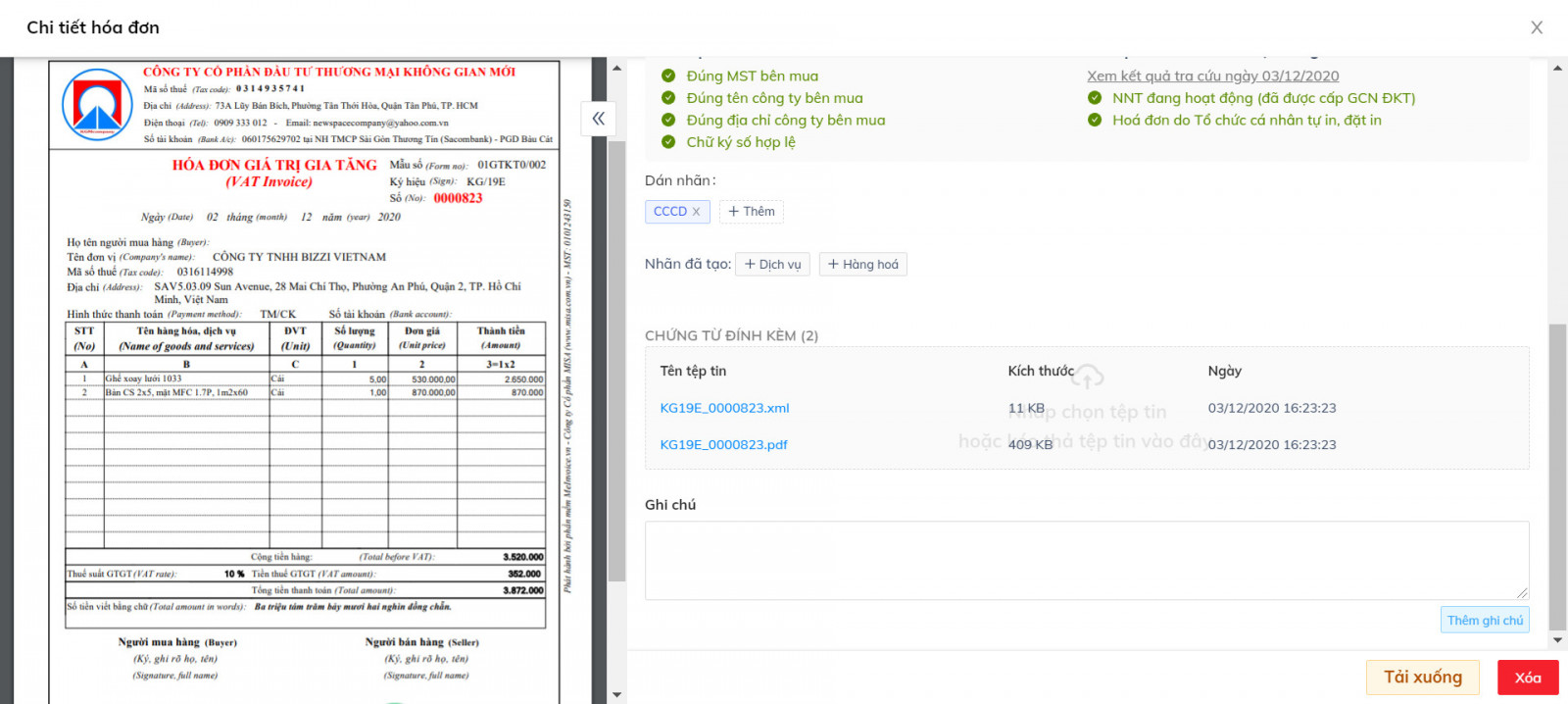
Chief accountants and CFOs frequently face legal risks and cash flow losses when invoice processing remains reliant on manual data entry. Data errors not only slow down the record-to-report cycle but also create the risk of incorrect payments, payments for invalid invoices, and expense disallowances during tax settlements.
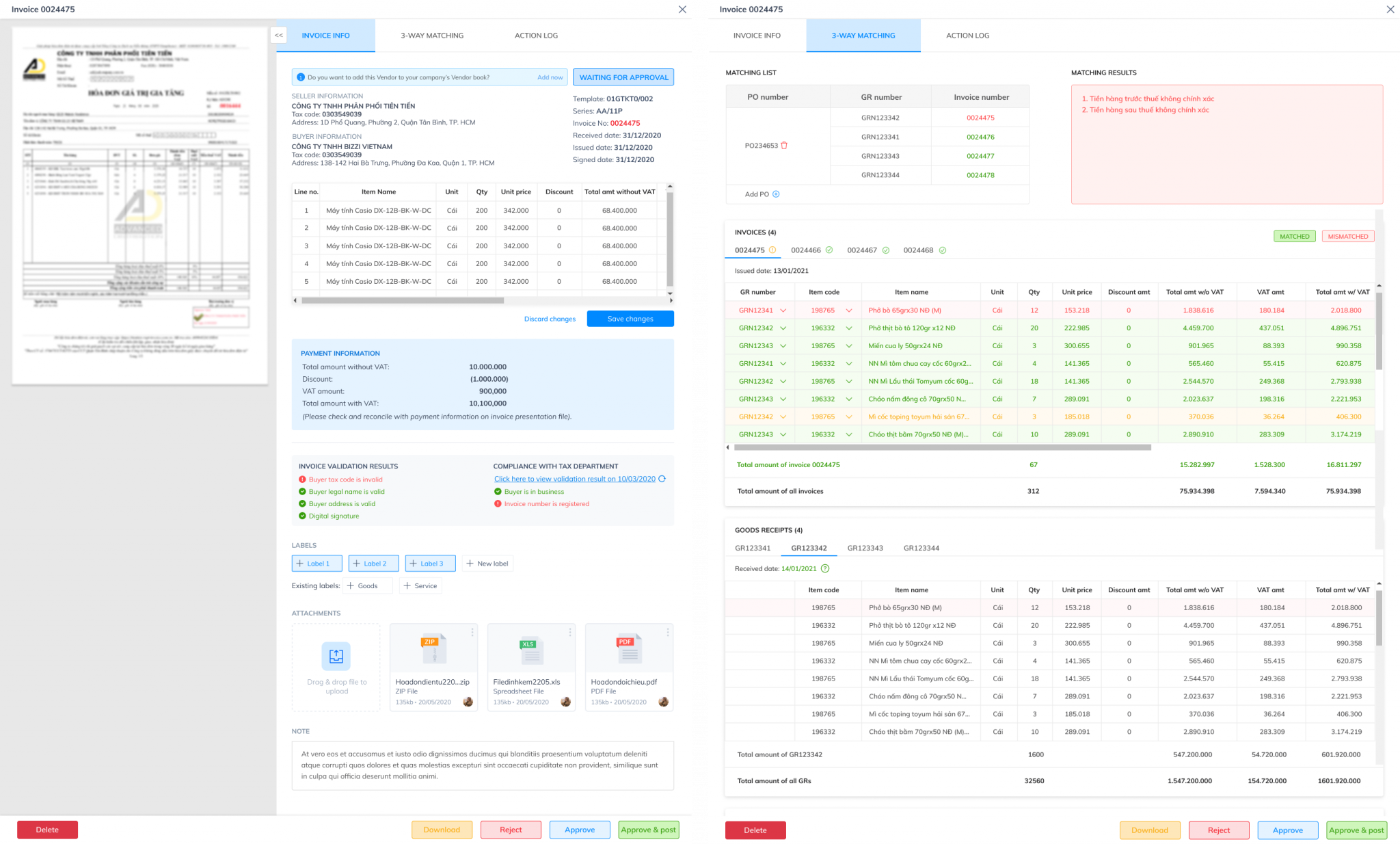
This article analyzes an automated invoice data extraction solution combining various mechanisms. 3D comparison (3-Way Matching), where information on the invoice is cross-checked with the Purchase Order (PO) and the Receipt of Goods (GR). Only when these three data sources match in quantity, unit price, and payment value is the transaction recorded and entered into the payment process. This approach helps businesses tightly control the validity of input data, optimize the accounts payable (AP) process, and secure cash flow even before payment is made.
What is automatic invoice data extraction?
Automated invoice data extraction is a process that applies AI, RPA, and XML parsing to collect, read, and extract all important information from invoices, such as the seller, tax identification number, payment value, etc., without manual data entry. Instead of processing fragmented data from images, PDFs, or other sources... electronic invoice XML fileThe system will then normalize everything into structured data (Master Data) ready to be pushed in. ERP system and analysis.
From a management perspective, this is not simply an accounting support tool, but a "safety net" controlling input risks for the entire financial system. When input data is incorrect, all subsequent reports can be severely affected. Therefore, Extract invoice information Real-time accuracy helps CFOs make decisions based on reliable data rather than potentially inaccurate Excel files.
In practical implementation, Bizzi Bot automatically connects to email or portals to receive invoices, processes them 24/7, and generates clean data instantly. This helps businesses completely eliminate manual data entry time and reduce human error to almost zero.
Differences between XML extraction and invoice OCR technology
XML extraction is a method of directly reading the original data of an electronic invoice – the format with the highest legal validity as stipulated in the Decree. Decree 70/2025/ND-CP and Circular 32/2025/TT-BTC.
Extracting XML data This is the process of directly retrieving code from pre-defined tags in the original file. Because the computer reads its own language, accuracy is achieved. absolute 100% With instant processing speed, this is the original document with the highest legal value, ensuring data integrity without the need for human intervention to re-verify it.
Conversely, OCR technology is used to recognize characters from unstructured formats such as photographs or scanned PDF files. The system must analyze pixels to reconstruct the information, so accuracy depends on image quality, lighting, and font. OCR is often applied to secondary data sources or paper invoices when there is no original data file to digitize the information into the system.
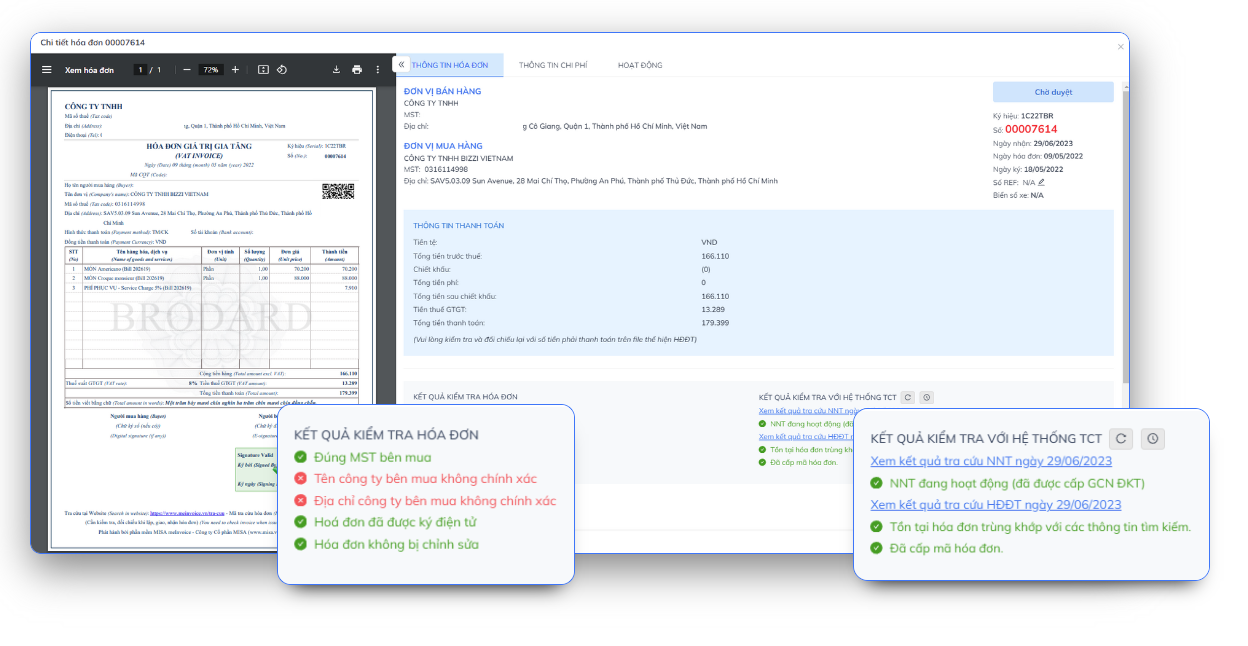
Legal risks associated with software lacking vendor verification.
Even if the data is accurately extracted, risks remain if the system doesn't check the legal status of the supplier. Businesses could inadvertently record invoices from "ghost" or defunct companies, leading to expense disallowances and tax arrears.
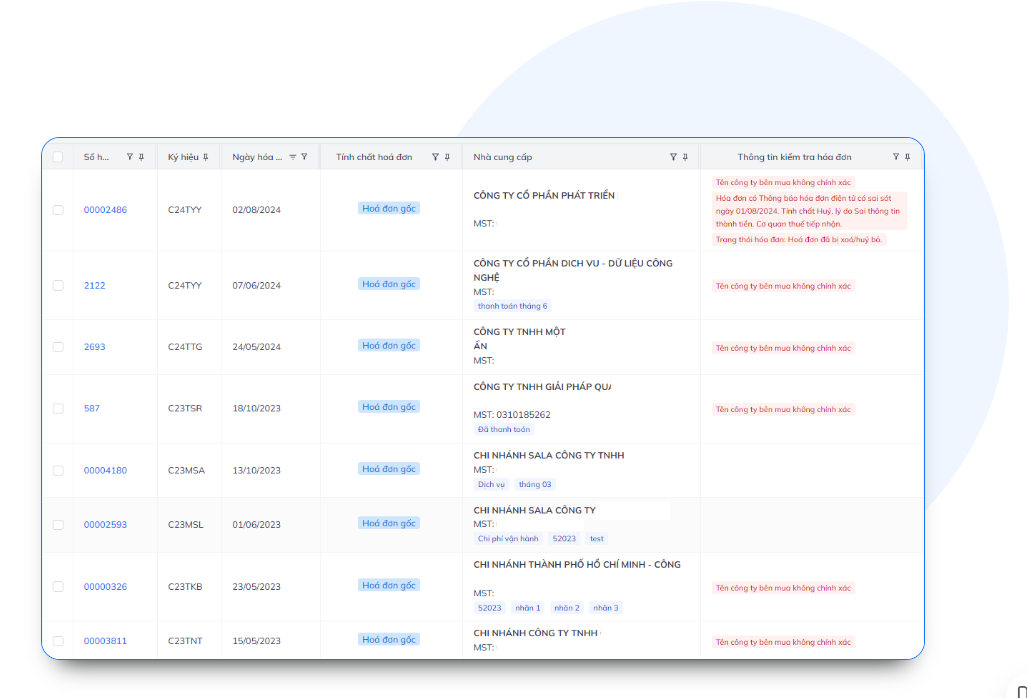
This is a gap that many software programs, if they only have OCR capabilities but cannot check the supplier status, cannot address because they focus only on data recognition without a risk control layer. Meanwhile, Bizzi Boot integrates real-time tax code verification with the tax authority's system, helping to immediately detect suppliers with tax risks.
This allows CFOs to prevent risks from the outset instead of dealing with the consequences after they have been accounted for.
Automated process for extracting, verifying invoices, and performing 3D reconciliation.
A modern AP process goes beyond simply extracting data; it must ensure that data is verified against actual transactions. The standard process begins with... data extraction singleThe system then automatically compares this with the purchase order (PO) and the goods receipt note (GRN).
The core principle lies in making payment decisions not based on trust but on data matching. When these three documents are consistent, the risk of fraud is minimized. Bizzi implements this process by combining AI, OCR, and RPA, enabling the processing of thousands of invoices daily without the need for manual file opening.
Automatically extract details and match internal material codes.
One of the biggest challenges is the discrepancy between the supplier's product naming convention and the internal system. If handled manually, accountants would have to check each line, which is prone to errors and time-consuming.
AI and NLP technology enable the system to read every detail line on the invoice and automatically map it to internal SKU codes. As a result, inventory and cost data are recorded with absolute accuracy, completely eliminating manual data entry.
Handling invoice time discrepancies for tax declaration purposes.
In many cases, the invoice date and the digital signature date do not coincide. According to current regulations, only the digital signature date is considered valid for tax declaration purposes.
The intelligent extraction system will automatically identify these two data fields, alert if there are discrepancies, and suggest the appropriate filing period. This helps businesses avoid the risk of filing in the wrong period, which is a common cause of tax penalties.
Integrating invoice data into ERP shortens the P2P and R2R cycles.
After the data has been standardized and verified, the next step is to directly push it into the ERP system to generate journal entries. This completely eliminates the Excel import/export process, which is prone to errors.
By integrating APIs with ERP systems, businesses can shorten the Record-to-Report cycle from several days to just a few days, providing management with near-real-time financial data for decision-making.
See also the following documents: Intelligent automation in the Procure-to-Pay (P2P) process.
Optimize working capital through the AP automation platform.
Automating the Accounts Payable (AP) process not only saves time but also directly impacts cash flow. When businesses accurately control accounts payable and payment terms, CFOs can optimize their DPO (Demand Payment Order) and maximize working capital.
Job Extract invoice information This is precisely the foundation for building aging reports, cash flow forecasts, and payment planning. As a result, businesses no longer face cash shortages or late payments that damage their reputation with suppliers.
Wasting budget by only buying OCR software to scan images.
Many businesses fail in their digital transformation because they invest in standalone OCR tools. These tools only address the "reading" aspect without handling the context and processes.
As a result, data is fragmented, accountants still have to check manually, and risks persist. This is the "Garbage In, Garbage Out" problem – uncontrolled input data can disrupt the entire financial system.
An effective solution must be a platform that integrates the entire process from extraction and reconciliation to accounting. Bizzi takes this approach, helping businesses build a closed-loop process and completely eliminate "blind spots" in cost management.
Frequently Asked Questions about Invoice Extraction Technology
Invoice data extraction technology uses AI and OCR to automate the reading, analysis, and import of data from invoices (PDF, images) into accounting systems. This solution helps increase processing speed and reduce human error.
Here are the most frequently asked questions:
Can the invoice splitting system detect shell companies?
Conventional OCR tools only recognize characters from invoices, and therefore lack the ability to assess the validity of suppliers. With Bizzi's solution, verification goes beyond simply "reading data" and is integrated directly into the input invoice processing flow. The system automatically compares the supplier's tax identification number with data from the tax authorities in real time, thereby determining operational status and alerting to invalid cases before the transaction is recorded or paid.
How can I automatically assign accounting accounts after extraction?
After extracting invoice data, the system uses AI to analyze the content of goods, services, and transaction context. This information is compared with the Master Data system established in the ERP (such as expense categories, accounting accounts, and expense centers), thereby automatically assigning appropriate journal entries. This approach helps standardize accounting, reduce reliance on personal experience, and minimize discrepancies in expense recording.
Does the software support multiple languages?
Yes. Modern document processing engines are capable of recognizing and extracting data from multiple languages, such as English, Chinese, or bilingual. This is especially useful for businesses involved in imports, when they need to process documents like commercial invoices while ensuring data is standardized before being entered into the financial system.
What should be done if the invoice differs by 1 VND from the purchase order?
In practice, small discrepancies can arise due to rounding or unit conversions. The system allows the CFO to set a tolerance level in the three-way reconciliation process (PO – GR – Invoice). If the difference is within the acceptable range, the invoice will be automatically approved; otherwise, the system will switch to an exception handling mechanism for verification before payment approval.
Is it necessary to save the original file when extracting XML?
Mandatory. Extracted data is for accounting and transaction processing purposes only, while the original XML file (digitally signed) is the legally valid document when dealing with tax authorities. Businesses must retain this file for the prescribed period (usually a minimum of 10 years) to ensure compliance and facilitate inspections and audits.
Is the data automatically compared against the contract?
Yes, but not by manually checking each clause. In the 3-way matching process, data from invoices is compared against Purchase Orders (PO) and Receipts for Goods Receipts (GR), which are established based on the original commercial contract. This ensures that all payments are within budget and agreed-upon terms, allowing the CFO to tightly control spending without having to re-examine the contract for each transaction.
Conclude
In the context of increasing tax compliance pressure and rapidly growing invoice volumes, automated invoice data extraction is no longer an option but a mandatory requirement for modern businesses. From ensuring the accuracy of input data and controlling supplier risks to optimizing AP processes and cash flow, all value begins with an intelligent invoice processing system.
Instead of investing in separate tools like simple OCR, businesses need a comprehensive, integrated platform that covers everything from data extraction and validation to reconciliation and accounting. This is the approach that helps CFOs transform the finance department from a cost management center into a value creation center.
If the business is looking for AP process optimization solutionBy minimizing tax risks and improving operational efficiency, Bizzi is a worthwhile option. Sign up for a demo to experience how Bizzi helps you control invoices and cash flow automatically, accurately, and transparently.
To receive advice on effective corporate financial management solutions, schedule an appointment with Bizzi here: https://bizzi.vn/dat-lich-demo/