



From 2026, the method for determining the invoice obligations of household businesses will no longer be based on whether they are subject to "tax declaration" or "lump-sum" tax. Household businesses will need to base their calculations on annual revenue, VAT calculation method, type of activity, and whether or not they sell directly to consumers.
It's important to note that not all businesses use the same invoicing method. Depending on revenue, tax calculation method, and sales model, businesses can create invoices themselves using software, use electronic invoices from a cash register, or request the tax authorities to issue invoices on a transaction-by-transaction basis. The following guide will help you determine the correct situation before proceeding.
Two key legal milestones for sole proprietorships to remember in 2026.
Abolish the lump-sum tax mechanism.
Household businesses and individual business owners are now required to declare and pay taxes according to the new regulations. Therefore, the previous guidelines separating "tax-declaring households" and "lump-sum tax households" are no longer appropriate as the primary tax structure.
The new electronic invoicing framework has come into effect.
Law No. 108/2025/QH15 on Tax Administration, Decree 254/2026/ND-CP, and Circular 91/2026/TT-BTC become the main basis for electronic invoices and electronic documents.
Which businesses are required to use electronic invoices?
| Situation | Invoice obligations | Implementation plan |
|---|---|---|
| Annual revenue exceeding 1 billion VND. | Belongs to the group required to register for the use of electronic invoices. | Register for electronic invoices with codes or electronic invoices from the cash register, depending on the business. |
| Cumulative revenue for the year exceeded 1 billion VND. | You must switch to using electronic invoices within the specified timeframe. | Register within 30 days from the last day of the tax period in which cumulative revenue exceeds the threshold. |
| Annual revenue of 1 billion VND or less. | No revenue threshold is required by default. | Applications can be submitted voluntarily if eligibility is met, or on a case-by-case basis as appropriate. |
| Selling property requires registration of ownership and usage rights. | This falls under the category requiring separate determination of electronic contract obligations. | Compare transaction records and invoice issuance procedures at the tax authority. |
| Retail, food and beverage, hospitality, passenger transport, entertainment, or services directly to the consumer and subject to mandatory requirements. | Use electronic invoices generated from cash registers connected to the tax authority's data system. | Connecting sales/POS software with e-invoice solutions. |
The revenue threshold used to determine invoicing obligations should not be confused with whether or not a household is required to pay individual taxes. Household businesses need to monitor cumulative revenue by period to register within the deadline when exceeding the threshold.
Should a sole proprietorship issue sales invoices or VAT invoices?
The answer depends on VAT calculation methods, not just depending on the type of business household.
| Invoice type | Use cases | Note |
|---|---|---|
| Sales invoice | The seller calculates VAT using the percentage-based method on revenue. | Do not present output VAT according to the VAT invoice structure. |
| VAT invoice | The seller applies the VAT deduction method as prescribed. | Show the price before tax, tax rate, VAT amount, and total payment. |
| Electronic invoices are generated from the cash register. | Direct-to-consumer sales activities are subject to these regulations. | Data is generated at the point of sale and connected, then transmitted to the tax authorities. |
| Electronic invoices are issued on a transaction-by-transaction basis. | In cases where invoices are not used frequently but are needed for specific transactions and are eligible for issuance by the tax authorities. | The application must be completed, and relevant tax obligations declared and paid before or according to the issuance process. |
Readers who need background knowledge can refer to the following article. What is an electronic invoice?.
What preparations does a sole proprietorship need to make before registration?
- The business registration information and tax identification number have been synchronized and are accurate.
- The electronic tax transaction account and contact information currently in use.
- The device has an internet connection.
- Electronic invoicing solutions or sales software capable of connecting data as required.
- The electronic signature/digital signature method is suitable for the type of invoice and the registration process.
- Information of the business representative is required for biometric authentication when registering or changing information for the use of electronic invoices.
- Product and service catalog; units of measurement; selling prices; tax policies and information on regular customers.
Households should choose a solution based on the type of invoice, the number of transactions, the sales model (in-store or B2B), the ability to connect to a point-of-sale system, and support for handling invoice errors. See further instructions on... Register for electronic invoices.
Procedures for registering to use electronic invoices for household businesses.
-
Determine the invoice format.
Choose invoices with tax authority codes, invoices from cash registers, or invoices issued on a transaction-by-transaction basis according to revenue, industry, and tax calculation method.
-
Choose software or service provider
Verify connectivity with the tax authority, create the correct invoice type, integrate with POS systems, perform electronic signatures, save XML files, and process adjustments or replacements.
-
Fill out the registration form.
Complete Form No. 01/ĐKTĐ-HĐĐT under Appendix III of Circular 91/2026/TT-BTC on the tax authority's system or through a service provider.
-
Verify the representative and submit the application.
Verify identification information, perform biometric authentication as required, and submit electronic documents.
-
Receive notifications from the tax authorities.
If accepted, configure the invoice template, symbols, product categories, and user. If not accepted, clearly state the reason, correct the data, and resubmit.
How to issue electronic invoices for sole proprietorships using the software.
Interfaces may vary between vendors, but the business process typically consists of the following six steps.
-
Step 1: Select the invoice type and create a new one.
Select the correct sales invoice, VAT invoice, or cash register invoice according to the registered format. Do not use an invoice template different from the household's tax method.
-
Step 2: Enter buyer information
Enter the buyer's name, address, and tax identification number when available or required by the transaction. For business customers, verify the tax identification number before issuing.
-
Step 3: Import goods and services
Record the correct name of goods/services, unit of measurement, quantity, unit price, discount amount, total amount, and tax information according to the invoice type.
-
Step 4: Check the timing and content.
Compare the order, delivery note, acceptance report, or cash register data. Pay particular attention to the buyer's name, tax identification number, amount, and type of tax.
-
Step 5: Sign, send code, or issue from the cash register.
Electronic signing is performed according to the system's procedures. For invoices with codes, the data is sent to the tax authority for code issuance; for invoices from cash registers, the data is generated at the point of sale and transmitted via a standard connection.
-
Step 6: Send to buyer and store
Send the link, PDF file, or appropriate electronic method to the buyer; and save the XML file and related data for future reference and comparison.
See the general procedure in the article. How to issue electronic invoice.

How to generate electronic invoices from a cash register.
Electronic invoices generated from cash registers are suitable for activities with a large number of transactions and direct sales to consumers such as retail, food and beverage, hotels, passenger transport, entertainment, or personal services that are subject to regulations.
- The point-of-sale software records transactions at the counter.
- The cashier checks the goods, quantity, price, discount, and payment method.
- The system generates electronic invoices from the cash register.
- The invoice data is connected and transmitted to the tax authorities.
- Buyers receive invoices via a lookup code, QR code, email, or other electronic method.
Businesses should check their ability to handle connection loss, refunds, post-sales discounts, and incorrect invoices. See also the article. Electronic invoice generated from cash register.
How can a sole proprietorship request invoices for each transaction?
The mechanism for issuing electronic invoices with codes on a transaction-by-transaction basis is for cases within the scope authorized by the tax authorities, typically used when the seller does not use invoices regularly but needs one for a specific transaction.
Prepare transaction documents.
Contract, delivery/acceptance record, buyer information, value, and documents proving the origin of the transaction.
Request for invoice
Complete the electronic procedure using the form and instructions displayed on the tax system at the time of submission.
Filing and paying taxes
Fulfill all tax declaration and payment obligations as required by the tax authorities.
Receive an invoice with a code.
Verify the issued invoice data, send it to the buyer, and record the transaction.
When must a business issue an invoice?
| Transaction | The time to determine |
|---|---|
| Selling goods | When transferring ownership or the right to use goods to the buyer, it is not required to have received payment or not. |
| Providing services | Upon completion of service provision; in cases where payment is collected before or during the provision of services, the timing of payment and related exceptions shall be determined according to regulations on payment collection and related exceptions. |
| Delivery or partial acceptance | Issue invoices for the goods or services delivered or accepted accordingly. |
| Selling directly via cash register. | Generate invoices at the time of sales transactions on the sales system. |
How does the company issue invoices to individual business owners?
When a business sells goods or provides services to a household business, the business still issues an invoice as with a regular sales transaction. The buyer's information should be recorded according to the household's actual registered information.
- Business name.
- Appropriate business address or registered address.
- The business household's tax identification number, if already issued and included in the required information field.
- Email or other method for receiving invoices.
Do not use a personal name as a representative instead of a household name if the purchase documents, contracts, and registration information use a household business name. Before issuing, verify the tax identification number and the buyer's name to avoid any necessary adjustments.
What information should be included on an electronic invoice for a sole proprietorship?
The specific content depends on the type of invoice. Before issuing, households should check at least:
- Name, address, tax identification number of seller.
- The buyer's name, address, and tax identification number should be included if required.
- Name of goods or services.
- Unit of measurement, quantity, unit price, and total amount.
- Any discounts, price reductions, or adjustments that may apply.
- Tax information matches the invoice type.
- Total payment amount.
- Invoice date.
- Tax authority code, lookup code, QR code, or identification data specific to the invoice type.
How to handle incorrect electronic invoices?
| Error | What to do | Do not do |
|---|---|---|
| Incorrect buyer name or address, but correct tax identification number. | Identify cases requiring error notification according to regulations and send the information to the buyer. | Unauthorized deletion of issued invoice data. |
| Incorrect tax identification number, amount, type of tax, goods or services | Issue adjustment or replacement invoices as applicable. | Create a new invoice but do not link the incorrect invoice. |
| The invoice was rejected by the tax authorities for a tax code. | Read the error code, correct the registration data or invoice content, and then resubmit. | Submitting multiple times without fixing the cause is unacceptable. |
| The transaction was cancelled or returned. | Based on the transaction records and regulations for processing issued invoices, adjust the data accordingly. | Use "cancel invoice" as a general solution for all situations. |
The error handling procedure has changed according to Circular 91/2026/TT-BTC. See the detailed instructions. Correcting incorrect electronic invoices and the cause Electronic invoice code denied.
How to look up issued electronic invoices
- Access the tax authority's electronic invoice lookup portal or the lookup function on your software.
- Enter the seller's tax identification number, form symbol, invoice symbol, invoice number, and verification information.
- Compare the status, tax authority code, and seller data.
- Save the XML file as the original data; the PDF is merely a representation for reading and sharing.

See further instructions. Look up electronic invoices on the tax authority's system..
Frequently asked questions
Is it mandatory for sole proprietorships to issue electronic invoices?
Households with annual revenue exceeding 1 billion VND are required to register for electronic invoices. Households with revenue of 1 billion VND or less can register voluntarily if they meet the conditions, or use a per-transaction issuance mechanism if appropriate.
Can a household business with revenue under 1 billion VND issue invoices?
Yes. Not being required to meet a revenue threshold does not mean it's prohibited. Households can register voluntarily or request the tax authorities to issue invoices for specific transactions if they are eligible.
Can sole proprietorships issue VAT invoices?
It is necessary to determine the method for calculating VAT. Households that calculate tax as a percentage of revenue usually use sales invoices; in cases where the deduction method is applied, VAT invoices are used.
Do sole proprietorships need a digital signature to issue invoices?
The required signature depends on the type of invoice and the method of creation. Households need to prepare a suitable electronic signature method; invoices generated from cash registers have their own mechanisms for creation and data transmission. See further instructions on... digital signature on electronic invoices.
When do newly established businesses exceeding 1 billion VND in revenue need to register?
Households that register to use electronic invoices within 30 days from the last day of the tax period and have cumulative revenue exceeding 1 billion VND.
Can the company issue invoices to individual business owners?
Yes. The company issues invoices for sales or service transactions and records the buyer's information according to the actual registration of the business household, including name, address, and tax identification number when available.
Do sole proprietorships still have to report on their invoice usage?
Electronic invoices are transmitted and managed on a data system. Separate reporting obligations need to be determined according to the type of invoice and the requirements of the tax authorities at the time of implementation; the old paper invoice reporting process should no longer be used mechanically.
B-Invoice assists business households in creating and managing invoices.
B-Invoice is Bizzi's electronic invoicing solution. According to the product page, the system supports standard electronic invoices, invoices generated from cash registers, digital signatures, QR codes, invoice search, XML storage, and integration with sales software or management systems.
Invoice issuance
Create, sign, and manage electronic invoices on a single system.
Connect the cash register.
Supports the flow of electronic invoices generated at the point of sale.
Search and store
Search invoices, save XML data, and export in multiple formats.
System integration
Connecting sales software and management systems according to deployment needs.
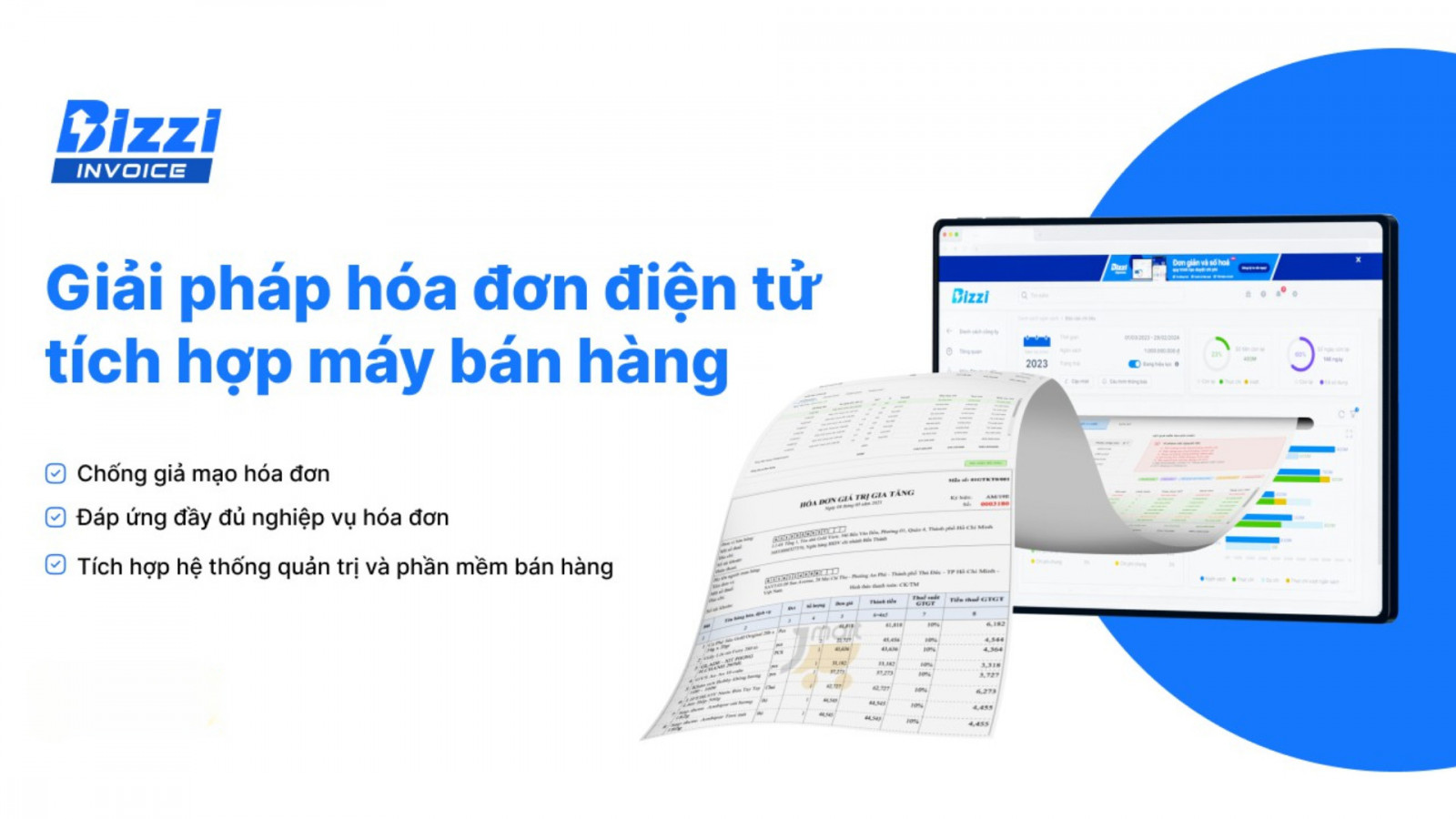
Note: Regulations regarding electronic invoices have changed since July 1, 2026. Before implementation, businesses should consult with the Bizzi team to confirm that the B-Invoice version being offered supports the correct invoice types, connection methods, and processes suitable for their business model.
Conclude
The process of issuing electronic invoices for household businesses in 2026 begins with determining revenue, type of activity, and VAT calculation method. Households with revenue exceeding 1 billion VND must register to use electronic invoices; those selling directly to consumers who meet the requirements must implement invoices from cash registers. Households with revenue of 1 billion VND or less can still voluntarily register or request electronic invoices on a transaction-by-transaction basis when eligible.
Before issuing, households need to check the correct invoice type, buyer information, issuance date, and code issuance status. If errors occur, they must notify, adjust, or replace the invoice according to new regulations, instead of arbitrarily deleting or canceling the invoice data.
Reference
- Law on Tax Administration No. 108/2025/QH15.
- Decree 254/2026/ND-CP on electronic invoices and electronic documents.
- Circular 91/2026/TT-BTC provides guidance on electronic invoices and electronic documents..
- Decree 141/2026/ND-CP amends tax policies for household and individual businesses..
This content is for general guidance only. Business owners should compare the tax method, industry, revenue, and notices from the directly managing tax authority with their specific situation.