



In a business payment process, receiving a valid invoice does not automatically mean the expense is ready for payment. Before the money actually leaves the business account, the Finance department must verify several other factors, such as whether the expense has been properly approved, whether the payment documentation is complete, and whether the transferred amount matches the supporting documents and the transaction.
That's also the reason invoice reconciliation, transactions and payment requests It becomes an important control step in the process. low fuel for B2B businesses. Instead of checking each document individually, reconciliation helps connect data between them. bill, payment request and actual payment transaction, This helps to mitigate risks such as duplicate payments, payments to the wrong recipients, missing documentation, or the inability to trace funds later on.
As the number of invoices, suppliers, and payments increases, managing these three data groups using Excel, email, or multiple separate systems easily creates blind spots in control. This not only affects payment schedules but also makes it difficult for businesses to track the status of each expense and consolidate information for auditing or cash flow management.
This article by Bizzi will help you understand how the three layers of data in the payment process need to be linked, the risks of mismatches, and how to build appropriate controls before money leaves the business.
What is invoice reconciliation, transaction reconciliation, and payment request reconciliation?
Invoice, transaction, and payment request reconciliation involves matching three layers of data: the document generating the payment obligation, the payment approval request, and proof that the money has actually been transferred. The goal is not to check each document individually, but to confirm that all the data collectively reflects a valid expenditure before the business makes the payment.
In a payment process, these three layers of data serve three completely different roles:
- Bill Confirm that the business has incurred an obligation to pay the supplier.
- Payment request This indicates that the expenditure has been initiated, reviewed, and approved according to internal procedures.
- Payment transactions This is proof that the money has actually been transferred from the business account to the correct recipient.
Each data layer reflects a different stage in the lifecycle of an expense. If businesses only examine each layer individually without comparing them to each other, they may still encounter situations such as:
- Valid invoices that have not yet been approved will still be paid.
- The payment request has been approved, but the amount transferred differs from the amount on the invoice.
- The bank transaction occurred, but it is unclear which bill or offer it was being paid for.
These discrepancies usually don't stem from a document being "wrong," but rather from... The three data sources are no longer consistent. within the same payment process.
That's also why businesses have processes. financial operations management Mature accounting professionals do not view reconciliation as the final verification step, but rather consider it as a process. A layer of control throughout Payment Operations, This helps ensure that all disbursements are fully substantiated by operational procedures, approvals, and payment authorizations.
When viewing these three data sets as three independent "pieces of a puzzle," businesses will find it very difficult to identify risks. The true value of reconciliation lies in identifying them. Are they both describing a single transaction?. Therefore, before establishing a reconciliation process, businesses need to understand this clearly. What three layers of data are required to match in a payment transaction?.
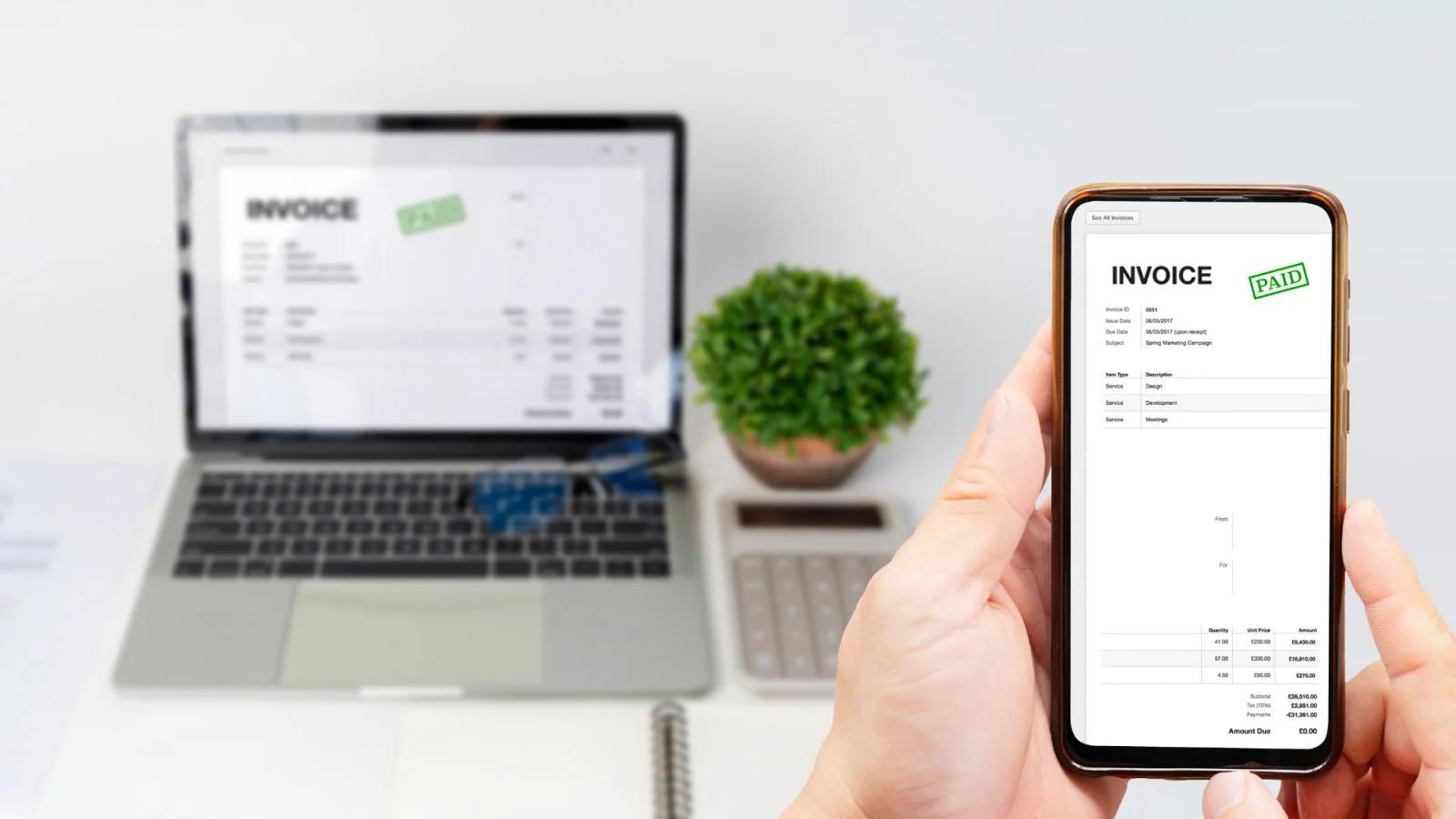
Three layers of data need to match in a payment process.
A well-controlled payment process requires that invoices, payment requests, and bank transactions all point to a single valid expense. Only when these three layers of data are consistent in information and status can businesses reduce the risk of incorrect payments, duplicate payments, or a lack of traceability later on.
This is a key difference between a bureaucratic payment process and a modern financial management system.
In many businesses, invoices are stored in accounting software, payment requests are sent via email or a private approval platform, and transfer transactions are held in internet banking or statement files. Each system reflects a portion of the expense, but doesn't automatically confirm that all the data is referring to the same transaction.
For effective control, the Finance Department needs to reconcile three layers of data according to the model below.
| Data layer | Role in the process | Data needs to match | Risks if there are discrepancies. |
| Bill | Confirm the payment obligation. | Invoice number, supplier, tax identification number, amount, tax, invoice date | Invalid invoice payments, duplicate payments, or incorrect expense recording. |
| Payment request | Activate the internal approval process. | Request code, applicant, department, budget, attached documents | Misappropriation of budget funds, incorrect approval levels, or lack of justification for payment. |
| Payment transactions | Confirm that the money has actually been transferred. | Amount, payment date, recipient account, transaction code, transfer details | Incorrect account payments, inability to reconcile statements, and difficulty tracing the issue during audits. |
The table above shows that each data set answers a different control question.
- Bill Answer the question: Does the business actually have an obligation to pay?
- Payment request reply: Was this expenditure requested and approved through the proper procedures?
- Payment transactions reply: Was the money transferred to the right person, in the right amount, and at the right time?
If any of the three questions remain unanswered, the business should not consider the payment complete.
For example, an invoice may have complete information and be recorded in the accounting system, but the payment request has not been approved or there is insufficient documentation to prove the service has been completed. If you still transfer the money at this point, the risk lies not with the invoice but with... The control process was overlooked..
Conversely, there are also cases where a payment request has been approved and the money successfully transferred, but the transfer details cannot be linked to the corresponding invoice. When reconciling end-of-period statements, accountants will spend a lot of time tracing these transactions, and this also increases the risk of discrepancies. debt and cash flow management, This affects the book closing schedule.
For the CFO, the value of reconciliation lies not only in verifying each document, but also in... Ensure that all outflows of funds can be traced back from the bank transaction to the payment request and original invoice.. This provides the foundation for building a transparent payment control system and enabling real-time monitoring of cash flow.
When the three layers of data are no longer consistent, businesses will begin to encounter numerous exceptions in the payment process. These exceptions not only increase the workload of the Finance department but also pose significant risks to internal control, auditing, and cash flow management. In the following section, we will analyze the most common discrepancies and how to identify them during the reconciliation process.
At which checkpoints should the reconciliation process take place?
Reconciliation is not a single verification step before transferring funds, but should be performed throughout the payment process. Establishing multiple control checkpoints helps businesses detect discrepancies as soon as they arise, rather than dealing with the consequences after the payment has been completed.
Many businesses still maintain a traditional approach: only checking records when the accounting department is preparing to process a payment. This approach may be suitable when the number of transactions is small, but when a business processes hundreds or thousands of payments each month, concentrating all reconciliation activities at the end of the process puts significant pressure on the Accounts Payable (AP) department and increases the risk of overlooking discrepancies.
Instead, businesses with modern financial management systems typically distribute reconciliation activities across multiple consecutive control points. Each control point has its own objective, but all aim towards the common goal of ensuring compliance. All disbursed funds are fully supported by operational procedures, approval criteria, and payment criteria..
Control Point 1: Upon receiving the invoice from the supplier.
The first point of control occurs as soon as the business receives the invoice or payment documents from the supplier.
At this stage, the goal is not to approve the payment but to Verify the completeness and validity of input documents..
The Accounting Department needs to check the following information:
- The electronic invoice was issued in accordance with current regulations.
- The supplier information, tax identification number, and invoice number are accurate.
- The value of goods or services matches the signed contract or agreement.
- The attached documents, such as contracts, acceptance reports, handover reports, or warehouse receipts, are complete.
If discrepancies are detected at the time of receipt, businesses can request the supplier to make adjustments before the expenditure proceeds to the approval process, avoiding the need to cancel or amend the documentation at later stages.
Control Point 2: When preparing a payment request
After the input documents are confirmed, the user department or accounting department will prepare a payment request.
This is the time when businesses need to make a comparison between payment records and internal regulations, Instead of just checking the information on the invoice.
The information that needs to be verified includes:
- Please verify if the payment request matches the invoice that needs to be paid.
- The amount of payment requested matches the amount on the invoice.
- The expenditure has been allocated correctly within the budget, Cost Center, or project.
- The documentation proving the transaction has been completed is attached in full.
- Does the person making the request have the correct scope of responsibility?.
Checking at this stage helps to prevent errors in documentation, incorrect submission of documents, or payment requests that do not meet the eligibility requirements according to the company's spending regulations.
Control Point 3: Before Payment Approval
This is a managerial control layer where an authorized person assesses whether the expenditure qualifies for payment by the business.
Unlike the payment request preparation stage, the approver needs to consider the expenditure from a financial management perspective, including:
- The expenditure is within the approved budget.
- Have the departmental or project's spending limits been exceeded?.
- The file is complete according to internal regulations.
- There are exceptions that require additional approval.
- Does this payment overlap with a previously processed offer?.
This is also a crucial time to prevent improper spending before funds are disbursed.
Checkpoint 4: Before executing the money transfer order
Even after a payment request has been approved, businesses should still perform a final reconciliation step before issuing the payment order.
At this stage, the accounts payable accountant needs to confirm:
- Supplier's bank account information.
- The amount transferred.
- Currency of payment.
- Transfer details or reference code.
- Payment terms as per contract.
- Check the payment status to avoid multiple money transfers.
This is the final layer of control aimed at limiting business errors such as transferring money to the wrong account, transferring the wrong amount, or making duplicate payments.
For businesses with many transactions daily, standardizing this verification step significantly reduces the risks arising from manual operations.
Control Point 5: After payment and reconciliation with bank transactions.
Many businesses believe the reconciliation process ends when the bank confirms the transaction was successful. However, this is actually the point where the final reconciliation round needs to be completed.
After payment, the business needs to:
- Compare the bank transaction with the payment request.
- Update the status of the paid invoice.
- Reconcile accounts payable with suppliers.
- Record the payment transaction in the accounting system.
- Maintain complete records for auditing and tax settlement purposes.
Completing the post-payment reconciliation step ensures that all data accurately reflects the actual status of the expenditure, and provides a basis for verification, tracing, or dispute resolution with the supplier when necessary.
Businesses should shift from “end-of-process inspection” to “point-by-point control.”
As can be seen, reconciliation is not solely the responsibility of accounts payable, but is a continuous activity involving many departments such as Purchasing, service users, Accounting, Finance, and the approver.
Instead of focusing solely on verification at the point of preparing to transfer funds, businesses should design processes with multiple components. checkpoint This allows for the detection of discrepancies as soon as data is generated. This approach not only reduces end-of-cycle processing volume but also enhances the transparency and traceability of the entire payment process.
However, when each control point is implemented across different tools such as email, Excel, accounting software, and Internet banking, maintaining data consistency becomes very difficult. This is also why many businesses still encounter problems. Duplicate payments, incorrect payments, or inability to fully verify documentation., despite having established relatively strict control procedures. In the next section, we will analyze these The most common discrepancies in the reconciliation process. and their impact on corporate financial management.
Common discrepancies when reconciling invoices, transactions, and payment requests.
Most of the risks in the payment process stem from a lack of Automatically process input invoices., data between invoices, Manage payment requests and expense approvals., However, banking transactions are inconsistent. Just one misplaced link can lead to businesses paying the wrong amount, to the wrong recipient, or causing significant delays in reconciliation and tracing later on.
In reality, payments are rarely completely wrong from the start. Most problems arise because the information is updated across multiple systems, by different departments, and at different times.
For example, the Purchasing department updates the new unit price but has not yet notified the Accounting department; the service user department submits a payment request before the acceptance documents are complete; or the accounting department has transferred the money but the payment details do not contain enough information to link to the corresponding invoice.
These discrepancies are often only discovered during accounts receivable reconciliation, audits, or year-end reviews, resulting in significantly higher processing costs compared to early detection.
1. Discrepancies between the invoice and the payment request.
This is the most common situation in businesses that still process documents manually.
Some common cases include:
- The amount on the payment request does not match the amount on the invoice.
- The payment request acknowledges a shortfall or surplus of VAT.
- The supplier information in the two documents is inconsistent.
- A payment request was mistakenly attached to an invoice for a different transaction.
- The invoice has been adjusted or replaced, but the payment record still uses the old version.
If not detected before the money is transferred, businesses may pay the wrong amount or have to perform many corrective actions later.
For example, the Marketing department initially requested 150 million VND for an advertising campaign based on the quoted price. However, after completion, the supplier issued an invoice for 142 million VND due to adjustments in the scope of work. If the accountant only relies on the payment request without comparing it with the final invoice, the business risks overpaying.
2. Discrepancies between payment requests and bank transactions.
Even if the payment request has been fully approved, risks can still arise at the money transfer stage.
Common discrepancies include:
- The transfer amount was incorrect.
- Transfer the money to the supplier's old bank account.
- Making multiple payments for the same offer.
- The transfer details did not conform to the established conventions, making the transaction difficult to trace.
- Payment was processed incorrectly due to an incorrect reference code.
These errors not only affect cash flow but also increase the workload of the accounting department in reconciling statements.
In particular, in businesses that process hundreds of transactions daily, the lack of a unified reference code between payment requests and bank transactions makes the end-of-period reconciliation process extremely time-consuming.
3. Discrepancies between invoices and payment transactions.
A successful bank transaction does not necessarily mean the payment has been completed correctly.
Businesses may still encounter the following situations:
- An invoice was paid in multiple installments but the payment status was not updated.
- A bank transaction paid for multiple bills but lacked allocation information.
- The invoice has been paid, but the system still shows it as unpaid.
- Duplicate payments were made to the same invoice because the previously made transaction was not detected.
These discrepancies directly affect the management of accounts payable and the accuracy of financial reporting.
For businesses with multiple suppliers or installment payments, the inability to link bank transactions to corresponding invoices increases the risk of debt disputes.
4. Discrepancies in document processing status
Not all discrepancies are related to the amount of money. In many cases, the problem lies in the fact that... The status of the documents is inconsistent..
For example:
- The payment request has been approved, but the invoice has not yet been received.
- The invoice has been issued, but the acceptance documents are missing.
- The bank transaction has been completed, but the status on the system remains "pending payment".
- The supplier has received payment, but the outstanding debt has not been updated.
When these states are not synchronized, it becomes very difficult for businesses to answer questions such as:
- What stage is the expenditure at?
- What is missing from the application?
- Why can't I make the payment yet?
- Has the supplier received the payment yet?
This reduces the CFO's oversight of the entire payment process.
The impact of discrepancies on corporate financial performance.
If these discrepancies are not detected in time, businesses will not only face operational errors but also suffer significant management consequences.
| Discrepancies | Risks arise |
| The invoice and payment request do not match. | Incorrect payment amount required, necessary document adjustment. |
| The payment request and the bank transaction do not match. | Transferring money to the wrong recipient, making duplicate payments, or lacking supporting documentation. |
| The bill and bank transaction do not match. | Discrepancies in accounts payable, difficulties in auditing and tracing transactions. |
| Document status is out of sync. | Late payments prolong the closing time and reduce the ability to track cash flow. |
It is noteworthy that the majority of these discrepancies... not due to a personal error, This is because the data is stored on multiple independent systems, lacking a mechanism for real-time linking and updating. As the number of transactions increases, manual reconciliation using Excel or email makes the likelihood of missing or making discrepancies even higher.
Therefore, the problems businesses need to solve are not just... Reconciliation after detecting discrepancies., which is Design a process that helps identify discrepancies right from the moment a payment is made.. This is also why many businesses standardize their reconciliation process step-by-step, with clear responsibilities for each department before making payments. The following section will analyze this further. Invoice reconciliation process, transactions, and payment requests. in this direction.
Why is manual reconciliation difficult to meet the control needs of the CFO?
As businesses grow in size and transaction volume increase, reconciling invoices, transactions, and payment requests using Excel, email, or multiple separate systems is no longer sufficient for modern management. The challenge lies not in reconciling each document individually, but in the ability to track the entire lifecycle of a payment in real time.
In many businesses, the reconciliation process is still carried out in a familiar way: invoices are received via email, payment requests are created in Excel or internal software, approval records are stored in various locations, and payment transactions are checked through Internet Banking or bank statements.
On a small scale, this approach may meet operational needs. However, as a business expands with hundreds of suppliers and thousands of transactions each month, the dispersed data makes it time-consuming for the Finance department to compile and verify information, while the CFO lacks a comprehensive picture of the company's payment status.
The biggest problem with manual reconciliation is not that takes a lot of time, which is loss of real-time control.
Distributed data leads to inconsistent reconciliation.
In a manual payment process, each department typically manages information using a different tool.
For example:
- The Purchasing Department keeps records of contracts and quotations.
- The department using the service prepares the payment request.
- The Accounting Department manages invoices and accounts payable.
- The Finance department monitors bank payments.
- Management approves via email or work communication application.
When data is not interconnected, accountants must constantly cross-reference information across multiple sources to confirm a payment. Simply checking whether an invoice has been approved or which bank transaction matches a payment request can be time-consuming if done manually.
More importantly, the fact that each department uses a separate data source makes it difficult for the business to maintain consistency. “"Single Source of Truth" This applies to the entire payment process. This increases the risk of using outdated versions of documents or missing approved changes.
The process is highly dependent on human intervention, making it prone to errors.
Manual reconciliation requires accountants to check each record, enter data, compare figures, and update the status manually.
At each step, even a small error can lead to mistakes, for example:
- You entered the wrong invoice number or amount.
- The wrong document was attached.
- You selected the wrong bank account number for the provider.
- I forgot to update the payment status after making the transfer.
- A transaction was missed due to having to process a large volume of documents in a short period of time.
As businesses grow, transaction volumes increase, but human processing capacity remains largely unchanged. This leads to a risk of errors accumulating over time, often only being discovered during accounts receivable reconciliation or audits.
Lack of ability to track payment status in real time.
One of the questions that CFOs frequently need to answer is:
- How many payments are pending approval?
- Which payments have been approved but not yet transferred?
- What is the total amount of payments expected this week?
- How much of the cash flow has been committed but not yet disbursed?
If the process is managed using email and spreadsheets, answering these questions often requires the Finance department to aggregate data from multiple sources. The report therefore only reflects the situation at the time it is compiled, rather than the actual state of the business.
This reduces the predictability of cash flow and makes it difficult for management to make timely decisions, especially during periods requiring tight budget control or optimal working capital.
It is difficult to detect duplicate payments and unusual transactions.
Duplicate payments are one of the most common risks in the Accounts Payable process.
The cause could be:
- The supplier sent the invoice multiple times.
- Multiple payment requests are made for the same expense.
- A single invoice is processed by multiple employees.
- The bill has been paid but the status hasn't been updated.
In a manual environment, detecting these instances relies heavily on the accountant's experience and the document review process. As the number of transactions increases, the ability to identify unusual payments decreases significantly.
Besides duplicate payments, businesses also find it difficult to detect signs such as:
- The payment exceeded the invoice value.
- Payments to suppliers not on the approved list.
- Payments made outside of the budget or exceeding the limit.
- The transaction was unusually large compared to previous purchases.
These are all risks that can directly affect the effectiveness of financial management and internal control systems.
Wasting time on tasks that don't create value.
In the manual reconciliation process, most of the accountant's time is not spent on analysis or risk control, but on repetitive tasks such as:
- Gathering records from multiple departments.
- Verify the information between the documents.
- Update processing status.
- Monitor your email for approval reminders.
- Compare bank transactions.
- Compile payment reports.
These tasks, while necessary, consume significant resources without directly generating managerial value.
For a CFO, what matters is not how many files the finance team handles each day, but whether they have enough time to analyze data, assess risks, and support senior management in making decisions.
From manual reconciliation to real-time payment management.
As can be seen, the limitations of manual methods not only affect the productivity of the Accounting department but also reduce the CFO's ability to observe and control the entire cash flow of the business.
When the payment process is digitized, data from invoices, payment requests, approvals, and bank transactions are connected on a single platform. This helps businesses not only shorten reconciliation time but also track the status of each payment in real time, detect discrepancies early, and increase transparency throughout the Accounts Payable process.
For businesses accelerating their digital transformation, expense and payment management platforms such as Bizzi This allows for the automatic linking of electronic invoices, payment records, approval processes, and payment data into a unified processing flow. As a result, the Finance department significantly reduces manual reconciliation time, while the CFO can track all payment statuses, committed expenditures, and projected cash flow on a centralized system.
Once the data is connected and standardized, the issue is no longer about "faster reconciliation," but rather... Establish a payment process that is controllable from the outset and operates transparently at every stage.. This also provides a foundation for businesses to implement automated approval processes and real-time payment management. The following section will analyze how businesses can do this. Automate the process of reconciling invoices, transactions, and payment requests. to reduce risks and improve operational efficiency.
What states should a payment data control model have?
An effective reconciliation process not only checks whether the data matches, but also indicates the status of each payment. Standardizing processing statuses helps businesses track progress in real time, reduces lost records, and enhances the CFO's control over the entire cash outflow.
In many businesses, when asked where a payment is in the process, the answer often has to be gathered from multiple sources: the approver's email, the accountant's tracking Excel file, paper records, or bank transaction history.
This reflects a common problem: businesses have the data, but... there is no unified state To describe the lifecycle of a payment.
Without a clear state model, the Finance department finds it difficult to answer questions such as:
- Which files are awaiting additional documentation?
- Which payments have been approved but not yet made?
- Which funds have been transferred but not yet reconciled with the bank statement?
- Which installments have been completed and can the file be closed?
That's why businesses with mature Payment Operations processes often build one. Payment Status Model throughout the lifecycle of each payment.
Status 1: Waiting for application to be received
This is the stage where a business receives an invoice or payment request from a supplier.
In this state, the system needs to determine:
- Has the profile been created yet?.
- Are the documents complete?.
- Are there any missing invoices, contracts, or acceptance certificates?.
If the application is incomplete, the process should not proceed to the approval stage to avoid multiple rejections.
Status 2: Awaiting reconciliation
After receiving all the necessary documents, the company proceeds to compare the data layers.
This is the verification phase:
- The invoice matches the payment request.
- The payment amount is accurate.
- The supplier, tax identification number, and bank account details match.
- The application meets the company's payment policy.
If an exception is detected, the payment will be moved to a processing status instead of continuing the process.
Status 3: Awaiting Approval
After the verification process is complete, the file is forwarded to the competent authority.
Here's what businesses need to monitor:
- The person handling the file.
- Current approval level.
- Approval waiting time.
- Reason for refusal or additional request (if any).
Tracking this status helps businesses quickly identify bottlenecks in the process and avoid situations where documents are left pending for too long.
Status 4: Awaiting payment
The payment has been approved but the money transfer has not yet been executed.
This is the time when the Finance department can:
- Create a cash flow plan.
- Group payments by supplier or payment term.
- Proactively balance short-term funding sources.
For CFOs, this is a particularly important set of data because it reflects... Payment obligations that have been committed but not yet disbursed., This, in turn, supports more accurate cash flow forecasting.
Status 5: Paid – Awaiting Verification
Even after the bank confirms the transaction is successful, the process is not yet complete.
Businesses need to continue:
- Compare the bank transaction with the payment request.
- Update accounts payable.
- Confirm that the supplier has received payment.
- Check for installment payments or partial payments.
This step helps ensure that the payment data on the system accurately reflects the actual transaction.
Status 6: Completed
A payment should only be marked complete when:
- The invoice has been reconciled.
- The application has been fully approved.
- The money has been successfully transferred.
- The bank transactions have been reconciled.
- Accounts payable and accounts receivable have been updated.
- The records are fully maintained for auditing and tax settlement purposes.
Clearly defining the conditions for transitioning to the "Completed" status helps businesses avoid closing files too early or missing important control steps.
From document management to status management
The difference between a traditional reconciliation process and a modern one lies not in the number of documents to be checked, but in The ability to monitor the status of each payment throughout its processing lifecycle..
When all records have a clear status and are updated in real time, the CFO can quickly know:
- How many payments are pending?.
- Which applications are stuck at the approval stage?.
- Total value of committed but undisbursed funds.
- Which transactions need to be prioritized to ensure timely payment and cash flow management?.
This also serves as a foundation for businesses to transition from the model. manual document processing luxurious Real-time Payment Operations management. Based on that, the following section will analyze how Automating the reconciliation process The aim is to synchronize data, reduce manual operations, and increase control throughout the entire payment process.
When should businesses automate invoice reconciliation, requests, and transactions?
Businesses should automate reconciliation processes when the volume of invoices, payment requests, and bank transactions exceeds the capacity of manual management. The goal of automation is not only to reduce processing time but also to create a transparent control system, allowing CFOs to track the entire payment lifecycle in real time.
In the early stages, many businesses can still manage their payment processes using Excel, email, or accounting software. When the number of transactions is not large, this method is relatively effective and does not require significant investment.
However, as businesses grow, the number of suppliers, invoices, and payments increases rapidly, causing manual processes to gradually reveal their limitations. At this point, the issue is no longer about the competence of individual accounting staff, but rather the operational capability of the entire control system.
If businesses continue to add staff instead of optimizing processes, operating costs will increase, but the effectiveness of control may not necessarily improve.
These are signs that the reconciliation process is overloaded.
One of the most obvious signs is The processing time for applications is getting longer and longer., Meanwhile, the number of accounting staff continues to increase.
Businesses may begin considering automation when they frequently encounter situations such as:
- Accountants have to reconcile information across multiple Excel files, emails, and other systems.
- Each payment requires multiple confirmations with various departments before it is eligible for disbursement.
- It is difficult to determine exactly which stage the application is at in the process.
- It takes a lot of time to retrieve documents when auditing or reconciling accounts payable with suppliers.
- Payment reports are only compiled at the end of the week or month instead of having real-time data.
- Cases of duplicate payments, delayed payments, or adjustments needed after money transfers frequently occur.
These signs indicate that the business is devoting too many resources to manual processing, while the value generated from reconciliation activities is not increasing proportionally.
When the CFO can no longer see the entire cash flow.
For a CFO, the biggest risk isn't a few isolated operational errors, but rather... Loss of ability to monitor all the money that is leaving and will leave the business..
If you want to know:
- Total value of pending application.
- Approved but unpaid expenses.
- The payment obligation is expected within the next week or month.
- Which files are stuck at the reconciliation stage?.
- Which supplier is awaiting payment due?.
…but it takes hours to compile data from multiple sources, which is a sign that the current process no longer meets management needs.
In a volatile business environment, decision-making based on slow or inconsistent data can directly impact cash flow management, budget planning, and supplier relationships.
Automation helps businesses shift from "reconciliation" to "control."“
The greatest value of automation doesn't lie in reducing the number of data entries or shortening the processing time of a single document by a few minutes.
More importantly, businesses can shift from one way of doing things. Compare the data after it has been generated. luxurious Control during the processing.
A modern payment management system can:
- Automatically link invoices to payment requests and related records.
- Verify the completeness of the documents before proceeding to the approval step.
- Alerts will be issued if discrepancies are detected regarding the amount of money, provider, bank account, or profile status.
- Track the processing progress of each payment in real time.
- Synchronize data between approval, payment, and accounts receivable processes to reduce manual reconciliation.
As a result, the Finance department no longer has to spend most of its time on repetitive tasks, but can focus more on risk control, data analysis, and supporting the leadership team in decision-making.
Bizzi helps businesses build a centralized payment reconciliation process.
For many businesses, the difficulty lies not in a lack of processes, but in... The process is carried out using too many different tools.. Invoices are stored on one system, payment requests are sent via email, approval history is on a different platform, and bank transactions have to be manually reconciled. This results in fragmented data, making it difficult to track and increasing the risk of errors during the payment process.
Bizzi Supporting businesses in digitizing their entire expense and payment management process on a unified platform, facilitating seamless connectivity between them. Electronic invoice, payment request, approval process, budget and payment transactions.
Instead of manually comparing each document, the system can automate the process:
- Collect and digitize invoice data.
- Verify the completeness of the documents before submitting them for approval.
- Compare the information between the invoice, payment request, and related data to detect discrepancies.
- Track the processing status of each payment on a centralized interface.
- It tracks the entire processing and approval history, supporting audits and retrieval when needed.
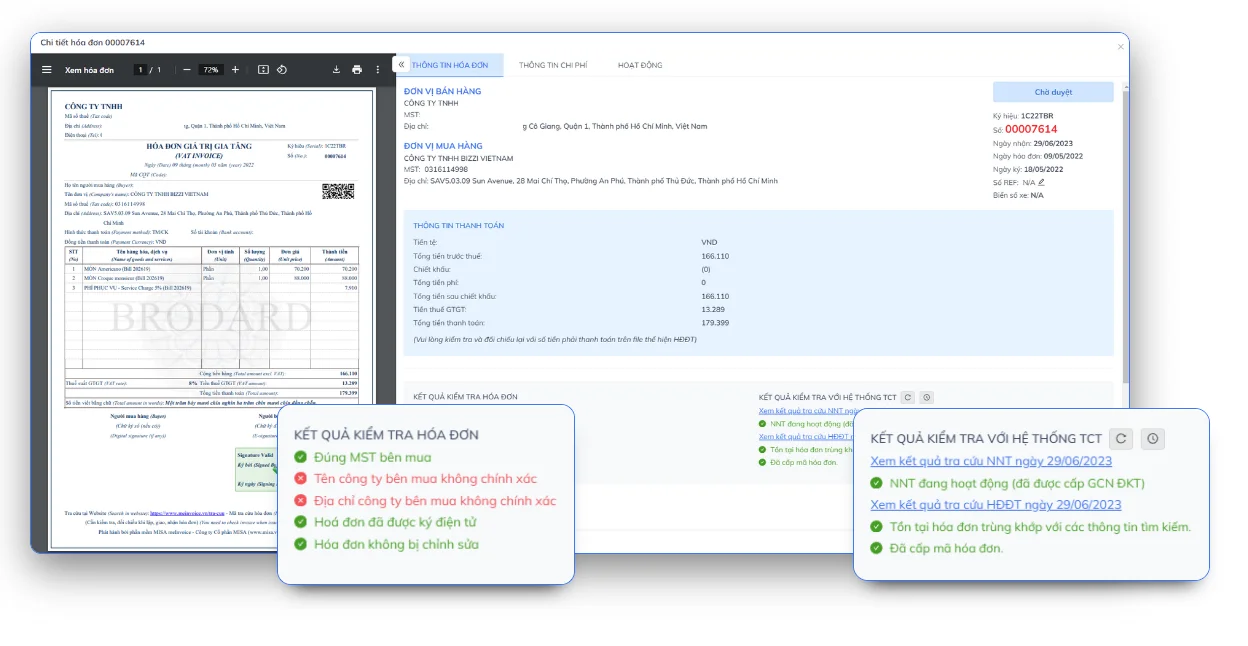
As a result, businesses not only shorten processing times but also build a transparent payment process that can be monitored in real time. For CFOs, this means they can fully track incurred expenses, upcoming payment obligations, and the processing status of each transaction without having to aggregate data from multiple sources.
When payment data is connected and controlled on a single platform, reconciliation is no longer a mere end-of-period reconciliation task, but becomes part of a proactive financial management system. This also provides a foundation for businesses to improve cash flow control, optimize the Accounts Payable process, and be ready to scale without correspondingly increasing the manual workload of the Finance department.
Checklist for designing a reconciliation process for B2B businesses.
An effective reconciliation process not only helps businesses reduce payment errors but also lays the foundation for internal control, cash flow management, and meeting audit requirements. For B2B businesses, the process should be standardized at each control point rather than relying on individual experience or manual handling.
When developing or reviewing reconciliation processes, businesses can use the checklist below to assess the completeness of their current control system.
| Inspection items | Control objectives |
| Receive invoices from legitimate sources. | Ensure that invoices are issued correctly, contain complete information, and are traceable when needed. |
| Standardize invoice and supplier data. | Standardize vendor codes, account information, tax identification numbers, and other important data fields to reduce discrepancies during reconciliation. |
| Link invoices to payment requests. | Ensure that every payment request is supported by clear documentation and that no "orphan" files are created. |
| Establish a multi-level approval process. | Control approval authority based on expenditure value, department, or budget. |
| Verify the information before making the payment. | Verify the amount, receiving account, payment deadline, reference code, and application status before disbursing the funds. |
| Compare bank transactions after payment. | Confirm that the transaction has been successfully completed, update the outstanding balance, and finalize the payment record. |
| Monitor processing status in real time. | It helps accountants and CFOs know exactly where each payment is in the process. |
| Maintain a complete processing and approval history. | It serves audit purposes, tax settlements, and data retrieval in case of disputes. |
| Set up alerts for exceptions. | Early detection of duplicate payments, budget overruns, missing documentation, or incorrect supplier information. |
| Regularly evaluate and improve processes. | Ensure that processes are always aligned with the company's scale, internal policies, and evolving governance requirements. |
If the business can answer “"Have"” For most of the above criteria, the reconciliation process already has a relatively complete control framework. Conversely, if many steps are still being performed using Excel, email, or rely on manual operations, now is the time to consider digitizing and automating the process.
Expense and payment management platforms such as Bizzi This system can support businesses in implementing all the contents in this checklist in a synchronized manner. Instead of managing each step separately, businesses can connect electronic invoices, payment requests, approval processes, budgets, and payment data on a single system. This not only reduces the volume of manual reconciliation but also increases the ability to control, trace, and monitor cash flow in real time.
FAQ regarding invoice reconciliation, transactions, and payment requests.
What is invoice reconciliation, transaction reconciliation, and payment request reconciliation?
This is the process of cross-referencing information between invoices, payment requests, and bank transactions to ensure that all three layers of data reflect a valid expenditure. The goal is to prevent incorrect payments, duplicate payments, missing documents, or discrepancies in accounts payable before and after the business makes a payment.
When should businesses perform reconciliation?
Reconciliation should be performed throughout the payment process, including invoice receipt, payment request preparation, before approval, before fund transfer, and after bank transactions are completed. Establishing multiple control points helps detect discrepancies early rather than only addressing them after a risk has already arisen.
Why is simply comparing invoices not enough?
An invoice only confirms the payment obligation. To ensure the expense is valid, businesses also need to compare it with the approved payment request and the actual bank transaction. Checking only the invoice can still lead to risks such as duplicate payments, payments to the wrong account, or overspending.
What are the risks involved in manual reconciliation?
When managing accounts using Excel, email, or multiple disparate systems, businesses are prone to problems such as incorrect data entry, lost documents, duplicate payments, difficulty tracking file status, and time-consuming accounts receivable reconciliation. Manual processes also reduce the CFO's ability to monitor cash flow in real time.
When should businesses automate their reconciliation process?
Businesses should consider automation when the number of invoices and transactions increases rapidly, approval processes have multiple levels, data is scattered across multiple systems, or the accounting team spends too much time on manual reconciliation. This indicates that the current process is no longer meeting the requirements for control and scalability.
What can payment reconciliation software support?
A modern payment management platform can automatically link invoices to payment requests, check the completeness of records, reconcile data between documents, track processing status in real time, alert to discrepancies, and store the entire transaction history. This helps businesses reduce operational risks, improve internal control efficiency, and support CFOs in managing cash flow more proactively.
Conclude
In the context of businesses dealing with an increasing number of invoices, suppliers, and payments, Reconciling invoices, transactions, and payment requests. It is no longer just an administrative task but has become a crucial link in the system. expenditure control and cash flow management.
In reality, most of the risks in the payment process don't stem from a wrong invoice or an incorrect transfer, but rather from other issues. The three layers of data – invoices, payment requests, and bank transactions – are not interconnected and controlled throughout.. When data is scattered across multiple systems or manually reconciled using Excel and email, businesses are prone to problems such as duplicate payments, discrepancies in accounts receivable, slow approvals, difficulty tracing transactions, and a lack of real-time cash flow monitoring capabilities.
So instead of just focusing reconciliation at the end of the process, Therefore, businesses should build a comprehensive payment control model with multiple control points from invoice receipt, payment request creation, approval, disbursement to post-payment reconciliation. Simultaneously, standardizing processing status, linking data between documents, and automatically detecting exceptions will help the Finance department transition from... “"Handling errors"” luxurious “"Risk prevention"”, improving operational efficiency and increasing transparency in governance.
For businesses that are accelerating their digital transformation, implementing expense and payment management platforms like... Bizzi It is a solution that helps digitize the entire process. Accounts Payable On a centralized system, Bizzi supports the integration of electronic invoices, payment requests, approval processes, budgets, and payment data, while automatically reconciling information, alerting to discrepancies, and tracking processing status in real time. This not only reduces the manual workload for the accounting department but also provides the CFO with a comprehensive overview of incurred expenses, upcoming payment obligations, and projected cash flow.
In the context of requirements regarding internal control, cost management, and cash flow optimization With the increasing demand, investing in a standardized and automated reconciliation process not only helps businesses reduce operational risks but also lays the foundation for scaling, improving financial management capabilities, and making decisions based on accurate, transparent, and real-time data.
To experience Bizzi's solutions for free and receive one-on-one consultation from a financial expert, register to schedule an appointment here: https://bizzi.vn/dang-ky-dung-thu/