


From July 1st, 2026, businesses will officially apply the new legal framework regarding the timing of electronic invoice issuance according to Decree 254/2026/ND-CP. Determining this timeframe depends not only on the date of payment but also varies depending on the specific type of transaction, such as goods transfer, service completion, advance payment, or partial handover. This article provides guidance on preparing proper documentation and building internal control procedures to minimize the risk of delayed invoice issuance for businesses.
How are the new regulations regarding the timing of invoice issuance being applied?
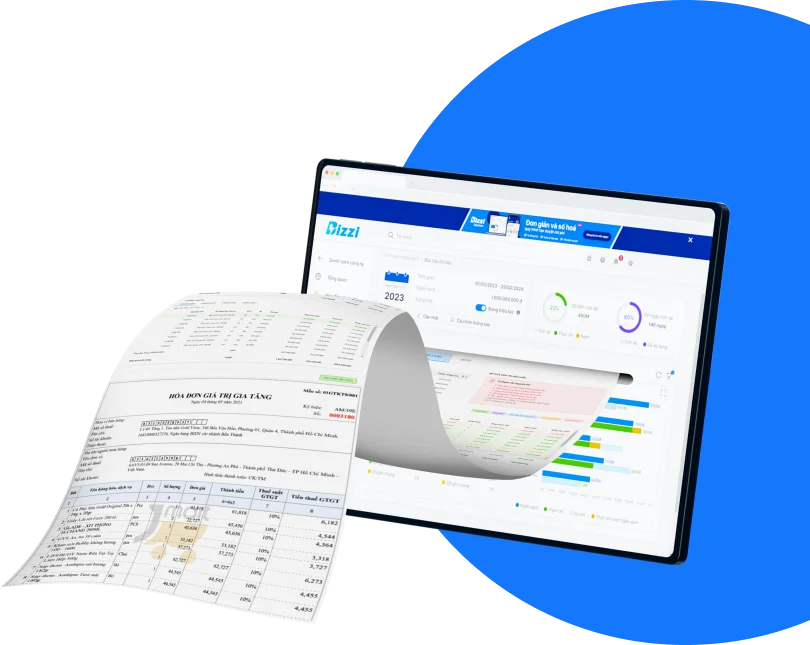
Since the date 01/07/2026, Businesses in Vietnam officially implement the management, creation, and use of electronic invoices in accordance with the regulations. Decree No. 254/2026/ND-CP Issued by the Government on June 30, 2026, this is a detailed legal document guiding the implementation of the Tax Administration Law No. 108/2025/QH15, establishing a new, more comprehensive and stringent legal framework to enhance the transparency of economic transactions.
Under this new regulatory system, Article 9 of Decree 254/2026/ND-CP It serves as the fundamental rule governing the entire timeline for electronic invoicing across all types of businesses, from trade and services to specialized transactions. To guide its consistent implementation, the Ministry of Finance has also issued regulations. Circular No. 91/2026/TT-BTC On the same day, June 30, 2026, on July 15, 2026, the Tax Department officially issued Official Letter No. 4831/CT-CS to introduce these amendments and additions in detail to the entire system of businesses and tax authorities nationwide.
Adhering to the current invoicing timeframe is not only a common legal requirement but also directly impacts a business's financial obligations. Errors in invoicing timing can lead to severe administrative penalties or the risk of being assessed taxed by the tax authorities for using illegal invoices. Therefore, a thorough understanding of the applicable regulations as of the update date below is a mandatory preparatory step for all accounting departments.
The applicable legal framework for electronic invoices in 2026.
- Law on Tax Administration No. 108/2025/QH15: The fundamental legal framework for tax administration and obligations related to electronic invoices and documents.
- Decree No. 254/2026/ND-CP: Regulations detailing the implementation of the Law on Tax Administration regarding electronic invoices and documents, effective from July 1, 2026.
- Circular No. 91/2026/TT-BTCDetailed guidance on the implementation of certain provisions of Decree 254/2026/ND-CP, issued on June 30, 2026.
- Decree No. 144/2026/ND-CPAmendments and additions to the regulations on Value Added Tax, effective from June 20, 2026.
After clearly defining the underlying legal framework, businesses need to categorize the types of transactions arising from their operations in detail, because the timing of invoicing for tangible goods and intangible services is determined based on completely different economic events.
When should invoices be issued for the sale of goods?
For the sale of physical goods, the deadline for issuing electronic invoices is clearly stipulated in Clause 1, Article 9 of Decree 254/2026/ND-CP. Accordingly, The time of issuing an invoice for the sale of goods is the time of transferring ownership or the right to use the goods to the buyer, regardless of whether payment has been received or not..
This principle asserts that the obligation to issue invoices and declare value-added tax is triggered by the actual or legal transfer of goods, and not by the payment date or actual cash flow. Businesses are not permitted to use the date of receipt of payment as the default date for issuing invoices if the delivery event has occurred before that.
To make it easier to understand, let's consider a practical example: Company A sells a batch of office equipment to Company B.
- On July 15, 2026, Company A transported and handed over all the equipment to Party B, and both parties signed a successful goods delivery and acceptance report.
- On July 30, 2026, Company B made the bank transfer to pay for the goods purchased, as per the payment terms in the contract.
In this case, the mandatory invoice date for Company A must be the date... 15/07/2026 (the actual date of transfer of ownership and use of the goods), and cannot be postponed to July 30, 2026.
To prove this transfer date to tax inspectors, data from goods delivery and receipt records, internal warehouse and transport slips, or handover records signed by representatives of both parties are crucial. These are concrete pieces of evidence recording the economic event that occurred, helping accountants accurately determine the date of the valid invoice.
What data are businesses using to determine if goods have actually been delivered? For service delivery, the deciding event is not the physical movement of goods, but rather the progress of service completion or a specific payment milestone.
When should services be invoiced?
The service business is always the area with the most accounting disputes and errors due to the intangible nature of the product. According to Clause 2, Article 9 of Decree 254/2026/ND-CP, the principle for determining the timing of invoice issuance for services is clearly divided into three main branches based on the completion event, the event of receiving advance payment, and the date of receiving the deposit. Businesses absolutely cannot lump all cases together based on the simplistic thinking that "invoices are only issued when payment is received.".
If a service is completed but payment has not yet been received, is an invoice required?
Clause 2, Article 9 of Decree 254/2026/ND-CP stipulates that the time of issuing invoices for the provision of services is as follows: the time of completion of service provision, regardless of whether payment has been received or not..
Therefore, the completion of the service is the trigger for the obligation to issue an invoice, completely independent of debt collection. The completion of the service is not the same as the time of cash collection. Once the service has been completed, the results delivered to the customer, and both parties sign an acceptance report or a service completion confirmation report, the business is required to issue an electronic invoice immediately. Delaying invoice issuance due to customer non-payment or non-receipt of payment is considered an act of issuing invoices at the wrong time and may result in administrative tax penalties.
How do I collect payment before the service is completed?
In cases where the service provider collects payment before or during the provision of services, The time of invoicing is the time of receiving payment.. This regulation applies to tuition fees, recurring software service fees, prepaid telecommunications charges, or other advance payments made according to the progress of the contract.
When a business receives advance payments from customers, the accountant must determine the nature of this cash flow. If the advance payment is actually payment for services to be provided, the business is required to issue an electronic invoice on the same day the payment is received to ensure proper accounting and tax declaration for the period in which the transaction occurs.
Does the deposit need to be invoiced at the time of receipt?
This is a very important new point in Decree 254/2026/ND-CP that helps resolve many practical difficulties for businesses. According to the new regulations, in cases where a deposit is collected to guarantee the performance of a service contract as stipulated in the Civil Code, No invoice required. at the time of receiving the money.
To correctly apply this exception, accountants need to clearly distinguish between deposits intended to secure the performance of civil obligations and advance payments. Advance payments are only exempt from invoicing obligations if the contract clearly states that the payment is a "deposit to secure contract performance" and complies with the provisions of the Civil Code. If the contract stipulates that this amount will be deducted immediately from the first payment of the service upon commencement, the tax authorities may consider the nature of the transaction to determine it is an advance payment and require an invoice to be issued upon receipt.
How should invoices be issued for deliveries or acceptances made in multiple installments?
In large-scale commercial transactions, contract execution is often lengthy and divided into multiple deliveries or partial acceptances. In this case, Clause 3, Article 9 of Decree 254/2026/ND-CP stipulates: In cases of multiple deliveries or handover of individual items or service stages, an invoice must be issued for the quantity and value of goods or services delivered or handed over each time..
A contract does not mean there is only one billing point. Businesses cannot wait until the entire contract is completed to issue a single consolidated invoice, unless there are specific regulations allowing for the issuance of a consolidated invoice at the end of the month for promotional items or gifts.
To clarify, let's analyze the business process guidelines at Official document No. 6031/CTH-QLDN2 of 2026 Regarding determining the timing of invoicing for each delivery or service handover:
- If the activity is identified as a service step with intrinsic value, Once the service is completed and the results slip is handed over to the customer, the business is required to issue an invoice for the completed service at the time of handover.
- If the contract is for a complete service package., In cases where intermediate activities are not separately accounted for, accepted, or paid for, but only serve the final outcome, the business will issue invoices at the time of completion, acceptance, and handover of all services as per the contract.
This difference requires the accounting and sales departments to carefully review acceptance terms, contract appendices, quotations, and payment terms to establish an invoicing process that aligns with actual operations.
How should the timing be determined in specific cases?
In addition to general principles for goods and services, Decree 254/2026/ND-CP has supplemented and refined regulations on the timing of invoice issuance for specific industry groups and transaction types. This helps ensure compatibility between legal regulations and the technological processes and practical operating methods of each industry.
Below is a detailed summary of the mandatory electronic invoicing deadlines for specific transaction groups from July 1, 2026, as stipulated in Article 9 of Decree 254/2026/ND-CP:
| Trading group | Deadline for mandatory electronic invoicing | Based on research and operational guidelines. |
|---|---|---|
| Retail of petroleum | Immediately after each sale. | The process automatically connects fuel pump data and sends it to the tax authorities. |
| Taxis (with fare calculation software) | Prepare it immediately after the client's trip ends. | The software for calculating fares in vehicles connects directly to the system. |
| Casino, electronic games with prizes | The report must be prepared no later than one day after the date of determining actual revenue. | Daily revenue reports from the monitoring system. |
| Medical examination and treatment facility (individual patients do not request invoices) | At the end of the day, prepare a summary invoice reflecting all transactions that occurred during the day. | A detailed list of medical services rendered during the day. |
| Transactions are processed at night (manually created). | No later than the next business day. | This applies to sellers who do not have automated invoicing software. |
| Construction and installation activities | The time of acceptance and handover of the project, project item, or completed work volume (regardless of whether payment has been received or not). | Minutes of acceptance of work volume, minutes of handover of project items. |
| Real estate business based on progress | Prepared on the payment date or as specifically agreed upon in the contract between the parties. | Payment schedules are stated in the contract or on actual payment receipts. |
| Lending activities | Interest is collected according to the agreed-upon schedule between the two parties in the contract. | A promissory note, including an agreement on interest rates and payment terms. |
| Electricity, telecommunications, e-commerce, logistics (sales to businesses) | No later than the 7th of the following month. | Periodic data reconciliation between business partners. |
| Air freight, insurance through agents | No later than the 10th of the following month. | Minutes of periodic revenue reconciliation and production volume comparison. |
| Electronic toll collection (ETC) | Schedule appointments must be made periodically, no later than the last day of the month in which the service is rendered. | Trip data from the central ETC system. |
What is the difference between the invoice date and the digital signature date?
One of the most common practical problems that makes corporate accountants vulnerable to penalties from tax authorities is the discrepancy between the invoice date and the digital signature date. Decree 254/2026/ND-CP provides clear guidelines to distinguish between these two concepts, serving as a basis for accurate tax accounting.
- Invoice date (Invoice issuance time): Follow the instructions in Article 9 of Decree 254/2026/ND-CP and display clearly in the format of the Gregorian calendar day, month, and year. This is the date reflecting the economic event that occurred.
- Date of digital signature on the invoiceThis is the moment when the seller digitally signs the invoice to confirm and send the invoice data to the tax authority's system or to the buyer. This date is automatically recorded by the supplier's electronic signature based on a valid digital certificate.
In reality, there are many objective reasons why the invoice date and the digital signature date may differ. According to current tax regulations, in cases where there is a difference between the invoice date and the digital signature date:
- From the seller's perspectiveThe deadline for filing value-added tax and output corporate income tax returns is: invoice date. Businesses are not allowed to use a later date for digital signatures as a reference point to postpone the deadline for filing output tax returns.
- From the buyer's perspectiveThe determination of the validity of invoices for the purpose of deducting input value-added tax and accounting for deductible expenses when calculating corporate income tax is also based on: invoice date, provided that the invoice has been properly digitally signed and submitted to the tax authority before the tax return filing period.
To better understand the legality and verification standards for signatures on electronic documents, businesses can refer to the detailed article on... Regulations regarding signatures on VAT invoices.
Once the legal milestones are clear, the next issue is what data businesses rely on to determine that the event giving rise to the invoicing obligation has actually occurred.
What criteria do businesses use to determine the correct invoice date?
To ensure compliance with the law goes beyond mere theory, businesses need to closely connect tax regulations with daily internal business documents. Each legal rule regarding the timing of invoice issuance must be verified and substantiated by a real business event with a clear data source.
This factual event can be understood as the trigger – the point in time that gives rise to the invoicing obligation. Below is a table comparing internal data sources that the Finance and Accounting department can use to control the valid invoice issuance timeline depending on the nature of each transaction:
| Economic events occur | Internal data and documents serve as the basis for the audit. |
|---|---|
| Disposal | Delivery notes, product handover records, and delivery confirmation records must be signed by both the warehouse and the customer. |
| Service delivery completed. | Service acceptance report, work completion confirmation report, and handover report to the partner. |
| Collect service fees in advance. | Bank credit advice, cash receipt (for legitimate payments), and business bank account statement. |
| Partial delivery/handover | Minutes of acceptance of completed work volume for each phase, minutes confirming the handover of work volume according to schedule. |
| Periodic reconciliation | Periodic production reconciliation statement, minutes confirming end-of-period consumption data between the two parties. |
Note: These are actual data sources that businesses build themselves within their internal control systems to prove the accuracy of the transaction timing to the tax authorities, and not a rigid list of mandatory documents stipulated in Article 9 of Decree 254/2026/ND-CP.
Despite clear documentation and regulations, why do so many businesses still make mistakes in issuing invoices late or at the wrong time in their daily operations?
Why can businesses still issue invoices late despite knowing the regulations?
In reality, tax audits show that the delay in issuing invoices largely stems not from accountants' lack of legal knowledge, but rather from disruptions in the flow of operational information within the business. Incorrect invoice timing is essentially a system error in data transmission and reception, not purely a legal awareness error on the part of personnel.
Let's analyze a very common operating scenario:
- On the 29th of the month, the project department signed the acceptance report for the completion of the network system installation for the customer. The event that gave rise to the actual invoicing obligation occurred on this date.
- Due to the manual, paper-based process, acceptance reports have to go through multiple levels of physical approval, mail delivery, or are stored in the drawers of sales staff.
- By the 3rd of the following month, the new set of paper documents will be delivered to the tax accountant's desk.
- At this point, the accountant will enter the data and issue an electronic invoice dated the 3rd.
From a tax perspective, this invoice was issued 4 days late compared to the actual completion date of the service. The business violated regulations regarding the timing of invoice issuance.
From the example above, three main bottlenecks that cause the risk of delayed invoicing in businesses can be identified:
- The incident was not recorded in a timely manner.: The departments directly involved in the execution (sales, projects, warehousing) lack the tools to record the completion date of economic events as soon as they occur.
- Data isn't being delivered to the right people at the right time.The flow of documents from the sales/operations department to the accounting department is delayed, and there are no strict regulations regarding deadlines for document handover.
- Lack of an automated end-of-period review mechanism.Businesses often lack automated tools to cross-reference delivered orders and completed services with issued invoices, leading to missed transactions until they are discovered by the tax authorities.
To thoroughly address this bottleneck, especially as transaction volumes increase, businesses need to establish a robust coordination mechanism between operational departments and core data systems. Customers can learn more about how to synchronize this data through the solution. ERP integration and electronic invoicing.
When delivery, acceptance, and invoicing data are spread across multiple systems, businesses need to standardize the data flow before considering automation.
How can businesses control the process to avoid incomplete or inaccurate reporting?
To eliminate the risk of being penalized by the tax authorities for late invoicing or having expenses denied deductions, businesses need to establish a closed-loop control process across three departments: Sales – Operations – Finance.
Who is responsible for reporting any incidents to the Finance department?
The company's financial regulations must clearly define the responsibilities of each department in the invoice creation chain:
- Sales DepartmentResponsible for monitoring contract progress, advance payment milestones, or collecting deposits from customers, and immediately notifying Finance to issue invoices.
- Operations/Warehouse/Project DepartmentResponsible for accurately recording the actual delivery date or the date of signing the service completion acceptance report. This department is obligated to send a copy of the report or update the completion status to the Finance management system within 24 hours of the event occurring.
- Finance and Accounting Department: Responsible for verifying the validity of input documents, comparing them with contract terms, and issuing electronic invoices on the date indicated on the actual delivery/acceptance documents.
Tax accountants are not the ones who create the economic event, but they are the ones who bear the legal consequences if other departments are slow to submit information. Therefore, clearly defining responsibility for reporting events is the first line of defense in the control system.
At the end of the period, which transactions have not yet been invoiced?
On the last day of the accounting month or quarter, the Accounting Department is required to perform the closing procedure and reconcile the invoice issuance dates. This review process focuses on high-risk transaction groups that may be overlooked, including:
- All delivery notes for the month have been signed by customers but invoices have not yet been issued.
- Service acceptance reports and handover reports for completed construction and installation projects during the period, but for which the accounting department has not yet received a request for invoice issuance.
- The funds transferred by customers to the company's bank account during the month are considered advance payments for services but have not yet been invoiced.
- Contracts for specific services have reached the end-of-month production reconciliation deadline, but the reconciliation invoices have not yet been issued.
How can I trace back the invoice date to the original transaction date?
A standard internal control system must ensure data traceability. When tax authorities conduct an audit, accountants must be able to explain and prove that the dates on invoices are completely accurate by tracing back the entire original sequence of business events.
Original contract/purchase order → Delivery/Acceptance documents → Issued electronic invoice → Output VAT declaration
If the date on the electronic invoice perfectly matches the date signed on the handover/acceptance record, and also coincides with the corresponding tax filing period, the business is completely safe from any tax audits. Customers can find detailed information about common errors in this data chain in the handbook. Common errors on electronic invoices.
Unified management of these data flows will be a crucial stepping stone for businesses to access comprehensive digital solutions.
When should businesses digitize their invoice control process?
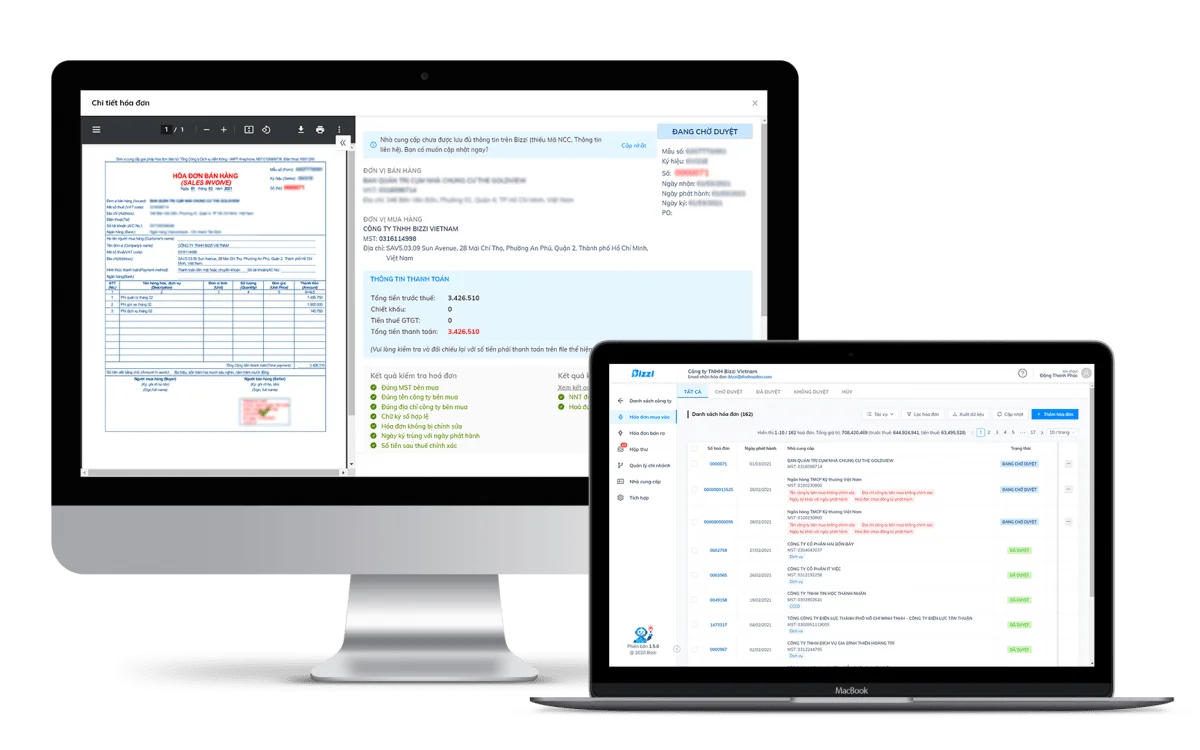
As a business's operations expand with thousands of transactions per month, controlling invoice timing using manual methods such as ledger entries, Excel spreadsheets, or paper document delivery will quickly reveal significant limitations. Businesses should seriously consider switching to a digital solution for their invoice management process when they notice the following signs:
- The frequency of invoice issuance is high and complex.Businesses with hundreds of delivery orders each day, or multiple departments and branches generating transaction data, are examples of this.
- The information was delayed in reaching the Accounting department.The accounting department consistently receives late handover and acceptance reports from the operations or sales department, resulting in invoices being issued later than the actual date on the documents.
- The volume of manual end-of-period reviews is overwhelming.The accounting department has to spend many working days cross-checking between warehouse release slips, acceptance reports, and issued electronic invoices to find any missed transactions before closing the books for tax filing.
As the number of outgoing invoices and data sources increases, the issue is no longer whether accountants can remember regulations, but rather the ability to consistently manage invoice data, documents, and processing flows. In this context, the application of modern electronic invoice management software solutions helps businesses fully automate the approval and issuance of outgoing invoices. The digitized system directly connects data from the company's sales software, inventory management, or ERP system to the electronic invoice system, automatically triggering invoice requests as soon as delivery or acceptance events are updated in the system. This completely eliminates human-induced delays, ensures data consistency, and removes the risk of issuing invoices at the wrong time.
Businesses can learn more about building a digital platform for financial management and automating invoicing through Bizzi invoice processing solution.
Checklist to determine when to issue invoices for businesses.
To help the Finance and Accounting department easily implement and check compliance on a daily basis, here is a 5-step checklist for reviewing the timing of electronic invoice creation before digitally signing and issuing them:
- Accurately classify the nature of actual transactions.
- Is this transaction the sale of physical goods, the provision of intangible services, or a specific type of transaction such as construction, installation, or real estate development on a project-by-project basis?
- Determine the exact date the triggering event occurred.
- On what date did the transfer of ownership of the goods occur?
- On what date was the service completion/acceptance report signed?
- Were there any advance payments made by customers for services rendered during the period?
- Compare the event with internal data sources to prove it.
- Do the dates on the delivery receipt and acceptance report match the expected dates on the invoice?
- Did the representative who approved the minutes have the proper authority?
- Verify the consistency of invoices before issuance.
- Does the expected electronic invoice date match the actual activation date (100%)?
- Have the names, addresses, and tax identification numbers of the seller and buyer been accurately recorded in the business registration?
- Update the legal safety of the process.
- Is the business applying the latest legal regulations, namely Decree 254/2026/ND-CP and Circular 91/2026/TT-BTC, correctly?
Frequently Asked Questions about When to Issue Electronic Invoices
Do I need to issue an invoice for sales where I haven't received payment yet?
Have. According to Clause 1, Article 9 of Decree 254/2026/ND-CP, the obligation to issue invoices for the sale of goods arises immediately at the time of transferring ownership or the right to use the goods to the buyer, regardless of whether the business has received payment for the goods or not.
When should an invoice be issued for a completed service that has not yet been paid for?
Businesses are required to issue electronic invoices immediately. time of completion of service delivery, That is, the date on which both parties sign to confirm the acceptance of the service or the completion of the handover of the results, regardless of whether payment has been received or not. Delaying the issuance of invoices to wait for payment is considered a violation of tax law.
Is it necessary to issue an invoice if payment is received before providing a service?
Have. In cases where a business provides a service and collects payment before or during the provision of the service, the time of issuing the invoice is... time of collection. The accountant must issue the invoice on the same day this advance payment is received.
Do I need to issue an invoice immediately after receiving a deposit?
Optional, If the previously received payment is legally considered a deposit to guarantee the performance of a service contract in accordance with the provisions of the Civil Code, Decree 254/2026/ND-CP has officially excluded the collection of deposits to guarantee contract performance from the requirement to issue an invoice at the time of receipt.
Do deliveries made in multiple installments require separate invoices for each delivery?
Have. In cases of multiple deliveries or handover of individual items or service stages, An invoice must be issued for each delivery or handover. Corresponding to the volume and value of goods and services delivered. Businesses are not allowed to combine multiple deliveries to issue a single consolidated invoice at the end of the contract.
Do the invoice date and the digital signature date have to be the same?
They don't have to be the same. The law allows the invoice date and the digital signature date on electronic invoices to differ due to internal approval processes. However, to determine the VAT declaration period for output and input VAT and to account for deductible expenses when calculating corporate income tax, both the seller and the buyer must base their calculations on the current date. invoice date, not based on the digital signature date.
What are the procedures for issuing invoices later than the stipulated time?
Issuing invoices at the wrong time will result in administrative penalties from the tax authorities for invoice violations under Decree 125/2020/ND-CP, with fines depending on the number of days of delay and the extent of the impact on tax declarations. Furthermore, if the use of invoices that do not include all mandatory information or are issued at the wrong time, leading to inaccurate accounting declarations, the business may be penalized by the tax authorities. tax assessment as stipulated in the current Tax Administration Law.
How can you tell if a business has uninvoiced transactions?
To detect uninvoiced transactions, the accounting department needs to perform a periodic cross-referencing process at the end of each month. Specifically, accountants need to compare the list of signed delivery notes from customers, the list of signed service acceptance reports for the period, and bank statements showing advance payments from customers with the list of actually issued electronic invoices. Any discrepancies in timing or missing invoices must be addressed immediately before closing the books for tax filing.
Conclude
Determining the correct time to issue electronic invoices depends not only on accountants' understanding of regulations but also on their ability to accurately record events, ensure timely document flow, and reconcile data between departments. An efficient process requires a tight connection of data from delivery, acceptance, and payment collection to invoice creation and issuance, thereby minimizing omissions or incorrect invoice issuance.
For businesses with high transaction volumes, implementing Bizzi's electronic invoicing solution helps connect data from ERP systems, sales software, and business documents with the invoicing process on a centralized system. This allows businesses to reduce information flow delays, support control over invoice timing, and improve the consistency of financial data.
Register here to receive consultation and experience solutions from Bizzi: Electronic Invoice