


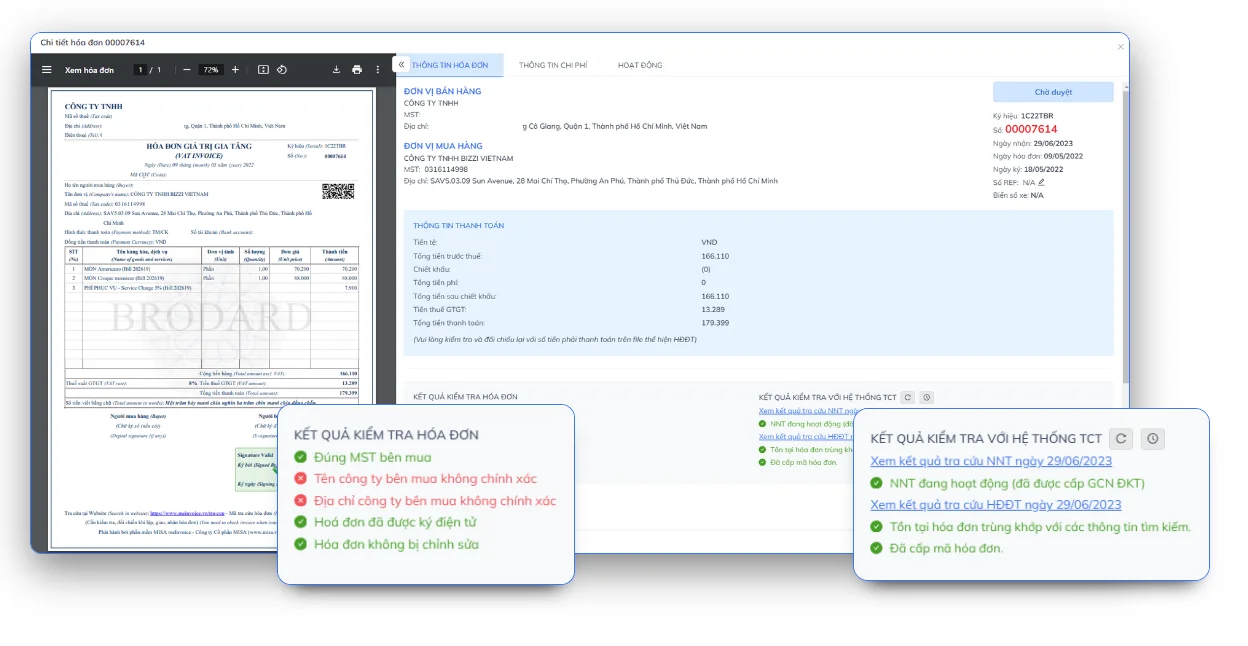
Input invoices are invoices issued by sellers or suppliers to businesses when the business purchases goods, services, or assets for its production and business operations. These are important documents for businesses to record expenses, declare taxes, consider eligibility for input VAT deduction, manage accounts payable, and prove the validity of transactions when requested by tax authorities or auditors.
In reality, input invoices are not just a single accounting document. They are the starting point of the entire cost control process within a business: from purchasing, receiving goods, checking documents, recording accounts payable to paying suppliers.
What is input invoice?
Simply put, an input invoice is a purchase invoice that a business receives when a transaction occurs involving the purchase of goods or the use of services.
It should be noted that “"Input invoices" are not a separate type of legal invoice., That's the way it's referred to from the buyer's perspective. The same invoice, for the seller, is an output invoice, while for the buyer, it's an input invoice.
Basic characteristics of input invoices
| Properties | Content |
| Recipient | Purchasing business or organization |
| Prepared by | Seller or supplier |
| Transactions arising | Purchasing goods, services, and assets. |
| Purpose | Cost accounting, tax filing, accounts receivable management |
| Position in the process | Input for the Accounts Payable (AP) process |
Currently, the majority of input invoices are issued electronically in accordance with current legal regulations on invoices and documents.
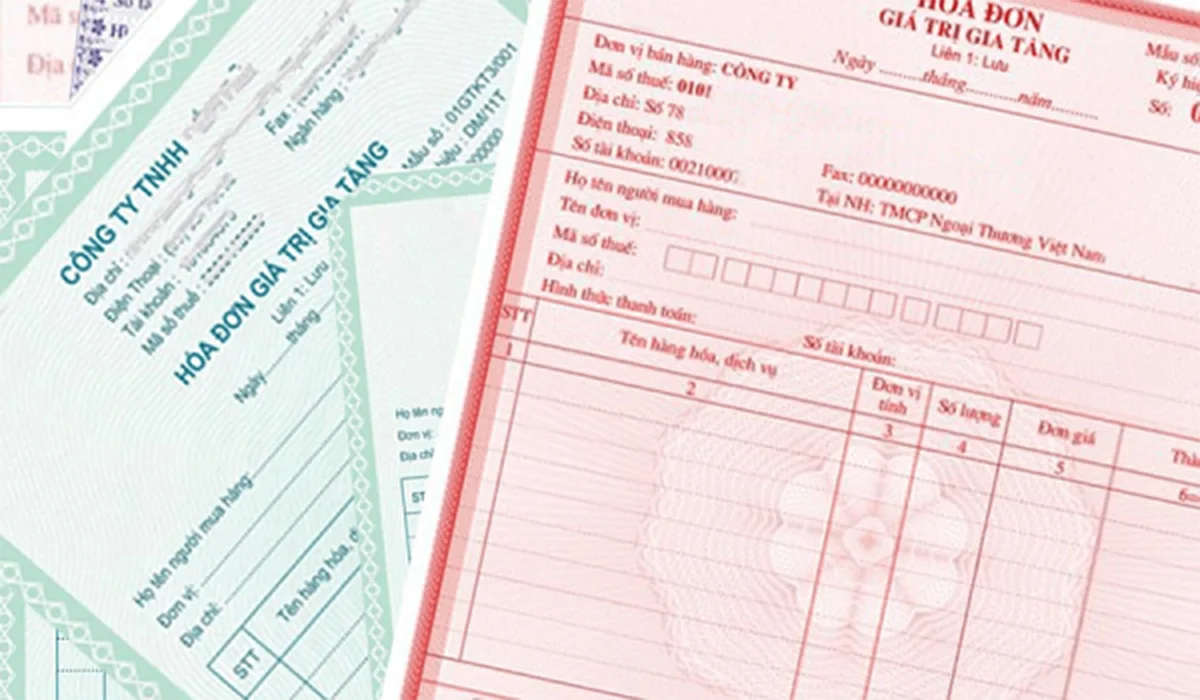
What are input invoices used for?
Input invoices play a crucial role in accounting, taxation, and corporate financial management.
It serves as the basis for cost accounting.
Accountants use input invoices to record incurred expenses such as:
- Cost of raw materials
- Service costs
- Shipping costs
- Marketing costs
- Office rental costs
- Fixed assets
For example, when a business hires advertising services worth 50 million VND, the invoice issued by the service provider will be the basis for recording marketing expenses.
It serves as the basis for declaring and deducting VAT.
For businesses applying the tax deduction method, input invoices are one of the bases for considering the conditions for deducting input VAT according to regulations.
However, not all input invoices are tax-deductible. Businesses need to fully meet the requirements regarding invoices, supporting documents, and payments as stipulated by current regulations.
It serves as a basis for controlling accounts payable.
Each input invoice reflects a payment obligation of the business to the supplier.
Through input invoices, the finance department can track:
- Which supplier needs to be paid?
- Amount to be paid
- Payment deadline
- Debt status
This is the core data of the process. Accounts Payable (AP).
It is data used to control costs and cash flow.
From the perspective of a CFO or Finance Manager, input invoices are not simply tax documents.
They provide data for:
- Cost analysis by department
- Budget tracking
- Cash flow management
- Control spending
- Supplier performance evaluation
Therefore, the quality of input invoice data directly impacts the quality of financial reporting and the business's decision-making ability.
What supporting documents are included in an input invoice?
In many cases, an invoice alone is not enough to prove the validity of a transaction. Businesses often need to keep additional related documents such as:
| Document | Role |
| Sales or service contract | Proof of transaction agreement |
| Purchase Order (PO) | Confirmation of approved purchase request |
| Warehouse receipt or delivery note | Proof that the goods have been received. |
| Acceptance report | Confirm service or task completion |
| Payment documents | Proof of payment |
| Supplier profile | Assistance in verifying transaction information. |
For businesses with well-established purchasing processes, the comparison between:
Purchase Order (PO) → Warehouse Receipt/Delivery Receipt → Invoice
Helps detect discrepancies in:
- Quantity
- Unit price
- Types of goods
- Supplier
before recording the debt and making the payment.
Distinguish between input invoices and output invoices
An input invoice is a document you receive from a supplier when you purchase goods or services. An output invoice is a document you issue to a customer when you sell your goods or services.
To understand and differentiate between these two important types of documents in business operations, you can refer to the following criteria:
| Criteria | Input invoice | Output invoice |
| Perspective | The business is the buyer. | The business is the seller. |
| Creator | Supplier | Sales businesses |
| Accounting purpose | Record expenses, inventory, and assets. | Record revenue |
| Related liabilities | Accounts Payable | Accounts receivable |
| VAT | Input VAT | Output VAT |
| Related procedures | Purchase → App → Checkout | Sales → AR → Cash Collection |
| Common risks | Incorrect information, invalid invoice | Incorrect timing, incorrect tax rate. |
What conditions must a valid input invoice meet?
Valid, legal, and reasonable input invoices must meet core criteria. Below are the details of the conditions that need to be verified to ensure the documents are accepted by the Tax authorities:
Quick checklist
☐ Contains all the required information as per regulations.
☐ Seller and buyer information is accurate.
☐ Correct tax identification number.
☐ The content of the goods and services matches the actual transaction.
☐ The invoice date corresponds to the date the transaction occurred.
☐ The tax rate and tax amount are determined accurately.
☐ We have complete documentation to prove the transaction when needed.
☐ There is appropriate payment documentation as required.
☐ Does not fall under the category of fake invoices, fictitious invoices, or invoices from suppliers with suspicious characteristics.
Currently, businesses need to pay special attention to the regulations at Decree 123/2020/ND-CP, additional amendments at Decree 70/2025/ND-CP and instructions at Circular 32/2025/TT-BTC, These regulations will take effect from June 1, 2025, and will apply to many aspects related to electronic invoices.
What is an invalid input invoice?
Input invoices may be considered invalid or potentially risky if they fall under any of the following categories:
- Incorrect business name.
- Incorrect tax identification number.
- Incorrect address.
- The invoice was issued at the wrong time.
- The content of the goods and services does not reflect the actual transaction.
- The invoice was altered illegally.
- The supplier shows signs of buying and selling invoices.
- There is no record proving the transaction.
- Does not match the contract, purchase order, or delivery note.
- Does not match the payment document.
For businesses that process hundreds or thousands of invoices each month, the risk lies not only in each individual invoice but also in discrepancies between invoice data and the purchasing, receiving, and payment processes.
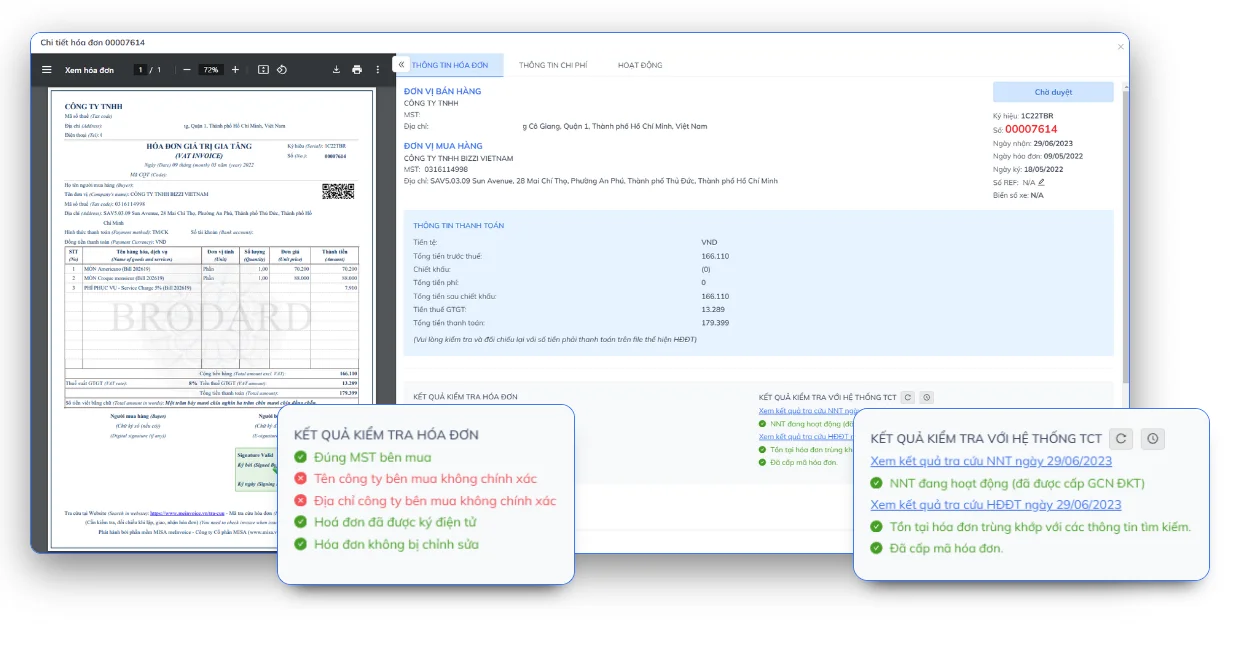
That's why many businesses now view checking input invoices as part of their cost control activities, rather than just a data entry task.
Some frequently asked questions about input invoices.
Input invoices are important documents for businesses to prove the origin of goods, claim VAT deductions, and account for reasonable expenses when settling corporate income tax.. Below are answers to the most frequently asked questions about this issue.
Is there a penalty for not declaring input invoices?
Not all cases of failure to declare input invoices result in penalties. However, businesses may lose the right to tax deductions or expense recognition if they do not comply with regulations.
Will I be fined if I lose my input invoices?
The processing method depends on the type of invoice, the storage method, and the specific circumstances. Businesses need to follow current regulations and maintain complete records of electronic invoice data.
Is it permissible to issue an output invoice when there is no input invoice?
It shouldn't be understood that all cases are prohibited. Depending on the business model, businesses may still issue output invoices before receiving corresponding input invoices. The nature of the transaction, the timing of revenue recognition, and relevant regulations need to be considered.
How long should input invoices be stored?
Businesses need to store invoices and accounting documents in accordance with the laws on accounting, taxation, and electronic invoicing, while ensuring they are retrievable when requested by regulatory authorities.
Do input invoices need to be compared with purchase orders (PO) and warehouse receipts?
It's not mandatory for all businesses. However, for businesses with professional purchasing processes, comparing invoices with purchase orders and delivery notes significantly reduces the risk of discrepancies before payment.
How should businesses manage input invoices?
To mitigate tax risks, manage liabilities, and control costs, businesses should:
- Centralize invoices into a unified management system.
- Verify validity before accounting.
- Compare the invoice with the contract, purchase order (PO), and warehouse receipt.
- Preserve the complete XML file and related data.
- Establish a clear approval process.
- Automate the verification and reconciliation process if the number of invoices is large.
For businesses processing hundreds or thousands of invoices each month, manual verification can easily lead to lost XML files, delays in recording accounts payable, and increased risk of errors. This is where automated input invoice processing, invoice reconciliation (PO - warehouse receipt), and Accounts Payable process automation solutions come into play.
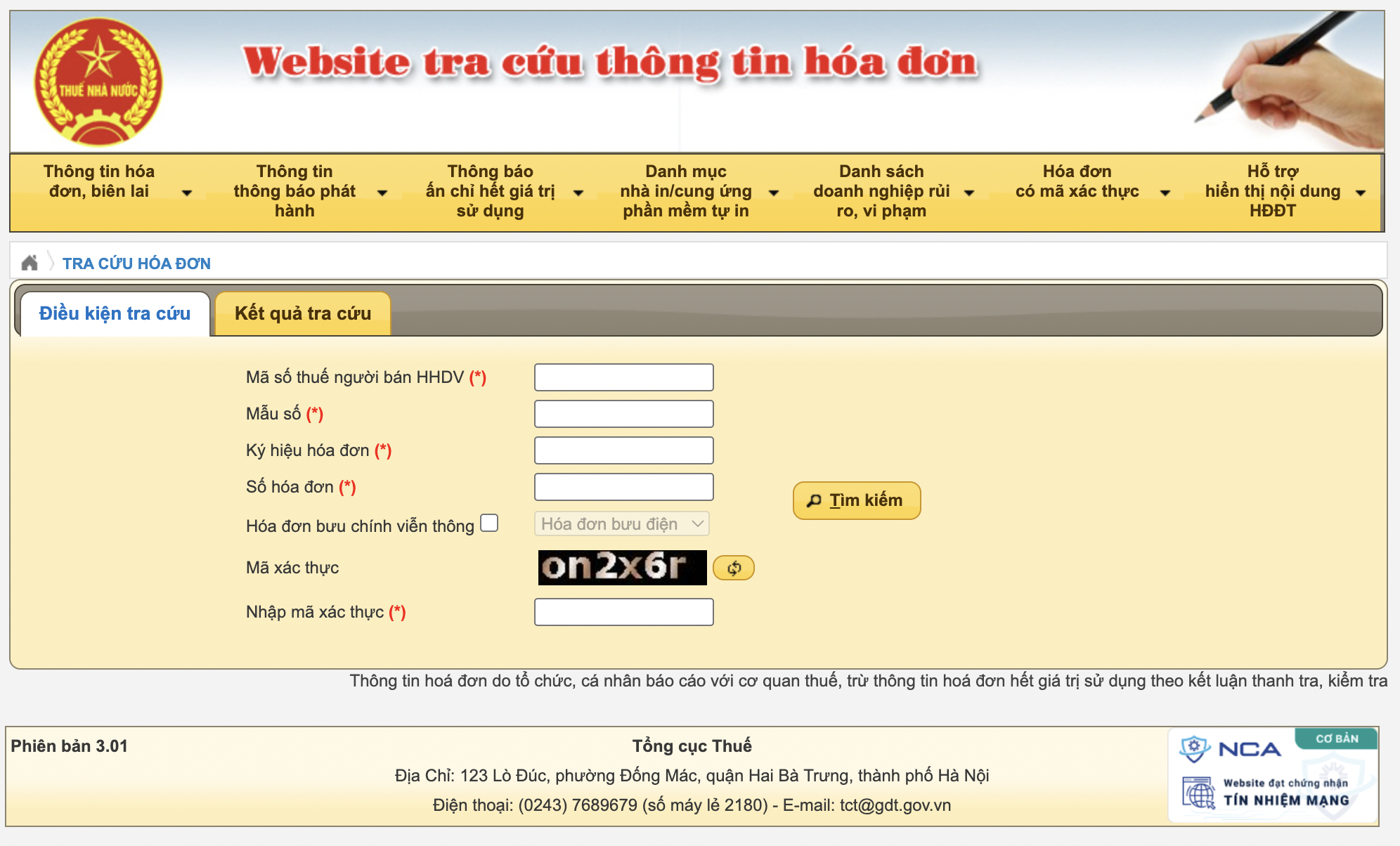
Conclude
Input invoices are not only documents recording the purchase of goods and services, but also the foundation for businesses to account for expenses, declare VAT, manage accounts payable, and control cash flow. Understanding what input invoices are, distinguishing them from output invoices, knowing the eligibility requirements, and identifying potential risks early will help businesses minimize accounting errors and ensure tax compliance.
However, as the number of invoices generated increases, the challenge is no longer about understanding the concept but about the ability to consistently verify, reconcile, and manage invoices. Many businesses still process invoices manually via email, Excel, or distributed storage folders, leading to the risk of lost XML files, incorrect data entry, delayed debt recording, or missing invoices with potential risks.
That's why more and more businesses are switching to automated solutions for processing incoming invoices. With this solution... Bizzi's automated input invoice processing, Businesses can automatically collect invoices from suppliers, verify invoice validity, alert suppliers to potential risks, reconcile invoices with purchase orders (POs) and warehouse receipts, and synchronize data with existing ERP or accounting software. The system, utilizing AI and RPA technology, significantly reduces processing time, minimizes data entry errors, and enhances internal control within the Accounts Payable (AP) process.
If your business is processing hundreds or thousands of invoices each month, building an automated verification and reconciliation process will not only improve operational efficiency but also create an accurate data foundation for cost management, accounts receivable management, and financial decision-making.