


Manage cost of sales It's not just about proper accounting. For CFOs and Chief Accountants, the real challenge lies in controlling tax risks, preventing losses from "hidden expenses" (non-trade expenses), and optimizing operating margins. Without a robust control system, businesses not only lose money but also face the risk of being disallowed during tax settlement. This article provides a comprehensive management framework, incorporating automation, to help businesses protect their P&L and maintain sustainable cash flow.
What are the costs of sales from a CFO's management perspective?
Cost of goods sold includes all expenses incurred during the sale of products, recorded in account 641 and transferred to account 911 at the end of the period to determine business results. However, from a CFO's management perspective, this is not just an accounting expense but a variable that directly affects the operating profit margin.
In financial terms, selling expenses fall under the Opex category and do not create long-term assets. This means that if these expenses do not generate corresponding revenue, they will directly "erode" profits. The core management formula clearly demonstrates this:
Operating Margin = Gross Profit – (Selling Expenses + Administrative Expenses)
Therefore, for the CFO, the challenge is not "accurate recording," but "effective control": every dollar spent must be traceable, legitimate, and contribute to revenue growth.

What are the 7 core selling expense items according to Circular 99/2025/TT-BTC?
According to current regulations, selling expenses are classified into 7 main groups (corresponding to 7 level 2 accounts) in account 641, including: employee expenses, packaging materials, tools and equipment, depreciation of fixed assets, taxes, fees, charges, outsourced services and other cash expenses.
Each group represents a specific expenditure line in the sales operation. For example:
- Employee costs (6411): This includes salaries, wages, and insurance contributions (social insurance, health insurance, unemployment insurance, etc.) for the sales team.
- Taxes, fees, and charges (6415): This reflects expenses directly related to the sales department, such as rent for the storefront. (This is a new point according to Circular 99).
- Outsourced service costs (6417): These costs typically include commissions for agents, advertising, transportation, or warehouse rentals.
- Other cash expenses (6418): This includes entertaining clients in the sales department, organizing customer conferences, or making sales presentations.
Accurate classification according to the new standards not only ensures legal compliance for financial reporting but also provides a clean data set. This is a core foundation for CFOs to analyze profitability performance and optimize OPEX by store, distribution channel, or marketing campaign.
How can I protect my selling expenses against the risk of tax disallowances?
For a sales expense to be accepted during tax settlement, a business must simultaneously meet three conditions: it must be directly related to business operations, have complete and legitimate invoices and supporting documents, and be a non-cash payment transaction of 5 million VND or more.
It's important to note that "correct accounting" does not equate to "correct tax." Many businesses record expenses fully in their books but still have them disallowed due to lack of supporting documentation or the use of invalid invoices.
In practice, the two highest-risk expense categories are brokerage commissions and entertainment expenses. These are expenses that are easily disallowed due to lack of contracts, internal regulations, or evidence of their connection to revenue. When disallowed, businesses not only lose the expenses but also face retroactive corporate income tax (CIT) collection, directly impacting net profit.
What can a CFO do to eliminate blind spots in non-trade selling expenses?
Non-trade expenses include items such as marketing, POSM (Point of Sale Materials), customer conferences, and entertainment. These expenses are not directly related to goods but account for a large proportion of costs and are the most difficult to control.
The biggest problem lies in the fact that departments like Sales or Marketing often have scattered spending, lacking centralized budget control. This leads to budget overruns, duplicate payments, or even fictitious expenses.
To address this, the CFO needs to establish three layers of control:
- Departmental budget allocations are set at the beginning of the period.
- Transparent electronic approval process
- Pre-payment reconciliation mechanism
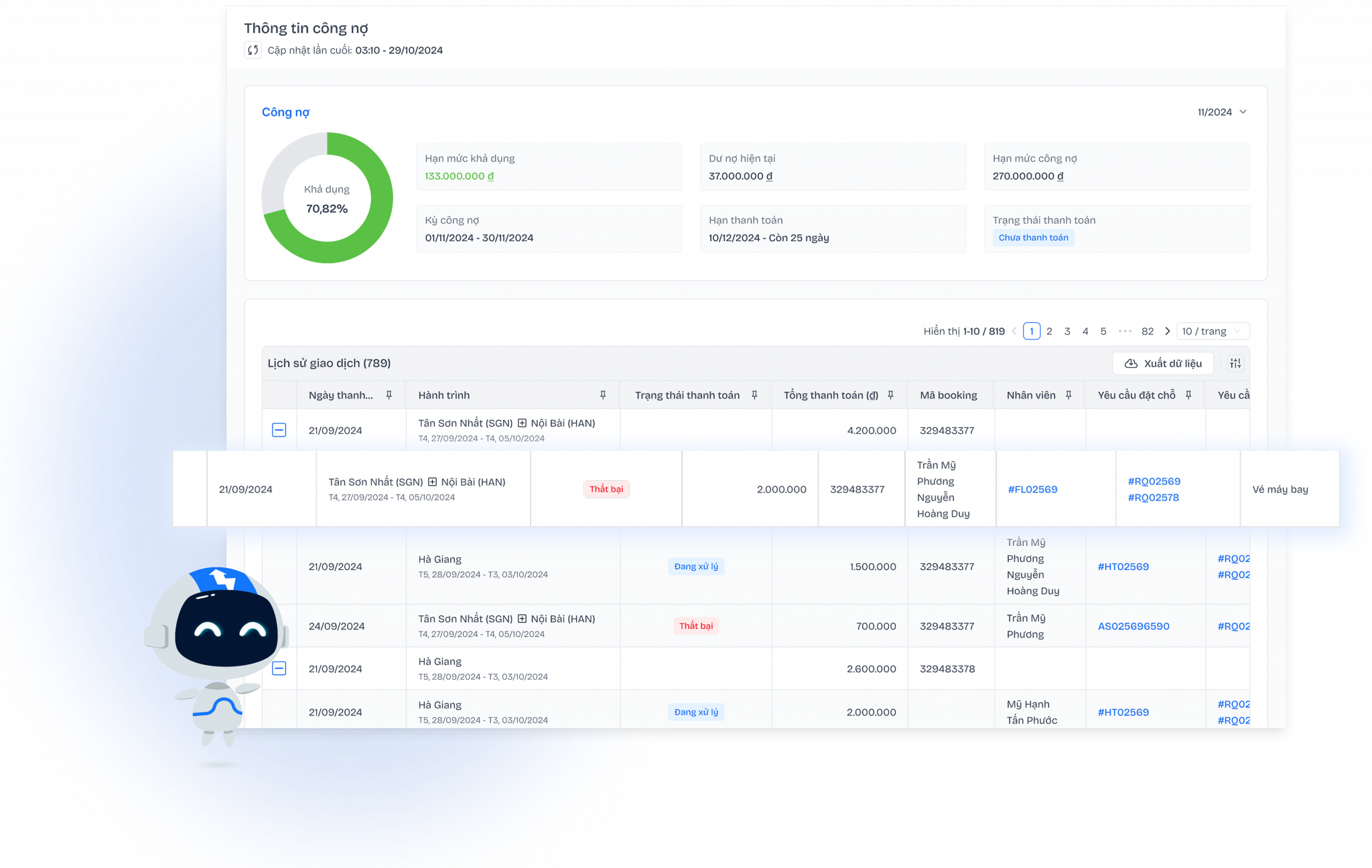
When implementing a system like this... Bizzi ExpenseThe entire process is digitized. Each spending request is automatically checked against the remaining budget, helping businesses prevent budget overruns at the source instead of dealing with post-audits.
What are the ways to automate the sales cost management process?
Automating sales cost management involves the application of RPA and AI to completely replace manual data entry, from collecting invoices to reconciliation and accounting.
In the traditional model, accountants have to process hundreds to thousands of invoices each month, from shipping fees to entertainment expenses. This is not only time-consuming but also prone to errors and slows down the closing process.
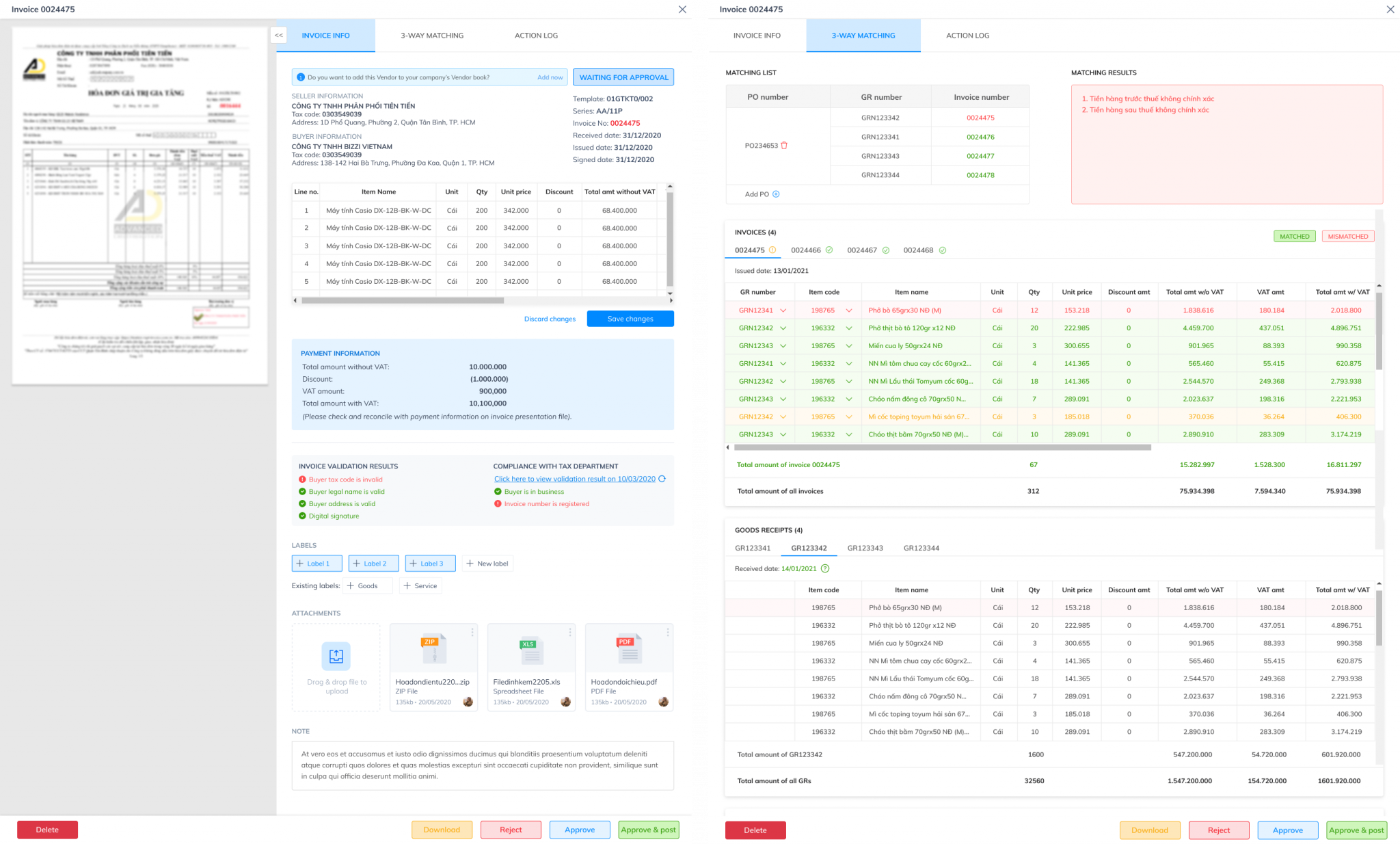
With automation, the process is transformed into a "zero-touch" form:
- The invoice was automatically collected from email.
- AI extracts data in seconds.
- The system checks the validity of the tax authority's records.
- Data is pushed directly into the ERP system.
Bizzi Bot and Bizzi Expense play a central role in this flow, helping businesses reduce processing time by up to 80% and ensuring clean data before accounting entries. More importantly, CFOs can track expenses in real time instead of waiting for end-of-month reports.
What is a reasonable ratio of selling expenses to revenue?
There isn't a fixed ratio for every business, but common benchmarks show:
- FMCG industry: approximately 10% – 20% due to high marketing and promotional costs.
- E-commerce: may be higher due to advertising and logistics costs.
- B2B production: typically ranges from 5% to 10%.
This index is calculated using the following formula:
Selling expense ratio = (Selling expenses / Net revenue) x 100%
For CFOs, tracking this metric across each sales channel or campaign helps assess investment effectiveness and adjust budgets promptly. If the rate increases but revenue doesn't increase proportionally, it's a warning sign of operational inefficiency.
Frequently Asked Questions about Sales Cost Management
Managing sales expenses (Account 641/6421) involves controlling actual expenses incurred (staff, packaging, transportation, advertising, warranty) to get goods to consumers, in order to optimize profits. Frequently asked questions include: Distinguishing costs, accurate accounting methods, optimizing online/offline costs, and accounting regulations.This helps businesses cut unnecessary costs and increase business efficiency.
How should the cost of promotional goods (which are not sold) be accounted for in account 641?
If the program is properly registered, record a debit to account 641 and a credit to account 156. If it is not registered, output VAT must be declared as a regular sale to avoid the risk of retroactive tax collection.
Are brokerage commission payments to individuals without invoices valid?
It is still valid if there is a brokerage contract, a personal income tax withholding certificate (form 10%), and complete payment documents.
Is the business license fee considered a selling expense?
No. This amount is considered a business management expense and is accounted for in account 642.
Are selling expenses included in the cost of goods sold?
No. Cost of goods sold (Account 632) only includes the costs of the product's components; selling expenses are incurred after the production process.
How are sales staff salaries accounted for?
All salaries and salary-related deductions for sales staff are recorded in account 6411.
What are the criteria for allocating general selling expenses?
Typically, management reports are based on the direct revenue or expenses of each branch to ensure fairness.
What is the difference between account 641 and account 642?
Account 641 reflects the costs of sales services, while Account 642 relates to the general management of the business such as accounting, human resources, and administration.
Conclude
Managing sales expenses is no longer a simple accounting task but has become a core financial strategy. Without careful control, these expenses can erode profits, cause budget losses, and create significant risks during tax settlements.
Bizzi's article clarified three crucial layers of management: understanding the true nature of costs, controlling tax risks, and applying automation to eliminate human error. In the context of increasingly expanding businesses, maintaining manual processes is no longer appropriate.
Solutions like Bizzi help CFOs establish an end-to-end sales cost control system: from invoice collection, validity verification, reconciliation to ERP accounting. This is not only a tool for optimizing operations but also a "shield" protecting the company's P&L and cash flow in the long term.
To receive advice on effective corporate financial management solutions, schedule an appointment with Bizzi here: https://bizzi.vn/dat-lich-demo/