



“B2B payment solutions are systems that help businesses process, control, and reconcile payments between the business and suppliers, partners, or employees. For CFOs and finance departments, the greatest value is not just faster payments, but controlling cash flow before money leaves the business.”
For many businesses, payment is no longer simply a matter of transferring money to a supplier. Each payment is linked to a budget, approval process, electronic invoice, accounting documents, and financial management data. As the number of transactions increases, using fragmented payment methods leads to time-consuming reconciliation, difficulty in controlling costs, and increased risk of errors.
B2B payment solutions These platforms were created to connect the entire process from expenditure request, approval, payment execution to document reconciliation and accounting. Instead of just helping to transfer money faster, modern platforms also support businesses in controlling expenditures before funds are disbursed, while generating comprehensive data for accounting, auditing, and cash flow management.
In this article, Bizzi will help you understand these groups. B2B payment solutions Currently, the selection criteria are appropriate for each business model, and an analysis is needed on how to integrate payment methods with electronic invoices., business cost management and Accounts Payable (AP) processes to improve financial operational efficiency.
- See more content about Top 5 Mistakes in Working Capital Management and How to Fix Them
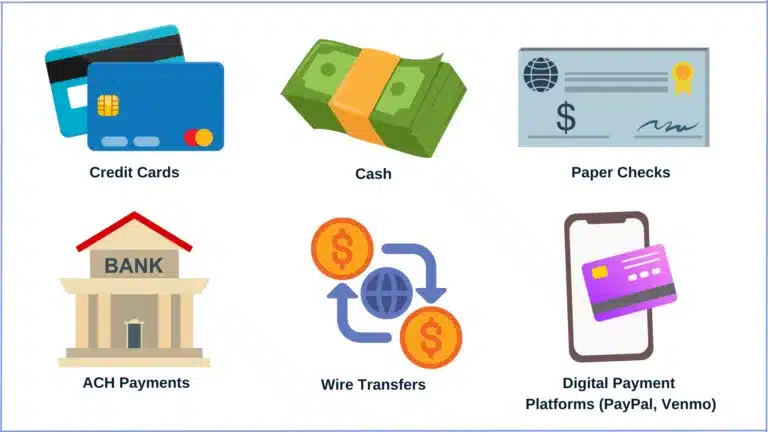
What are B2B payment solutions?
B2B payment solutions are a set of technologies and processes that help businesses execute, control, reconcile, and manage payments between themselves and suppliers, partners, or employees within a unified financial process.
In the modern business environment, a payment is often more than just a bank transfer. Before funds are disbursed, businesses may go through several steps such as preparing a payment request, budget review, authorization approval, document verification, and reconciliation with contracts or purchase orders. After the payment is completed, the data continues to be used for accounting, accounts receivable management, and auditing.
Therefore, the concept B2B payment solutions Today, e-banking tools have expanded far beyond traditional ones. A modern system not only facilitates money transfers but also acts as a bridge between spending processes, electronic invoices, and a company's financial data.
The modern B2B payment process can be visualized in four functional layers:
| Functional layer | Role |
| Pre-expenditure control | Review the budget, spending policy, limits, and approval process before making any payments. |
| Make a payment | Payment can be made via bank transfer, corporate card, virtual card, or other payment methods suitable for each situation. |
| Post-payment reconciliation | Match transactions with electronic invoices, documents, suppliers, and payment requests to reduce data discrepancies. |
| Synchronize financial data | Transfer data to accounting software or enterprise resource planning (ERP) systems, save processing history (audit trail), and use it for management reporting. |
The key difference between one B2B payment solutions The key to traditional payment methods lies in their ability to connect data seamlessly. Instead of each department using a separate tool, businesses can manage the entire lifecycle of an expense within a single process, from the moment the need arises to the completion of accounting.
For CFOs and Finance Managers, the greatest value lies not in "faster payments," but in the ability to... Control before money leaves the business., while also ensuring that all transactions are fully documented, have approval history, and data to support cash flow analysis, budget management, and auditing.
Although many businesses have adopted Internet Banking or electronic banking software for transferring funds, payments are often still separate from the approval, invoicing, and accounting processes. This is also why many CFOs struggle to control spending and forecast cash flow, a topic that will be analyzed in the following section.
Why do traditional B2B payments put pressure on CFOs and finance departments?
Traditional B2B payments often require finance departments to handle many manual steps, involve scattered data, and make it difficult to monitor cash flow in real time, especially as businesses grow.
In many businesses, the process of paying suppliers is still carried out via email, Excel spreadsheets, internet banking, and disjointed accounting software. Each payment goes through multiple steps such as receiving the payment request, checking documents, reconciling accounts payable, obtaining signatures, entering the transfer order, and updating the payment status. As the number of transactions increases, these seemingly simple operations quickly become an operational burden.
For the CFO and finance department, the pressure isn't just about... Pay on time, but also must Ensuring cash flow, controlling risk, and maintaining data traceability. When auditing or tax settlement is required, even a single mismatch in the chain can lead to a series of consequences such as duplicate payments, missed invoices, incorrect beneficiaries, or delays in updating accounts payable.
Common bottlenecks in traditional B2B payment processes.
| Problem | Impact on businesses |
| Payment data is stored in multiple systems (email, Excel, accounting software, Internet Banking). | Difficult to compile, time-consuming to cross-reference. |
| Manual approval via email or paper documents. | Delayed payments, difficulty tracking payment status. |
| Re-enter transfer information multiple times. | Increased risk of errors in account numbers, amounts, or payment details. |
| There is no centralized data source. | CFOs find it difficult to track payment obligations in real time. |
| It is difficult to trace the editing and approval history. | Increased risk when auditing or handling disputes. |
| Reconciliation of accounts payable after payment is mainly done manually. | Requires a large workforce and is prone to errors and omissions. |
These limitations become even more apparent when businesses work with hundreds or thousands of suppliers. Each supplier may use different invoice templates, payment terms, and documentation methods, making process standardization difficult without supporting tools.
The biggest challenge isn't transferring money, but controlling the process.
Many businesses believe that B2B payments are simply a matter of transferring money through a bank. In reality, the value of the payment process lies in its capabilities. control the entire lifecycle of an expenditure.From input invoices, document reconciliation, approval, payment processing to accounting recording and transaction tracking.
For a CFO, it's important to know more than just how to do it. How much has been paid?, but also need to answer questions such as:
- Was this payment properly approved?
- Are there valid invoices and supporting documents?
- Have you ever paid this bill before?
- Is the expenditure within the approved budget?
- Has the data been updated to the accounting system yet?
If the above questions have to be answered by opening multiple Excel files or searching through old emails, there is a gap in the payment process that needs to be addressed.
As businesses grow, manual payments are no longer a sustainable solution.
At a small scale, processing a few dozen transactions per month using Excel or Internet Banking may still meet the needs. However, as the business expands its number of branches, departments, and suppliers, the rapidly increasing volume of transactions will make manual processes a bottleneck for the finance department.
At this point, the need is no longer limited to just one thing. fast money transfer, which switched to centralized payment management, automating repetitive steps and ensuring every transaction has complete documentation and approval history.audit trail) and the ability to make comparisons throughout.
To overcome these bottlenecks, businesses need to understand B2B payment solutions What is it, and how does it differ from simply using Internet Banking or traditional accounting software?.
Popular B2B payment solution groups today
There isn't one B2B payment solutions Which one is suitable for all businesses? The optimal choice depends on the transaction size, number of suppliers, internal control requirements, system integration capabilities, and the level of automation the business desires. In practice, many businesses combine multiple payment methods to accommodate different cost groups and partners.
Below are some popular B2B payment solutions currently used by Vietnamese businesses.
| Solution group | Suitable when | Advantage | Limit |
| Bank transfer | Large value payments, recurring transactions | Widely accepted, safe, and widely adopted by most businesses. | Many manual operations are difficult to manage when the number of transactions is large. |
| Business Internet Banking | Businesses need to manage multiple accounts and user permissions. | Online payment options reduce reliance on in-store transactions. | The process remains separate from the cost management system. |
| Bulk Payment | Simultaneous payment to multiple suppliers or employees. | Saves processing time and reduces repetitive tasks. | Data needs to be standardized before creating payment orders. |
| Corporate Card | Business trip expenses, online service purchases, operating expenses. | Fast and convenient payment, minimizing the use of cash. | Strict control over spending limits and verification of documents are necessary. |
| E-wallet/B2B Wallet | Small value transactions or payments on digital platforms. | Fast and convenient with several providers. | Not yet common for large-scale B2B transactions. |
| Integrated B2B Payment Platform | Businesses have multiple invoices, multiple levels of approval, and require centralized control. | Connecting the process from expense request to payment, reconciliation, and tracking. | It needs to be implemented and integrated with existing processes. |
Bank transfers remain a popular method, but they are not yet optimized for the process.
Most businesses today still use bank transfers as their primary payment method. This is a suitable option for large payments, meets documentation requirements, and is easily accepted by partners.
However, when a business generates hundreds or thousands of transactions each month, creating each money transfer order, checking account information, cross-referencing with invoices, and updating payment status will consume a significant amount of the finance department's time. If the entire process still relies on spreadsheets or manual operations on Internet Banking, the risk of incorrect information entry, duplicate payments, or missed transactions will increase.
Batch payment helps improve processing efficiency.
For businesses that have to pay multiple suppliers in the same period, Bulk Payment This solution significantly reduces the number of operations performed.
Instead of creating individual transfer orders, businesses can consolidate multiple payments into a single list and send it simultaneously to the bank or payment system. This method is particularly suitable for manufacturing, retail, logistics, or chain store businesses with a large number of suppliers.
However, the effectiveness of batch payments depends heavily on the quality of the input data. If invoice information, bank accounts, or amounts are not pre-verified, businesses still have to handle exceptions manually.
Business cards are suitable for flexible spending.
Corporate cards are commonly used for incidental expenses such as:
- Business trip expenses.
- Book flights and hotels.
- Payment for SaaS software.
- Online advertising.
- Purchase low-value supplies.
The advantage of this method is that it shortens payment time and reduces the need for employees to take personal advances. However, businesses need to establish policies on spending limits, documentation submission procedures, and post-payment reconciliation mechanisms to mitigate the risk of unauthorized expenditures.
An integrated payment platform connects the entire financial process.
The current trend goes beyond just that. make payment, but also aiming towards managing the entire lifecycle of an expense..
Integrated payment platforms can support businesses in the following ways:
- Received payment requests from multiple departments.
- Check the payment terms according to internal policy.
- Compare with the invoice, contract, or purchase order if the procedure applies.
- Approval processes are structured according to quotas and management levels.
- Make payments through your bank or partner.
- Synchronize payment status with the accounting or ERP system.
- Store the entire processing history.Audit Trail) for auditing and reconciliation purposes.
This is also the preferred approach for businesses undergoing digital financial transformation. Instead of managing each step individually, all data from expense requests, approvals, invoices, and payments are linked within a single process, giving CFOs a comprehensive view of cash flow and payable obligations.
One example is Bizzi Expense Pay, combining cost management processes with the company's solvency. In addition, Bizzi Payment Sharing This approach helps businesses centrally manage multiple bank accounts, process batch payments, share controlled access, and track transaction status on a single platform. It reduces the need to switch between multiple systems while increasing control and traceability throughout the entire payment process.
Once a business has identified the appropriate set of solutions, the next question is no longer... “"Choose your payment method"” but “"What criteria should a B2B payment solution meet to be both secure and operationally efficient?"” The following section will analyze the key criteria when choosing a B2B payment solution for businesses.
What criteria should businesses use when choosing a B2B payment solution?
Businesses should choose B2B payment solutions based on the level of pre-payment control, document integration capabilities, reconciliation capabilities, and suitability for each operational scenario. An effective payment platform not only facilitates fast money transfers but also needs to ensure that all expenditures are fully documented, follow proper procedures, and are easily traceable during audits or reconciliation.
Instead of simply comparing transaction fees or processing speed, CFOs and finance departments should evaluate solutions across the entire payment lifecycle – from the initial request, approval, payment, to accounting and document archiving.
Key criteria when choosing a B2B payment solution.
| Criteria | Questions businesses should ask themselves |
| Control before spending. | There is support for budget approval, spending limits, spending policies, or spending category locking (MCC). Merchant Category Code) before payment? |
| Payment speed | Can emergency expenditures, recurring payments, and bulk payments be met while maintaining control over the process? |
| Invoice collection capability | It supports automatic invoice reminders and optical character recognition (OCR). Optical Character RecognitionCan you read electronic invoices and check the validity of the documents? |
| Post-payment reconciliation | Is it possible to link payment transactions to expense requests, invoices, suppliers, and related documents to reduce data discrepancies? |
| Accounting/ERP integration | Data is synchronized with accounting software or ERP systems.Enterprise Resource Planning) to reduce manual data entry? |
| Project/Department-based management | Is there a cost allocation system based on projects, campaigns, clients, or cost centers to support financial management? |
| Compliance and Audit Trail | Is a complete record of the approval history, including the proposer, payer, approver, and all supporting documents for the audit? |
Don't just look at the payment speed.
Many vendors focus their marketing on capabilities. “"Fast, convenient, and secure payment"”. These are important factors, but for B2B businesses, they only address part of the problem.
The bigger challenge lies in the fact that Control before money is spent. and Ensure that post-payment data is always accurate and complete.. A transaction processed in seconds can still generate hours of reconciliation if an invoice is missing, the supplier information is incorrect, or it cannot be linked to the original payment request.
Therefore, the true value of a B2B payment solutions The key is not about shortening transfer times, but about the ability to transform the entire payment process into a seamless data stream, where every transaction is fully documented, controlled according to policy, and ready for accounting, reconciliation, and auditing.
This is also the approach taken by modern financial management platforms such as Bizzi Expense Pay Pursuit: combination pre-expenditure control, collect documents, automatic reconciliation and Synchronize accounting data, This helps the finance department significantly reduce manual workload while enhancing risk control capabilities.
Industry-specific applications: When should you use virtual cards, payment processing, or AP automation?
Each business has its own unique cash flow, operating model, and types of expenses, so there is no single solution. B2B payment solutions Suitable for all situations. Instead of choosing based on technology, CFOs and finance departments should start from the practical spending problem: where the expenses are incurred, who is using the budget, how the documents are collected, and how the data will be reconciled after payment.
Below are some common application models categorized by business group.
| Industry/Business Group | Common payment issues | The right solution | Value created |
| Marketing & Media Agency | Running ads for multiple clients using the same card can easily lead to budget errors and make reconciliation difficult. | Virtual Card by client or campaign | Separating budgets reduces the risk of card suspension and makes it easier to reconcile expenses for each customer. |
| IT, Software & SaaS | Manage multiple cloud, SaaS, and subscription services with different billing cycles. | Virtual Card by individual provider or service group | Control recurring costs, reduce IT shadows, and easily lock or change limits when needed. |
| Logistics, Retail, F&B | With numerous small expenses arising, employees frequently need cash advances. | Branch, Petty Cash Digitization, corporate cards | Reduce reimbursements, increase transparency, and control incidental expenses by department. |
| Consulting, Professional Services | Business expenses, entertainment expenses, scattered invoices, late submission of documents. | Bizzi Expense Pay combining OCR (Optical Character Recognition) Optical Character Recognition) and managing travel expenses | Faster document collection, automatic transaction matching with invoices, and shorter settlement times. |
As can be seen, the value of B2B payment solutions It's not just about transferring money faster, but also about the ability to design payment methods that suit each type of expenditure.
For example:
- One Marketing Agency can grant one virtual card This applies to individual customers or specific Facebook, Google, and TikTok advertising campaigns. When the campaign ends, businesses simply deactivate the card without affecting other expenses.
- For business SaaS, Each platform, such as AWS, Google Cloud, Microsoft Azure, or AI tools, can be associated with a unique tag. business cost control Regularly and avoid unplanned occurrences.
- Meanwhile, businesses with a high volume of traveling employees, such as consulting, auditing, or sales, will benefit more from digitized expense tracking processes, where payments, invoices, and reimbursements are handled on a single platform.
More importantly, these payment methods should not operate in isolation. When connected to the expense approval process, electronic invoicing, and accounting, businesses can track the entire lifecycle of an expense, from the moment the need arises to the accounting and archiving of the documentation.
How should modern B2B payments be connected to invoicing, payment approval, and accounting?
One B2B payment solutions Modern technology shouldn't stop at the transaction processing stage. The greatest value lies in the ability to seamlessly connect data across expense approvals, payments, invoices, and accounting, helping businesses reduce manual operations while increasing financial control.
The reference process may include the following steps:
- The employee or department creates the payment request., declare purpose, supplier, budget, cost center (Cost Center) and attach supporting documents if any.
- Automated testing system Budget, spending policy, limits, and Cost Center information are required before moving to the approval step.
- Approval by management or finance department. Following the established workflow, ensure that funds are only disbursed when all internal control conditions are met.
- Make a payment by appropriate methods such as business bank transfer, business card, virtual card, household or Bizzi Expense Pay, depending on the type of expenditure.
- Invoices and receipts are collected automatically., using OCR (Optical Character Recognition) Optical Character Recognition) or read electronic invoices to extract data, reducing manual data entry.
- Transaction reconciliation Compare the expenditure request, invoice, supplier, and payment documents to detect discrepancies, missing records, or unusual transactions before recording them in the accounting system.
- Synchronize data to accounting software or ERP (Enterprise Resource Planning) system. Enterprise Resource Planning), serving accounting, financial reporting and archiving purposes. Audit Trail (History of control and tracing) audit services
Instead of existing as a standalone payment tool, Bizzi Expense Pay Designed as a link in Bizzi's cost management ecosystem, the solution can connect data from expense requests, payments, input invoices, document processing using Bizzi Bot, to reconciliation and synchronization with the accounting system. This approach helps businesses manage the entire lifecycle of an expense on a single, unified data stream, instead of having to piece together information from multiple different systems.
Where does Bizzi Payment fit into the B2B payment landscape?
Bizzi Expense Pay This is suitable for businesses that want to connect payment processing with expense control, electronic invoicing, internal approvals, and accounting data, rather than simply adding a money transfer tool.
In practice, many businesses have used Internet Banking or electronic banking software to conduct transactions. However, transferring money is only one link in the entire payment process.Accounts Payable – APDifficulties often arise in the steps before and after payment, such as collecting documents, checking invoices, reconciling with payment requests, or synchronizing data into accounting software.
This is the gap that the Bizzi ecosystem aims to fill:
- Bizzi Expense Support in managing expenditure requests, travel expenses, advances and reimbursements, approval processes, and budget control before payment.
- Bizzi Delivery It acts as the payment layer, connecting spending decisions with actual transactions while maintaining the link between payments and management data.
- Bizzi Bot It assists in receiving, reading, checking, and processing input invoices, contributing to the standardization of document data before accounting.
- The processed data can be synchronized with accounting software or ERP systems configured to suit the business, reducing repetitive data entry and improving traceability.
Bizzi's differentiating factor isn't replacing banks or accounting systems, but rather its ability to connect the disparate components of the B2B payment process into a unified data stream. When payment requests, transactions, electronic invoices, and accounting data are linked, CFOs and finance departments can track the entire lifecycle of each expenditure, improving control and audit performance.
Businesses can begin by evaluating their current payment processes, identifying bottlenecks in approval, document collection, or reconciliation to select an implementation roadmap. Bizzi Expense Pay and solutions within the Bizzi ecosystem in a suitable manner.
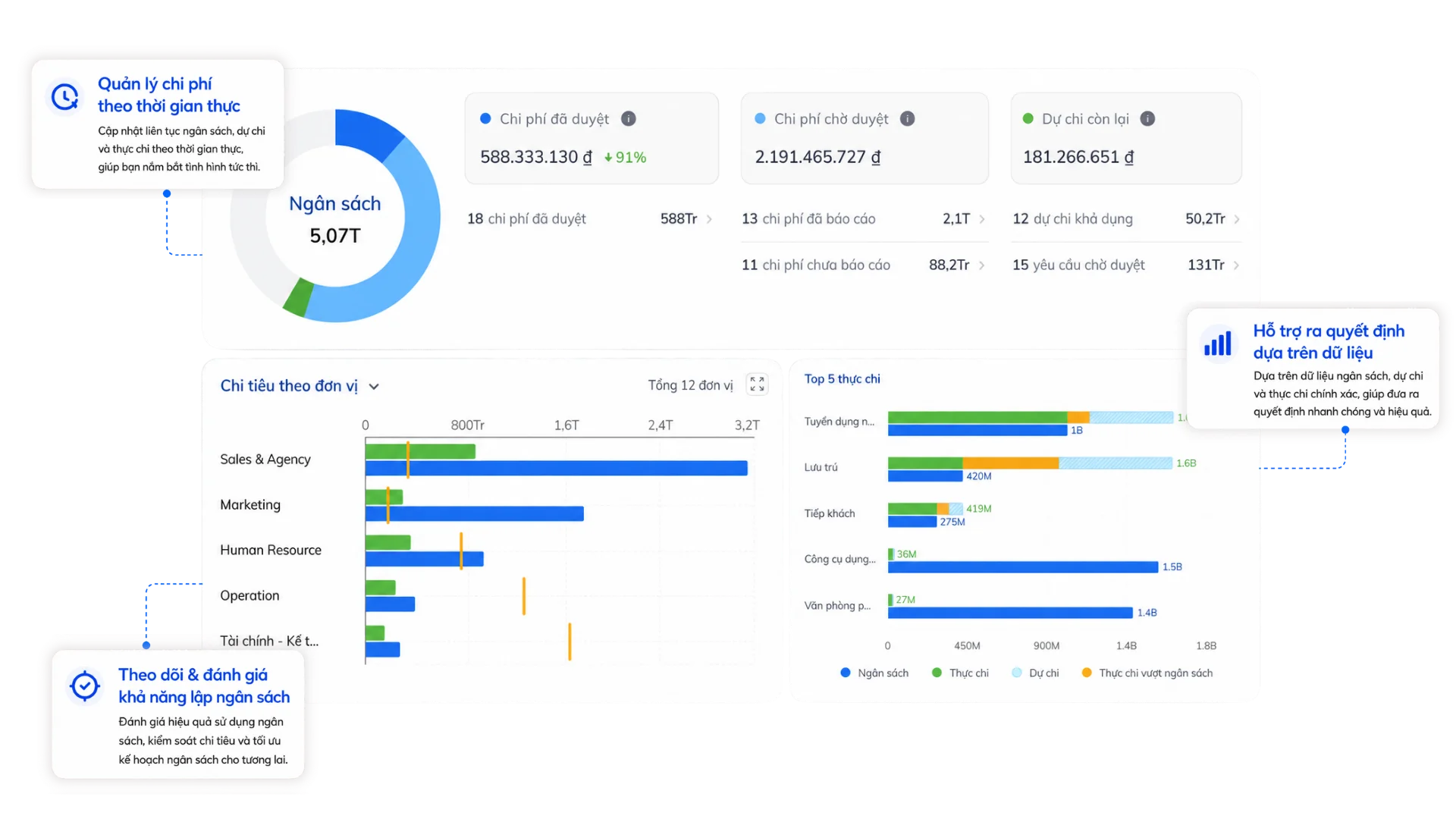
Checklist for evaluating before deploying a B2B payment solution.
Before investing in one B2B payment solutions, Therefore, businesses should review their current processes to identify bottlenecks that truly need improvement. The checklist below helps CFOs and the finance department quickly assess readiness and prioritize implementation.
| Assessment questions | It's available | Not yet |
| Does the business keep track of the number of recurring expenses incurred each month? | ☐ | ☐ |
| Are significant expenses subject to a pre-payment approval process? | ☐ | ☐ |
| Is the rate of late submission of invoices or documents being monitored and controlled? | ☐ | ☐ |
| Is it necessary to set limits based on employees, departments, projects, or Cost Centers? | ☐ | ☐ |
| Does your business incur many online expenses such as advertising, SaaS, cloud services, or bookings? | ☐ | ☐ |
| Do you need to make bulk payments to multiple suppliers or partners? | ☐ | ☐ |
| Is your current payment system connected to your accounting software or ERP system? | ☐ | ☐ |
| Does the CFO have dashboards for cash flow, budget, suppliers, and the Cost Center? | ☐ | ☐ |
| Does the current process maintain a complete history of proposals, approvals, payments, and supporting documents for auditing purposes? | ☐ | ☐ |
If a business marks "Not available" for many criteria, it indicates that the payment process still relies heavily on manual operations and scattered data. In that case, implementing a solution like... Bizzi Expense Pay, combined with cost management and Automate input invoice processing, This can help standardize processes, increase control, and create a more transparent financial data foundation.
FAQ about B2B payments
How do B2B payment solutions differ from enterprise Internet Banking?
Business internet banking primarily supports money transfer transactions. Meanwhile, B2B payment solutions It manages the entire process from expense request, approval, payment, invoice collection, reconciliation to accounting data synchronization, helping businesses control cash flow and documentation more effectively.
When should businesses use virtual cards instead of physical business cards?
Virtual cards are suitable for online expenses such as advertising, SaaS, cloud services, or project-based/customer payments. Businesses can set limits, usage periods, or specific payment purposes for each card, reducing risk and simplifying reconciliation.
Does B2B payment help reduce reimbursement time?
Yes. By integrating payment processing with expense management, electronic invoicing, and automated document collection, businesses can significantly reduce reimbursement time, minimize document loss, and shorten the expense settlement cycle.
Do SMEs need B2B payment solutions?
Yes. Small and medium-sized enterprises (SMEs) also face issues such as lack of documentation, manual reconciliation, or off-budget expenditures. Implementing appropriate solutions early on helps standardize processes and create a foundation for expansion without increasing management risks.
How do I connect payment processing with electronic invoicing and accounting?
Businesses should choose a solution that can link payment transactions with electronic invoices, documents, and approval processes, while also supporting data synchronization with accounting software or ERP. This helps reduce manual data entry and increase the accuracy of financial data.
What metrics should CFOs monitor when implementing B2B payments?
Some key metrics include: payment processing time, complete documentation rate, number of out-of-policy expenditures, reimbursement time, successful reconciliation rate, payment value by supplier, by Cost Center, and by budget. These metrics reflect the effectiveness of expenditure control and the operational quality of the B2B payment process.
Conclude
B2B payment solutions not only help businesses transfer money faster but also create a foundation for Control spending, standardize approval processes, automate document reconciliation, and enhance transparency in financial management.. When payments are linked to electronic invoicing, accounting data, and expense management systems, CFOs and finance departments can significantly reduce manual workload, minimize errors, and possess real-time data for more accurate decision-making.
For businesses looking to digitize their entire spending process, Bizzi Expense Pay It is a payment layer within Bizzi's expense management ecosystem, seamlessly connected to Bizzi Expense (Managing expenditure requests, travel expenses, advances - reimbursements, and processing input invoices). This allows businesses to build a closed-loop process from start to finish. Request for payment → Approval → Payment → Invoice collection → Reconciliation → Accounting support, This helps improve operational efficiency and enhance financial control across the entire enterprise.
To receive advice on effective corporate financial management solutions, schedule an appointment with Bizzi here: https://bizzi.vn/dat-lich-demo/