



This article documents how Bizzi introduced the Bizzi Bot workflow in 2022., When the product focuses on collecting invoices, verifying data, and reducing accounting data entry, the content is retained as historical product documentation; speed, cost, promotion, or performance figures from the previous version should not be interpreted as current commitments.
If you are evaluating Bizzi solutions at the present time, see Bizzi input invoice processing software. If you need to learn about the implementation process, see the article. Automate input invoice processing.
The input invoice processing workflow was introduced by Bizzi in 2022.

In 2022, the problem Bizzi focused on solving was reducing the number of manual operations: receiving invoices via email, uploading files, checking information, storing, and re-entering data into the accounting system.
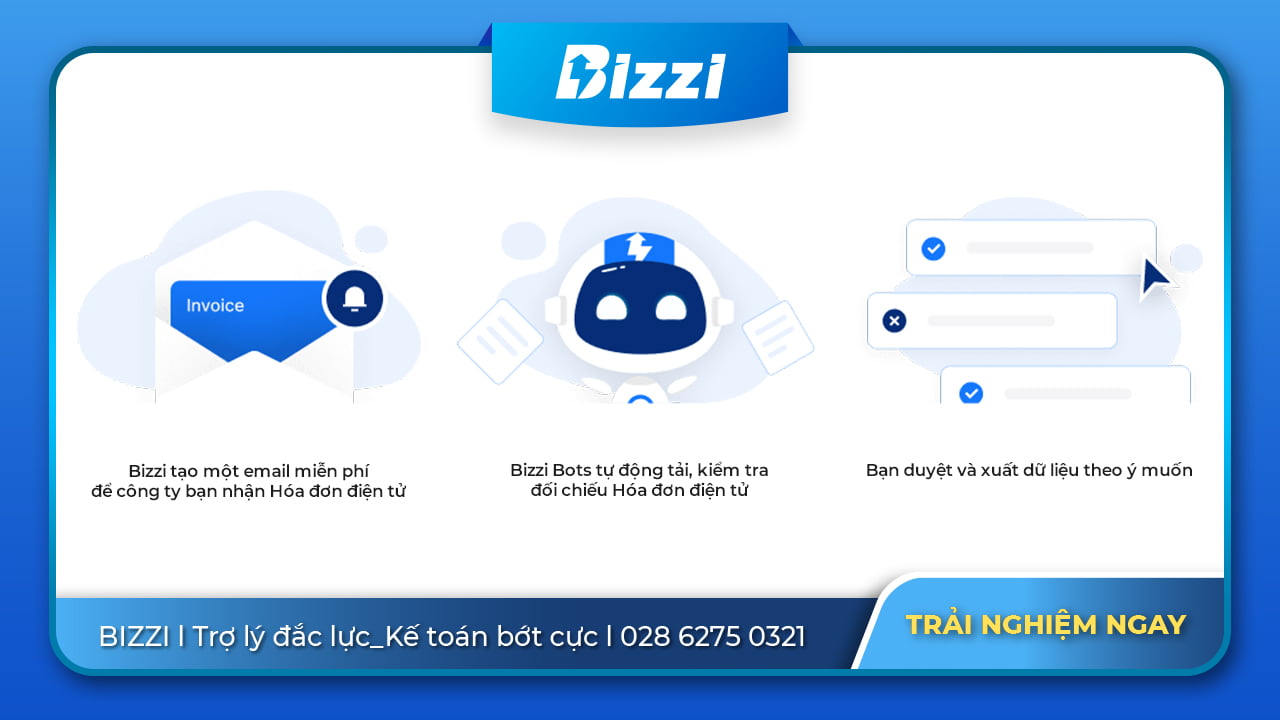
Workflows are described in three main layers:
- Received: Bring invoices from the input source to a centralized processing location.
- Check the data: Read the information fields, apply rules, and flag cases that require user verification.
- Data transfer: Transfer the processed data to the accounting step or related system according to the configuration.
This approach helps reduce fragmented handover points, but it doesn't mean every invoice can be fully automated. Missing documents, duplicates, transactions with discrepancies in PO/GR, or other specific cases still require exceptional workflows.
Why are manual processes prone to bottlenecks?
When invoices are sent via email, shared folders, Excel files, and accounting software, accountants may have to re-process the same data multiple times. Common bottlenecks include:
- Invoices come from multiple sources and are difficult to track their status;
- You have to download, rename, and save the file manually;
- Re-enter the invoice number, tax identification number, date, and amount;
- It is difficult to detect when the same document enters the system multiple times;
- It is difficult to trace the inspection history when discrepancies occur.
If you need to delve deeper into this group of issues, see the article. 5 bottlenecks when accountants process input invoices manually..
How should automated invoice verification be understood?
A system can assist in reading data, checking required fields, matching certain information, or flagging records showing unusual activity. However, Validation does not equate to legal conclusion..
For example, the system might alert you to a digital signature, vendor status, or invoice that closely resembles an existing one. Accountants still need to identify the cause and handle it according to actual business practices.
For transactions with purchase orders (POs) and delivery/acceptance data, businesses can add... 3-way matching. This is a matching layer, not the only mechanism to prevent duplicate invoices or payments.
The old claims are no longer valid as current commitments.
The 2022 version of this article used figures for processing times, cost per invoice, savings rates, and free programs. That information is subject to the product version, project conditions, and commercial program at the time of publication.
Therefore, terms like "10 seconds", "1,000 VND/bill", "50% discount" or the old free package remain. This article does not retain benchmarks or current offers.. When evaluating effectiveness, businesses should use pilot or before/after data from the process they are currently running.
What types of tasks did Bizzi Bot support at that time?
In principle, the content for 2022 revolves around the following competencies:
- Centralize invoices from the configured source;
- Read and normalize several data fields;
- Support rule-based testing;
- Storing and searching for documents;
- Transfer the data to the next accounting processing step.
The functional scope, document types, integration methods, and SLAs of the current product may have changed. Therefore, readers should refer directly to the current product page instead of using this archive as a feature document.
What content should I refer to right now?
| Demand | Relevant page |
| Review of current Bizzi products | Input invoice processing software |
| Learn about the 5-step automation process. | Automate input invoice processing |
| Learn about OCR and extraction. | OCR invoices |
| Compare and contrast Invoice – Purchase Order – Retail Price | 3-way matching |
Conclude
The "3-step" workflow marked a milestone in Bizzi's initial development direction: reducing the steps involved in receiving, checking, and entering invoices. Currently, the problem has broadened and requires a comprehensive view of the entire chain: intake, extraction, validation, matching, exception handling, and ERP handoff.
This article is kept to preserve the product context for 2022; current deployment decisions should be based on the latest product page, technical documentation, and pilot data.